Cat Island Japan, Where Cats Outnumber People
· 8 min read
Tashirojima, the cat island Japan is famous for, is a tiny island in Miyagi where cats outnumber people six to one, dogs are banned, and fishermen built a shrine for a cat.
In Japan, there is an island where cats outnumber people six to one. Dogs are banned. The local shrine is built for a cat, and the most famous place to sleep is a cluster of cat-shaped cabins. This is Tashirojima, the cat island Japan is famous for, a tiny island off the coast of Miyagi where the cats are not a tourist attraction added for visitors. They are the reason the island is the way it is.
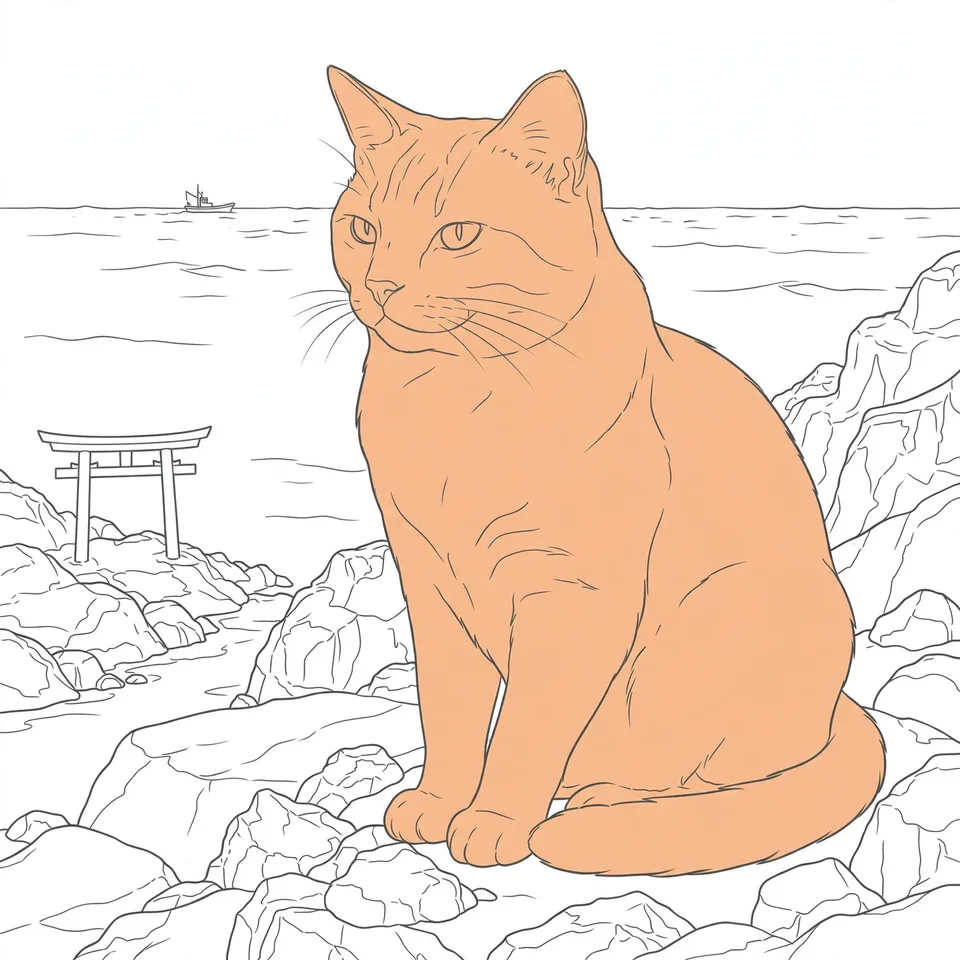
Tashirojima sits about 17 kilometers off the coast of Ishinomaki, in Miyagi Prefecture in the Tohoku region of northeastern Japan. It is small, just 3.14 square kilometers, with two villages, Odomari and Nitoda, and no cars. The ferry from the mainland takes about 40 minutes, and there are only three a day. What you find when you get off is an island that runs on cat time: cats napping on fishing nets, cats wandering into empty houses, cats waiting at the port for the boats to come in.
Cat Island Japan, in Numbers
The numbers tell the story of cat island Japan better than any description. In the 1950s, more than 1,000 people lived on Tashirojima. By 2015, the population had fallen to around 80, most of them over 65 years old. The island's only elementary school closed in 1989. Young people left for the mainland, and few came back.
The cats went the other way. Recent estimates put their number between 130 and 200, and the total has been higher, with at least 150 cats living in one village alone. That makes the ratio roughly six cats for every human, though the exact count shifts from year to year because there is no formal census and no spay and neuter program. The Japan National Tourism Organization sums it up in a single line: 25 percent humans, 75 percent cats.
The island is small enough to walk across, and the cats are everywhere, though not in the way viral photos suggest. They spread out across the island, and the highest concentration is around Nitoda Port, at the northern end. In hot weather or rain, many of them hide. The cats are semi-wild, cared for mainly by the locals, and they are part of daily life rather than a show put on for visitors.
Why the Cats Came Here
The cats did not arrive by accident. They were brought to Tashirojima centuries ago, during the Edo period, when the island's main work was raising silkworms for silk. Mice are the natural enemy of silkworms, and cats were the solution. The islanders kept cats to protect the silk, and the cats stayed.
Later, fishing took over as the island's main industry, and the fishermen gave the cats a second job. Cats would visit the inns where fishermen from other areas stayed and beg for scraps. Over time, the fishermen began to read the cats' behavior as a forecast: a restless cat meant bad weather or a poor catch, a calm cat meant a good day at sea. The cats became bringers of luck, and the fishermen fed them from their own catch.
That is why dogs are banned on the island. It is not a rule written for tourists. It is a rule that protects the cats, which the islanders have treated as lucky charms for generations. The cats are fed by the fishermen, sheltered by the locals, and left to roam as they please.
The Shrine Built for a Cat
In the middle of the island, on the trail between Odomari and Nitoda, stands a small shrine called Neko-jinja, the cat shrine. It is not a grand building. It is a small structure in the forest, surrounded by offerings visitors have left behind: maneki-neko figurines, cat toys, and small stones with cats drawn on them.
The shrine exists because of an accident. Long ago, fishermen were collecting rocks to weigh down their fixed fishing nets. A stray rock fell and killed a cat. The fishermen, feeling remorse, buried the cat and enshrined it at that spot. Afterward, the story goes, the fishing was good and there were no accidents at sea, so the dead cat came to be worshipped as a deity, known as Miyori Daimyojin. Visitors still leave gifts at the shrine, following the Japanese custom of bringing offerings to a grave.
The shrine is the clearest sign of how the island sees its cats. They are not pets and not pests. They are neighbors the island has chosen to honor, and the shrine is where that respect is made visible.
Manga Island and the Cat-Shaped Cabins
Tashirojima has a second claim to fame, and it is also about cats. On the southern tip of the island sits Manga Island, a camping resort where the cabins are shaped like cats. The cabins were designed by Shotaro Ishinomori, the manga artist who created Cyborg 009, Kamen Rider, and the Super Sentai series that Power Rangers was adapted from. Ishinomaki, the port city the ferry leaves from, is Ishinomori's hometown, and the island's manga connection runs through him.
The cat-shaped cabins are the island's most photographed buildings, and they are also a reminder that Tashirojima's fame is recent. The island was introduced on Japanese television in 2006, and the cats became widely known after that. Before the television crews came, the cats were simply part of island life. The cameras did not create the cats. They found them.
The 2011 Tsunami and the Cats That Ran Inland
On March 11, 2011, a magnitude 9.0 earthquake struck northeastern Japan and triggered a massive tsunami. Tashirojima was hit. The wave destroyed the harbor and caused the ground to sink, leaving the villages more exposed to flooding at high tide. The island's small fishing industry, already shrinking, shrank further, and several fishing families moved away.
The cats fled inland before the wave arrived, and only some of them returned to the villages afterward. The tsunami also caused an outbreak of parvo, a dog disease that spread to the cats, and at least 80 cats were captured and vaccinated within days. Some islanders say the cats' strange behavior before the wave warned them, though that is a local story rather than a proven fact. What is certain is that the cats and the humans survived, and by 2015 the harbor had been rebuilt.
The disaster is part of why the island is the way it is now. The population was already falling before 2011, and the tsunami sped up the decline. But the cats stayed, and the island's identity settled around them. Today, the island has one store and a vending machine, and the cats are still the main attraction.
How to Visit Cat Island Japan
Getting to cat island Japan takes planning, because the island is remote and the ferry is limited. From Tokyo, take the shinkansen to Sendai, about 80 to 120 minutes, then the JR Senseki Line to Ishinomaki Station, about 60 to 80 minutes. From Ishinomaki Station, the Ajishima Line ferry terminal is a 10 to 15 minute walk or a short taxi ride.
The ferry takes about 40 minutes and costs around 1,250 yen one way. There are only three ferries a day in each direction, at 9:00, 12:30, and 15:30, and the boat holds about 220 passengers, with residents getting priority. The ferry stops first at Odomari, then at Nitoda about eight minutes later. Nitoda is where most of the cats gather, so it is the better stop to get off.
A few practical notes: the island's tourism office closes from November 1 to April 1, and winter brings fewer cats and colder weather. Spring and autumn are the best times to visit. Bring cash, because the ferry takes cash only, and check the Ajishima Line timetable before you go, since it changes. There is almost nothing to buy on the island beyond the one store, so bring what you need.
Tashirojima is not the only island where animals rule. On Komodo Island, in Indonesia, the world's largest lizard walks free and the humans keep their distance. Both islands ask the same thing of visitors: come quietly, respect the animals that live there, and remember that you are the guest. On Tashirojima, the cats were here first, in the sense that matters. They shaped the island, and the island shaped itself around them.
| Year | What happened |
|---|---|
| Edo period | Cats are brought to Tashirojima to protect silkworms from mice |
| 1950s | More than 1,000 people live on the island |
| 1989 | The island's only elementary school closes |
| 2006 | Tashirojima is introduced on Japanese television, and the cats become famous |
| 2011 | The Tohoku earthquake and tsunami destroy the harbor; cats flee inland |
| 2015 | The harbor is rebuilt, and the human population is around 80 |
More in Food & Travel
Latest posts
- Ikigai, the Japanese Idea of a Reason to Live
- Why Japan Has a Vending Machine on Every Corner
- The Eruption That Changed the World
- How Karaoke Conquered the World
- The World's First Bullet Train
- Why Japan's Hot Springs Are a Way of Life
- The QR Code Was Invented in Japan
- What It Really Costs to Live in Tokyo
- Why Japan's Convenience Stores Are a Destination
- Walang Kekek and the Woman Behind Indonesia's Keroncong
- No Na, Indonesia's First Global Girl Group