Hojicha Is the Roasted Tea Japan Reaches for After Dinner
· 16 min read
Hojicha is Japan's roasted green tea, warm, nutty and low in caffeine, and this guide explains how it is made, how to brew it and why it suits the evening.
After dinner in Japan, when the plates have been cleared and the evening starts to slow down, the tea that usually appears is not the bright green sencha of the morning. It is a cup of brown tea, warm and toasty, with almost no bitterness at all. That tea is hojicha, and once you have tasted it, the habit makes complete sense. It is gentle on the stomach, easy to drink in large cups, and it does not keep you awake.
Hojicha is a Japanese green tea that has been roasted after it was made. The roasting turns the leaves from green to reddish brown and changes the flavour completely. The grassy notes fade, and in their place come aromas of toasted grain, roasted nuts and a faint sweetness like caramel. It is still green tea underneath, made from the same plant as sencha and matcha, but the roast gives it a character all of its own.
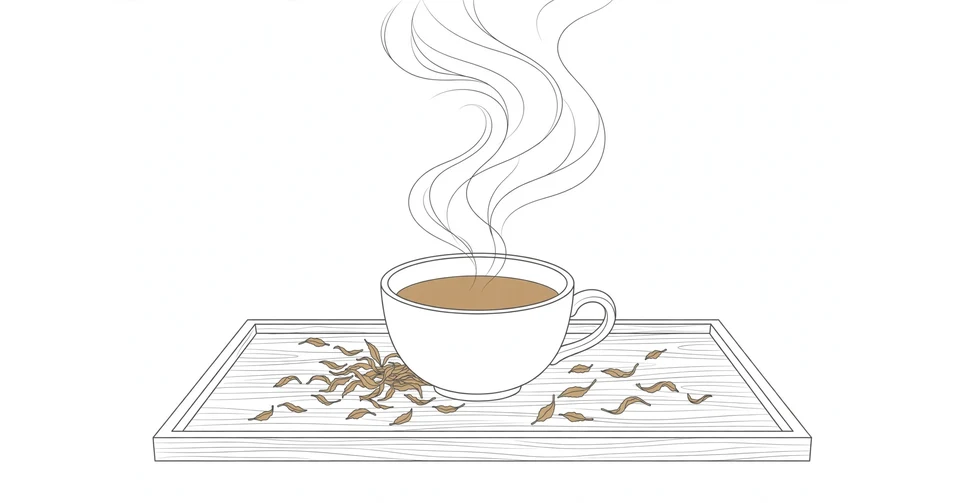
What makes this tea so easy to love is how little it asks of the drinker. It forgives hot water, it forgives a long steep, and it welcomes a second and third infusion. Children drink it, older people drink it, and restaurants pour it freely with meals because it suits almost everyone at the table. This guide explains what hojicha is, where it came from, how roasting changes the leaf, and how to brew a good cup at home.
What hojicha actually is
Hojicha is green tea that has been roasted at high heat after the usual steaming and drying. The name itself tells the story, since hoji means roast and cha means tea. Most of it starts life as bancha, the later harvest tea made from larger, more mature leaves, or as kukicha, the stems and twigs left over when sencha is sorted. Some producers roast first flush sencha instead, and that version keeps a little more of the sweetness of the original leaf beneath the roast.
The roasting is done in a porcelain pot over charcoal in the traditional method, or in a large rotating drum in modern factories. Temperatures are high, commonly around 150 to 200 degrees Celsius, and the leaves are kept moving so they roast evenly without burning. The result is a leaf that looks almost like a different plant, dark brown, light and brittle, with a smell that fills the room the moment hot water touches it.
In the cup, hojicha is a clear reddish brown, closer to the colour of weak coffee than to any green tea. The flavour is warm and round, with notes of roasted barley, toasted bread and hazelnut, and a clean finish that leaves no astringency on the tongue. People who say they do not like green tea often like it, because the roast removes exactly the grassy sharpness that puts them off.
A short history from Kyoto in the 1920s
Hojicha is a young tea by Japanese standards. Tea had been drunk in Japan for more than a thousand years before it appeared, and the elegant world of matcha and the ceremony around it was already centuries old. It arrived only in the 1920s, in Kyoto, and it arrived by accident of a practical kind.
The story most often told is that a Kyoto tea merchant found himself with a stock of bancha he could not sell. The leaves were past their best, and throwing them away would have meant losing the money they had cost. Rather than discard them, he roasted them over charcoal, and the heat transformed them into something new. The bitterness dropped away, the aroma turned warm and inviting, and customers liked the result enough that the merchant kept making it.
That account is widely repeated, and it fits what we know about the period, but it is worth a small note of caution. Roasting tea was not entirely new in Japan. Kaga bocha, a roasted stem tea from Ishikawa, had been made since 1902, and the idea of heating tea leaves to change their flavour was already understood. What the Kyoto merchant did was turn a salvage job into a product with its own name and its own following, and that is why the 1920s date is the one most sources give for the birth of hojicha.
From Kyoto, it spread across the whole country. It became the everyday tea of homes and restaurants, the tea served with a meal rather than the tea served for a ceremony. Its rise says something kind about Japanese food culture. A drink born from unsold leaves became a favourite not by pretending to be luxurious, but by being honest, useful and pleasant. There is a quiet lesson in that, and it is one reason I keep coming back to this tea. Good things do not always start with the finest ingredients. Sometimes they start with someone refusing to waste what they already have.
What roasting does to the leaf
Roasting is the single step that defines this tea, and it changes the leaf in several ways at once. The most obvious change is colour. Green leaves turn reddish brown as the heat drives off moisture and browns the leaf surface. The second change is aroma. High heat triggers the Maillard reaction, the same chemical process that browns toast and gives roasted coffee its smell, and it creates new aromatic compounds called pyrazines. These are the source of the nutty, toasty scent that rises from a fresh cup.
The third change is in the compounds that make green tea bitter. Roasting breaks down catechins and tannins, the substances responsible for astringency, and converts them into milder forms. That is why hojicha tastes smooth even when it is brewed strong, and why it rarely turns bitter the way an oversteeped sencha can. The leaf gives up its flavour quickly and gently, and there is little harshness left to extract.
Roasting also changes the physical leaf. The leaves become light and brittle, and they take up more space in the pot than the same weight of sencha would. A spoonful of the roasted leaf looks generous, and a pot needs more leaf than you might expect. That is normal, and it is part of the reason it is usually brewed in larger pots and poured into larger cups than delicate green teas.
Why hojicha is low in caffeine
One of the most useful facts about hojicha is that it is low in caffeine, though it is not caffeine free. A cup generally contains around 7 to 15 milligrams of caffeine, according to Senbird Tea, compared with roughly 30 to 50 milligrams in a cup of sencha and 35 to 70 milligrams in matcha. Other sources give a slightly wider range, up to about 20 milligrams per cup, so the honest way to put it is that it has roughly a third or less of the caffeine of sencha.
Two things keep the caffeine low. The first is the base tea. Bancha and kukicha come from later harvests and from stems, and those parts of the plant naturally contain less caffeine than young buds and first flush leaves. The second is the roasting itself. At high temperatures, some caffeine sublimates, which means it passes directly from solid to gas and leaves the leaf. Together, the modest base and the hot roast produce one of the lowest caffeine teas in the Japanese green tea family.
That low caffeine is the practical reason hojicha is the evening tea of Japan. It is served after dinner, it is given to children, and it is the tea hospitals in Japan commonly serve to patients, because it is gentle, low in acidity and easy to digest. It is also the reason restaurants pour it so freely with meals. Nobody at the table needs to worry about a late cup keeping them awake, and nobody needs to ask for a decaffeinated version that does not exist.
I think there is a wider point here about choosing the right drink for the hour. We tend to treat caffeine as a single switch, on in the morning and off at night, but this tea shows that the middle ground matters. A warm drink after dinner is a small comfort, and it should not come with a cost to sleep. It keeps that comfort without the cost, and that is a better design than either strong tea or no tea at all.
How to brew hojicha at home
Hojicha is one of the most forgiving Japanese teas to brew, and that is good news for anyone who has been put off by the precise temperatures and short steeps that sencha demands. The roast has already done the work that makes high heat risky, so hot water is welcome here. Use water just off the boil, around 90 to 95 degrees Celsius, and do not worry about cooling it first.
For loose leaf, use about 5 grams of tea per 200 millilitres of water. That looks like a generous tablespoon, because roasted leaves are light and bulky. Steep for only 30 to 60 seconds for the first infusion, then pour out every last drop so the leaves are not left sitting in water. The second infusion needs only 15 to 30 seconds, and a good batch will give a pleasant third cup as well. The flavour comes out fast, and a long steep turns the cup flat and woody rather than bitter, so short and hot is the rule.
The traditional brewing vessel is a kyusu, the side handled teapot used for Japanese green tea, but a larger pot works well too, since hojicha is often made in quantity for the whole table. Warm the pot first with a splash of hot water, add the leaf, pour the water straight on, and enjoy the smell that rises at that moment. It is half the pleasure of the tea.
Cold brew hojicha is worth trying in summer. Use about 7 grams of leaf per 500 millilitres of cold water and leave it in the refrigerator for 4 to 6 hours. The result is smooth and naturally sweet, with almost no bitterness at all. It is a gentle drink for a hot afternoon, and it keeps well in the fridge for a day.
Where hojicha is drunk in Japan
Hojicha is everywhere in Japan, in a quiet way that visitors sometimes miss. It is the tea that comes free with a meal at a small restaurant, poured from a large pot into a plain cup. It is the tea in the flask at a family gathering, the tea in a hospital ward, and the tea in a vending machine bottle, sold hot in winter and cold in summer. It is not a special occasion drink. It is a daily drink, and that is its strength.
In restaurants, it is chosen because it goes with food. Its roasted flavour stands up to oily dishes, grilled fish and fried food, and it cleanses the palate without competing with the meal. Sencha is more delicate and can be overwhelmed by strong flavours, but it holds its own. That is why a sushi restaurant or a small diner will often serve it rather than sencha with the meal.
At home, hojicha is the tea of the evening and the tea of the whole family. Parents drink it, grandparents drink it, and children drink it, all from the same pot. There is something generous about a tea that does not need to be reserved for adults or for connoisseurs. It is a shared drink, and sharing it is part of the point.
Visitors to Japan will also find it in the form of roasted tea ice cream, in department store food halls, and in the soft serve sold at tourist spots in Kyoto and Uji. The flavour translates well into desserts, because the roast gives it a warmth that green tea ice cream does not have. If you see a hojicha soft serve on a cold day in Kyoto, it is worth the small queue.
Hojicha latte and modern uses
In the last decade, it has travelled far beyond the Japanese dinner table, and much of that journey has been led by the hojicha latte. Made from finely ground hojicha powder whisked with hot water and topped with steamed milk, the latte is creamy, caramel coloured and gently sweet without any added sugar. Oat milk works especially well, because its own nutty flavour matches the roast, but whole milk is the classic choice.
The latte works because the roast flavour is strong enough to stand up to milk, where delicate green teas can disappear. Matcha lattes are brighter and more vegetal, while a hojicha latte tastes closer to a mild coffee drink, warm and comforting, with none of the jitter that coffee brings. Cafes in Kyoto, Tokyo and then around the world have made it a menu staple, and it has become the introduction to hojicha for many people who have never visited Japan.
The powder is also used in baking and cooking. It flavours cookies, cheesecake, ice cream and puddings, and unlike matcha it does not turn bitter when it is baked. A spoonful or two in a cake batter gives a warm brown colour and a roasted aroma that survives the oven. Japanese cafes sell hojicha pudding, roasted tea chocolate and even a roasted tea beer, and while not every experiment is a success, the best of them show how flexible this tea can be.
I am glad hojicha has found this second life, but I also think it is worth remembering where it came from. A tea that was once the humble drink of the dinner table is now a cafe favourite, and that is a happy ending. The danger is only that the latte becomes the whole story, and the simple hot cup gets forgotten. The latte is a treat. The hot cup is the habit. Both are worth keeping.
Hojicha next to sencha, genmaicha and matcha
The easiest way to understand hojicha is to place it beside the other Japanese teas it is most often compared with. Each one starts from the same plant, Camellia sinensis, and each one is shaped by a different step in processing. Sencha is steamed and rolled, and it keeps a fresh, grassy flavour with a yellow green liquor. Genmaicha is sencha mixed with roasted rice, which gives it a nutty warmth while keeping some green character. You can read more about that blend in our guide to genmaicha, the roasted rice tea that turns nutty and warm. Matcha is shade grown and stone ground into a fine powder, vivid green and rich in umami, and it is whisked rather than steeped, as explained in our guide to matcha and the green tea of Japan.
It is different from all three because the roast, not the leaf or an addition, does the work. The leaf itself is roasted, so the whole cup tastes toasted, and the colour turns a deep reddish brown. Genmaicha is the closest in flavour, since both taste roasted, and the two are often mixed up. The difference is what gets roasted. In genmaicha, the rice is roasted and the tea leaf stays green. In hojicha, the leaf itself is roasted, which gives a darker, deeper toast and a flavour closer to coffee. That distinction, first noted in the genmaicha article, is the simplest way to keep the two straight.
The table below compares the four teas at a glance. The caffeine figures are approximate, since they vary with the amount of leaf and the brewing method, but the order is consistent across sources. Hojicha sits at the low end, matcha at the high end, and sencha and genmaicha sit in between.
| Tea | Colour in the cup | Flavour | Caffeine | Best time to drink |
|---|---|---|---|---|
| Hojicha | Reddish brown | Toasty, nutty, caramel | Low, about 7 to 15 mg | Afternoon and evening |
| Sencha | Yellow green | Grassy, fresh, sweet | Moderate, about 30 to 50 mg | Morning and afternoon |
| Genmaicha | Yellow green with brown tint | Nutty, toasty, green | Low to moderate, about 20 to 30 mg | Any time of day |
| Matcha | Vivid green | Creamy, umami, earthy | Moderate to high, about 35 to 70 mg | Morning and early afternoon |
If you are choosing between them, the question is less about which is best and more about what the moment needs. A bright morning calls for sencha or matcha. A meal with rich food calls for hojicha or genmaicha. A late evening calls for it alone, because it is the only one of the four that will not argue with your sleep. That practical way of choosing is how most people in Japan actually drink tea, and it is a better guide than any ranking.
For a fuller picture of how the roast shapes the cup, Senbird Tea has a detailed guide to hojicha types, health benefits and brewing, and Path of Cha tells the story of hojicha as Japan's low caffeine roasted green tea. Both are worth reading if this article has sparked your interest, and both agree on the essentials, that hojicha is a 1920s Kyoto creation, that roasting lowers its caffeine, and that it is one of the most forgiving teas to brew.
A quiet cup to end the day
Hojicha does not ask to be admired. It is not rare, it is not expensive, and it does not come with a ceremony. It is a brown, toasty cup of tea that turns up after dinner, with a meal, and in the hands of people of every age. That ordinariness is exactly what makes it worth writing about, because the drinks we reach for every day shape our days more than the rare ones do.
If you have never tried hojicha, start with a simple hot cup after dinner. Use water just off the boil, a generous spoonful of leaf, and a short steep. Notice the smell first, then the warmth, then how clean the finish is. If you like it, try it with a meal, try it cold brewed in summer, and try a hojicha latte on a slow afternoon. Each version shows a different side of the same tea, and none of them is the wrong way to drink it.
The best teas are not always the most famous ones. Sometimes they are the ones that fit quietly into daily life and make an ordinary evening a little better. Hojicha is that kind of tea, and Japan has known it for a hundred years.
More in Food & Travel
- Mugicha Is the Barley Tea Japan Pours All Summer Long
- Bancha Is the Everyday Tea Japan Drinks Without Thinking
- Kakigori and the Thousand-Year History of Japan's Shaved Ice
- Genmaicha Turns Roasted Rice Into Japan's Nuttiest Green Tea
- Takuan Turns a Humble Daikon Into Japan's Yellow Crunch
- Nukazuke Is the Living Pickle Bed Japan Feeds Every Day
Latest posts
- Chusonji Is the Mountain Temple That Outlasted Its Golden Age
- A Pure Land Garden Is a Paradise You Can Walk Through
- Sagemono Are the Hanging Treasures Samurai Wore at the Waist
- Oshu Fujiwara Built a Golden Capital in the North
- Harajuku and the Tokyo Streets Where Fashion Refuses to Sit Still
- Fujiwara no Kiyohira Turned War Into Gold
- Motsu-ji Keeps Hiraizumi's Pure Land Garden Alive
- Hiramaki-e Keeps the Gold Flat and Lets the Picture Speak
- Chuson-ji Is the Mountain Temple That Guarded the Golden Hall
- Urushi Kabure Is the Rash Lacquer Apprentices Learn to Live With
- Konjikido Is the Golden Hall That Outlived a Fallen Capital
- Hidehira-Nuri Keeps Hiraizumi's Golden Age in Lacquer
- Urushiol Is the Itch Behind Japan's Most Beautiful Lacquer
- Wajima-nuri Is the Lacquer That Survives Being Dropped
- Tsugaru-nuri Hides Four Seasons of Colour Under the Lacquer