Genmaicha Turns Roasted Rice Into Japan's Nuttiest Green Tea
· 20 min read
Genmaicha is Japanese green tea blended with roasted brown rice, a warm and nutty cup that began as the people's tea and became a quiet classic.
Most green teas ask you to notice the leaf. Genmaicha asks you to notice the rice. It is Japanese green tea blended with roasted brown rice, and the first sip tastes less like a garden and more like a kitchen where something warm has just come out of the pan.
I first drank genmaicha the way many people in Japan do, without choosing it at all. It came with a meal, poured from a pot at the table, and I expected a plain cup of green tea. What arrived instead smelled faintly of toasted grain, like popcorn and brown bread at the same time, and it changed what I thought a cup of tea could be.
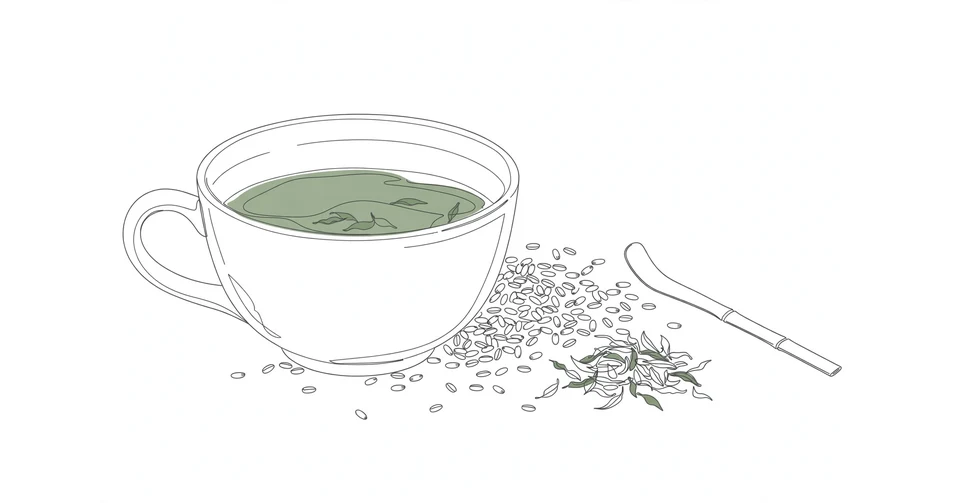
That cup is the reason this tea deserves its own story. Genmaicha began as a practical way to stretch expensive tea with cheap rice, and it ended up as one of the most comforting drinks in Japan. It is the tea that shows up beside sushi, inside ochazuke, and in quiet kitchens late at night, and it never asks for ceremony to be enjoyed.
What genmaicha actually is
Genmaicha is a Japanese green tea combined with roasted popped brown rice. The blend usually starts with bancha, a later harvest green tea that is coarser and milder than the first flush leaves, though some blends use sencha instead. The rice is toasted until it turns golden brown, and a few grains pop during roasting, which is why the tea is sometimes called popcorn tea. The result is a light yellow cup that tastes of green tea and toasted grain at once, as Wikipedia explains in its short entry on the tea.
The balance matters more than the recipe. Too much rice and the cup tastes like a grain drink with tea in the background. Too much leaf and the roast disappears. A traditional blend runs about one part tea to one part rice, though every maker has its own ratio, and the good ones guard it the way a cook guards a family recipe. When the balance is right, neither side wins. The green tea brings freshness and a mild grassy note, and the rice brings warmth, body, and a nutty sweetness that softens the whole cup.
That softness is the first thing most drinkers notice. Plain green tea can be sharp, especially when the water is too hot or the leaves steep too long. Genmaicha forgives those mistakes. The roasted rice smooths the edges, and the cup stays drinkable even when the brewing is a little careless. I think that is part of its charm. It is a tea that does not punish a beginner, and it rewards a careful brewer all the same.
There is also a stronger version worth knowing. Matcha-iri genmaicha has powdered green tea added to the blend, which deepens the color toward green and sharpens the flavor. It looks more like a classic green tea and tastes a little bolder, but the roasted rice is still there underneath, keeping the cup warm and round. If plain genmaicha feels too gentle for you, the matcha version is the natural next step.
The name that explains the cup
Japanese tea names are often plain descriptions, and genmaicha is one of the plainest. Genmai means brown rice, the unpolished grain with its bran layer still on, and cha means tea. Put them together and the name says exactly what is in the cup, brown rice tea. There is no poetry in the name, no reference to a mountain or a season, and that honesty suits the drink.
The name also explains why the tea spread so widely. Rice was the staple food of Japan, cheap and present in every household, while tea was a luxury that many families could only afford in small amounts. Mixing roasted rice into the leaves made the tea go further, and the blend picked up a nickname that stuck, the people's tea. Wikipedia notes that the rice served as a filler and reduced the price of the tea, making it historically more available for poorer Japanese, and that today all segments of society drink genmaicha. The name never changed, even after the drink stopped being poor.
That history sits inside every cup, whether the drinker knows it or not. Genmaicha tastes like a solution to a real problem, not like a product invented for a shelf. It is food thinking applied to drink, the same instinct that turns leftover rice into a meal and leftover vegetables into pickles. Japan has a word for the reluctance to waste anything, mottainai, and genmaicha is mottainai you can drink.
A history with more than one beginning
Ask where genmaicha came from and you will get more than one answer, and the honest thing is to say so rather than pick one story and call it history. The explanation most often given is practical. In the Edo period, when tea was expensive, households stretched it with roasted rice, which was cheap, filling, and pleasant in the cup. By the Edo period the blend was common among working class Japanese, and it kept its reputation as an everyday drink rather than a tea for ceremony.
A more specific telling places its rise in Kyoto in the 1920s or 1930s, when a tea merchant is said to have roasted leftover New Year rice cakes and stirred them into his tea. Another version credits farming households in the Tohoku region, who roasted their own rice and mixed it with tea at home. What the versions share is the same idea, that someone with more rice than tea found a way to make both go further, and the result tasted good enough to keep making.
Then there is the legend, and it is a good story even if it is almost certainly not true. A servant named Genmai is said to have dropped grains of roasted rice from his sleeve into his samurai master's tea, and the master, after punishing the servant, tasted the tea and found it delicious. The tale is dramatic, and it is also convenient, since it turns the name of the tea into a man's name. Historians treat it as folklore, and the name is far more simply explained by the words for brown rice and tea. I enjoy the legend the way I enjoy any good story told beside a pot of tea, but I would not repeat it as fact.
One detail from the older sources is worth keeping, because it says something real about the drink. Genmaicha was also used by people fasting for religious purposes, or by people who found themselves between meals for long periods, because the rice takes the edge off hunger. That is not a health claim and it is not magic. It is simply what happens when a drink contains a little food. A cup of genmaicha is a small meal in the way that a cup of plain tea never is, and people who worked long hours without eating understood that before anyone wrote it down.
How genmaicha is made
Making genmaicha has two halves, and each half is simple on its own. The first half is the tea. Bancha leaves are picked later in the season than the tender first flush leaves used for sencha, which makes them coarser, lower in caffeine, and milder in flavor. They are steamed, rolled, and dried in the usual way for Japanese green tea, and then they wait for the rice.
The second half is the rice, and it is where the character of the tea is made. Brown rice is soaked, steamed, and then roasted at high heat until the grains turn golden brown. Some of them pop, the same way corn pops, and those popped grains are the pale, puffy pieces you can see in the dry blend. The roasting is a matter of judgment. Too light and the tea tastes flat. Too dark and the rice turns bitter and swallows the green tea underneath. A good roaster watches the color and the smell, and stops when the grain smells like toasted bread rather than burnt grain.
Once both halves are ready, they are mixed and packed. The blend keeps best in a cool, dark place in a sealed container, and like all green tea it loses its freshness over months rather than years. A bag of genmaicha that has sat open in a warm kitchen will still make a drinkable cup, which is part of its forgiving nature, but the roasted aroma fades first, and with it goes the reason to drink this tea at all. Freshness matters here more than it does for hojicha, whose roast is in the leaf itself and holds longer.
There is one more thing to notice when you look at the dry leaves. Genmaicha looks untidy next to the neat, needle shaped leaves of sencha or gyokuro. The blend is a mix of flat leaves, round brown grains, and white popped pieces, and it looks more like a handful of trail mix than a refined tea. I like that about it. The cup does not try to look expensive, and the taste does not need it to.
What genmaicha tastes like
The flavor of genmaicha is easier to recognize than to describe, but it helps to break it into parts. The first thing you notice is the smell, warm and toasty, with a hint of popcorn and a trace of something like roasted chestnut. The second is the color, a light yellow that is paler than most green teas, with a golden edge from the rice. The third is the taste, which arrives in two layers, the fresh grassy note of the green tea first, and then the nutty warmth of the roasted rice settling underneath.
The rice changes the texture of the cup as well as the flavor. The sugar and starch from the grain give the tea a warm, full, nutty character, and the cup feels rounder in the mouth than plain green tea. It is considered easy to drink, and many drinkers find it settles the stomach, which is one reason it shows up after meals rather than before them. The flavor is mild rather than strong, and that mildness is the point. Genmaicha does not demand attention. It offers comfort and waits for you to notice.
The closest comparison in the kitchen is the smell of rice cooking in a Japanese home, that warm, slightly sweet steam that fills the room when the rice cooker clicks open. Genmaicha carries a little of that smell into the cup, which may be why it feels so familiar even to people who have never tasted it before. Rice is the background flavor of Japanese life, and this tea brings it to the front for a moment.
One honest warning belongs here. Genmaicha can taste thin when it is made from a cheap blend with too little tea, or stale when the rice has lost its roast. If your cup tastes mostly like warm water with a faint hint of toast, the problem is usually the blend or its age, not the brewing. A good genmaicha should taste clearly of both parts, green tea and roasted rice, and if one of them is missing, it is time for a fresher bag.
Genmaicha, sencha, and hojicha side by side
The easiest way to understand genmaicha is to place it next to the two teas people confuse it with, sencha and hojicha. All three are Japanese green teas, and all three come from the same plant, but they are made and drunk in very different ways.
Sencha is the standard Japanese green tea, steamed leaves brewed on their own. It is bright, grassy, and sometimes a little sharp, with a fresh green color and a clean finish. It has no rice in it at all, and its flavor comes entirely from the leaf. If you want to taste what Japanese green tea is at its most direct, sencha is the cup to drink. Genmaicha takes that same family of flavor and softens it, trading some of the brightness for warmth and body.
Hojicha is the one people mix up with genmaicha most often, because both taste roasted. The difference is what gets roasted. In hojicha, the tea leaf itself is roasted, which turns the leaves brown and gives the cup a dark, toasty, almost coffee like flavor. In genmaicha, the leaf is not roasted at all. Only the rice is roasted, and the leaf underneath stays green. That is why genmaicha tastes both fresh and toasty at once, while hojicha tastes toasty all the way through. Hojicha also tolerates hotter water, around 90 to 95 degrees, while genmaicha prefers cooler water, which is one more sign that its leaf is still a green tea at heart.
The caffeine difference is real but modest. Because part of the blend is rice rather than leaf, a cup of genmaicha contains less caffeine than the same amount of pure sencha, and the bancha base is lower in caffeine to begin with. It is not caffeine free, and anyone who avoids caffeine entirely should choose mugicha, roasted barley tea, instead. But for an evening cup, or for a second pot after dinner, genmaicha is the gentler choice among the green teas, and that is one more reason it has become the tea of the table rather than the tea of the ceremony.
How to brew genmaicha at home
Genmaicha is one of the most forgiving Japanese teas to brew, and that is good news for anyone who does not own a thermometer or a scale. The method below follows the brewing guide from Hibiki-an, a Kyoto tea shop, which gives 8 grams of leaf for 200 milliliters of water at 80 degrees Celsius, steeped for one minute. Most other guides land in the same range, around 80 to 85 degrees for one to two minutes, so that is a safe place to start.
Begin by warming the pot and the cups with hot water, then pour that water away. This sounds fussy, but it serves two purposes. It warms the cups so the tea does not cool too fast, and it drops the temperature of freshly boiled water down toward the 80 degrees the leaves want. If you have a thermometer, use it. If you do not, let boiling water sit for a minute or two, or pour it into the cups first and then into the pot, and you will be close enough.
Measure about one heaped tablespoon of genmaicha per cup, or about 5 grams per 200 milliliters if you are weighing it. The blend is bulky because of the rice, so a spoonful looks like more than it weighs. Put the leaves in a small teapot, a kyusu with a built in strainer is ideal, and pour the hot water over them. Steep for about one minute, then pour out every last drop. Water left sitting on the leaves keeps brewing and turns the next cup bitter, so a full pour matters more than a precise timer.
The leaves will give you two or three infusions. The second steep can use slightly hotter water and a shorter time, around 30 seconds, and it will taste a little more of green tea and a little less of rice, since the rice gives up most of its flavor in the first pour. That shift is not a flaw. It is the blend changing as you drink it, and the third cup is often the quietest and the most refreshing of the three.
Some recipes take a different road and use near boiling water with a very short steep, around 30 seconds, which suits the roasted rice and keeps the leaf from overextracting. The guides disagree on this point, and the disagreement is worth knowing about rather than hiding. My own habit is the cooler, longer steep, because it is easier to repeat and harder to get wrong, but if you like a bolder cup, try the hot, short version once and see which one you prefer. Either way, do not steep for three minutes and hope for the best. The rice can take it, but the green tea cannot, and the cup will turn bitter.
Cold brewing is the summer version, and it is simpler than it sounds. Put a generous spoonful of genmaicha in a bottle of cold water, leave it in the fridge for a few hours, and strain it. The result is sweet, smooth, and very toasty, with almost no bitterness, and it keeps well for a day. On a hot afternoon in Shizuoka, when the air is thick and the tea fields are shimmering in the distance, a cold glass of genmaicha is one of the best drinks I know.
Where to drink genmaicha in Japan
You do not need to hunt for genmaicha in Japan, because it comes to you. It is the tea that sushi restaurants pour without asking, the tea that sits in a pot on the table at a neighborhood diner, and the tea that a ryokan leaves in the room beside the kettle. If you eat a meal in Japan and a pot of tea arrives with it, there is a good chance that the tea is genmaicha, and that is the highest praise a drink can earn. It is the default, the tea a place serves when it wants everyone at the table to be happy.
For a better cup, go to a tea shop. Kyoto and Uji, the old tea country south of the capital, have shops that have sold tea for generations, and their genmaicha is made with better leaves and fresher rice than the blends in a supermarket. Shizuoka, where I live, is Japan's largest tea producing prefecture, and its tea shops carry genmaicha made from local bancha, which tastes a little greener and a little fresher than the blends from further west. Ask the shopkeeper which blend they recommend for everyday drinking, and you will usually get an honest answer and a small sample to take home.
Department store food halls are another good place to look. The basement floors of a Japanese department store hold tea counters where you can smell the blends before you buy, and the staff will often brew a sample if you ask. Tea bags are the easiest way to start, and there is no shame in them. A good tea bag of genmaicha, brewed for a minute in a mug, makes a better cup than a careless pot of loose leaf, and it travels well in a suitcase.
The setting matters less than the company. Genmaicha belongs to the kind of slow, ordinary moment that the Japanese tea ceremony honors in a formal way, and the story of the Japanese tea ceremony and the art of slowing down is worth reading if you want to understand what that slowness means. Genmaicha is the everyday version of the same idea, a small pause in a normal day, taken with a warm cup in both hands rather than a bowl prepared by a master. Both are worth having.
Why genmaicha pairs so well with food
Genmaicha is a food tea before it is a tasting tea, and that is the key to its place in Japanese eating. The roasted rice gives it a savory, almost grain like quality that sits comfortably next to salty and oily food, while the green tea underneath cleans the palate between bites. It does the same job that a glass of water does at a meal, but with more character, and it never fights the food for attention.
Sushi is the classic pairing, and it is no accident. A piece of raw fish with vinegared rice asks for something warm and mild beside it, and genmaicha answers without overwhelming the fish. Grilled fish works the same way, and so does tempura, where the tea cuts through the oil and leaves the mouth ready for the next piece. Onigiri, the rice balls that fill lunchboxes and convenience store shelves across Japan, pair naturally with a cup of genmaicha, since the tea echoes the rice in the food and turns a snack into a small meal.
The most literal pairing is the one this article grew out of. In ochazuke, rice with hot tea poured over it, genmaicha is the natural tea to pour, because the bowl already contains rice and the tea doubles the flavor instead of competing with it. The roasted rice in the tea meets the plain rice in the bowl, and the whole dish tastes more complete than either part on its own. If you have never tried ochazuke, pour genmaicha over a bowl of rice with a pickled plum and a little salmon, and you will understand the pairing in a single spoonful.
Sweet food works too, though it surprises people. A piece of yokan, the sweet bean jelly served with tea, or a small wagashi cake, tastes better with genmaicha than with plain green tea, because the roast in the cup answers the sweetness on the plate. I have also come to like genmaicha with a simple breakfast of toast and egg, which is not traditional at all, but the nutty flavor sits happily next to bread in a way that grassy sencha never quite does. Traditions are guides, not fences, and a tea this forgiving invites experiments.
There is a practical lesson here for anyone building a meal. When the food is rich, salty, or oily, reach for genmaicha. When the food is delicate, like sashimi or a clear soup, reach for sencha and let the tea stay quiet. When the food is gone and the table is being cleared, reach for genmaicha again, because it is the tea that turns the end of a meal into a moment of its own.
A humble cup worth keeping
Genmaicha began as a way to make expensive tea go further, and it could have disappeared once tea became cheap and plentiful. It did not, because the blend turned out to be good on its own terms. The roasted rice was never just a filler. It was a flavor that belonged in the cup, and once people tasted it, they kept drinking it for the taste rather than the price.
That is the story I keep coming back to. Some of the best things in Japanese food started as a practical answer to a hard time, a way to stretch what was scarce into enough for everyone. Ochazuke, pickles, and genmaicha all belong to that family, and all of them survived because they were good, not because they were cheap. Frugality made them. Flavor kept them.
If you have never tried genmaicha, start with a tea bag and a mug and a minute of patience. Smell it before you drink it, notice the rice in the cup, and pay attention to the moment the green tea gives way to the toast. Then make it again the next day, and the day after that, until it becomes part of your routine. Some teas impress you once. Genmaicha grows on you slowly, one warm cup at a time, and that slow growth is exactly the point.
More in Food & Travel
- Mugicha Is the Barley Tea Japan Pours All Summer Long
- Bancha Is the Everyday Tea Japan Drinks Without Thinking
- Hojicha Is the Roasted Tea Japan Reaches for After Dinner
- Kakigori and the Thousand-Year History of Japan's Shaved Ice
- Takuan Turns a Humble Daikon Into Japan's Yellow Crunch
- Nukazuke Is the Living Pickle Bed Japan Feeds Every Day
Latest posts
- Chusonji Is the Mountain Temple That Outlasted Its Golden Age
- A Pure Land Garden Is a Paradise You Can Walk Through
- Sagemono Are the Hanging Treasures Samurai Wore at the Waist
- Oshu Fujiwara Built a Golden Capital in the North
- Harajuku and the Tokyo Streets Where Fashion Refuses to Sit Still
- Fujiwara no Kiyohira Turned War Into Gold
- Motsu-ji Keeps Hiraizumi's Pure Land Garden Alive
- Hiramaki-e Keeps the Gold Flat and Lets the Picture Speak
- Chuson-ji Is the Mountain Temple That Guarded the Golden Hall
- Urushi Kabure Is the Rash Lacquer Apprentices Learn to Live With
- Konjikido Is the Golden Hall That Outlived a Fallen Capital
- Hidehira-Nuri Keeps Hiraizumi's Golden Age in Lacquer
- Urushiol Is the Itch Behind Japan's Most Beautiful Lacquer
- Wajima-nuri Is the Lacquer That Survives Being Dropped
- Tsugaru-nuri Hides Four Seasons of Colour Under the Lacquer