Harajuku and the Tokyo Streets Where Fashion Refuses to Sit Still
· 8 min read
Harajuku is the Tokyo district where street fashion was invented again and again, from Takenoko dancers to Lolita, and it still rewards anyone who looks past the crowds.
Harajuku is the Tokyo district where fashion goes to be invented. Walk out of JR Harajuku Station on a Sunday afternoon and the first thing you notice is not a shop or a sign, it is the clothes. Teenagers in platform boots and oversized bows share the pavement with office workers, tourists, and grandmothers on their way to the shrine. Few places in Japan pack this much self-expression into so little space.
The district sits in Shibuya ward, between Shinjuku and Shibuya, and it is small enough to cross on foot in minutes. Its fame is wildly out of proportion to its size. Harajuku gave the world Lolita fashion, Decora, Visual Kei, and the street snaps of FRUiTS magazine, and it did it without a single fashion week or a single designer with a global house behind them. What it had instead was a street, a station, and teenagers with the confidence to dress exactly as they pleased.
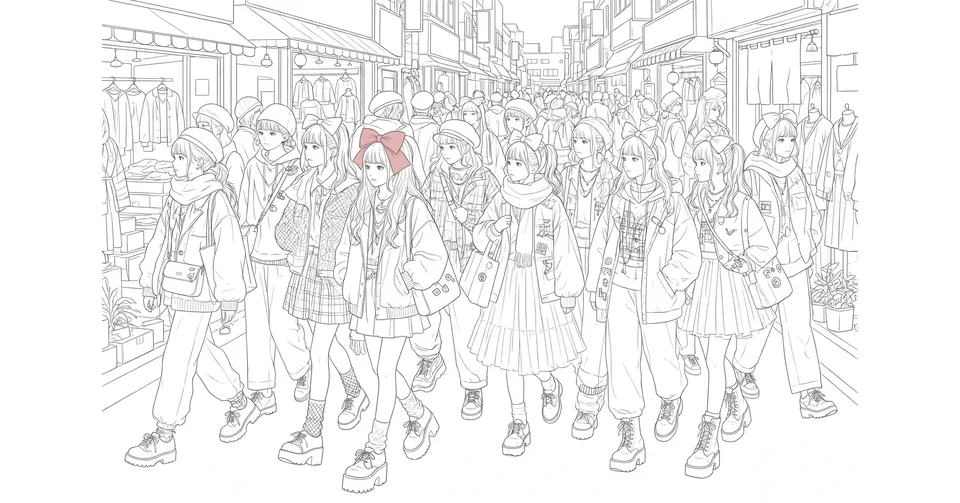
That confidence is the real story of Harajuku. The clothes change every few years, the crowds change every decade, but the permission to stand out has survived fifty years of trends, a pandemic, and a wave of souvenir shops. This is a guide to how a quiet rest stop on an old road to Kamakura became the most copied street style on earth, and how to enjoy it now that the crowds have found it too.
A rest stop that became a runway
Long before the bows and platform boots, Harajuku was a rest stop on the Kamakura Kaido, the medieval road to Kamakura. In the Edo period it was fields, temples, and samurai residences on the edge of the city, and it stayed quiet until the twentieth century gave it a station and a reason for people to pass through.
The turning point came after the Second World War. The area around the station became Washington Heights, housing for American military families, and when the Americans left, the empty buildings and cheap rents drew young Japanese with an appetite for American music and clothes. By the 1970s the first boutiques had opened, and Harajuku had found its job: it would be the place in Tokyo where young people dressed for each other, not for their parents or their employers.
The 1970s and 1980s set the pattern. MILK, founded in 1970, helped shape the Lolita look from its shop in Jingumae. In 1979 the Takenoko-zoku, teenagers in bright harem suits from Boutique Takenoko, began dancing on Sundays near the station, and their name spread across Japan through television. Harajuku was no longer a neighbourhood. It was a stage, and the whole country was watching.
The nineties and two thousands made it global. Photographer Shoichi Aoki launched FRUiTS magazine in June 1997, a monthly book of street snaps of Harajuku teenagers, and the images travelled the world on the early internet. When Aoki closed the print magazine in February 2017, he said there were no more cool kids to photograph, a line that said as much about the photographers as about the kids. The station itself, built in 1924 as the oldest wooden station in Tokyo, was rebuilt between 2017 and 2019, and the new station opened on 21 March 2020 a few dozen metres from the old one. A good overview of the district's history and its main sights is kept by the team at Kanpai Japan.
Takeshita Street, 350 metres of noise
Every story about Harajuku passes through Takeshita Street, the narrow pedestrian lane that runs about 350 metres from the station. It is the beating heart of the district, and on a weekend it feels like a festival that forgot to end. The shops are small, the signs are loud, and the pavement is a slow river of people moving at the speed of the slowest phone camera.
The street sells the whole Harajuku menu in one walk. Boutiques mix Lolita dresses with punk jackets and vintage denim, accessory stalls sell bows by the dozen, and the food is built for photographs: rainbow cotton candy, crepes from Marion Crepes, open since 1976, and ice cream in colours that do not occur in nature. Purikura photo booths, the sticker booths that print decorated portraits, are still here too, a reminder that Harajuku was making pictures of itself long before the smartphone.
Go early if you can. Takeshita Street is at its best before ten in the morning, when the shutters are still coming up and you can actually see the shopfronts. Come on a weekday if your schedule allows it, and treat the street as the beginning of a walk rather than the whole of it. If the crowds get too much, the side streets and the nearest convenience store offer a five minute breather before you go back in. The best of Harajuku is not on this one lane, and the crowds know it too.
The styles that started in Harajuku
It is hard to name another district of this size that has produced so many named styles. Each one began as a small group of teenagers dressing alike, and each one ended up in fashion histories and museum exhibitions. Harajuku did not invent dressing up, but it invented the idea that a street could be a fashion laboratory, and the experiments are still running.
| Style | What it looks like | Where it started |
|---|---|---|
| Lolita | Victorian-inspired dresses, lace, bows | 1970s boutiques such as MILK |
| Decora | Layers of bright accessories, hair clips, colour | 1990s Takeshita Street |
| Visual Kei | Dramatic hair, make-up, rock band looks | 1980s music scene |
| Gyaru | Tanned skin, bleached hair, bold make-up | 1990s youth culture |
| Ura-Harajuku streetwear | Sneakers, oversized hoodies, vintage mix | Back streets behind Omotesando |
None of these styles asked for permission, and none of them stayed in Harajuku for long. Lolita spread to Paris and Los Angeles, Visual Kei filled concert halls, and streetwear from the back streets ended up on runways in New York. That is the district's real export. It is not a dress or a bow, it is the idea that clothes can be a language, and that anyone can learn to speak it.
Beyond the crowds
Step off Takeshita Street and Harajuku changes character in a single block. Omotesando, the wide avenue to the south, is the district's other face: flagship stores in buildings by famous architects, earning it the nickname of Tokyo's Champs-Elysees. The contrast is the point. In Harajuku, a five hundred yen accessory and a five hundred thousand yen coat can sit two streets apart, and nobody finds that strange.
Walk the other way and you reach the Meiji Shrine, one of Tokyo's most visited shrines, set in a forest that feels a world away from the crowds. Its neighbour, Yoyogi Park, is where Harajuku's teenagers go to be themselves on a Sunday: dance groups rehearsing, musicians playing, families picnicking under the trees. If you come in spring, the park's cherry blossoms are one of the city's best free shows, and they are the reason many first-time visitors fall for Harajuku before they have bought a single thing.
Between the two, Cat Street and the back lanes of Ura-Harajuku hold the independent shops that made the district's name: vintage stores, small labels, and cafes that do not appear in the guidebooks. This is where the district still feels like itself, and it is where a first-time visitor should spend the second hour, after the first hour on Takeshita Street. The travel writers at Japan Nakama keep a practical guide to the same streets, with food stops and shop picks that go beyond the main lane.
Harajuku today
It would be dishonest to pretend nothing has changed. The street fashion that filled FRUiTS has thinned since its peak in the nineties and two thousands. Many of the independent shops have been replaced by souvenir stalls and chain cafes, and young Tokyoites who once dressed up for Harajuku now gather in Shin-Okubo instead. A first-time visitor on a Sunday will find more tourists than locals on Takeshita Street, and the cosplayers who once posed by the station bridge are rarer than the guidebooks suggest.
That is not the end of the story, and it would be a mistake to write the district off. Harajuku has reinvented itself every twenty years for half a century, from American housing to rockabilly to Lolita to streetwear, and every reinvention was declared dead by someone who arrived too late for the last one. The permission to stand out is still the product here, and it is still on sale. I think the honest way to visit is to accept both versions at once: the crowded postcard street and the quiet lanes behind it, the global brand and the handmade bow. One stop south on the Yamanote line, Shibuya Crossing shows the same city at a different scale, and the two together make a good afternoon.
Come for the clothes, stay for the walk, and leave time for the shrine. Harajuku rewards the visitor who treats Takeshita Street as a door rather than a destination, and who is willing to turn one corner past the crowds. The fashion will have changed by the time you come back, and that is exactly the point.
More in Life & Style
- Tenugui Is the Thin Cotton Cloth Japan Uses for Everything
- Japanese Stationery and the Small Tools Japan Takes Seriously
- Osouji Is the Cleaning Japan Does Before the Gods Arrive
- Inside Japan's 100 Yen Shops, Where Everything Costs a Coin
- Akihabara and How Tokyo's Electric Town Learned to Sell Everything
- Kotatsu, Japan's Heated Table That Warms Winter
Latest posts
- Sagemono Are the Hanging Treasures Samurai Wore at the Waist
- Oshu Fujiwara Built a Golden Capital in the North
- Fujiwara no Kiyohira Turned War Into Gold
- Motsu-ji Keeps Hiraizumi's Pure Land Garden Alive
- Hiramaki-e Keeps the Gold Flat and Lets the Picture Speak
- Chuson-ji Is the Mountain Temple That Guarded the Golden Hall
- Urushi Kabure Is the Rash Lacquer Apprentices Learn to Live With
- Konjikido Is the Golden Hall That Outlived a Fallen Capital
- Hidehira-Nuri Keeps Hiraizumi's Golden Age in Lacquer
- Urushiol Is the Itch Behind Japan's Most Beautiful Lacquer
- Wajima-nuri Is the Lacquer That Survives Being Dropped
- Tsugaru-nuri Hides Four Seasons of Colour Under the Lacquer
- Shunkei-nuri Lets the Wood Grain Shine Through the Lacquer
- Takamaki-e Raises Gold Off the Lacquer Until You Can Feel It
- Shibayama Turns Shell Ivory and Coral Into Small Paintings in Lacquer