Japan Goes Maple Hunting Every Autumn and Calls It Momijigari
· 15 min read
momijigari is Japan's autumn tradition of going out to hunt for red maple leaves, a thousand-year-old outing that turns an ordinary walk into a small ceremony of looking.
Every autumn, Japan goes hunting, and the hunt has a name, momijigari. The prey is a leaf, the weapon is a pair of eyes, and the whole country seems to join in. From the mountains of Hokkaido to the temple gardens of Kyoto, people plan their weekends around a single question: where are the maples at their reddest right now?
The name for this hunt is momijigari. It is one of Japan's oldest seasonal pleasures, older than most of the temples people visit to enjoy it, and it is still going strong. Families, couples, photographers, and lone walkers all take part, and they all do it for the same reason. For a few short weeks, the ordinary landscape turns extraordinary, and the only way to catch it is to go outside and look.
A momijigari outing is simple at its core. You pick a place famous for its maples, you go at the right week, and you walk slowly among the trees. But behind that simplicity sits a thousand years of poetry, court manners, and local food, and that is what makes momijigari more than a walk in a pretty park. It is a ritual Japan has been refining since the days when emperors ruled from Kyoto.
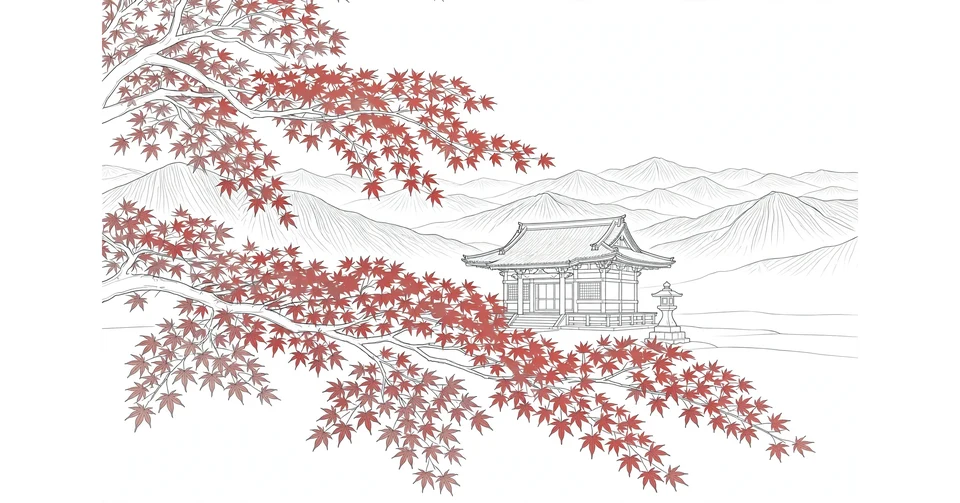
The word itself gives the game away, and it is worth pausing over. Momijigari is written with characters that mean red leaves and hunting, and it is often translated as maple hunting or autumn leaf hunting. Nobody is expected to stalk a maple through the woods. The hunting is the search: choosing a valley, climbing a hill, and finding the trees at their best. The word momijigari captures something honest about the activity. You do not wait for autumn to come to you. You go out and find it.
What momijigari actually means
The first half of the word does most of the work. Momiji usually means the red leaves of the Japanese maple, the small elegant tree known as Acer palmatum. The same characters can also be read as koyo, which means colored leaves in general, every deciduous tree that turns red, orange, or gold. So momijigari is literally a hunt for red leaves, but in practice it covers the whole autumn show, maples, ginkgo, and everything else that catches fire in November.
The second half is where the poetry lives. Gari means hunting, and it once meant hunting animals. Over centuries the word stretched to cover the seeking of beautiful things in nature, flowers in spring, mushrooms in autumn, and finally the leaves themselves. There is a gentle joke inside the word: the court nobles who invented the pastime could not bring themselves to say they were simply going for a walk to look at trees, so they called it hunting instead. Walking on dirt paths was considered vulgar for people of their rank, and hunting sounded like a proper expedition. The joke has lasted a thousand years, which tells you something about how seriously Japan takes its seasons.
What makes momijigari different from simply admiring autumn leaves is the intention. You do not stumble on the colors on your way to work and call it momijigari, although the colors may be just as beautiful. Momijigari is a deliberate outing, planned in advance, with a destination, a time, and often a meal attached. It is the autumn twin of hanami, the spring cherry blossom viewing, and it carries the same spirit: go out together, look slowly, eat well, and mark the season before it passes.
How momijigari began with Heian aristocrats
The custom is usually traced to the Heian period, which ran from 794 to 1185, when Kyoto was the imperial capital and the court lived by poetry, music, and the turning of the seasons. In spring, aristocrats could admire cherry blossoms in their own gardens. Autumn was different. The finest maples grew in the mountains, so the nobles had to travel to find them, and travel they did, in ox carts and palanquins, out to the hills around Kyoto to compose poems beneath the red trees.
Autumn leaves appear again and again in the literature of that age. The Kokin Wakashu, a poetry anthology compiled in the early tenth century, is full of poems about falling maple leaves. The Tale of Genji, composed around the beginning of the eleventh century, has a whole chapter called Momiji no Ga, often translated as Beneath the Autumn Leaves, in which the court gathers for music and dance under the maples. These were not travel guides. They were the record of a court that treated the seasons as something to be studied, celebrated, and written down.
For centuries momijigari stayed a pastime of the wealthy. Ordinary people had neither the time nor the freedom to travel for the sake of looking at trees. That changed in the Edo period, which ran from 1603 to 1868. By the middle of the eighteenth century, the custom had spread to townspeople, and rich merchants began holding banquets under the maples just as the nobles once had. The outing had gone from court ceremony to public holiday, and it has stayed that way ever since.
I find this part of the story quietly moving. A habit that began with emperors and poets now belongs to anyone with a train ticket and a free afternoon. The leaves do not care who is looking at them, and that may be the most democratic thing about Japanese culture. Beauty that was once fenced off behind palace walls now grows in public parks, and the only price of admission is showing up at the right week.
Momijigari is not the same as admiring koyo
It helps to keep two words apart. Koyo is the phenomenon, the turning of the leaves, and the season itself. Momijigari is the activity, the going out to see it. You can admire koyo from your apartment window. Momijigari requires you to leave the apartment.
The distinction matters because Japan treats koyo as a national event, almost like a weather system. The color front moves south from Hokkaido starting in mid September and reaches the lower elevations of central and southern Japan around late November, with some trees in Tokyo and Kyoto staying colorful into December. Forecasts track it the way other countries track storms, and newspapers publish weekly maps of where the red is best. A full account of that forecasting habit is told in the companion piece on how koyo turns Japan into a country that forecasts leaves, and the forecasts are exactly what a momijigari planner consults before choosing a date.
Momijigari, then, is the human answer to the koyo front. The forecast tells you where the color is, and momijigari is the act of going there. One is nature, the other is culture, and the two have been dancing together for more than a thousand years. Spring has its own version of the same dance. Cherry blossom viewing by day is hanami, and the same blossoms after dark become yozakura, Japan's cherry blossoms after dark. Autumn answers with momijigari by day and illuminated maple gardens by night, and the country loves both seasons with equal seriousness.
The ritual and etiquette of a momijigari outing
There is no rulebook for momijigari, and nobody will test you on it. But there is a shared understanding of how the outing should feel, and it is worth knowing before you go.
First, slowness is the point. A momijigari outing is not a hike with a summit to conquer. The best walkers stop often, look up, and let the canopy do its work. At a temple garden, the classic move is to sit on a veranda or a bench and simply watch the leaves for a while. The Japanese word for the feeling this produces is mono no aware, an awareness of impermanence, the bittersweet knowledge that the beauty in front of you will fall within days. You do not rush past it. You sit with it.
Second, quiet matters, especially at temples and shrines. Many of the famous momijigari spots are places of worship, and the other visitors may be praying. Keep your voice low, switch your phone to silent, and do not block a path while taking a photograph. At the busiest gardens, staff guide the flow of people along one-way routes, and the polite thing is to follow the flow rather than doubling back against it.
Third, look but do not strip. Do not pull branches from the trees or pick leaves off them, and stay on the paths in gardens where the ground is planted with moss. A fallen leaf on the path is a souvenir; a branch torn from a living maple is damage. The trees at places like Tofuku-ji are centuries old, and they will be there long after your visit. Treat them as hosts, not as props.
Fourth, bring food, or plan to eat nearby. The outing traditionally ends with something warm or sweet, and the villages and temple towns around the famous spots are built for exactly that. A thermos of tea in a park, a bowl of noodles in a mountain town, or a sweet from a stall by the path all count. The meal is part of the ritual, not an afterthought, and it is where the group talks about what it has just seen.
Where to go for momijigari
Japan has hundreds of famous maple spots, and every prefecture has its local favorite. The classics, though, are classics for a reason. The table below lists some of the best known, with the weeks they usually look their best. Treat these as typical windows, not promises. A warm autumn delays the color, a cold snap brings it early, and the forecasts move with the weather.
| Place | Region | Typical best weeks | | Tofuku-ji Temple | Kyoto | Mid November to early December | | Eikando Temple | Kyoto | Mid November to early December | | Kiyomizu-dera Temple | Kyoto | Mid November to early December | | Nikko and Lake Chuzenji | Tochigi | Late October to mid November | | Momijidani Park | Miyajima, Hiroshima | Mid to late November | | Rikugien Garden | Tokyo | Late November to early December | | Lake Kawaguchiko | Yamanashi | Late October to mid November | | Mount Takao | Tokyo | Mid November to early December |
Kyoto is the heart of momijigari, and Tofuku-ji is its most famous stage. The temple's Tsutenkyo bridge crosses a valley filled with maples, and at peak color the view from the bridge is a sea of red with the temple roofs floating in it. Eikando is smaller and quieter, with a pond that mirrors the trees, and Kiyomizu-dera sets its maples against the wooden stage that hangs over the hillside. All three are crowded at peak, so an early morning visit is worth the alarm clock.
Nikko is the mountain answer to Kyoto. The shrines and temples of Nikko sit among forests that turn earlier than the cities, and the road up to Lake Chuzenji passes through valleys of gold and red. The air is colder there, the crowds thinner, and the combination of sacred architecture and wild color feels older and wilder than Kyoto's polished gardens.
Momijidani, the Maple Valley on the island of Miyajima, carries the word momiji in its very name. The valley behind the famous floating torii gate is planted with maples, and the walk up through the valley is one of the gentlest momijigari outings in Japan. You can pair it with the island's deer, its shrine, and its maple sweets in a single unhurried day.
Tokyo's own options are easy to reach. Rikugien Garden, a traditional landscape garden in the north of the city, lights its maples in the evening during the season, and the reflections in its pond are among the most photographed scenes in the capital. Mount Takao, an hour west of the center, offers a mountain walk through maple forest with a cable car for tired legs. For timing and practical planning, the autumn leaves guide on japan-guide.com tracks the koyo front as it moves south and lists the best viewing spots across the country, and it is the page I would check first before fixing a date.
Food and drink that belong to momijigari
An outing built around looking deserves food built around the same leaves, and Japan has obliged. The most famous is momiji tempura from Minoh, a small city in the hills just north of Osaka. Real maple leaves are preserved in salt for about a year, then coated in a sweet batter of flour, sugar, and white sesame and deep fried until crisp. The result is a golden, leaf-shaped snack that tastes faintly sweet and toasty. Local tradition traces the idea back some 1,300 years to the mountain ascetic En no Gyoja, who is said to have fried maple leaves for travelers near Minoh Falls. Treat that as legend rather than documented history, but the snack itself is very real, and the stalls along the walking path to the falls sell it all year.
Miyajima answers with momiji manju, a maple-leaf-shaped cake filled with sweet red bean paste, created in the early 1900s to represent the Momijidani valley. Today it comes in many flavors, from chocolate to custard, and a fried version called age-momiji, a momiji manju coated in batter and fried like tempura, is sold by a confectioner on the island. Eating one while looking up at the valley that inspired it is a small, satisfying circle.
Beyond the maple sweets, the season has its own flavors. Sweet potatoes roasted on street corners, chestnuts sold warm in paper bags, hot amazake at shrine stalls, and oden simmering in convenience stores all belong to the same cold-weather mood. A momijigari picnic often includes onigiri and tea, eaten on a bench under the trees. The food is simple, and that is the point. You are not there for a feast. You are there for a leaf, and the food is the warm punctuation at the end of the sentence.
How to do momijigari well on your first visit
If you have never done momijigari before, the whole thing is forgiving. There is no test, no ticket, and no wrong way to look at a tree. A few practical habits, though, will make the day better.
Check the forecast, not the calendar. The color moves with temperature, so a fixed date is a gamble and a forecast is a plan. The Japan National Tourism Organization describes mid November to early December as the period when trees turn vivid hues of red, orange, and yellow in much of the country, with Hokkaido turning earlier, and its autumn in Japan guide is a good place to start planning the trip around the season.
Go early or go on a weekday. The famous gardens are beautiful at 9 in the morning and exhausting at noon on a Sunday. If you can only go on a weekend, arrive at opening time, see the most famous view first, and save the quieter corners for later when the crowds peak.
Dress for standing still. Walking keeps you warm, but momijigari involves a lot of standing and looking, and November shade is cold. Layers, a warm drink, and shoes you can walk in for hours matter more than a camera. Bring the camera anyway, but do not spend the whole visit behind it. The leaves look better when you look at them directly, and the photograph will still be there after you have finished looking.
Combine the outing with something else. A temple and a lunch, a mountain walk and an onsen, a garden and an evening illumination. Momijigari works best as the centerpiece of a day rather than the whole day, because an hour of intense looking is enough to fill you up, and the rest of the day can be spent talking about it.
Finally, let the day be short on purpose. The Heian aristocrats understood something that modern travelers often forget: a pleasure scheduled too long stops being a pleasure. Go, look, eat something warm, and go home while the colors are still bright in your memory. The leaves will fall whether you stay or not, and the memory of them is the real souvenir.
Why momijigari still matters
Japan has faster pleasures now, neon, bullet trains, and screens that never sleep. Momijigari is the opposite of all of that. It is slow, quiet, free, and over in a few weeks. You cannot buy a better version of it, you cannot watch it on a screen and have the same experience, and you cannot reschedule it once the leaves have fallen.
I think that is why it has lasted a thousand years. The custom asks very little of you. Show up, walk slowly, look up, and notice that the world has changed color since last week. In a life full of noise and deadlines, that small act of attention feels almost radical. The maples will turn again next autumn, and the year after that, and the people who go out to find them will keep calling the search by its old, honest name. Momijigari is not about hunting anything at all. It is about remembering to look.
More in Food & Travel
- Koyo Turns Japan Into a Country That Forecasts Leaves
- Momiji-Gari Is Japan's Autumn Answer to Hanami
- Momiji Turns Japan Red Every Autumn
- Japanese Castles and the Samurai Fortresses That Still Stand
- Kongobuji Still Runs the Mountain Kukai Chose
- Tenkasu Turns Tempura Scraps Into Japan's Favorite Crunch
Latest posts
- Omiyage and the Japanese Art of Bringing Something Back
- How the Katana Became the Soul of the Samurai
- The Menpo Gave the Samurai a Face Worth Fearing
- Kabuto Gave the Samurai a Helmet Worthy of His Sword
- Christmas in Japan and the Fried Chicken Dinner That Started It All
- Kiso Yoshinaka Rode Out of the Mountains and Nearly Took Japan
- Sakayaki Gave the Samurai His Signature Hairline
- The Archer on the Tower Was Hangaku Gozen
- Inside Japan's 100 Yen Shops, Where Everything Costs a Coin
- Tomoe Gozen Rode Into Battle When Women Were Told to Stay Home
- A Chonmage Is the Knot Every Sumo Wrestler Wears Before the Fan
- Onna-Bugeisha Held the Castle While the Men Were Away
- Akihabara and How Tokyo's Electric Town Learned to Sell Everything
- The Naginata Gave Japan's Women Warriors a Blade of Their Own
- How an Oichomage Turns a Wrestler Into a Sekitori