Tenkasu Turns Tempura Scraps Into Japan's Favorite Crunch
· 16 min read
Tenkasu is the crisp golden crumbs of fried tempura batter, and this small topping gives tanuki udon, takoyaki, and okonomiyaki their crunch.
Tenkasu is the crunch in the bowl. It is a spoonful of crisp golden crumbs made from fried tempura batter, scattered over noodles or folded into savoury pancakes, and it turns a plain dish into something worth paying attention to. There is no fish inside it, no prawn, no vegetable. It is batter and oil and air, and that is the whole trick.
You have probably eaten tenkasu already without knowing its name. If you have ordered tanuki udon in Tokyo, the golden crumbs on top were those same flakes. If you have eaten takoyaki from a street stall in Osaka, the light crunch inside the ball was the same topping. It is one of those ingredients that does its work quietly, in the background, and most people only notice it when it is missing.
I first paid proper attention to those crumbs at a standing noodle counter, in the minute between ordering and eating. The bowl arrived looking plain, pale broth and white noodles, and then I noticed the scatter of crumbs on top. They were crisp for about a minute, then softened into the broth and gave it a faint fried richness, and the whole bowl tasted better for it. That minute taught me more about tenkasu than any menu ever had. It is a small thing, and it asks to be eaten quickly, and it rewards you for doing so.
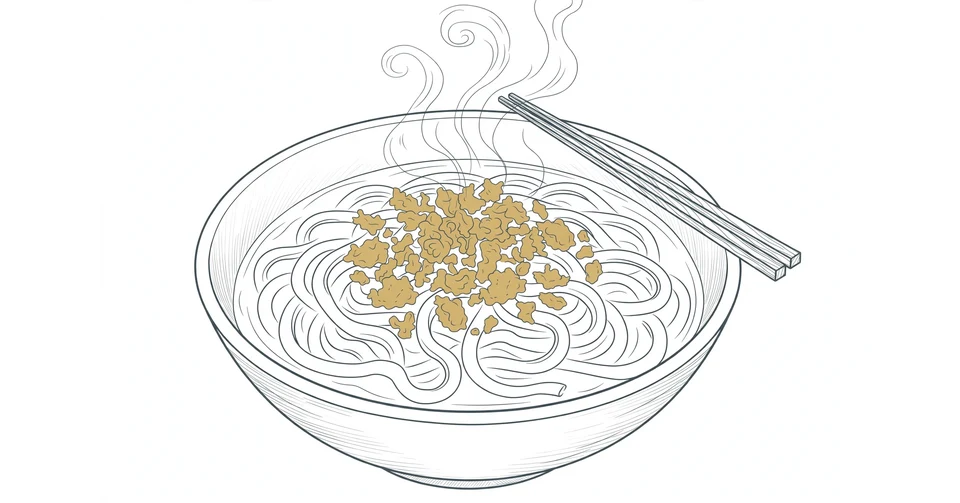
What tenkasu actually is
It is the topping that makes tanuki udon what it is, and it deserves a proper introduction of its own. Tenkasu is small crunchy bits of deep fried flour batter, the scraps left behind when tempura is fried. When a cook dips prawns and vegetables in batter and lowers them into hot oil, loose drops of batter fall into the oil and fry into crisp golden flakes. A careful cook skims them out instead of throwing them away, and those flakes are tenkasu.
The name is honest about what the stuff is. Ten means tempura, and kasu means dregs or lees, the leftover part. It is literally tempura dregs, and Japanese cooking has a long habit of turning dregs into food. Nothing is wasted if it still tastes good, and the crumbs taste good. It is light, airy, faintly oily, and it carries the flavour of fried batter without any filling inside.
That lightness is the point. A piece of tempura is rich and filling because there is a prawn or a slice of sweet potato inside the batter. Tenkasu has no filling at all, so it stays light, and it seasons a dish instead of dominating it. A spoonful of the crumbs adds the flavour of frying to a bowl of noodles without frying anything new, and that is why it turns up in so many cheap, quick dishes. It is the flavour of tempura at the price of scraps.
Tenkasu is not a sauce and not a spice. It is a texture first and a flavour second. The flavour is simple, fried batter and a little salt from the broth it lands in. The texture is what people remember: crisp, then softening, then gone. A dish with tenkasu in it changes as you eat it, and that change is part of the pleasure.
Tenkasu or agedama, two names for one thing
If you go looking for the crumbs in Japan, you may find them under a second name, and the second name causes a fair amount of confusion. Tenkasu is also called agedama, and the two words mean the same thing. Agedama means fried ball, which is a fair description of the round golden crumbs. The difference is regional, not real.
The usual rule is that tenkasu is the word used in western Japan and agedama is the word used in the east. A maker of tempura flakes puts it plainly: in the Kanto region around Tokyo, the crumbs are called agedama, while in the Kansai region around Osaka they are called tenkasu. It is only a name preference, and it refers to the same thing in different areas. A cook in Tokyo and a cook in Osaka who argue about the word are arguing about geography, not about food.
A survey by the NHK Broadcasting Culture Research Institute in 2003 found that 68 percent of the Japanese people it asked called the crumbs tenkasu. That much is consistent across the sources that quote the survey. The figure for agedama is less settled. One source that quotes the same survey gives 29 percent for agedama, while another gives 16 percent, and I have not been able to resolve the difference, so I will not pretend the second number is certain. What is safe to say is that the western word was the more common one by a wide margin, and that the split follows the old east and west divide in Japanese food culture.
The two names also explain a small puzzle on noodle menus. Hot udon or soba topped with tenkasu is called tanuki udon or tanuki soba in much of Japan, but in Kansai the same bowl is called haikara udon or haikara soba. The topping is the same. The name changes with the map, just as the name of the topping itself does. Once you know that, the menu stops looking contradictory and starts looking like a map of the country.
How to make tenkasu at home
Making tenkasu at home is simple, and it is worth doing at least once, because it teaches you what the crumbs really are. You do not need a special ingredient. You need flour, cold water, hot oil, and a little patience with the dripping.
The Just One Cookbook recipe for making them at home is the clearest guide I found, and it is worth reading in full before you cook. It uses four tablespoons of cake flour and four tablespoons of iced water, mixed with chopsticks until the flour is just incorporated. Two cups of neutral oil are heated in a medium pot to 350F (180C), and the batter is dripped into the oil in batches and fried until crisp. The whole job takes about fifteen minutes, five to prepare and ten to cook, and it makes one batch.
A second guide, from Bite My Bun, uses a slightly richer batter: 100 grams of wheat flour, two tablespoons of potato starch, two tablespoons of rice vinegar, and 180 to 200 millilitres of chilled dashi soup. The method is the same. The batter is scooped with chopsticks and spread onto the hot oil in a circular motion, and it separates at once and pops up to the surface like bubbles. A wire mesh strainer lifts the crumbs out before they turn overcooked, and they drain on a plate lined with paper towel. The guide adds a useful tip: the consistency should be similar to crepe batter, and you can test it by dipping a finger in and lifting it, when the stream that runs off should be a straight line.
Three pieces of advice make the difference between good crumbs and soggy ones. First, do not overmix the batter. Stir it only until the flour is just incorporated, because overmixing develops the starch and makes the crumbs tough instead of light and airy. Second, do not crowd the pot. Too much batter at once will stick together in a clump instead of separating into flakes, so fry in small batches. Third, drain the crumbs properly. Excess oil left on the tenkasu will reduce its crispness and make it less tasty, so let the oil drip off and replace the paper towel as needed.
The easiest way to make the crumbs is not to make them on their own at all. It is to make them on a night when you are already frying tempura. The loose batter that falls into the oil while you fry prawns and vegetables is tenkasu already, and all you have to do is skim it out. That is how tenkasu began, as a byproduct, and it is still the most sensible way to get it. If you are not already making tempura, a packet from the shop is the easier choice.
A homemade batch keeps for about a week in the fridge and two to three months in the freezer, stored in an airtight container. Just One Cookbook gives those numbers plainly, and they match the other guides. A tablespoon of tenkasu weighs only three to four grams, which tells you how light the stuff is. A small packet goes a long way, because a little crunch is all a dish needs.
Where tenkasu shows up on the menu
The crumbs turn up in more dishes than most people realise, and it plays a different role in each one. Sometimes it is a topping you can see. Sometimes it is hidden inside, doing quiet work on the texture. Learning where to look for it is the best way to understand what it is for.
The most visible role is on noodles. Tanuki udon is the bowl where tenkasu does the most visible work, a scatter of golden crumbs on thick noodles in hot dashi broth. The same topping on soba makes tanuki soba, and in Kansai the same bowl is called haikara udon or haikara soba. The crumbs start crisp and soften as they soak up the broth, so the bowl changes with every spoonful. That is not a flaw. It is the dish. But it does mean the bowl rewards fast eating, and a bowl left sitting for ten minutes is a different, quieter bowl than the one that arrived steaming.
The regional naming is worth a warning, because it catches travellers out. In Osaka, the word tanuki on a menu can mean soba topped with aburaage, the sweet fried tofu, while the udon with tenkasu is simply called tenkasu udon. The safest habit is to read the topping, not the animal. Crumbs mean tenkasu. A golden sheet of tofu means aburaage. Asking for tenkasu udon by name removes all doubt in Osaka, and it works in Tokyo too.
Inside takoyaki, the octopus balls sold at street stalls, the flakes play a hidden role. They are mixed into the batter with diced octopus, pickled ginger, and green onion, and they make the inside lighter and fluffier. The same is true of okonomiyaki, the savoury pancake, where the flakes are listed among the core ingredients alongside cabbage, egg, flour, and yam or squid. It gives the pancake a little crunch inside its soft batter, and it helps the pancake cook evenly. Hiroshimayaki, the Hiroshima style layered pancake, uses it the same way. Monjayaki, the runnier Tokyo cousin of okonomiyaki, also folds the crumbs into its thin batter.
Tenkasu also works as a finishing touch on dishes that have nothing to do with batter. A sprinkle over ramen adds crunch to a rich broth, in the same way croutons add crunch to tomato soup. A spoonful in miso soup does the same job on a smaller scale. On plain rice, the crumbs behave like fried shallots on an Asian meal: a crisp, savoury scatter that makes a simple bowl taste finished. Mixed with rice and soy sauce and green onion, it becomes tanuki musubi, a rice ball with a distinct rich flavour that children especially love for the crunch.
There is even a way to eat tenkasu on its own. A maker of tempura flakes suggests chopped green onion and soy sauce over a small bowl of the crumbs, as a snack to go with sake. It also works on top of tofu with natto and wasabi mayonnaise, or sprinkled over salads and sausages. Eaten this way, with nothing to hide behind, tenkasu is simply what it is: fried batter, salt, and crunch. That is a small pleasure, but it is a real one.
Buying a packet of tenkasu
If you are not frying tempura tonight, the easiest way to keep the crumbs in your kitchen is to buy them ready made. Packaged tenkasu sits in the dried food section of Japanese and Asian grocery stores, and it is also sold online. The packets are light, cheap, and resealable, and they keep the crumbs crisp until you need them.
The most popular brand is Otafuku, which comes in a plastic ziplock package so you can reseal it after opening. Bite My Bun calls it the most popular instant brand, with the right crunchiness and savoury taste, and notes that you have about one week to finish a pack once it is open. That short window is worth remembering. The crumbs oxidise easily, and they do not keep well once air gets to them. Keep the packet sealed, and use it while it is still crisp.
Two other brands are worth knowing. Yamahide sells tempura flakes in two versions, original and prawn flavoured, and the prawn version contains real prawn shavings that enrich the taste. It is a favourite for homemade okonomiyaki and for soup dishes like ramen and udon. Marutomo is another well known name, imported to many countries outside Japan, and its crumbs are airier and lighter in taste than other brands. If your local shop stocks only one brand, any of them will do. The differences between brands are small, and they matter less than using the crumbs while they are fresh.
There is also a shortcut worth knowing about. If a recipe calls for tenkasu and you cannot find it, you can buy tempura batter mix flour instead. Kikkoman and Shirakiku both sell it, and it lets you fry a small batch of crumbs whenever you need them, instead of opening a packet and racing the clock to finish it. It takes more effort than opening a packet, but it is still much more manageable than making tenkasu from scratch, and you cook only as much as you need.
The crunch that does not last
There is one thing to know about eating tenkasu, and it shapes every dish that uses it. The crunch is temporary. The flakes start crisp, then soften as they soak up liquid, and after a few minutes they are soft altogether. Some pieces stay crisp while others go soft, so the texture changes with every bite. That is not a flaw. It is the dish. But it does mean that tenkasu rewards fast eating, and that timing matters more than any other detail.
The rule that follows from this is simple: add tenkasu last, at the very moment of serving, and eat right away. On noodles, that means scattering the crumbs over the bowl at the table, not in the kitchen five minutes before. In takoyaki and okonomiyaki, the crumbs are protected inside the batter, so they keep some of their texture longer, but even there the dish is best eaten hot from the pan. A bowl of tenkasu left on the table while you check your phone is a different bowl than the one that arrived steaming.
The flakes also expand when they sit in liquid, which is a second reason to go easy with it. Bite My Bun warns that tenkasu will expand if submerged in water, so if you put too many flakes into your soup, they will fill up your bowl in a few minutes. A tablespoon or two is enough for a bowl of noodles. More than that, and the crumbs stop being a topping and start being the meal, which is not what anyone wants.
I think this short life is part of why tenkasu is loved rather than merely used. It cannot be saved for later, and it cannot wait. It asks you to pay attention to the food in front of you, right now, while it is still crisp. That is a small demand, and a generous one, because it turns an ordinary bowl of noodles into a moment that has to be noticed.
If you cannot find tenkasu
Tenkasu can be hard to find outside Japan, and not every cook wants to fry a batch at home. The good news is that it is a supporting ingredient, and a dish will usually still taste good without it. Bite My Bun makes the point plainly: the flakes mostly play a supporting role, and your dish would likely still taste delicious even if it does not have it. Sometimes it is even acceptable to skip the ingredient without any substitute at all.
If you do want a substitute, pick one that matches the job tenkasu was doing. If you want the crunch, use panko breadcrumbs or rice crispies, which give a light, airy, and crunchy texture similar to fried batter. Panko is the substitute chefs reach for most often, and it is coarser than Italian style breadcrumbs, so it holds up better in a hot dish. If you want the umami kick, try katsuobushi, fried shallot, or aonori seaweed. You can also combine a crunchy substitute and an umami substitute to get both of the traits that tenkasu brings at once.
None of these is a perfect match, and that is worth saying honestly. Panko is crunch without the fried batter flavour. Katsuobushi is umami without the crunch. Fried shallot comes closest on both counts, which is why it works so well scattered over rice in Southeast Asian cooking. But a substitute is a stand in, not a replacement, and the real thing is worth seeking out when you can find it.
A small ingredient that earns its place
Tenkasu began as waste, the batter that fell off the tempura and into the oil. Someone looked at those crumbs, tasted them, and decided they were too good to throw away. That decision turned a byproduct into an ingredient, and the ingredient into a small piece of Japanese food culture. It now has two names, a place on noodle menus across the country, a role inside takoyaki and okonomiyaki, and a packet on the shelf of every supermarket.
What I like most about the crumbs is that they never pretend to be more than they are. They do not dress themselves up as something grand. They call themselves dregs, fry themselves crisp, and do a small job well. Most of the food we love begins that way, with someone looking at what is left over and deciding it is good enough to serve. Tenkasu is the proof that the decision was right, and it is still proving it, one spoonful of crunch at a time.
More in Food & Travel
- Tanuki Udon Is the Bowl Named After a Raccoon Dog
- Wagyu Beef and Why One Small Steak Costs More Than Dinner
- Inari Sushi Turns Fried Tofu Into a Portable Feast
- Aburaage Is the Fried Tofu Japan Simmers Sweet
- Japanese Cheesecake and the Fluffy Cake That Jiggles
- Kitsune Udon Is the Bowl the Fox Would Order
Latest posts
- Goshuin Collects Your Shrine Visits One Red Stamp at a Time
- Hamaya Is the Arrow That Breaks Demons at New Year
- Saisen Is the Small Coin You Offer Before You Pray
- Japanese Gardens and the Quiet Art of Borrowed Scenery
- A Himorogi Is the Shrine Before Shrines Had Walls
- Sakaki Is the Sacred Tree Shinto Cannot Do Without
- Tamagushi Is the Sakaki Branch You Offer to the Kami
- The Miko Who Dance Between People and Kami
- Kotodama and the Spirit That Lives Inside Japanese Words
- Kagura Is the Sacred Dance Shinto Still Performs
- Norito Give a Shinto Ceremony Its Voice
- The Gohei Wand Carries the Kami Into the Ceremony
- Origami and How a Single Sheet of Paper Became Japan's Quiet Art
- A Hishaku Is the Bamboo Ladle That Starts Every Shrine Visit
- A Kitsune Is the Fox Messenger Who Guards the Shrines of Japan