Japanese Castles and the Samurai Fortresses That Still Stand
· 13 min read
Japanese castles look timeless, but only twelve keeps are truly original. Here is which ones survived, which ones are concrete rebuilds, and how to plan a castle trip across Japan.
Stand in front of Himeji Castle on a clear morning and it is easy to believe Japanese castles have always been there, white walls rising over the moat like a heron about to take flight. The image is so familiar that it feels permanent, as if every Japanese city has one and every one of them is centuries old. The truth is sharper and more interesting. Of all the Japanese castles you can visit today, only twelve keeps are original, built of wood before the samurai age ended. Everything else is a reconstruction, a ruin, or a stone base with no tower at all.
That number changes how you see them. Japanese castles were not built to last forever. They were military machines, built fast in an age of civil war, then abandoned, demolished, or burned in the centuries that followed. The twelve that survived did so through luck, stubborn local pride, and a few accidents of history. Visiting them is less like touring a museum and more like meeting the last members of a species.
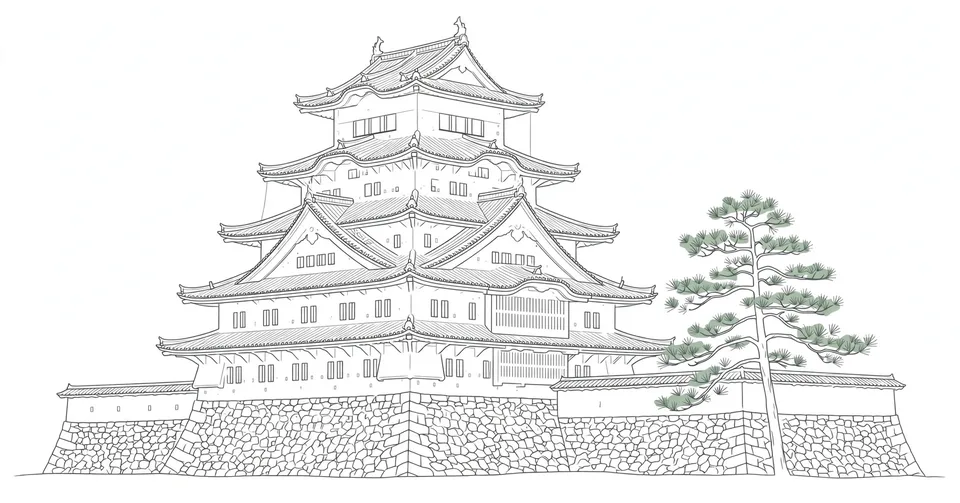
The short answer to the question most visitors ask is this. Japanese castles are worth visiting, but the ones worth travelling for are the twelve original keeps, and Himeji, Matsumoto, and Inuyama are the best places to start. The concrete rebuilds have their own pleasures, museums, views, and city parks, but they are modern buildings wearing old clothes. This article explains what original means, names all twelve survivors, looks at the famous rebuilds honestly, and ends with a practical plan for a castle trip that does not waste your time.
What Japanese castles actually are
A Japanese castle is not a single building. It is a fortified compound built around a main keep, the tenshu, ringed by stone walls, moats, gates, turrets, and a palace where the lord actually lived. The keep was the symbol and the last refuge, not the home. Lords lived in the palace at the foot of the keep and climbed the tower only in wartime or ceremony. Most keeps were built of wood and plaster over a stone base, with layered roofs that look delicate from a distance and are surprisingly heavy up close.
The great age of Japanese castles was short. It began in the late 1500s, when warlords like Oda Nobunaga and Toyotomi Hideyoshi fought to unite Japan, and it peaked in the first decades of the 1600s, when the Tokugawa shogunate settled the country and every domain needed a seat of power. Oda Nobunaga built Azuchi Castle in 1579 with the first great multi-storey keep, and within a generation hundreds of castles rose across the country. Then the building stopped almost as suddenly as it started. A united Japan under the Tokugawa had no use for new fortresses, and a law of 1615 limited each domain to a single castle, which quietly condemned the rest to decay.
That is why so few Japanese castles are old. The buildings were wooden, the peace was long, and nobody maintained a fortress that had no enemy. By the time samurai rule ended in 1868, the new Meiji government saw castles as obsolete military infrastructure and ordered many of them demolished under the 1873 Haijo Rei decree. Fires, earthquakes, and the air raids of 1945 finished most of the rest. Twenty original keeps still stood in the early 1940s. Seven were destroyed in the bombing of 1945, including Nagoya, Okayama, Wakayama, Hiroshima, Ogaki, Mito, and Fukuyama. One more, Matsumae in Hokkaido, burned in 1949. Twelve were left.
The twelve Japanese castles that survived
The twelve original Japanese castles are Hirosaki, Matsumoto, Maruoka, Inuyama, Hikone, Himeji, Matsue, Bitchu Matsuyama, Marugame, Matsuyama, Uwajima, and Kochi. They were finished between the 1570s and 1854, and every one of them is protected today. Five are National Treasures, the highest rank Japan gives a building. The other seven are Important Cultural Properties. The Japan Castle Association lists them all in its 100 Famous Castles, a list drawn up in 2006 and extended with a second hundred in 2017, covering all 47 prefectures between them. A full guide to the twelve original keeps describes each one, from the oldest timber at Inuyama to the youngest keep at Matsuyama.
Inuyama Castle holds the oldest surviving timber of the twelve, with parts dating to 1537, and it watches over the Kiso River from a small hill in Aichi Prefecture. It is a compact keep, four storeys inside, with a viewing balcony at the top that feels closer to the town than any other castle in Japan. Matsumoto Castle, built in 1593 and 1594, is the black one, its walls lacquered dark against the mountains of Nagano, which is why people call it the Crow Castle. Unlike most castles it stands on flat ground, ringed by a moat, and its reflection in the water is one of the most photographed sights in the country.
Of all the Japanese castles in the country, Himeji Castle is the one every visitor should see first. It is the largest and most visited of the twelve, with 1,567,674 paid admissions in the 2025 fiscal year, and the only castle keep on the UNESCO World Heritage list, inscribed in 1993. Its white plaster walls and layered roofs earned it the name White Heron Castle, and its maze of gates and walls was designed to confuse attackers, which still works on tourists who take a wrong turn inside. Admission rose to 2,500 yen on 1 March 2026, a steep jump from 1,000 yen, and the castle is honest about why: the money maintains a building that is now more than four centuries old.
Hikone Castle, on the shore of Lake Biwa in Shiga Prefecture, is the smallest of the National Treasure keeps and one of the most elegant, built in the early 1600s and never seriously damaged. Matsue Castle, in Shimane Prefecture, was the last of the five to be upgraded to National Treasure, in 2015, and it is the only one of the twelve that still has its original keep in a city that never built a concrete replacement beside it. The other seven originals are smaller and quieter, and that is part of their charm. Maruoka Castle in Fukui was knocked down by an earthquake in 1948 and reassembled from its original timbers. Kochi Castle keeps its original palace buildings beside the keep, a combination no other castle in Japan can offer. Iyo-Matsuyama Castle, finished in 1854, is the youngest of the twelve, the last keep ever built in the age of the samurai.
The famous Japanese castles that are not original
Most visitors meet one of the rebuilt Japanese castles first, and there is nothing wrong with that as long as you know what you are looking at. Osaka Castle is the most famous example. The keep that dominates the Osaka skyline today is a concrete reconstruction from 1931, built on the original stone base, housing a museum inside. The original castle was destroyed in the 17th century, rebuilt, and burned again in the 19th. What stands now is a faithful shape with modern bones, and the park around it is one of the best places in Osaka for cherry blossom season, which is covered in our guide to Japan's autumn leaves and where to find them for the other end of the year.
Nagoya Castle tells a sadder story. Its original keep burned in the air raids of 1945, and the concrete replacement built in 1959 has been closed to visitors since 2018 over earthquake safety. The city plans to rebuild the keep in wood, using the original plans, but the work has been delayed for years and no opening date is certain. Hiroshima Castle, also destroyed in 1945 and rebuilt in concrete in 1958, is closed to the public in autumn 2026 as well, and its future is under discussion. These closures are a reminder that even the rebuilds are aging now.
Kumamoto Castle is the most dramatic case of a castle caught between old and new. The great earthquake of April 2016 cracked its stone walls and damaged the keep, and the main tower reopened to visitors in 2021 after emergency repairs. Full restoration of the walls and outbuildings will take many more years. The keep itself is a 1960 concrete reconstruction, but the stone walls at its base are original, and seeing the scaffolding and the patient repair work is a lesson in what it actually costs to keep a castle standing.
Shuri Castle in Okinawa burned down in October 2019, and its main hall is scheduled to reopen to visitors on 23 November 2026. Shuri was the palace of the Ryukyu kings, a different tradition from the mainland samurai castles, painted red and built in a style closer to China than to Edo. Its rebuilding is a national project, and its reopening is one of the most watched dates in Japanese heritage this year.
What to look for inside Japanese castles
The first thing to notice in Japanese castles is the stone base. The walls of a Japanese castle are not straight. They curve inward as they rise, a shape called a fan slope, built without mortar from stones fitted so tightly that many walls have survived earthquakes that flattened the wooden buildings above them. The steeper the slope, the newer the wall, and castle enthusiasts can roughly date a wall by its angle, which is a pleasant detail to carry into your visit.
Inside the keeps of Japanese castles, expect steep stairs, low beams, and bare wooden floors. The original keeps were not furnished like palaces. They were military spaces, and the rooms are mostly empty except for weapon racks, a few displays, and the view from the top. Wear shoes you can slip off easily, because you will leave them at the entrance, and take the stairs slowly. The steps in Matsumoto Castle are famously steep, almost ladder-like, and they were designed that way on purpose, to slow down an attacker climbing in armour.
The gardens and grounds of Japanese castles matter as much as the tower. Himeji has a large park at its foot, and the Koko-en garden next door is a quiet counterpoint to the crowds inside the keep. Matsumoto has a moat full of carp and a small shrine. Hikone has a garden built for the lord's retirement. If you plan a visit the way the Japanese do, the castle is the morning and the garden is the slow afternoon, the same rhythm as a visit to one of the Japanese gardens we wrote about earlier this month.
How to plan a Japanese castles trip
A good trip around Japanese castles follows the train lines, not a checklist. Himeji is an easy day trip from Osaka or Kyoto, about an hour by Shinkansen to Himeji station and a fifteen-minute walk from there. Matsumoto is a day trip from Tokyo or Nagoya, about two and a half hours by limited express, and it pairs well with the town of Narai-juku on the old Nakasendo road. Inuyama is forty minutes from Nagoya and makes a gentle half-day trip. Hikone is on the main line between Kyoto and Nagoya, and Matsue needs a full day from Okayama or Hiroshima.
The table below gives a starting point for the five National Treasure keeps, the ones worth building a trip around.
| Castle | City | Designation | Why go |
|---|---|---|---|
| Himeji Castle | Himeji, Hyogo | National Treasure, UNESCO | The largest and most beautiful, the essential first castle |
| Matsumoto Castle | Matsumoto, Nagano | National Treasure | The black Crow Castle, moat reflections, mountain setting |
| Inuyama Castle | Inuyama, Aichi | National Treasure | The oldest surviving timber, river views from the balcony |
| Hikone Castle | Hikone, Shiga | National Treasure | Small, elegant, on Lake Biwa with a lord's garden |
| Matsue Castle | Matsue, Shimane | National Treasure | Quiet, original, in a castle town that still feels old |
Go early, especially at Himeji. Japanese castles are at their best in the first hour, before the tour groups arrive. The keep admits a limited number of visitors at a time, and the queue on a spring weekend can run past two hours. The castle opens at 9 in the morning, and the first hour is the calmest. Winter is the quietest season, and snow on the white walls of Himeji or the black walls of Matsumoto is a sight that summer visitors never see. Autumn brings crowds for the maple leaves, and the leaves are worth it, but arrive before 9 or after 4 if you want the stairs to yourself. For current prices and opening hours across the originals and the rebuilds, the Japanese castles guide at Japan Pocket Guide compares them side by side and is updated for 2026.
One honest warning: the original Japanese castles are small, steep, and not accessible. There are no lifts inside a 400-year-old wooden tower, and the stairs are narrow. If climbing is difficult, the castle parks, the stone walls, and the gardens are free or cheap and give you most of the experience without the climb. The view of Matsumoto across its moat is as good from the ground as it is from the top, and Himeji from the park at its foot is the postcard everyone knows.
Why Japanese castles still matter
I have visited Japanese castles that are reconstructions and Japanese castles that are original, and the difference is not in how they look from the outside. A good concrete keep can fool a photograph. The difference is in the stairs, the smell of old wood, and the knowledge that the floor under your feet has been walked on since before your country existed in its current form. The twelve original keeps are not just old buildings. They are the twelve times Japan decided, after war and fire and demolition orders, that something was worth keeping.
That is also why the number twelve matters more than any ranking of Japanese castles. There are no more coming. No one will build another original keep, and every one of the twelve is a survivor of a cull that destroyed more than a hundred of its kind. If you stand inside one, you are standing inside a building that was supposed to be demolished, or burned, or forgotten, and was not. The climb up Mount Fuji is a different kind of old, a mountain that never needed saving. A castle is old in the human sense, a thing people chose to keep, and that choice is what you are really visiting.
My own opinion is simple, and it is the reason I would put castles on a first trip to Japan even above another famous temple. A temple can be rebuilt in wood and still feel sacred, because a temple is a place of practice. A castle is a place of memory, and a rebuilt castle remembers nothing. Go to Himeji once, climb the steep wooden stairs slowly, look out over the city from the top floor, and then decide for yourself whether the original is worth the journey. I think it is, and I think the other eleven are worth the rest of your trips.
More in Food & Travel
- Kongobuji Still Runs the Mountain Kukai Chose
- Tenkasu Turns Tempura Scraps Into Japan's Favorite Crunch
- Tanuki Udon Is the Bowl Named After a Raccoon Dog
- Wagyu Beef and Why One Small Steak Costs More Than Dinner
- Inari Sushi Turns Fried Tofu Into a Portable Feast
- Aburaage Is the Fried Tofu Japan Simmers Sweet
Latest posts
- A Kamidana Brings the Shrine Into the Japanese Home
- An Omamori Carries a Shrine's Protection in Your Pocket
- A Shinai Is a Sword That Refuses to Cut
- Pachinko and the Neon Rooms Where Japan Plays Its Loudest Game
- Kiai Is the Shout That Turns a Strike Into a Commitment
- Toro Stone Lanterns Light the Way Through Japan's Sacred Places
- An Ofuda Brings the Kami Home on a Slip of Paper
- Kagura Suzu Are the Bells That Let the Kami Hear the Dance
- Japanese Knives From Samurai Swords to Kitchen Counters
- Goshuin Collects Your Shrine Visits One Red Stamp at a Time
- Hamaya Is the Arrow That Breaks Demons at New Year
- Saisen Is the Small Coin You Offer Before You Pray
- Japanese Gardens and the Quiet Art of Borrowed Scenery
- A Himorogi Is the Shrine Before Shrines Had Walls
- Sakaki Is the Sacred Tree Shinto Cannot Do Without