Akihabara and How Tokyo's Electric Town Learned to Sell Everything
· 11 min read
Akihabara went from post-war radio stalls to the world capital of anime and gadgets. Here is how Tokyo's Electric Town kept reinventing itself, and how to visit it without getting lost.
Step out of the Electric Town exit at Akihabara Station and the first thing that hits you is not the noise, though there is plenty of that. It is the density. Towering shops sell cameras on one floor and model kits on the next, a maid in a frilled apron hands you a flyer on the corner, and a poster for a game you have never heard of covers an entire building. Akihabara is the one place in Tokyo where the city stops pretending to be orderly and just shows you everything it loves, all at once.
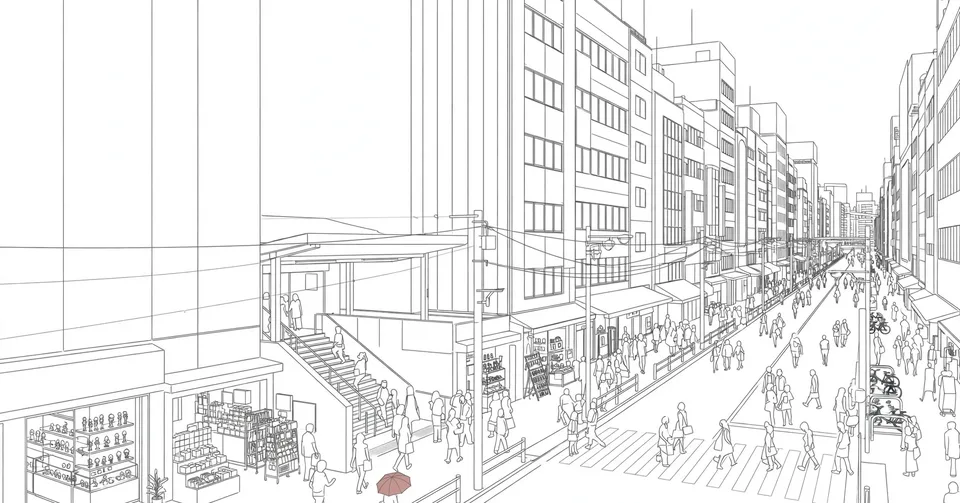
The short answer is that Akihabara is worth a visit even if you care nothing about anime. The district has reinvented itself three times in eighty years, from a black market for radio parts to the home of Japanese electronics to the world capital of otaku culture, and each layer is still visible if you know where to look. This article traces that history, names the shops and streets that matter, and ends with a practical plan for a first visit.
Akihabara rewards the curious more than the efficient. The big stores are easy to find, but the real character of the place lives in the narrow lanes behind the main street, in a six floor shop that sells only secondhand cameras, or a tiny stall that has sold the same electronic components since your grandparents were young. Go with a list of one or two things you actually want, and let the rest of the district surprise you.
Where the name Akihabara comes from
The name Akihabara comes from Akiba Shrine, a small fire prevention shrine built in 1869 to protect the area from the fires that regularly swept through the wooden city of Edo, the old name for Tokyo. The shrine gave its name to the whole neighbourhood, and the neighbourhood gave its name to the station. Akihabara Station itself opened for freight in 1890 and for passengers in 1925, and for decades it was a quiet stop on the edge of the city, known mostly to traders and railway workers.
Nothing about that early history predicts what Akihabara became. The area had no castle, no famous temple, and no wealthy merchant quarter. It was ordinary, and that ordinariness turned out to be useful. When the war ended in 1945, ordinary places with a station and empty lots were exactly where a new kind of trade could start without anyone stopping it.
From black market radios to Electric Town
After the Second World War, Akihabara became a black market. The occupation authorities had outlawed unlicensed radio assembly, but radio parts kept flowing into the neighbourhood from technical schools and surplus military stockpiles, and students and hobbyists bought discarded parts, built radios, and sold them on the street. Radios were expensive appliances at the time, and a working set assembled from scrap was worth real money. By the 1950s, more than 500 small electronics shops had clustered around the station.
The trade grew up fast. As Japan rebuilt, the stalls became shops, and the shops began selling televisions, refrigerators, and washing machines to a country that suddenly wanted all of them. Through the 1960s, 1970s, and 1980s, Akihabara was synonymous with home appliances and consumer electronics, and the nickname Electric Town stuck. The shops competed on price, and customers came from all over Tokyo because nowhere else had so many sellers in one place. If you wanted a specific part, a specific model, or a specific price, Akihabara was where you went.
That competition shaped the district in a way that still shows today. Akihabara never had one dominant department store the way other districts did. It had hundreds of small specialists, each one narrower than the last, and the habit of selling something very specific to people who know exactly what they want never went away. It just changed what the specific thing was.
The computer years
The next reinvention came in the 1980s, when personal computers arrived. Akihabara, already full of people who liked taking things apart, became the place to buy a computer, upgrade it, and argue about which parts were best. The big electronics chains built megastores near the station, Yodobashi Camera among them, and the small shops shifted to components, cables, and secondhand machines. For a while the district was known as PC Town, and on weekends the streets filled with hobbyists carrying boxes of parts home like groceries.
The computer years also brought a new kind of customer. The people who built their own computers were often the same people who played video games, read manga, and watched anime, and the shops noticed. Anime and manga retailers that were already established in the neighbourhood, shops like Animate and Mandarake, began to expand. Game shops multiplied. The electronics were still the main business, but the balance was starting to tip, and by the late 1990s it was clear that the future of Akihabara would be decided by what its youngest customers wanted to buy.
How anime took over Akihabara
The transformation into the world capital of otaku culture happened between 2000 and 2010, and it happened fast. As large electronics chains spread to the suburbs, Akihabara lost its monopoly on appliances, and the shops that filled the gap were the ones selling anime, manga, games, and figures. The district did not plan this change. It adapted to it, the way it had adapted to radios and computers before.
Two dates mark the turn. In 2001, the first permanent maid cafe, Cure Maid Cafe, opened in Akihabara, and a strange idea, being served coffee by a waitress in a maid costume who calls you master, became a real business and then a whole industry. In December 2005, the idol group AKB48 opened its own theatre inside the Don Quijote building, performing for a small audience almost every day, and the group grew into one of the most successful acts in Japanese pop music. The theatre reached its 1,000th performance in 2010, by which time Akihabara had fully become the global centre of anime and manga shopping.
Radio Kaikan, the ten storey complex that was once the heart of the electronics trade, tells the same story in a single building. Rebuilt in 2014, it is now filled with anime merchandise, model kits, and hobby shops. The building kept its name and its address. It just changed what it sells, which is the story of Akihabara in miniature.
What to do in Akihabara now
Start at the Electric Town exit on the west side of the station. Chuo-dori, the main street, runs south from there, and on Sunday afternoons it closes to cars, which makes it the easiest time to walk and look around. The big stores line this street, and the smaller shops hide in the lanes behind it.
Yodobashi Camera Multimedia Akiba is the easiest first stop, a huge store where you can compare cameras, headphones, and gadgets across several floors, and where tourists can shop tax free with a passport. For anime and manga, Animate is the largest chain store, while Mandarake, spread across several floors in its own building, is the place for secondhand manga, rare figures, and collectibles that are out of print. K-Books and other specialist shops cover doujinshi, the fan made works that are a large part of the culture here. A useful overview of the district, including its main streets and landmarks, is kept by Japan Guide.
The arcades are worth an hour even if you never play a game. The big multi floor arcades, now under the GiGO name, hold rows of crane games, rhythm games, and retro cabinets, and the crane games in particular are a spectacle, with shelves of plush toys and figures swaying behind glass. Super Potato, a famous retro game shop, sells old consoles and cartridges stacked floor to ceiling, and it is as much a museum as a store. If you want a quieter corner, the model kit floors of Radio Kaikan and the camera shops along the back streets are where the serious hobbyists go.
Maid cafes deserve a clear explanation, because they confuse first time visitors more than anything else in Akihabara. A maid cafe is a themed cafe where the staff dress as maids, greet you as master, and serve food and drinks with a small performance, drawing a picture on your omelette or leading a short chant. It is playful and theatrical, not romantic, and the staff keep a polite distance. Most cafes charge a cover of around 500 to 1,000 yen plus food and drinks, and photography is usually limited or charged extra. The big chains, @home Cafe and Maidreamin, are the safest first try, with English menus and staff used to tourists. If the idea makes you uncomfortable, skip it without guilt. Akihabara has plenty else to offer.
Food in Akihabara is better than its reputation. The district has excellent ramen shops, curry houses, and standing sushi bars tucked between the electronics stores, and the basement food halls of the big stores sell bento and snacks for a quick lunch. The official Tokyo tourism site lists Akihabara as a sightseeing spot with its main attractions, and it is a good starting point if you want to check what is open before you go.
A practical visit
Akihabara is easy to reach. The JR Yamanote line stops at Akihabara Station, which puts it one stop from Ueno and two from Tokyo Station, and the Hibiya subway line also serves the area. If you are already planning a Tokyo day, Akihabara pairs naturally with Shibuya Crossing, the other great Tokyo crowd scene, though the two districts feel very different. Shibuya is about fashion and scale. Akihabara is about obsession and detail.
Give the district half a day, not a full one. Two or three hours is enough to walk Chuo-dori, visit one big store, one specialist shop, and one arcade, and have lunch. A full day is only worth it if you have a specific hunt in mind, a rare figure, an old camera lens, a complete manga set, because the joy of Akihabara is in the search, and the search takes time. Bring cash for the small shops, since some of the older ones still do not take cards, and keep your passport handy if you want tax free prices, which apply to purchases over 5,000 yen at participating stores.
The best time to go is a weekday morning, when the shops are open and the crowds are thin, or a Sunday afternoon, when Chuo-dori closes to traffic and the street belongs to pedestrians. Avoid Saturday afternoons if you dislike crowds, because that is when the district is at its most packed. And if you ride the train in, remember that Japanese trains run on a precision the rest of the world envies, a subject covered in the story of why Japanese trains are almost never late, so you can plan your arrival to the minute and it will probably work.
Why Akihabara keeps changing
What I find most interesting about Akihabara is not any single thing it sells. It is the fact that it has survived three complete changes of identity without ever being demolished, rebranded, or turned into a theme park version of itself. The radio sellers became appliance sellers, the appliance sellers became computer sellers, and the computer sellers made room for anime, and at every step the district kept its small shops, its narrow lanes, and its habit of serving people who care deeply about something specific. That is rare. Most shopping districts either freeze in place and fade, or get rebuilt into something generic. Akihabara did neither. It kept the same streets and changed the goods.
There is a lesson in that for anyone who likes a place for what it is now. Akihabara will change again. The maid cafes may fade, the idol theatres may move on, and some new obsession will fill the empty floors. The district has done this before, and it will probably do it well, because the one thing it has never sold is nostalgia for itself. It sells whatever its customers love next, and it sells it with the same intensity it sold radios in 1950. Go now, while the anime era is still in full colour, and you will see a place that is entirely itself, crowded, noisy, specific, and unlike anywhere else on earth. A convenience store run on the way home, for a late night snack after the crowds thin out, is the proper way to end the day.
More in Life & Style
- Kotatsu, Japan's Heated Table That Warms Winter
- The History of the Bicycle From Wooden Wheels to Japanese City Bikes
- A Shukubo Lets You Sleep Inside a Working Temple
- Kaburiyu Is How You Talk Your Body Into the Bath
- Ganbanyoku Is Bathing Without Water
- The Obuki Throws Out Nine Thousand Litres a Minute
Latest posts
- A Chonmage Is the Knot Every Sumo Wrestler Wears Before the Fan
- Tomoe Gozen Rode Into Battle When Women Were Told to Stay Home
- Onna-Bugeisha Held the Castle While the Men Were Away
- Momiji-Gari Is Japan's Autumn Answer to Hanami
- The Naginata Gave Japan's Women Warriors a Blade of Their Own
- Momiji Turns Japan Red Every Autumn
- How an Oichomage Turns a Wrestler Into a Sekitori
- Ginkgo and the Gold That Falls on Tokyo Every Autumn
- Japanese Castles and the Samurai Fortresses That Still Stand
- A Kamidana Brings the Shrine Into the Japanese Home
- An Omamori Carries a Shrine's Protection in Your Pocket
- Kongobuji Still Runs the Mountain Kukai Chose
- A Shinai Is a Sword That Refuses to Cut
- Pachinko and the Neon Rooms Where Japan Plays Its Loudest Game
- Kiai Is the Shout That Turns a Strike Into a Commitment