Kuromame Turns Black Beans Into a Wish for Health
· 14 min read
Kuromame are sweet simmered black soybeans that lead the top tier of osechi, carrying a wish to work hard and stay healthy through the year.
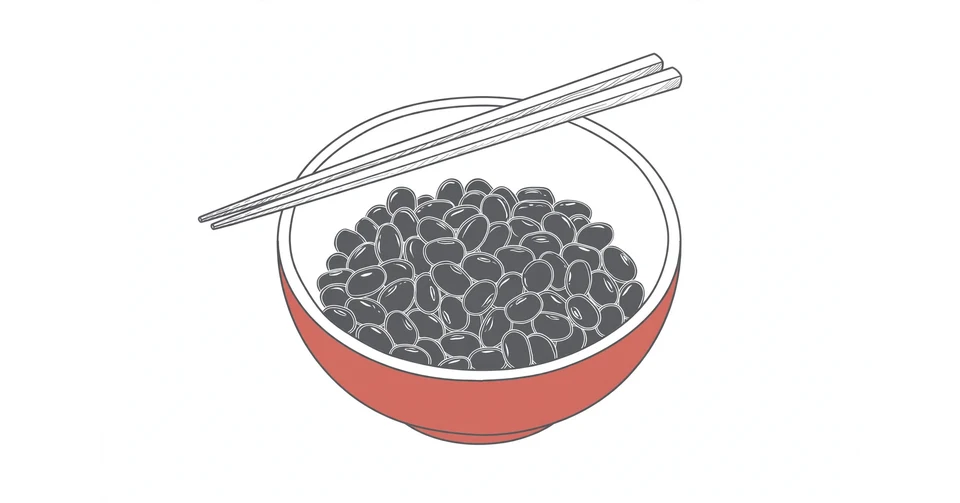
Open a lacquered box on the morning of January 1 in Japan and the first thing you notice is colour. Red and white fish cake, golden chestnut paste, orange carrot flowers, and right in the middle of it all, a small pile of beans so black they shine. That pile is kuromame, black soybeans simmered sweet, and it sits in the top tier of the osechi box because it carries the first wish of the year: health, and the strength to work hard.
Kuromame looks simple, almost too simple for the place of honour it holds. Kuromame is one ingredient, cooked slowly in sugar and soy sauce, served cold in a small dish. There is no fancy technique on display, no garnish worth photographing on its own. Yet families have cooked these beans for generations, starting days before the New Year, because the dish is not really about flavour alone. It is a wish you can eat, and the wish is the whole point.
I did not love kuromame the first time I tried it. The beans were sweeter than I expected, and I ate them politely, the way you eat something at someone else's house when you are still learning the rules. By my third New Year in Japan, I was reaching for them first, before the prawn and before the golden chestnut paste. What changed was not the recipe. What changed was that I had started to understand what the beans were for, and once I understood that, the sweetness made sense. It was not dessert. It was a promise, made in sugar.
What kuromame is and where it sits in the box
Kuromame literally means black beans, but the beans are not the black beans you might know from other cuisines. Kuromame are black soybeans, a soybean with a black skin and a white interior, slightly larger than an ordinary soybean, with a glossy coat that grows more lustrous as it cooks. Kuromame is simmered until tender and plump, infused with a sweet soy sauce seasoning, and served chilled or at room temperature in a small dish.
Kuromame belongs to osechi, the traditional New Year feast of Japan, a collection of small symbolic dishes packed into stacked lacquered boxes called jubako and eaten over the first three days of January. Our article on osechi and the year of luck packed into stacked boxes follows the whole feast, from the herring roe that wishes for children to the curved prawn that wishes for a long life. Kuromame leads the top tier, and it leads for a reason. It is one of the three basic elements of the feast, alongside kazunoko, the salted herring roe, and gomame, the tiny dried sardines, or tataki gobo, the pounded burdock that takes their place in the Kansai region. The other two dishes wish for children and for a good harvest. Kuromame wishes for the eater. The top tier holds the celebratory dishes and sweets, the dishes a family reaches for first on the morning of the new year, and our article on jubako and the layers of a family's luck explains how the tower of boxes is itself a wish for happiness piling up on happiness. Kuromame sits at the top of that tower, which means it is the first wish the year makes.
The wordplay behind the wish
Every dish in osechi is an edible good luck charm, and most of the meanings come from wordplay. A name that sounds like a happy word, a shape that suggests a long life, a colour that means celebration. Kuromame is the clearest example of how the wordplay works, because the meaning is built into the name itself.
The word mame means bean, but it also sounds like the word for working diligently and staying healthy. The phrase mame ni hataraku means to work hard, and the same sound carries a wish for a body that stays strong. So when a family eats kuromame on New Year morning, they are not only eating beans. They are saying, in the language of food, that they hope to work hard and stay well through the year. Web Japan, the official portal of the Japanese government, puts it plainly: the word mame can mean to work hard or be healthy, and for this reason the dish represents long life and good health.
The colour does a second job. Black is the colour used in Japan to ward off evil, and the glossy black beans carry that protection with them into the new year. It is a humble kind of magic, the kind that lives in a kitchen rather than a shrine. The beans are black, they are sweet, and they are eaten first, so the year begins with health, diligence, and a small shield against bad luck, all in one mouthful.
I like that the wish is so practical. It does not ask for wealth or fame. It asks for the ability to keep working and to keep feeling well while you do it, which is the wish most adults actually need.
How kuromame is cooked, slowly
Kuromame is a dish that begins before the year does. The recipe is simple, but it is not quick. The beans must be soaked, simmered for hours on very low heat, and then rested overnight so they turn darker and absorb more flavour. It is the kind of cooking that fills a house with a sweet smell for an afternoon, and that is the point. The work is the offering.
The method, as described in the Just One Cookbook guide to kuromame, starts with dried black soybeans, rinsed gently under cold running water, because the skins are fragile and should be handled with care. The beans are soaked for at least four hours, and many cooks soak them overnight. Then sugar and a pinch of salt go into the pot, the beans are brought to a boil, and the white foam that rises to the surface is skimmed off carefully. A drop lid, called an otoshibuta, is placed on the beans to keep them submerged under the cooking liquid, and the pot simmers on low heat until the beans are tender, about four hours or longer. Some recipes call for eight hours on low heat. Only when the kuromame is tender enough to mash between two fingers does the soy sauce go in, a tablespoon and a half, stirred through and left to cool.
The quantities tell you how sweet kuromame is meant to be. The usual ratio of black soybeans, sugar, and water is one to one to six by weight, so the sugar weighs as much as the beans themselves. The soy sauce is used in a much smaller amount than the sugar, because it is there for depth and savouriness, not for saltiness. The finished kuromame is sweet first and savoury second, glossy on the outside and soft all the way through.
The resting step is easy to skip and worth refusing to skip. Once cooled, the pot goes into the refrigerator for eight hours or overnight, with a sheet of parchment paper laid on the surface of the beans to keep them from drying out and wrinkling. During that rest, the beans turn darker and drink in more of the sweet cooking liquid. Just One Cookbook recommends making the dish one to three days before serving, and that timing is no accident. Kuromame is one of the first dishes a household cooks when it starts preparing osechi, because it keeps well and tastes better after a day or two.
The skins are the fragile part of cooking kuromame. If the beans are exposed to air while they cook or cool, the skins dry and wrinkle, and the glossy finish is lost. That is why the drop lid matters, why the parchment paper matters, and why the beans stay submerged in their cooking liquid until they are served. Only the portion being eaten is strained out.
The rusty nail trick
The strangest ingredient in kuromame is not an ingredient at all. It is a piece of iron. Most traditional recipes call for two or three rusty iron nails, wrapped in cheesecloth or tucked into an empty tea bag, dropped into the pot with the beans. The nails are not eaten. They are fished out when the beans are done, and their only job is colour.
The chemistry is simple enough to explain and strange enough to remember. Rust is iron oxide, and it reacts with the tannin in the beans, which helps them turn a deep, rich black. Without the iron, kuromame cooks up a softer, duller shade. With it, the beans come out glossy and midnight dark, the way they are supposed to look in the lacquered box. Just One Cookbook shows the difference side by side: beans cooked with an iron fish on one side, beans cooked without it on the other, and the gap between them is obvious.
Modern cooks who do not keep rusty nails in the kitchen have options. A food safe piece of cast iron, often sold in the shape of a fish, does the same job and is easier to find than nails. The Chopstick Chronicles guide to kuromame uses three to five rusty nails in a tea bag, and notes that a cast iron pot or an iron fish works as a substitute. The iron is cosmetic, so a cook who is happy with a softer black can leave it out entirely, but most cooks who care about the look of the box keep it in.
There is a faster route, too. A pressure cooker cuts the simmering down to about fifteen minutes at high pressure, and the beans still come out tender. The soak and the overnight rest stay the same, so the dish still takes two days from start to finish. I understand the appeal, but I think something is lost when the pot stops needing attention. A dish that simmers for four hours asks the cook to stay nearby, to check the liquid and skim the foam. That attention is part of the care the dish is supposed to carry into the new year.
Chorogi, the red companion
Kuromame is sometimes served with a small red companion called chorogi, a pickled tuber with a curled, knotted shape. The pairing is about colour as much as taste. The glossy black beans and the bright red chorogi sit side by side in the dish, and the contrast is deliberate. Red and white are the celebratory colours of Japan, and the red of the chorogi against the black of the beans makes the small dish look festive in the lacquered box.
Chorogi itself is a small tuber, pickled in plum vinegar until it turns a vivid red, with a crisp texture and a sharp, sour taste. It is not sweet, which is exactly why it works next to the beans. One spoonful of kuromame is soft and sugary, and then a bite of chorogi cuts through the sweetness with acid and crunch.
Not every household serves chorogi with the beans, but when it appears, it tells you the cook was thinking about the box as a picture as well as a meal. The top tier is the first thing a family sees on New Year morning, and the cook wants it to look like a celebration.
How the beans change by region and by year
There is no single correct osechi, and kuromame changes with the household that cooks it. The three basic elements of the feast are the clearest example. In Kanto, around Tokyo, the trio is usually kazunoko, kuromame, and gomame, the tiny dried sardines. In Kansai, around Kyoto and Osaka, pounded burdock often takes the place of the little sardines. The beans themselves stay in the trio in both regions, which says something about how central they are. The dish that changes is the third one. The beans do not move.
The sweetness changes too. Some families cook their kuromame very sweet, closer to a dessert, with the full ratio of sugar to beans. Others pull the sugar back and let the soy sauce speak more, so the beans work as a savoury side dish rather than a sweet one. Some cooks add a little baking soda to the soaking liquid, which helps the beans soften. Some use a mix of white and brown sugar to add depth to the sweetness. None of these versions is wrong. They are the same wish, seasoned differently, and the difference between them is the difference between one family's New Year and another's.
The modern box has widened further. Many households now buy ready made osechi sets from department stores, supermarkets, convenience stores, restaurants, and hotels, and mix them with a few homemade dishes. Some boxes now include roast beef, ham, smoked salmon, and other Western dishes beside the classics. Purists may grumble, but the grumbling misses the point. A tradition that cannot make room for a family's actual tastes is a museum piece, and osechi has survived for a thousand years precisely because it makes room.
Kuromame has also stepped out of the New Year box. The beans are eaten year round as a side dish and as a bento box addition, and the leftover beans and cooking liquid have second lives that have nothing to do with January. The sweet cooking liquid can be used to make oshiruko, the warm red bean soup, or a black soybean latte, or a jelly set with gelatin or agar. The leftover beans can go into a pound cake or a steamed cake.
What kuromame tastes like the first time
If you are tasting kuromame for the first time, expect sweetness before anything else. The first bean is soft, glossy, and sugary, with a gentle nuttiness underneath and a faint savoury note from the soy sauce that arrives a moment later. The skin gives way easily, and the inside is tender rather than firm, closer to a cooked chestnut than to a bean from a salad. It is not a flavour that shouts. It is a flavour that settles.
That sweetness surprises people who come to kuromame expecting something like a savoury bean stew. It helps to remember that the beans are a celebration dish, not an everyday one, and that osechi as a whole is sweeter and saltier than an everyday Japanese meal. The sugar is not a mistake. It is a preservative as well as a seasoning, and it is what lets the dish keep for days in the refrigerator. The beans are meant to be eaten cold, a few at a time, with chopsticks, between bites of something vinegared or briny.
My honest advice is to take three or four beans and nothing more on your first try, then wait, then take a bite of something sour, and then come back to the beans. The second taste is always better than the first, because the first taste is a surprise and the second taste is a decision. By the third New Year, if you keep coming back to the table, you may find what I found: that the beans you once ate politely have become the dish you reach for first.
A small dish with a long job
Kuromame is the smallest dish in the top tier of the osechi box, and it carries the largest wish. Health and diligence are not glamorous things to hope for. They do not make a good toast, and they do not photograph well. But they are the two things a year actually depends on, the ability to keep working and the body to do it in, and the beans say that plainly, without decoration, in a small lacquered dish.
Kuromame also carries a quieter lesson about how traditions survive. Kuromame has lasted because it is simple enough to cook in any kitchen, meaningful enough to keep cooking year after year, and flexible enough to change with the family that makes it. Kuromame can be simmered for eight hours or fifteen minutes in a pressure cooker. They can be cooked with rusty nails or with a fish shaped piece of iron. They can be very sweet or barely sweet. They can sit in a thousand year old box or a store bought one. The wish stays the same through all of it, and that is why the beans are still there on the morning of January 1, glossy and black, waiting to be eaten first.
More in Food & Travel
Latest posts
- Gyoji Are Sumo's Referees in Silk and Calligraphy
- Japanese Baseball and the Game Japan Made Its Own
- The Banzuke Remembers Every Basho in Calligraphy
- Fifteen Days of Basho Decide Who Sumo Remembers
- Kojiri Is the End Cap That Takes Every Knock for a Katana
- Kurikata Is the Chestnut Knob That Holds a Katana at the Hip
- Koshirae Is the Formal Mounting That Turns a Blade Into a Katana
- Shirasaya Is the Plain White Scabbard Where a Katana Rests
- The Togishi Polishes a Katana for Weeks Before It Ever Cuts
- Kozuka Is the Small Knife Hiding in a Katana's Saya
- Wakizashi Was the Short Sword a Samurai Never Took Off
- Tsuba Is the Small Guard That Stops a Katana From Cutting Its Owner
- Yokote Is the Small Line That Tells a Katana's Age
- Seppa Are the Thin Washers That Keep a Katana From Rattling
- Kissaki Is the Small Tip That Finishes a Katana