The Banzuke Remembers Every Basho in Calligraphy
· 19 min read
The banzuke is sumo's handwritten ranking sheet, published before every tournament, and it records the fate of more than six hundred wrestlers in calligraphy.
A single sheet of paper, the banzuke, decides where every professional sumo wrestler stands. It is published about two weeks before each tournament, and when it appears, careers change. A man who won eight bouts in the last tournament moves up. A man who lost eight moves down. Nobody argues with the sheet, because the sheet is the argument, written out in full for everyone to see.
That sheet is the banzuke, the ranking list of professional sumo. It is not a spreadsheet printed from a database. It is a large sheet of paper, covered in handwritten calligraphy, listing every wrestler in rank order, from the yokozuna at the top to the newest teenager at the bottom. It has been made this way, in this form, since 1761, and sumo has never found a reason to change it.
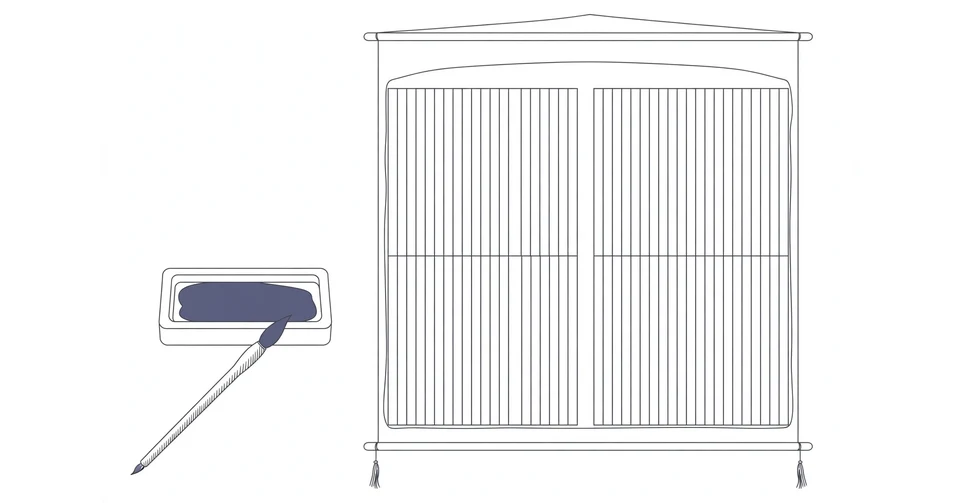
To understand sumo, you have to understand this sheet. The banzuke is where a tournament ends and the next one begins. The fifteen days of bouts are the evidence, and the banzuke is the verdict, published in the form of a new ranking sheet. This guide explains what the banzuke is, how to read it, who writes it by hand, and why a piece of paper commands so much respect in a sport built on physical force.
What a banzuke actually is
A banzuke, officially called a banzuke-hyo, is a document listing the rankings of professional sumo wrestlers, published before each official tournament, or honbasho. The term can also refer to the rankings themselves, so a fan might say that a wrestler "moved up the banzuke" and mean his position rather than the paper. The document is normally released about two weeks before the tournament begins, and the release is an event in its own right. Fans check it, stables study it, and wrestlers learn from it exactly where they stand.
The banzuke lists more than six hundred wrestlers across six divisions. The top division is makuuchi, fixed at forty two wrestlers, and below it sit juryo, makushita, sandanme, jonidan, and jonokuchi. The two top divisions together are the sekitori, the salaried wrestlers, and reaching them changes a wrestler's life. Our earlier guide to Fifteen Days of Basho Decide Who Sumo Remembers explains how a tournament sorts every wrestler by wins and losses and then publishes its verdict in the form of a new banzuke, the ranking sheet.
Each wrestler appears on the banzuke with his full shikona, or ring name, his hometown, and his rank. The top of the page starts with the highest ranked makuuchi wrestlers printed in the largest characters, down to the wrestlers in the lowest divisions, who are written in much smaller characters. The size of the writing is part of the message. A yokozuna's name is large because his rank is large, and a newcomer's name is small because he has not yet earned the space. You can read the hierarchy of the sport from the size of the ink before you read a single character.
The form of the banzuke can be traced as far back as 1761, and it has been a defining component of sumo for centuries. That longevity matters. Sumo is a sport that keeps its old forms alive on purpose, and the banzuke is one of the oldest forms it has. The Banzuke on Wikipedia sets out the history, the layout, and the preparation of the sheet in full, and it is a useful companion for the details that follow here.
A printed banzuke is also a collector's item. The Japan Sumo Association distributes copies, stables buy them in large quantities to give to their sponsors, and tea houses in the Tokyo sumo venue buy them to give out to their patrons. Copies are also available for purchase for a small fee at tournament sites. Fans keep old copies the way other sports fans keep old programmes, except that a banzuke is more than a programme. It is a snapshot of the whole sport on a single day, and no two copies are ever the same.
How to read a banzuke without reading Japanese
A banzuke is meant to be read right to left, top to bottom, as is the traditional Japanese style. That is the first thing to learn, and it is the thing that confuses newcomers most. If you open the sheet and start at the left, you are starting at the bottom of the sport. Start at the right, and you are starting at the top.
The wrestlers are divided into East, which is printed on the right, and West, which is printed on the left. At the same rank and number, East is slightly above West, so the order runs East Maegashira 1, West Maegashira 1, East Maegashira 2, West Maegashira 2, and continues downwards. The difference between East and West at the same number is small, but in a sport where every inch of rank is fought over, small differences are the whole game.
The layout of the banzuke makes the hierarchy visible even to someone who cannot read a single kanji character. The largest names sit at the top right, and the writing shrinks steadily as your eye moves left and down through the divisions. A first time reader does not need to decipher the sheet. Find one wrestler, follow his name from one banzuke to the next, and the dense forest of calligraphy starts to behave like a map. His neighbours change, his position shifts, and the distance he has travelled becomes visible.
That is the practical way to use the banzuke. Pick a wrestler in the middle of the rankings and watch him across tournaments. The championship race is the headline, but the middle of the banzuke is where the most human stories live. A wrestler fighting for his eighth win, or fighting to stay in the top division, is fighting for his livelihood, and his position on the next sheet will tell you whether he succeeded. I think this is the most rewarding way to follow sumo. The stars are easy to watch. The middle of the banzuke is where you learn what the sport costs.
The hand that writes the banzuke
No machine writes the banzuke. High ranking gyoji, the sumo referees, take on the laborious task of copying down the new rankings on a traditional Japanese paper roll called a maki. They write the kanji characters of each wrestler in a calligraphy style called sumo moji, a bold, rounded style developed for this exact purpose. The work is very intricate and requires a great deal of skill, and it usually takes about a week to complete.
A week is a long time to spend writing out a list, and it tells you something about how sumo values the document. The gyoji are not copying names from a screen. They are writing six hundred names, plus the names of referees, judges, ushers, hairdressers, and elders, by hand, in a style that must stay legible at sizes ranging from large display characters down to writing so small that the lowest ranked names are hard to read without care. A mistake cannot be deleted. The brush moves once, and the ink stays.
The information on the banzuke is carefully guarded for several weeks before it is released, which is usually on the Monday thirteen days before an official tournament begins. The exception is the information about wrestlers who rise from the third division, makushita, to the second division, juryo. Their names become known immediately, because they obtain the status of sekitori and have to make the necessary preparations for it. A promotion to juryo means a salary, a private room, an assistant, and the white silk belt worn in training, so the wrestler needs to know at once. You can read how that change looks up close, in the white training belt and the ginkgo leaf topknot, in White Silk Means You Made It as a Sekitori.
The handwritten original is then printed at a greatly reduced size on sheets of paper measuring 58 centimetres by 44 centimetres. That is the sheet fans buy, the sheet stables stamp with their own name, and the sheet that ends up framed on walls. The reduction is part of the craft. The gyoji write large, and the printing shrinks their work into a dense, beautiful object that fits in your hands. I find that contrast moving. A week of careful, large scale handwriting becomes a single sheet you can hold, and the whole sport fits on it.
How the rankings are decided
Writing the banzuke and deciding the rankings are separate tasks. The gyoji record the established order. They do not choose who deserves promotion. That decision belongs to an assembly composed of twenty sumo judges and three supervisors, who gather a few days after each official tournament ends.
The assembly assigns ranks to over six hundred wrestlers in six divisions based on their performance in the previous tournament. There are no precise rules for assigning rank, but the general rule is simple. A wrestler who achieved kachi-koshi, a majority of wins, will be raised in the rankings, and a wrestler with make-koshi, a majority of losses, will be lowered. The degree of a wrestler's success or failure helps the assembly decide how far he rises or falls.
In the top division, where a wrestler fights fifteen bouts, eight wins against seven losses is the smallest winning record, and seven wins against eight losses is the smallest losing record. There is no middle ground, no draw, no points for effort. The record is the record, and the next banzuke reflects it. A wrestler who goes eight and seven moves up, sometimes only by a single rank, sometimes by several places if he beat strong opponents. A wrestler who goes seven and eight moves down. The system rewards consistency over brilliance, and it punishes a slow start even when the finish is strong.
That strictness can feel cruel, and it can also feel fair. I have come to think that is the point. Sumo is a sport of routine as much as of strength, and the banzuke is the sport's memory. It remembers every basho, and it forgets nothing. A single bout can be the difference between promotion and demotion, between a salary and no salary, between fighting stronger opponents next time or weaker ones. The assembly reads the record strictly because the record is all it has, and because every wrestler is judged by the same numbers.
The stakes are highest at the boundary between the divisions. A juryo wrestler who finishes with a strong winning record can be promoted to makuuchi, and a makuuchi wrestler who finishes with a poor losing record can fall to juryo and lose his place among the sekitori. Falling out of the top two divisions means losing a salary, a private room, and the right to wear the white silk belt in training. Climbing into them means gaining all of those things. A basho can therefore change a wrestler's daily life, not just his position on a sheet of paper.
The top of the banzuke has its own rules. The ranks inside makuuchi run from yokozuna at the top, through ozeki, sekiwake, and komusubi, down to the maegashira, who are numbered in order. The top four ranks are known together as sanyaku, although yokozuna is in practice a rank apart, since a yokozuna cannot be demoted and is expected to retire if he can no longer compete at the highest level. Promotion to yokozuna has no fixed formula, but the usual standard is winning two consecutive tournaments as an ozeki, or an equivalent run of results, together with the dignity the rank demands. Only seventy five wrestlers had reached it by May 2025, according to the Japan Sumo Association's records. That combination of numbers and character is what makes the rank so rare, and why the name at the very top of the banzuke carries so much weight.
More than a list of wrestlers
The wrestlers form the bulk of the banzuke, but they are not the only names on it. The sheet is better understood as the credits for the entire show, listing everyone who makes a tournament happen. The names of gyoji, yobidashi, shimpan, oyakata, and occasionally tokoyama are also listed, each group in its own place and in its own rank order.
The referees sit in the centre of the sheet, in a slim column between the East and West wrestler lists. At the top of this central column are the characters for "received permission," followed by the year, the dates of the first and last days of the tournament, the location, and the announcement that a sumo tournament will be held. The phrase dates back to a time when sumo needed official permission to hold tournaments at all, and it has stayed on the sheet ever since. Below it, the gyoji are listed by rank, with the highest ranked tate-gyoji on top in larger characters. Then come the shimpan, the ringside judges, twenty in total, working in groups of five. The Anatomy of a Banzuke guide walks through this central column and the rest of the sheet in detail, and it is the best companion I have found for learning to read a real copy.
The bottom row of the banzuke holds the lowest ranked wrestlers on one side and the rest of the Sumo Association on the other: the elders, the ring callers, and the hairdressers. Sumo elders are former wrestlers who own or lease a share in the Association, and they are listed by rank, from board members down to ordinary elders and retired advisors. The yobidashi, who call the wrestlers to the ring and sweep it between bouts, and the tokoyama, who dress the wrestlers' hair, are listed too. A retired wrestler who stays with the Association appears here in his new role, and his old name gives way to a new one. The sheet records the change without comment, the way it records everything else.
There is a small phrase squeezed into the bottom left of the sheet that references the maezumo wrestlers who are not listed on the banzuke, followed by a blessing that hopes the tournament is successful for thousands of years to come. It is easy to miss, and it is worth finding. The banzuke lists almost everyone in sumo, and then it pauses to acknowledge the few it does not list, and to wish the whole enterprise well. That is the character of the document in miniature. It is exact, it is complete, and it is polite.
The numbers at the top of the sport are relatively fixed, even as the total number of wrestlers fluctuates. The top division holds forty two wrestlers, juryo holds twenty eight, makushita holds one hundred and twenty, and sandanme holds one hundred and sixty. The rest are mostly in jonidan, and jonokuchi, the lowest division, is mainly for wrestlers who are just starting out. Some wrestlers do not appear on the banzuke at all, including recruits who have not completed maezumo and men recovering from injuries who have fallen out of the list of active wrestlers. The sheet is a record of the active sport, not of everyone who has ever entered it.
| Division | Wrestlers | What it means |
|---|---|---|
| Makuuchi | 42 | The top division, where the stars fight |
| Juryo | 28 | The second division, the lower half of the salaried sekitori |
| Makushita | 120 | The third division, the last step before a salary |
| Sandanme | 160 | The fourth division, where most careers are built |
| Jonidan | Varies | The fifth division, for developing wrestlers |
| Jonokuchi | Varies | The lowest division, for wrestlers just starting out |
The table looks tidy, but the lived experience behind it is not. A wrestler in jonidan is fighting for his first winning record. A wrestler in makushita is fighting for the promotion that will change his life. A wrestler in makuuchi is fighting to stay where he is, because the fall from the top division is steep and public. The banzuke holds all of those stories at once, in the same ink, on the same sheet.
The banzuke as the memory of sumo
A banzuke is published six times a year, and each one replaces the last. That rhythm is what makes the sheet a memory rather than a mere list. Keep a run of them, and you hold a wrestler's career in your hands. You can watch a teenager enter at the bottom, climb through the divisions, reach the salaried ranks, and one day appear near the top in large characters. You can also watch the reverse, a slow slide down the sheet as injuries and losses accumulate, until the name disappears from the list altogether.
Stables treat the sheet as a working document. Before mailing out ranking sheets, a stable will stamp it with the name of the stable, and smaller stables sometimes use a highlighter to mark which wrestlers are their own. It is a small, practical act, and it says something about how the banzuke is used. It is not framed and hung on the wall the moment it arrives. It is read, marked, studied, and argued over. The stable master looks at where his men landed. The wrestlers look at who they will face. The sponsors look at whose names to follow.
Fans do the same in their own way. An old banzuke from a famous tournament is kept, traded, and collected, and its value grows as the names on it become history. The sheet from a tournament where a future yokozuna first appeared, or where a long reign ended, is a record of a moment that will not come again. I think this is why the banzuke is treated with such care. A result on a screen disappears when the next result arrives. A banzuke stays. It can be held, stored, and opened again years later, and it will still say exactly what it said on the day it was published.
That permanence is also a kind of honesty. The banzuke does not revise itself, does not soften a demotion, and does not promote a popular wrestler because the crowd likes him. It records what happened, in the order the committee decided, in ink that cannot be edited. A wrestler who disagrees with his rank has one remedy, and it is the same remedy every wrestler has. He can win more bouts in the next tournament, and the next banzuke will say so. The sheet is strict, but the strictness is the same for everyone, and that sameness is what makes it fair.
There is something else the sheet preserves, and it is easy to overlook. The calligraphy itself is a record of a person. A gyoji spent a week writing those names, and his hand is in every stroke. When the printed sheet is reduced to 58 by 44 centimetres, the writing becomes small, but it is still handwriting, still the product of a brush, ink, and a steady arm. In a sport that is often described in numbers, wins and losses, ranks and records, the banzuke is the one place where the numbers are written by a human hand. That is not a decoration. It is the point. The sport is run by people, judged by people, and recorded by people, and the sheet shows it.
Why a sheet of paper commands respect
Sumo is a physical sport, and its most famous images are physical ones: two huge men colliding, a wrestler thrown from the ring, a champion struggling to lift a thirty kilogram cup. The banzuke is none of those things. It is paper, ink, and order. Yet it commands as much respect as anything in the sport, and I think the reason is simple. It is the one object in sumo that tells the truth about everyone at once.
A bout tells the truth about two men for a few seconds. A tournament tells the truth about a few hundred men for fifteen days. The banzuke tells the truth about the whole sport, in a single document, and it does so without shouting. It does not celebrate a champion or mourn a demotion. It lists the names in order, largest first, smallest last, and lets the order speak. That restraint is part of its authority. The sheet does not need to argue, because the argument is already settled. The bouts were fought, the records were counted, and the names are where they belong.
There is a lesson in that restraint that reaches beyond sumo. Most of modern life is judged loudly, in real time, with opinions attached to every result. The banzuke judges quietly, twice removed from the noise: first the bouts, then the committee, then the brush. By the time the sheet is published, the noise has settled, and what remains is a record. I admire that patience. It is the same patience that makes a wrestler wait through the long pause before a bout, and the same patience that lets a fifteen day tournament decide a career one bout at a time.
So when the next banzuke is published, about two weeks before the next tournament, do not only look at the top of the sheet. Look at the middle, where the wrestlers are fighting for their eighth win. Look at the bottom, where a new name has appeared for the first time. Look at the centre column, where the referees and judges are listed, and at the small blessing in the corner that wishes the tournament well for thousands of years. The sheet is the sport in miniature, written by hand, and it remembers every basho. A career in sumo is a journey across a series of these sheets, and each one is worth reading slowly, because the next one will already be different.
More in Culture & Society
- Gyoji Are Sumo's Referees in Silk and Calligraphy
- Japanese Baseball and the Game Japan Made Its Own
- Fifteen Days of Basho Decide Who Sumo Remembers
- Kojiri Is the End Cap That Takes Every Knock for a Katana
- Kurikata Is the Chestnut Knob That Holds a Katana at the Hip
- Koshirae Is the Formal Mounting That Turns a Blade Into a Katana
Latest posts
- Kuromame Turns Black Beans Into a Wish for Health
- Jubako Layers a Family's Luck One Box at a Time
- Osechi Packs a Whole Year of Luck Into Stacked Boxes
- Shirasaya Is the Plain White Scabbard Where a Katana Rests
- The Togishi Polishes a Katana for Weeks Before It Ever Cuts
- Kozuka Is the Small Knife Hiding in a Katana's Saya
- Wakizashi Was the Short Sword a Samurai Never Took Off
- Tsuba Is the Small Guard That Stops a Katana From Cutting Its Owner
- Yokote Is the Small Line That Tells a Katana's Age
- Seppa Are the Thin Washers That Keep a Katana From Rattling
- Kissaki Is the Small Tip That Finishes a Katana
- Nakago Is the Hidden Tang That Carries a Katana's Signature
- Mekugi Holds a Katana Together With a Single Bamboo Pin
- Why a Katana Stays Put, Thanks to the Koiguchi
- Tsuka-Ito Is the Cord That Binds a Katana Grip