Japanese Baseball and the Game Japan Made Its Own
· 11 min read
Japanese baseball arrived from America in 1872 and became something else entirely, a national pastime built on school tournaments, deafening cheers, and a league of its own.
Baseball is the most popular sport in Japan, and it did not get there by accident. Japanese baseball took an American game, folded it into school life, university rivalry, and neighbourhood pride, and turned it into a pastime that fills domes on weeknights and stops the country every August. Ask a Japanese sports fan what the national game is and the answer is not a polite debate. It is Japanese baseball, or yakyu, the field ball.
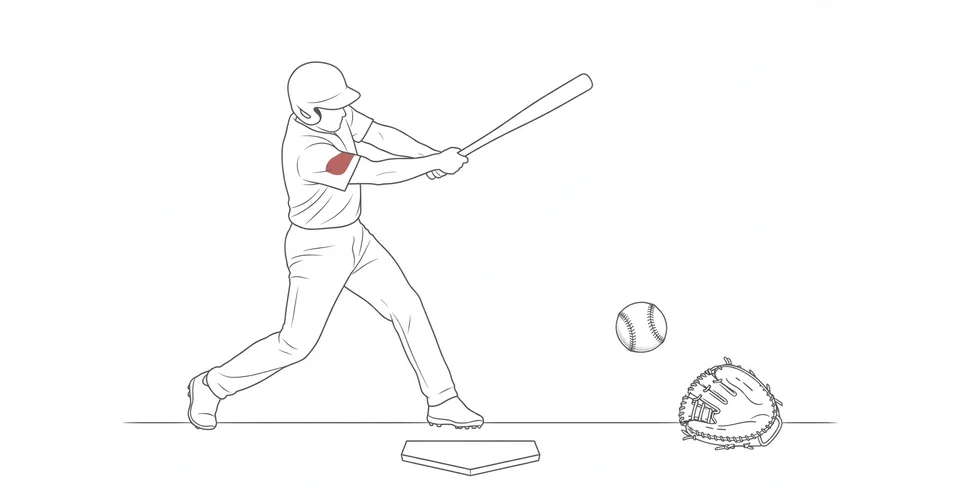
The story of Japanese baseball starts with a teacher, not a team. In 1872, Horace Wilson, an American teaching English at the Kaisei Academy in Tokyo, introduced his students to the game. America itself had only just fallen for baseball a decade earlier, so Japan was not far behind at all. Within a few years Japanese baseball had spread through schools and universities, and by the 1890s it had become the outdoor game that mattered most to young Japan.
How Japanese baseball began
The early years of Japanese baseball were shaped by schools. The first organised club, the Shimbashi Athletic Club, was formed in 1878. Universities picked the game up quickly, and the rivalry between Waseda and Keio, which began in 1903, became a national spectacle long before professional teams existed. Students filled the stands, newspapers covered the games in detail, and the sport became a way to teach discipline, teamwork, and perseverance, values that already sat at the centre of Japanese education. The story of how a foreign pastime became a national obsession is told well in a Great Big Story piece on why baseball is so big in Japan, which traces the game from Wilson's classroom to the packed stadiums of today.
There was also something about baseball that suited the mood of Meiji Japan. The country was modernising fast, borrowing Western ideas while holding on to its own traditions. Baseball looked modern and organised, with formal rules, officials, and rigorous training, yet it rewarded patience, precision, and self-control rather than brute force. Historian Donald Roden, who studied the period, noted that no other outdoor game ignited as much enthusiasm among players, spectators, and newspaper readers. Baseball arrived at the right moment and stayed, and a detailed history of the game in Japan shows how quickly it moved from schoolyards to a professional stage.
Japanese baseball crossed the Pacific in the other direction too. In 1905, the Waseda University team toured the American West Coast, playing local sides in California. Japanese teams kept travelling, American teams kept visiting, and the exchange became part of the sport. The most famous visit came in 1934, when Babe Ruth, Lou Gehrig, and Jimmie Foxx toured Japan with a team of American all-stars. The crowds were enormous, and the tour proved that baseball in Japan could be more than a school sport. It could fill stadiums.
Koshien, where schoolboys become national heroes
If you want to understand Japanese baseball, watch Koshien. The National High School Baseball Championship, held every summer at Koshien Stadium in Nishinomiya, near Osaka, began in 1915 and has grown into one of the most watched sporting events in the country. Almost 4,000 high schools enter the prefectural qualifying rounds each year. Only 49 teams reach the final tournament, and the whole country follows their progress on television and radio.
Koshien is not a stepping stone to a professional career for most of the boys who play there. It is the destination itself. For many fans, Koshien is the purest form of Japanese baseball, played for pride rather than pay. Players practise for years for a single summer, and a loss means the dream is over, since third-year students cannot return. After the final out, losing players kneel and scoop dirt from the field into small bags, a tradition known as Koshien no tsuchi, the soil of Koshien. They take it home as a keepsake, and sometimes scatter it on their school field so the next team can play on it.
The spring tournament, the other great festival of Japanese baseball, is held at the same stadium every March, and it opens the baseball year in Japan. The season begins as the cherry blossoms open, which is no coincidence in a country that marks the year by the flowering of the sakura. Opening day in late March feels like a second New Year for sports fans, and Japan's cherry blossom season gives the first games of the year a festival atmosphere that no other league can copy.
NPB, the professional league
Professional Japanese baseball began with the 1934 American tour. The Tokyo Giants, now the Yomiuri Giants, were founded the same year, and the first professional league followed in 1936. After the Second World War the league was rebuilt as Nippon Professional Baseball, or NPB, in 1950, with two leagues, the Central League and the Pacific League, and 12 teams that still form the league today.
Professional Japanese baseball is smaller than Major League Baseball in America, and that is part of its charm. Twelve teams means every rivalry in Japanese baseball is familiar and every stadium has a personality. The Yomiuri Giants, based at the Tokyo Dome, are the most famous club, the team of Shigeo Nagashima and Sadaharu Oh, who hit 868 home runs, a world record that still stands. The Hanshin Tigers, based at Koshien Stadium, have the most passionate fans in the country, and their supporters are famous for singing through entire games, win or lose.
Attendance tells the story of modern Japanese baseball. More than 27 million fans attended NPB games in 2023, a record for the league, and the numbers have stayed high since. A weeknight game at the Tokyo Dome draws a crowd that many football clubs in Europe would envy, and the atmosphere is unlike anything in American baseball. Each team has organised cheering sections with brass bands, flags, and a different song for every player. When a home player comes to bat, thousands of fans sing his song in unison. When the home team scores, the noise rolls around the stadium like a wave.
The Japanese baseball season also runs on a calendar that feels very Japanese. The season opens in late March, runs through the summer heat, and ends with the Japan Series in late October or early November. There is a rhythm to it, and fans plan holidays, reunions, and first dates around it. Baseball is not an event in Japan. It is a season of life, in the same way that sumo tournaments mark the year for their own followers. Both are sports, but both are also calendars, and sumo shows the same pattern, a traditional contest that organises the year around it.
How Japanese baseball differs from the American game
Japanese baseball looks like American baseball from a distance, and the differences only appear when you watch closely. The ball is slightly smaller, the strike zone is a little different, and the style of play leans toward small ball, bunts, stolen bases, and hit-and-runs, rather than the power hitting that dominates the American game. Strategy matters more, and managers are judged on their tactics as much as on their rosters.
One rule surprises American visitors. Regular season games in NPB can end in a tie after 12 innings. There is no endless extra innings in the regular season, and a draw is an accepted result, which fits a sporting culture that values the contest itself as much as the outcome. Playoff games play until there is a winner, but a tied game in July is simply part of the season.
The fans of Japanese baseball are different too. In America, the crowd reacts to the game. In Japan, the crowd performs with it. Cheering is organised, not spontaneous, and the visiting fans get their own section, their own songs, and their own corner of the stadium. The famous seventh-inning balloon release, where fans inflate small balloons and release them together during the stretch, turns the stadium into a brief, floating celebration. It is noisy, joyful, and completely orderly, which is a very Japanese combination.
Training is where the two games diverge most. Japanese baseball has a reputation for practice that borders on the monastic. High school teams train before sunrise, and professional players run famously long spring camps. The ethic comes from the same place as the school baseball tradition, the idea that repetition builds character. I admire the devotion, but I also think the sport is at its best when the joy is visible, when a player smiles after a home run instead of apologising for celebrating. Japanese baseball is slowly making room for that joy, and the game is better for it.
Ohtani, Ichiro, and the bridge to America
No story about Japanese baseball is complete without the players who carried it back to America. Ichiro Suzuki arrived in Major League Baseball in 2001 and won both Rookie of the Year and Most Valuable Player in his first season. In 2004 he collected 262 hits, a single-season record in the major leagues that still stands. He played with a precision and a style that looked unmistakably Japanese, a slap hitter with a cannon arm and a routine for everything, and American fans loved him for it.
Shohei Ohtani took the bridge further. A pitcher and a hitter at the highest level, something no one had done in a century, he became the most famous baseball player on the planet. When Japan beat the United States in the final of the 2023 World Baseball Classic, with Ohtani striking out his own teammate Mike Trout to end the game, it felt like the closing scene of a story that began in 1872, when an American teacher first showed Japanese students how to throw a ball.
Japan has won the World Baseball Classic three times, in 2006, 2009, and 2023, more than any other country, and each title pushed Japanese baseball further into the global spotlight. The national team, nicknamed Samurai Japan, is treated with a reverence that borders on the religious during tournament weeks. The country watches together, and the players know it.
Watching a game in Japan
A Japanese baseball game is one of the easiest and most rewarding things a visitor can do. Tickets are cheap by the standards of major sports, often less than the price of dinner, and same-day seats are usually available except for the biggest rivalries. The Tokyo Dome, the home of the Giants, sits in the middle of the city and holds more than 45,000 people under its air-supported roof. Koshien Stadium, older and open to the sky, is a pilgrimage site in its own right.
The food is part of the experience. Stadiums sell bento boxes, fried chicken, and beer poured by vendors who carry kegs on their backs and weave through the seats. Eating and drinking are social, not solitary, and the crowd around you will happily explain the songs if you ask. Getting there is simple too, since the stadiums sit on the same train lines that carry millions of commuters every day, and Japan's famously punctual trains deliver fans to the gates on time, even for a 6 p.m. first pitch.
If you go, sit with the home fans at least once. Learn the song of one player and sing it when he bats. You will not understand all the words, and it will not matter. The point of Japanese baseball, for a visitor, is not to analyse the game. It is to feel what it means to a crowd that has been singing these songs for generations.
Japanese baseball began as a borrowed game and became a mirror. It reflects the country that adopted it, disciplined and orderly, yet capable of sudden, joyful noise. It rewards patience, honours effort, and treats a high school tournament as seriously as a professional championship. America invented baseball, but Japan made it its own, and the game has been richer for the exchange ever since.
More in Culture & Society
- Gyoji Are Sumo's Referees in Silk and Calligraphy
- The Banzuke Remembers Every Basho in Calligraphy
- Fifteen Days of Basho Decide Who Sumo Remembers
- Kojiri Is the End Cap That Takes Every Knock for a Katana
- Kurikata Is the Chestnut Knob That Holds a Katana at the Hip
- Koshirae Is the Formal Mounting That Turns a Blade Into a Katana
Latest posts
- Kuromame Turns Black Beans Into a Wish for Health
- Jubako Layers a Family's Luck One Box at a Time
- Osechi Packs a Whole Year of Luck Into Stacked Boxes
- Shirasaya Is the Plain White Scabbard Where a Katana Rests
- The Togishi Polishes a Katana for Weeks Before It Ever Cuts
- Kozuka Is the Small Knife Hiding in a Katana's Saya
- Wakizashi Was the Short Sword a Samurai Never Took Off
- Tsuba Is the Small Guard That Stops a Katana From Cutting Its Owner
- Yokote Is the Small Line That Tells a Katana's Age
- Seppa Are the Thin Washers That Keep a Katana From Rattling
- Kissaki Is the Small Tip That Finishes a Katana
- Nakago Is the Hidden Tang That Carries a Katana's Signature
- Mekugi Holds a Katana Together With a Single Bamboo Pin
- Why a Katana Stays Put, Thanks to the Koiguchi
- Tsuka-Ito Is the Cord That Binds a Katana Grip