Sony, the Tokyo Workshop That Taught the World to Listen
· 13 min read
Sony began in 1946 as a tiny Tokyo workshop with a failed rice cooker. Eight decades later it shapes how the world listens, watches, and plays.
It started in the ruins of postwar Tokyo, in a bombed-out department store, with almost no money and a product that did not work. The company began on 7 May 1946 as Tokyo Tsushin Kogyo, founded by engineer Masaru Ibuka and physicist Akio Morita with capital of just 190,000 yen and about 20 employees. Its first product was an electric rice cooker. It failed.
It did not stay a failure for long. Within a decade it was selling pocket radios around the world. Within three decades it had invented personal music with the Walkman. Within five decades it owned the living room with the PlayStation. Today it makes the image sensors inside most of the world's smartphones, the cameras professionals trust, and the console that defines gaming for a generation. No other Japanese company has reinvented itself so many times, or so successfully.
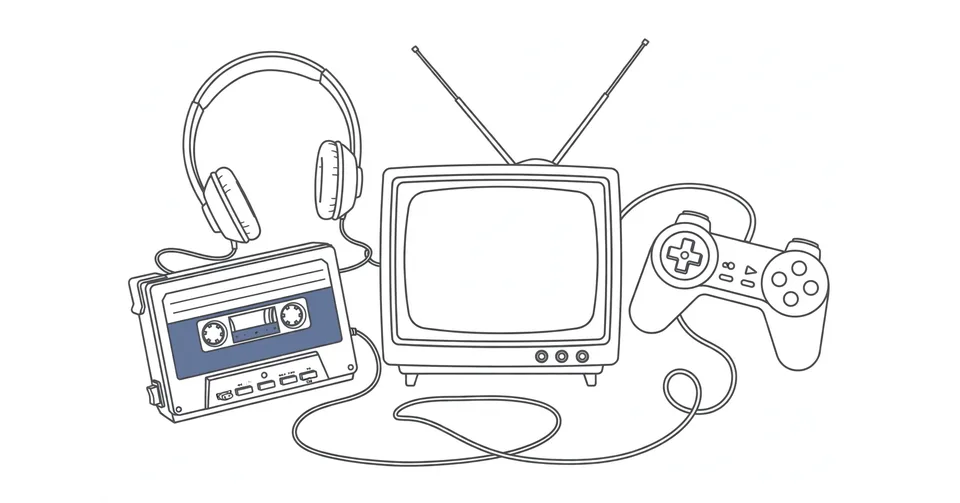
The story of this company is not really a story about electronics. It is a story about two men who believed that a small company in a defeated country could sell beautiful, clever things to the whole world, and who kept betting on that belief even when the bets looked foolish. That belief explains both the triumphs and the famous failures, from Betamax to the MiniDisc, and it explains why it is still here when so many of its rivals are gone.
A rice cooker that failed, a tape recorder that worked
Ibuka and Morita had met during the war, working as engineers on military research. After the war ended, Ibuka set up a small electronics repair shop in the Shirokiya department store building in Nihonbashi, Tokyo. Morita joined him, and together they founded Tokyo Tsushin Kogyo, which translates as Tokyo Telecommunications Engineering Corporation. The founding prospectus Ibuka wrote in January 1946 is still treated inside Sony as the origin of the whole group.
The rice cooker was their first attempt at a consumer product, and it was a flop. The rice came out undercooked at the bottom and burnt at the top, or the other way around, depending on the day. The two founders moved on quickly. Its first real success was a tape recorder. In 1950 the company introduced the Type-G, the first tape recorder designed in Japan. It was heavy, expensive, and aimed at schools and government offices rather than living rooms, but it sold, and it proved the little workshop could build something nobody else in Japan was building.
The company's history from this point reads like a series of careful gambles. In 1952 Ibuka travelled to the United States and arranged to license the transistor from Bell Laboratories. The fee was 25,000 dollars, a fortune for a company of Sony's size. Morita backed the decision. The transistor made radios small, and small radios could go everywhere. Its first transistor radio, the TR-55, appeared in 1955. Two years later the TR-63, a shirt-pocket radio, became a hit in Japan and then abroad. It was the first product that carried the name Sony, a word Morita coined from the Latin sonus, meaning sound, and the slang "sonny boy". The company itself took the name Sony in January 1958. The full history is told in the Wikipedia account of Sony.
The pocket radio that put Sony on the map
The TR-63 mattered for a reason that had little to do with radio. It taught the little company how to sell to the world. Morita understood that a Japanese name would be hard for American and European customers to pronounce and remember, so he gave the product a short, friendly, international name. He also understood that smallness itself was a selling point. A radio that fit in a shirt pocket was not just a radio. It was a promise that technology could belong to one person, carried close to the body, rather than sitting in the corner of a room for the whole family.
That idea, technology made personal, would return again and again in the company's story. It is there in the Walkman, in the Discman, in the PlayStation Portable, and in the mirrorless cameras that professionals now carry instead of bulky studio gear. It kept finding ways to take something that used to be shared and fixed in place and turn it into something individual and portable. The pocket radio was the first draft of that idea, and it worked so well that it funded everything that came after.
The same postwar decade that produced the pocket radio also produced other Japanese inventions that travelled the world, from the bullet train to the QR code. Sony belonged to that generation of companies that rebuilt Japan's reputation one product at a time, and it did so faster than almost any of them.
Sony and the television in every living room
If the radio made the company famous, television made it rich. In 1968 Sony introduced the Trinitron, a colour television built around a new kind of picture tube that produced a brighter, sharper image than the shadow-mask sets its rivals sold. The Trinitron became one of the most successful television designs ever made. It sold for decades, won the company a technical Emmy, and turned the company's name into a byword for picture quality. For a whole generation, buying a Sony television was the safe, obvious choice, the one you made when you wanted the best picture and were willing to pay for it.
The company also learned its most expensive lesson in the living room. In 1975 it launched Betamax, a home video cassette format that was, by most technical measures, better than the rival VHS format from JVC. Betamax lost anyway. VHS tapes recorded for longer, VHS machines were cheaper, and more manufacturers backed VHS. By the early 1980s the war was effectively over. It kept making Betamax machines for years, but the market had decided.
The Betamax defeat shaped the company for decades. It made the company wary of fighting format wars alone, and it pushed Sony toward partnerships. When the compact disc arrived, it did not go it alone. It developed the format jointly with Philips of the Netherlands, and the first commercial CD player, the CDP-101, went on sale in October 1982. This time the format won, and it won everywhere. The CD did not just change music. It became the storage medium for software, games, and data, and it carried Sony into the computer age.
Sony and the Walkman that made music private
The Walkman, released in 1979, is the product that best explains what the company was. It was not a technical breakthrough. It was a small cassette player that could only play tapes, not record them, and it had no speaker at all, only headphones. Its own engineers were sceptical. Morita insisted on building it anyway, and legend has it he said he would resign if it failed.
It did not fail. The Walkman sold hundreds of millions of units over its lifetime and changed how people related to music. Before the Walkman, listening to music was something you did in a place: at home, in a car, at a concert. After the Walkman, listening became something you did while doing something else, walking, commuting, exercising, alone in a crowd. The idea of a personal soundtrack, of music as a private bubble in public space, started here. Every pair of earbuds in every pocket today descends from that little blue-and-silver box.
The Walkman also showed the company at its most confident. The company was not following a market. It was creating one, trusting that people would want something they had never asked for. That confidence is easy to admire in hindsight, but it is worth remembering how strange the Walkman looked in 1979. A music player that could not record and could not be heard by anyone except the person wearing it was, on paper, a worse radio. It bet that people did not want a better radio. They wanted music of their own, wherever they went. The company was right, and the bet made the company a cultural force, not just an electronics brand.
Sony, the compact disc, and the road to PlayStation
By the late 1980s it was no longer just an electronics company. In 1988 it bought CBS Records, one of the world's biggest music labels. In 1989 it bought Columbia Pictures, a Hollywood studio. The purchases puzzled some observers. Why would a television and radio maker buy a film studio? Morita's answer was that hardware and content belonged together. It would make the machines and own some of what played on them. The logic took years to pay off, but the music and film businesses eventually became pillars of the group, and they still are.
The most consequential deal the company never made was a partnership that fell apart. In the late 1980s Engineer Ken Kutaragi worked with Nintendo on a CD-ROM add-on for the Super Nintendo. The deal collapsed in public and acrimonious fashion in 1991, when Nintendo announced a rival partnership with Philips the day after Sony had presented their joint project. It could have walked away from games entirely. Instead, Kutaragi persuaded the company to build its own console.
The PlayStation launched in Japan in December 1994. It used CDs instead of cartridges, which were cheaper to make, held far more data, and were friendlier to outside developers. The machine sold on the strength of games like Ridge Racer, Tekken, and later Final Fantasy VII and Gran Turismo, and it turned the company into a gaming company almost overnight. Nintendo, the partner that had walked away, suddenly had a rival it had helped create. The story of that rivalry is told in our article about Nintendo, the playing card maker that became a gaming giant.
PlayStation and the console that outsold everything
The PlayStation 2, released in Japan in March 2000, went further than the original. It played DVDs as well as games, which made it the cheapest DVD player many families owned, and its library grew into the largest of any console. The company has confirmed that the PlayStation 2 sold 160 million units, making it the best-selling video game console of all time, ahead of Nintendo's DS at around 154 million. The numbers are confirmed in GameReactor's report on the official sales figures.
The PlayStation 3, launched in 2006, was a harder sell. It was expensive, difficult to develop for, and it arrived carrying the Blu-ray format, the company's next format gamble. This time the gamble worked. Blu-ray beat the rival HD DVD format, and the PlayStation 3 eventually sold more than 87 million units. The PlayStation 4, released in 2013, sold more than 117 million. The PlayStation 5, released in 2020, made Sony the largest maker of game consoles and the largest video game publisher in the world.
Gaming is now the company's biggest business by revenue, and it is easy to forget how accidental that looks in hindsight. A failed partnership, an engineer who refused to give up, and a bet on CDs produced an empire that now shapes what hundreds of millions of people play, and how they play it. It did not invent video games. It industrialised them, gave them Hollywood budgets and global marketing, and turned a hobby into one of the largest entertainment industries on earth.
What Sony looks like now
The company of today would be barely recognisable to the two men in that bombed-out department store. In April 2021 the company renamed itself Sony Group Corporation and became a holding company, with the electronics business continuing under the name Sony Corporation. The group now spans games, music, film and television, electronics, and semiconductors. In 2020 it held about 55 percent of the global image sensor market, making it the largest image sensor maker in the world, and the second-largest camera maker. The sensor inside your phone, whatever brand is printed on the back, was very probably made by Sony.
It also entered financial services in Japan in 2001, building a bank and an insurance business that grew quietly beside the cameras and consoles. In September 2025 that financial business was spun off as a separate company, with the group keeping a 20 percent stake. The move was a reminder that the company has always been willing to reshape itself, selling or spinning off businesses that no longer fit, and doubling down on the ones that do.
There have been failures along the way, and it has had more than its share. Betamax lost. The MiniDisc never escaped Japan. The Memory Stick lost to the SD card. It was slow to the smartphone, and its own Xperia phones never became a major force. The company that once defined portable music watched Apple define it instead with the iPod. Each of those misses cost the company money and pride, and each of them is also part of the same story. A company that never bets on a new format never wins one either. Its record is mixed precisely because it kept betting.
Why Sony still matters
It matters because it keeps proving that a hardware company can also be a culture company. The Walkman changed how people listen. The Trinitron changed how people watch. The PlayStation changed how people play. The image sensor changed how people remember, because almost every photograph taken today passes through Sony silicon. Few companies can claim to have changed daily life in so many different ways, and fewer still have done it across eight decades without disappearing into irrelevance.
There is also something quietly hopeful about the company's story. It began in a country that had lost a war, in a building that had been bombed, with two men and a broken rice cooker. It grew by making things a little smaller, a little better, and a little more personal than anyone else's, and by trusting that customers would notice. That is not a complicated strategy, and it is not a guaranteed one. Plenty of companies have tried it and failed. Sony succeeded often enough, and failed gracefully enough, to still be standing.
The next time you put on headphones, take a photograph, or pick up a game controller, there is a good chance Sony is somewhere in the chain, even if its name is nowhere on the device. That invisibility might be the company's greatest achievement. It began by putting its name on a pocket radio so the world would remember it. Eighty years later, the world uses its work every day without needing to be told. The little Tokyo workshop taught the world to listen, and then it taught the world to watch, to play, and to remember. The lesson, it turns out, was never really about electronics at all.
More in Tech & Internet
- Nintendo, the Playing Card Maker That Became a Gaming Giant
- Emoji, the Tiny Pictures Japan Gave the World
- Japanese Video Games and How a Small Island Rewired Play
- Otohime, the Small Sound That Protects Privacy in Japanese Toilets
- Disaster Vending Machines in Japan That Give Their Drinks Away
- Japan's Maglev Train That Runs at 500 Kilometres an Hour
Latest posts
- An Engawa Is Neither Inside nor Outside, and That Is the Point
- Nikko and the Shrines Hidden in the Cedar Forest
- Minka Are the Folk Houses Japan Built Around the Hearth
- Miyadashi Is the Moment the God Leaves Home
- Otabisho Is Where the God Rests on the Way Through Town
- Mikoshi Are the Portable Shrines Japan Carries on Its Shoulders
- Sanja Matsuri Turns Asakusa Into Tokyo's Loudest Weekend
- The Orangutan and the Vanishing Forests of Borneo
- Waraji Straw Sandals Walked Japan for a Thousand Years
- Hozomon Guards the Treasure House Behind Senso-ji's Main Hall
- Nakamise Is the Shopping Street That Has Fed Pilgrims for Centuries
- Kaminarimon Is the Thunder Gate That Opens Asakusa to the World
- Fujin Carries the Wind That Arrives Before the Thunder
- Raijin Is the Thunder God Behind Japan's Summer Storms
- Tengu Is the Mountain Goblin Japan Still Meets on the Trail