Nintendo, the Playing Card Maker That Became a Gaming Giant
· 11 min read
Nintendo began in 1889 as a handmade playing card workshop in Kyoto and became the most beloved name in video games, from the Game Boy to the Switch 2.
Nintendo is older than the light bulb in most homes, older than the airplane, older than the radio. The company was founded in Kyoto in 1889, when Japan still had samurai in living memory, and its first product was not a console or a cartridge. It was a deck of hand painted playing cards. Today it is the most beloved name in video games, the company behind Mario, Zelda, Pokemon and the Switch, and it got there by surviving for 137 years without ever really changing what it believes a game should be.
That belief is simple, and it explains almost everything the company has done since. A game should be fun within seconds, it should be playable by anyone in the room, and it should feel like a toy rather than a machine. The company has followed that idea from paper cards to the Switch 2, through triumphs, flops and one near death experience for the whole industry. The company did not invent video games, but it saved them, and then it kept reinventing them on its own terms.
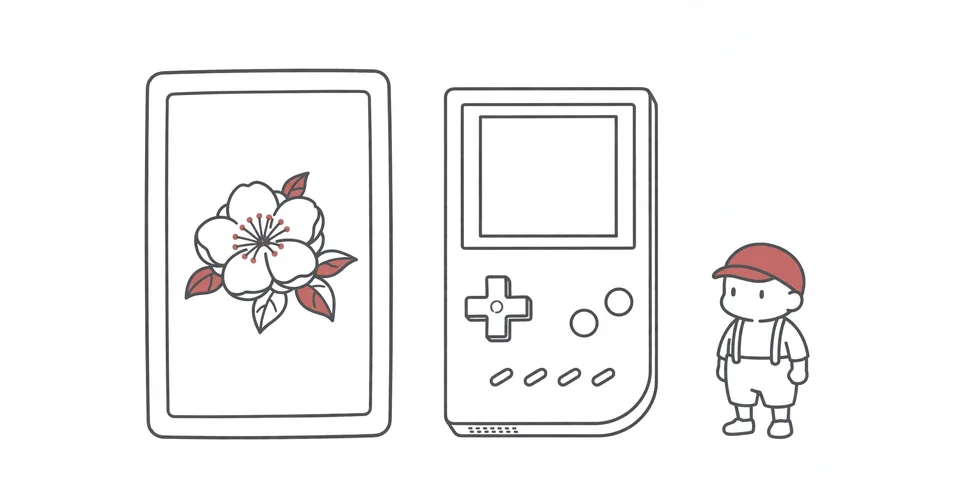
The story starts with a craftsman, not a corporation. Fusajiro Yamauchi opened a small workshop in the Shimogyo ward of Kyoto on 23 September 1889 to make hanafuda, the traditional Japanese flower cards. A hanafuda deck has 48 cards in 12 suits, one for each month of the year, decorated with flowers, animals and scenes from nature. At the time, gambling with cards was technically banned in Japan, but hanafuda was tolerated because it was seen as a folk game, and Yamauchi sold his handmade decks to gambling halls and shops around Kyoto. He called the business Nintendo Koppai. The name is often translated as leave luck to heaven, which turned out to be a fitting motto for a company that would bet its future again and again.
For its first 70 years, Nintendo stayed a card company. It grew into the biggest playing card maker in Japan, it made cards for the imperial court, and in 1959 it signed a deal with Disney to print cards with Mickey Mouse and other characters, which put Nintendo cards in toy shops across the country. But the card market had a ceiling, and by the 1960s the third president, Hiroshi Yamauchi, the founder's great grandson, was looking for something bigger. He tried instant rice, a taxi company and a love hotel chain, and most of these ventures failed. What saved the company was a toy. An engineer named Gunpei Yokoi made a simple extendable plastic arm called the Ultra Hand, and it sold more than a million units in 1966. Yokoi became the head of a new games division, and the firm started thinking of itself as a toy company.
The long road to video games
The company entered video games cautiously. It made arcade machines, it made the Color TV Game home consoles in 1977 in partnership with Mitsubishi, and in 1980 Yokoi created the Game and Watch, a pocket sized handheld with a single game and a clock. The Game and Watch sold 43 million units and introduced the cross shaped control pad that every controller still uses today. Then, in 1981, a young designer named Shigeru Miyamoto created Donkey Kong for the arcades, and with it a jumping carpenter who would later be renamed Mario. Miyamoto had no formal game design training. He had studied industrial design and drawn manga, and he designed games the way a cartoonist draws a story, with a clear hero, a clear goal and a world that made sense at a glance. That instinct would define Nintendo for the next four decades.
Meanwhile the American video game industry was collapsing. In 1983, a flood of rushed, low quality games destroyed consumer trust, and the market in the United States fell from around 3.2 billion dollars to almost nothing in two years. Retailers stopped stocking game consoles entirely. Into that wreckage walked the Kyoto firm, with a machine called the Famicom, released in Japan in 1983, and relaunched in the United States in 1985 as the Nintendo Entertainment System. It solved the quality problem with a seal of approval, a lockout chip that stopped unlicensed games, and strict limits on how many games a publisher could release each year. The plan worked. The NES sold about 62 million units, Super Mario Bros. became the best selling game of its era, and by the end of the decade it had rebuilt the American game market almost single handedly. The company that made flower cards had saved an industry it did not create.
The handheld kingdom
If the NES made the company famous, the Game Boy made it unstoppable. Released in Japan on 21 April 1989, the Game Boy was deliberately unambitious. Its screen was black and white, its processor was modest, and its great virtue was that it ran for hours on four AA batteries. The game packed in the box, Tetris, was a perfect fit, and the Game Boy went on to sell 118.69 million units together with the Game Boy Color. For the next 15 years Nintendo owned handheld gaming, while rivals with colour screens and better specifications faded because their batteries died after three hours.
The Kyoto company understood something its rivals did not. Power matters less than play. The Nintendo DS, launched in 2004 with two screens and a touch pen, sold 154.02 million units and became one of the best selling game machines of all time, not by chasing graphics but by opening games to people who had never played them. Brain Training sold to grandparents, Nintendogs sold to children, and the DS became a machine that sat in handbags as often as in bedrooms. Pokemon, first released in 1996 as a pair of Game Boy games about catching and trading pocket monsters, grew into the highest grossing media franchise in the world, bigger than Star Wars and Marvel, with games, cards, television and films. The thread running through all of it was the same as in 1889. The firm made things you could hold in your hands and play with anyone.
The Wii bet and the Wii U lesson
The Wii, launched in 2006, was the boldest bet the company ever made. While Sony and Microsoft competed on processing power, the Kyoto firm built a console around a motion sensing remote and a game, Wii Sports, that let a grandmother beat her grandson at virtual tennis on the first try. The Wii sold 101.63 million units and turned living rooms into bowling alleys. It proved that the market for games was far larger than the market for gamers, and for a few years Nintendo was the most talked about company in entertainment.
The follow up was a lesson in humility. The Wii U, launched in 2012, had a tablet like controller that confused buyers, weak third party support, and a name that many shoppers mistook for an accessory to the old Wii. It sold only 13.56 million units, the worst result for a home console from Kyoto, and the company posted losses for three straight years. Analysts wrote obituaries. Investors demanded the company put Mario on smartphones. It did release a few mobile games, but it refused to abandon hardware, and in 2017 it answered its critics with the Switch.
The Switch changes everything
The Switch was a simple idea executed with rare confidence. It was a home console that could be lifted off its dock and carried out of the house as a handheld, with controllers that split in two so two people could play anywhere. It launched on 3 March 2017, and it became the fastest selling console in the company's history, passing 150 million units and overtaking the DS as the best selling hardware the company has ever made. Games like The Legend of Zelda Breath of the Wild, Animal Crossing New Horizons and Mario Kart 8 Deluxe sold tens of millions of copies each, and during the pandemic the Switch became a fixture of locked down households around the world. Where the Wii U had confused people, the Switch explained itself in a single sentence. Play at home, play on the train, play with a friend.
The success gave the company room to grow beyond games. Super Nintendo World opened in Osaka in 2021 and later in the United States, letting visitors walk through a life sized Mushroom Kingdom. The Super Mario Bros. Movie earned more than 1.36 billion dollars in 2023, one of the highest grossing animated films ever made. And in October 2024, the company opened the Nintendo Museum in Uji, near Kyoto, in a renovated factory, where visitors can play more than 100 years of the company's products, from hanafuda cards to the Famicom. The museum is a statement. The firm now treats its own history as a product, and fans travel to Kyoto to see it.
| Console | Released | Lifetime sales |
|---|---|---|
| Nintendo Entertainment System | 1985 | About 62 million |
| Game Boy and Game Boy Color | 1989 | 118.69 million |
| Nintendo DS | 2004 | 154.02 million |
| Wii | 2006 | 101.63 million |
| Wii U | 2012 | 13.56 million |
| Nintendo Switch | 2017 | More than 150 million |
| Nintendo Switch 2 | 2025 | 3.5 million in the first four days |
The newest chapter began on 5 June 2025, when the Nintendo Switch 2 launched worldwide. It sold 3.5 million units in its first four days, the fastest launch for any hardware from Kyoto ever, and the fastest selling console launch in history at the time. The machine keeps the hybrid design of the original Switch, with a bigger screen, magnetic controllers and a new Mario Kart as its flagship launch title. Early demand was so strong that the company apologised in advance for shortages in Japan, and lotteries were held for the right to buy one. It was a familiar scene for a company that has been creating queues since the 1980s. The firm does not chase trends, and that is why it keeps setting them.
Why Nintendo keeps winning
The honest answer is that the company has never really tried to win the same race as everyone else. Sony and Microsoft sell power, and the Kyoto firm sells play. Its games are built around a feeling first and a specification second, and its hardware is designed to be picked up by someone who has never held a controller. That sounds simple, but it is a discipline, and it is easy to see what happens when the company forgets it. The Wii U forgot it and failed. The Game Boy remembered it and conquered the world with a grey screen and four batteries.
There is also something in the company's age that its rivals cannot copy. It has survived the death of the arcade, the crash of 1983, the rise of the PlayStation, the arrival of the smartphone and the arrival of free to play games, and it did so without ever leaving Kyoto and without ever letting go of the characters Miyamoto drew in the 1980s. Mario is now 40 years old and still the face of the company, and that continuity is part of the product. Parents buy a Switch because they played a Game Boy, and their children will buy whatever comes next because they played a Switch. Few companies in any industry can say that.
For a visitor to Japan, the story is visible everywhere. The company headquarters sits in Kyoto, not Tokyo, and the city that gave the world the bullet train and the Studio Ghibli films also gave it the most quietly radical entertainment company on earth. Nintendo goods fill the shelves of Japanese convenience stores, its characters appear in parades and on trains, and its museum draws fans from around the world to a suburb of Kyoto. The company that once made cards for gambling halls now makes the games the whole family plays after dinner, and the distance between those two things is the history of modern play.
The company began with a deck of cards and a craftsman who believed a well made game was worth an honest price. One hundred and thirty seven years later, the cards are in a museum, the consoles are in a hundred million living rooms, and the belief has not changed. Play should be simple, it should be shared, and it should make you smile before you understand how it works. That is the whole secret, and it has carried the company from 1889 to the Switch 2.
More in Tech & Internet
- Emoji, the Tiny Pictures Japan Gave the World
- Japanese Video Games and How a Small Island Rewired Play
- Otohime, the Small Sound That Protects Privacy in Japanese Toilets
- Disaster Vending Machines in Japan That Give Their Drinks Away
- Japan's Maglev Train That Runs at 500 Kilometres an Hour
- How to Use a Suica Card in Japan
Latest posts
- Shirakawa-go, the Village of Praying Hands
- Hanafuda Turns Twelve Months of Flowers Into a Card Game
- Tana Toraja and the Funerals That Last for Days
- Tempeh and the Fermented Bean Cake Indonesia Gave the World
- Gado-Gado, the Peanut Sauce Salad That Feeds All of Indonesia
- The Washlet Made the Japanese Bathroom the Warmest Room in the House
- Bakso and the Meatball Soup Indonesia Eats Everywhere
- Kecak Dance and the Hundred Voices That Tell the Ramayana
- Sapporo Snow Festival and the Ice City That Rises Every February
- Rangda Is the Witch Queen Bali Never Lets Win
- The Japanese School Uniform and the Story Behind the Sailor Suit
- Aikido and the Martial Art That Refuses to Fight Back
- Satay and the Smoke That Carries Indonesia to the World
- Barong Is the Lion Bali Calls Out When the Village Needs Protection
- Tumpeng Is the Rice Cone Java Serves When It Wants to Say Thanks