Takoage Sends New Year Wishes Up on a Paper Kite
· 20 min read
Takoage is the Japanese art of flying kites at New Year, a paper kite that carries wishes for good fortune into the winter sky.
In Japan, the first days of the year have a sound. It is not only the temple bell or the murmur of a shrine crowd. On a clear winter morning, it is the thin hum of a string pulled tight, and the sight of a paper shape climbing into a pale sky. That is takoage, kite flying, and for centuries it has been one of the quiet joys of the Japanese New Year.
A kite is a simple thing, paper stretched over bamboo, yet takoage has never been only a game. In takoage, the kite carries a wish. When it rises high, the old belief says, the gods receive the wish, and the year ahead begins with good fortune. That is why families still gather on open ground in January, why children still run with a string in their fist, and why the craft of takoage survives in workshops that have seen better days.
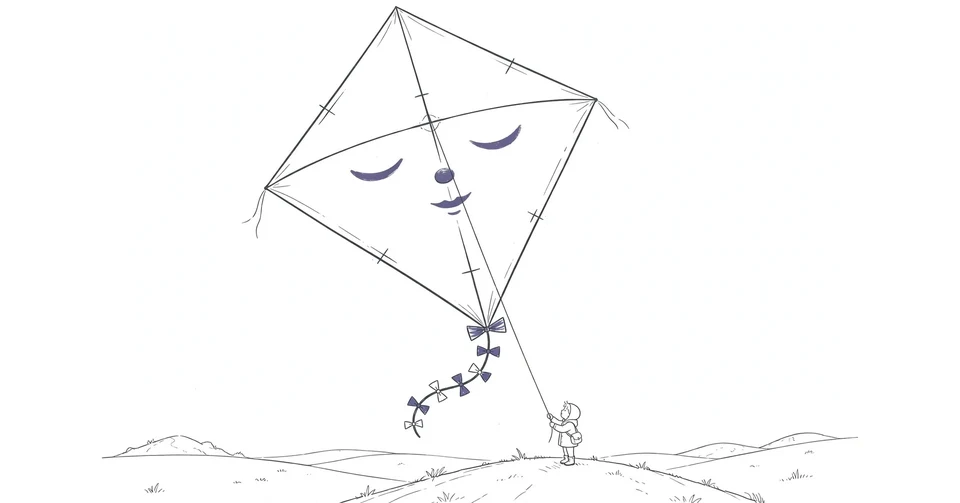
I first met the word in a small phrase tucked inside an article about the pine decorations of the New Year season. The line listed the old games of the holiday, and there it was, plain as day: "takoage, kite flying." That single phrase, quoted from my earlier piece on matsunouchi, the week Japan keeps the pine up for its guest, sent me down a path I did not expect. Behind two words sat more than a thousand years of history, a shogun's ban, regional rivalries, and a festival where whole neighbourhoods fight in the sky. This article follows that thread, from the arrival of the first kites to the giant octopus kite that still flies at the foot of Mount Fuji.
What takoage actually means
The word breaks apart neatly. Tako means kite, and age means to raise or to lift. Put them together and takoage is simply the raising of a kite, the act of sending it up and keeping it there. In everyday speech, people often just say tako for the kite itself, and the full word takoage belongs to the activity, the event, the day out.
There is a joke hiding inside the word, and every Japanese schoolchild knows it. Tako also means octopus. The name stuck, so the story goes, because early kites trailed long tails that rippled in the wind like the arms of an octopus. Some old sources say kites were also called ika, squid, for the same reason. The humour suits the object. A kite is a creature of the air that looks, from below, like something that belongs in the sea, and the Japanese language kept the joke.
Takoage sits alongside the other traditional games of the New Year. In the old song about New Year's Day, takoage is the first activity named, followed by spinning tops, hanetsuki, and the temari ball game. Hanetsuki, the game played with wooden paddles and a feathered shuttlecock, is its closest companion, an indoor and outdoor pair that fills the first days of January. I wrote about hanetsuki, the wooden paddle game that keeps New Year in the air as a companion to this piece, because the two games belong to the same holiday mood, one a rally kept aloft by hand, the other a wish sent up on the wind. Where hanetsuki is quick and close, a game of reflexes in a small space, takoage is slow and wide. It needs sky, and it rewards patience.
How kites reached Japan
Nobody can put an exact date on the arrival of takoage in Japan, and the honest sources admit as much. The kite was invented in China, where early examples were used to measure distances, test the wind, forecast the weather, and signal during military operations. From China, the idea travelled across the sea, probably carried by Buddhist monks, and reached Japan sometime in the early centuries of the first millennium. Some accounts place the arrival in the 6th century. Others, more cautious, point to the Nara period, from 710 to 794, when Buddhist culture was flowing into Japan at full strength. The safest thing to say is that the kite arrived from China through Buddhist channels, and that it was first a sacred object, not a toy.
The earliest firm evidence comes from a book, not from a kite. The Wamyo Ruijusho, an encyclopedia and dictionary of the Japanese language compiled around 931 to 938, records a word for kite, kami tobi, which means paper hawk. The name suggests that the first Japanese kites were shaped like birds, high flying creatures made of paper. A dictionary entry from the 10th century is a small thing, but it tells us that by the Heian period, the art of takoage already had a name, a shape, and a place in Japanese life.
In those early centuries, takoage was practised in religious ceremonies. They were flown to ward off demons and illness, and to pray for benevolent weather and plentiful crops. The kite was a messenger, a thing that could climb toward the heavens and carry a human request with it. There were also practical uses that sound almost unbelievable today. Large kites were used in the construction of shrines and temples to lift tiles and other materials up to workers on the scaffolding and rooftops. The same wind that carried a prayer could carry a roof tile.
For a long time, takoage stayed close to the nobility and to ritual. Ordinary people watched, but the kite belonged to ceremonies and to the court. That changed, as so many things in Japan changed, in the Edo period.
The Edo boom and the ban
The Edo period, from 1603 to 1868, was when takoage became a passion of ordinary people. Japan was closed to the outside world, its cities were growing, and its merchant class had money and leisure. Takoage spread from the court to the towns, and the skies over Edo, the city we now call Tokyo, filled with colour. Woodblock prints by masters such as Katsushika Hokusai and Utagawa Hiroshige show paper kites flying over the Sumida River and along the roads of the city. The kite had become popular entertainment, and the whole country caught the enthusiasm.
Popularity brought trouble. Kites fell onto roofs, tangled in power lines in later years, and crowded the narrow streets. The Tokugawa shogunate, which prized order above all, responded the way it often did, with a ban. For part of the Edo period, takoage was forbidden except during the New Year celebrations. The ban is one reason takoage became so closely tied to the New Year. When something is allowed only once a year, that one time becomes precious, and the whole holiday gathers around it.
The ban also produced one of the most charming episodes in the history of takoage. Some townspeople, unwilling to give up their kites, relabelled them as ikanobori, carp streamers, pretending that their flying objects were festive carp decorations rather than forbidden kites. The wordplay worked as a loophole, at least for a while, because carp streamers were a legitimate decoration. It is a small story, but it tells us something real about the period. People loved takoage enough to argue with the government about it, and the government thought kites mattered enough to regulate.
The Edo period also gave takoage its modern name. Before that time, kites were called by older names such as kami tobi. The word tako, with its octopus joke, only became the common name during the Edo period, when the merchant class of Edo made kite flying their own. The language changed because the people who flew the kites changed.
A kite for every region
One of the most remarkable facts about the kites of takoage is how many kinds there are. Roughly 130 different styles and types are recorded, and each region has its own distinctive shape. The kite is not one object in Japan. It is a family of objects, shaped by local wind, local paper, local bamboo, and local pride.
The most famous shapes of takoage are easy to picture. The yakko-dako, the samurai attendant kite, is a small rectangular kite painted with the figure of a footman in a crouching pose, his arms spread wide. When it flies, the painted servant seems to dance in the sky, and its flapping arms give it a lively, comic character. It is one of the most popular shapes for family takoage, and its cheerful design has made it a symbol of the New Year itself.
The Edo kite, or Edo kaku-dako, is a large square kite from Tokyo, famous for elaborate paintings of warriors, kabuki actors, legendary heroes, and bold kanji characters. These are serious works of art, painted on washi paper in strong colours, and they are made by specialists called takoshi, kite makers. In Tokyo, a maker of Edo kites is called an Edo takoshi, and the craft has been passed down through families for generations. Mikio Toki, one of Japan's few remaining professional kite makers, has spent more than four decades making Edo kites inspired by ukiyo-e prints, and his work has been shown as far away as Sydney.
Then there is the rokkaku, the hexagonal kite, a six sided fighter built for takoage battles. The rokkaku is known for its stability and its ability to climb to impressive heights, and it is the classic kite of the fighting tradition. In a takoage battle, flyers try to cut the strings of rival kites by rubbing their own lines against them, and the rokkaku, steady and strong, is a natural weapon for that contest. Other regions have their own fighters and their own shapes, from the bird kite of Niigata, the tori-dako, to the gadfly kite of Nagoya, the abu-dako. The variety is the point. A kite from one town would look out of place in another, and the people of each town knew it.
In takoage, the decorations matter as much as the shapes. Kites are painted with heroes from Japanese legends, with cranes that symbolise good fortune and longevity, with the zodiac animal of the year ahead, and with words or phrases that signify good luck. The designs are printed and painted on washi, Japanese paper, which is then fixed to a bamboo frame. A kite in takoage is therefore a small piece of folk art before it ever leaves the ground, and that is part of why people keep them, hang them on walls, and give them as gifts long after the wind has dropped.
Hamamatsu and the kite battles
If one festival keeps the fighting spirit of takoage alive, it is the Hamamatsu Festival in Shizuoka Prefecture. Held every year from May 3 to 5, during the Golden Week holidays, it fills the Nakatajima sand dunes with giant kites and the night streets of Hamamatsu with illuminated palace floats. More than 170 neighbourhoods take part, and the daytime kite battles are the heart of the event.
The festival's origin is a legend, and the official history is careful to say so. The story goes that more than 450 years ago, in the Eiroku era from 1558 to 1569, the lord of Hikuma Castle, the castle that stood where Hamamatsu is today, flew a large kite to celebrate the birth of his first son, Yoshihiro. There is little written evidence to support the story, and the earliest documented references to kite flying in the region date from the Kansei era, from 1789 to 1800. But the custom the legend describes is real and unbroken. In Hamamatsu, takoage celebrates the birth of a child, and the tradition has survived in the form of the festival we see today.
The mechanics of the festival are simple to describe and extraordinary to watch. Each neighbourhood flies enormous kites, some several metres across, painted with the neighbourhood emblem. The first kites raised are the hatsudako, the first kites, flown for babies born in the past year, decorated with the child's name. Then the battle begins. Teams try to cut the strings of rival kites by rubbing their ropes against them, while drums and trumpets sound and hundreds of people pull together on the sand. On the opening morning, around 170 town kites rise at once at the signal of fireworks, and the sky over the dunes fills with colour.
The festival also shows how takoage can be a community act. A giant kite cannot be flown by one person. It needs a team, and in Hamamatsu the team is the neighbourhood itself. Parents, grandparents, and children pull the same rope, and the kite that rises belongs to all of them. The wish attached to it is not private. It is a wish for a child, made in public, in front of the whole town.
Kites as talismans
Beneath the festivals and the games, an older idea still runs through takoage. The kite is a lucky charm. At New Year, takoage is flown to ward off evil spirits and to attract good fortune for the year to come. The belief is simple and easy to feel on a cold January morning. The kite goes up, the bad luck stays down, and the year starts clean.
The talisman idea takes different forms in different places. At harvest festivals, takoage kites have been flown with stalks of rice attached as a symbolic offering of thanks for a good crop. People in their unlucky year, the yakudoshi, have flown takoage kites marked with the character for devil, as a way of shooting down the troubles that might come. The higher the kite flies, the better the luck, and the proverb is repeated at every New Year gathering. In takoage, a kite that climbs well is a good omen, and a kite that falls is simply a reason to try again.
I find this the most touching part of the tradition. A wish written on paper, tied to a string, and trusted to the wind is a humble kind of prayer. It does not demand a temple or a priest. It asks only for a clear day, a steady breeze, and a person willing to run a few steps and let go. There is something honest about that. We make so many of our wishes in private, typed into a phone or whispered at midnight, and the kite takes the opposite approach. It makes the wish visible, public, and as high as the wind allows.
The giant octopus at the foot of Fuji
The most spectacular modern expression of takoage happens not in May but in January, at the foot of Mount Fuji. The Octopus kite fly, in Mt. Fuji, is an annual event held every January during the New Year period at the Asagiri Highlands in Fujinomiya City, Shizuoka Prefecture. Its centrepiece is a kite 25 metres long, shaped like an octopus, flown against the backdrop of the mountain.
The event began as a kite flying competition about 20 years ago, started to offer a fun festival experience to a wider audience. Fujinomiya, on the western slopes of Mount Fuji, enjoys good sunlight and favourable wind conditions, with westerlies and south facing slopes that create mild winds and updrafts. The area is already famous for sky sports, including a national paragliding competition, so it was a natural place for a kite festival. What makes the event special is who flies the giant kite. Close to 100 children work together, holding the ropes of the 25 metre octopus to lift it into the sky, once in the morning and once in the afternoon, with Mount Fuji behind it. The organiser has described the joy on the children's faces as incredibly moving, and it is easy to believe him.
The event also shows how takoage is adapting. Alongside the giant kite, there is a kite making experience corner and kite sales, and families make up around 70 percent of the participants. In recent years, the number of international tourists has been growing. The official report from the Japanese government on the giant kite event at the foot of Mount Fuji notes that flying locations have become limited, because kites get tangled in power lines, so the chance to fly in such a spacious area is especially appreciated by families. The octopus kite is a reminder that the tradition is not only preserved in museums. It is still flown, still pulled by children's hands, and still big enough to make adults stop and look up.
How to make a simple kite
Part of the charm of takoage is that a kite can be made at a kitchen table. The traditional materials are bamboo for the frame, washi paper for the sail, glue, and string, and the same principles apply to a simple diamond kite made at home with paper, wooden sticks, and twine.
The frame comes first. Two light sticks, one vertical and one horizontal, are crossed and tied firmly at the centre. The horizontal stick sits about a third of the way down from the top of the vertical stick. The sticks must be light and straight, because a heavy frame will not fly, and a crooked one will spin.
Next comes the sail. A sheet of paper is cut to cover the frame with a small margin, and the edges are folded over the sticks and glued down. Traditional makers use washi, which is light and strong, but ordinary paper works for a first kite. The sail can be left plain or painted with a simple design. A crane, a bold character, or a splash of colour is enough. The painted kites of Edo are the distant cousins of this first attempt, and every maker starts with something simple.
Then comes the bridle, the set of strings that joins the kite to the flying line. Two short strings are tied to the frame, one near the top and one near the centre, and joined at a single point. The flying line is tied to that point. The bridle is where most beginners go wrong. If it is too long, the kite will not climb. If it is too short, the kite will dive. A good starting point is a bridle that lets the kite lean slightly back into the wind.
Finally, the tail. A long strip of paper or cloth, tied to the bottom of the kite, steadies it in flight. This is the octopus part, the trailing shape that gives the kite its balance and its character. A kite without a tail will spin. A kite with a tail will climb, slowly and steadily, and stay up as long as the wind holds.
Flying a kite in takoage is a matter of wind and patience. Stand with your back to the wind, hold the kite up, let the line out a little at a time, and walk backward into the breeze. Do not run too fast. The wind does the work, and the flyer only guides it. Choose an open space, away from power lines and roads, and check the weather before you go. The old advice still holds. A clear winter day, with a steady breeze, is the best day for takoage.
Why the skies grew quieter
For all its history, takoage is not as common as it once was. The reasons are plain, and they are the same reasons that have thinned many folk traditions. Cities grew taller and open spaces grew scarcer. Skyscrapers replaced vacant land, and there are fewer fields where children can run with a string. The number of professional kite makers, the takoshi, has dwindled, and a generation of children who did not grow up flying kites has become adults. More people now buy takoage kites as decorations than fly them, and the kite has become, for many, a beautiful object on a wall rather than a living thing in the sky.
This is not a story of disappearance, though. It is a story of narrowing, and of the places where the tradition holds on. The Tokyo Kite Museum, in the Nihonbashi district of Tokyo, keeps hundreds of kites on display, from palm sized masterpieces to expansive creations, in a small museum founded in 1977 by Shingo Modegi, the late owner of the Taimeiken restaurant. The museum sits in the restaurant building in Ginza, and it is a quiet place where the craft is taken seriously. Visitors can see Edo kites painted with warriors and auspicious symbols, and sculptural kites from around the country, and understand what a kite can be when a master makes it.
Festivals do the louder work of keeping takoage alive. Hamamatsu keeps the battle tradition. Fujinomiya keeps the giant kite. Smaller towns keep their own kite days, and New Year gatherings still include a kite for the children. The tradition survives because it is carried by events that people attend together, not only by individuals who remember it alone.
There is a lesson in that for anyone who cares about old customs. A tradition does not survive because it is written down. It survives because it is done, in public, with other people, on a day that repeats every year. The kite needs the wind, but it also needs the crowd, the team pulling the rope, and the child who will remember the day and come back next year.
The wish still goes up
Takoage began as a ritual object, became a popular entertainment, was banned and then celebrated, and is now a craft kept alive by festivals and by families who still make time for it in January. It has been a prayer for good weather, a charm against evil, a celebration of a birth, a work of art, and a game. Few objects in Japanese culture have carried so many meanings on such a light frame.
Japan House London, in its account of New Year traditions of kites and kumade, puts the heart of the matter simply. Kites are decorated with bright designs, heroes from legends, symbols and words that signify good fortune, and each region has its own distinctive shape. That is the whole tradition in a sentence, and it is enough. The kite is a picture of what a community hopes for, sent up where everyone can see it.
I think the reason takoage has lasted is that it asks so little and gives so much. A few sticks, a sheet of paper, a length of string, and a willing wind are all it takes. The reward is a few minutes of looking up together, which is a rare thing in a season when most of us are looking down at screens and schedules. The kite does not hurry. It climbs at the pace of the wind, and it stays up as long as the wind and the flyer agree.
So the next time January comes, and the sky is clear, and there is an open field somewhere nearby, it is worth remembering the old phrase from the pine decoration article, "takoage, kite flying," and giving takoage a try. The wish does not need to be grand. Good health, a steady year, a child growing well, these are the wishes kites have always carried. Send one up on a paper kite, and watch it climb. That is takoage, and it has been enough for a thousand years.
More in Culture & Society
- Hanetsuki Keeps New Year in the Air With a Wooden Paddle
- Karuta Turns a Hundred Poems Into Japan's Fastest Card Game
- Hatsuyume Is the First Dream Japan Reads Like a Fortune
- Japanese Manga and How It Became the World's Most Read Comics
- Hatsu-Hinode Is the First Sunrise Japan Wakes Up For
- Matsunouchi Is the Week Japan Keeps the Pine Up for Its Guest
Latest posts
- Japanese Stationery and the Small Tools Japan Takes Seriously
- Toshikoshi Soba Is the Long Noodle Japan Eats at Midnight
- Osouji Is the Cleaning Japan Does Before the Gods Arrive
- Japanese Anime and How a Niche Hobby Conquered the World
- Toshigami Is the Guest Japan Prepares the Whole House For
- Urajiro Is the Fern That Wishes a Family Twice Over
- A Shimekazari Hangs the New Year Over the Front Door
- Make-Koshi Is the Eight Loss Line That Sends a Sumo Wrestler Down
- Japanese Arcades and the Game Centers That Refuse to Die
- Danpatsu-Shiki Is the Haircut That Ends a Sumo Career
- Kachi-Koshi Is the Eight Win Line That Moves a Sumo Wrestler Up
- Tachiai Is the One Second That Decides a Sumo Bout
- A Gunbai Points at the Winner and Nobody Argues
- Izakaya, the After-Work Pubs Where Japan Unwinds
- Dondo-Yaki Is the Fire That Closes the Japanese New Year