Ochazuke Is Rice Tea and Comfort in One Bowl
· 15 min read
Ochazuke is hot tea poured over rice, a simple Japanese bowl that turns leftovers into a warm, quiet ending to a meal.
Some dishes announce themselves. Ochazuke does the opposite. It arrives quietly, a bowl of plain rice with hot tea poured over it, and it asks for nothing more than a few minutes of your attention.
The first time I tried ochazuke, I expected it to feel like a shortcut, something you eat only when the kitchen has run out of ideas. Instead it felt like the most honest bowl in Japanese cooking. Warm tea softens the rice, salt and sourness wake it up, and suddenly a handful of leftovers tastes deliberate.
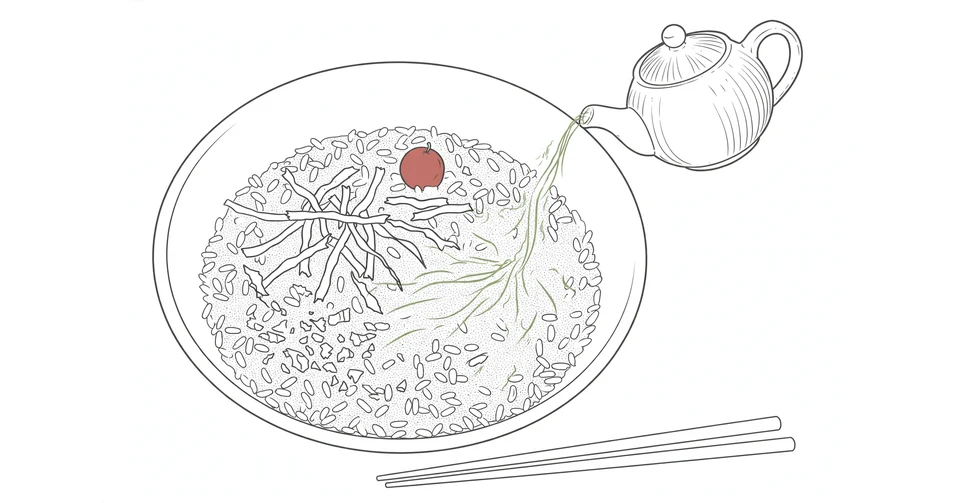
That is the whole secret of ochazuke. It is not a dish that tries to impress you. It is a dish that takes care of you, one spoonful at a time, and it has been doing that job in Japan for centuries.
What ochazuke actually is
At its simplest, ochazuke is cooked rice with hot liquid poured over it, green tea, dashi, or plain hot water. The name gives the recipe away. Ocha means tea, and zuke means submerged, so the word describes rice that has been steeped in tea. The liquid is usually green tea, but dashi, the clear Japanese soup stock, is just as common, and in older times people simply used hot water.
The rice sits in a bowl, toppings are arranged on top, and the hot tea or dashi is poured in until the rice is about halfway submerged. You eat it with a spoon or chopsticks, scooping up rice that has softened in the warm liquid. It is closer to a soup than to a plate of rice, but it is lighter than most soups, and it never pretends to be a full meal.
That lightness is the point. Ochazuke is rarely the main event of a dinner. In Japan it is more often the quiet ending, a small bowl after the real cooking is done, or a quick meal when the stomach wants warmth rather than weight. A good guide to the dish puts it plainly: instead of proper mealtime food, the Japanese enjoy ochazuke more as a quick meal or to fill up at the end of the meal.
It also happens to be one of the easiest things in Japanese cooking to make well. The ingredients are pantry staples in most Japanese homes, which is why ochazuke shows up on tired evenings, in student rooms at midnight, and in kitchens where someone has come home late and hungry.
A bowl with a long history
Ochazuke did not appear out of nowhere. Its roots reach back to the Heian period, when people poured water over rice, a practical way to make cold rice easier to eat and quicker to finish. Tea came later. During the Edo period, green tea, particularly bancha and sencha, became the popular substitute, valued for its aroma and mild umami flavor.
The dish even has a working class origin story. Servants and apprentices employed by merchants in Edo had little time to eat, and their meal times were controlled by their superiors, so a fast way of eating was a necessity rather than a choice. Pickles were almost the only side dish the apprentices were allowed to eat freely, and they were often piled up in huge bowls. With no way to keep cooked rice warm, pouring hot liquid over cold rice was a convenient way to enjoy it and to finish a meal quickly.
By the Genroku period, the dish had become popular enough to support its own restaurants. Chazukeya, shops serving ochazuke, were widely popular as fast food for common people, and a late Edo travel guide mentions them plainly, which suggests they were common at the time. What began as a hurried meal for workers had become a fixture of city life.
In Kyoto, ochazuke is known by another name, bubuzuke. The name changes, but the bowl stays the same, and the Kyoto version carries a piece of local etiquette with it. A host offering bubuzuke to a guest was traditionally understood as a polite hint that the visit had gone on long enough. Whether every Kyoto host meant it that way is hard to prove, but the story survives because it captures something real about the dish. Ochazuke is the food of endings, including the end of a visit.
The classic toppings that make ochazuke work
A bowl of ochazuke is only as good as what sits on the rice before the tea is poured. The toppings do most of the flavor work, because the tea itself is gentle. The classic set is small, salty, sour, and crunchy in turn, and each piece has a job.
Umeboshi is the most famous of them. One sour pickled plum, placed in the center of the bowl, gives the whole dish its sharp, salty anchor. The plum softens in the hot tea and its tartness spreads through the rice. Anyone who has eaten a Japanese bento knows this plum well, and there is a reason it appears in so many lunchboxes. If you want to understand why one small plum carries so much weight in Japanese food, the story of umeboshi, the sour plum Japan puts in every bento is worth reading first.
Salted salmon is the other classic. Flaked shiozake, or any leftover cooked salmon, adds richness and salt, and its pink flakes look beautiful against white rice. A bowl of ochazuke topped with salmon is the version most people picture first, and it is the version most recipe writers reach for when they want to show the dish at its best.
Tsukemono, Japanese pickles, add crunch and a second note of salt or sourness. They are also the topping with the deepest history in this bowl, since pickles were the one side dish Edo apprentices could eat freely. Among the pickles that belong here, narazuke is one of the most interesting, a pickle that spends years asleep in sake lees before it is ready to eat. The slices go into ochazuke beautifully, and the story of narazuke pickles that spend years asleep in sake lees explains why a pickle made that slowly tastes so different from a quick one.
Around those three anchors, the rest of the toppings are a matter of texture and color. Shredded nori adds a taste of the sea. Bubu arare, tiny crispy puffed rice pellets, or crushed rice crackers add a crunch that survives a few seconds in the tea before softening. Toasted sesame seeds bring a nutty warmth. Mitsuba, Japanese parsley, or scallions add a fresh green note on top. A small dab of wasabi, if you like heat, dissolves into the liquid and warms the whole bowl from the inside.
None of these toppings is expensive, and none of them needs a special trip to buy. That is part of the design. Ochazuke is built from things a Japanese kitchen usually has already, and the bowl rewards whatever you have on hand rather than punishing you for what you lack.
Green tea or dashi, the two ways to pour
Every bowl of ochazuke forces one small decision: tea or dashi. The choice changes the character of the dish more than any topping does.
Green tea is the older, simpler option. Genmaicha, with its roasted rice and nutty flavor, is a natural fit, since the bowl already contains rice. Sencha is brighter and more grassy. Hojicha, roasted green tea, is darker and toastier. For a cold summer version, mugicha, barley tea, is caffeine free and refreshing. The tea version tends to be mild, and it relies on salty toppings to add flavor.
Dashi is the richer option, and it is the one most restaurants use. A good dashi, seasoned with a little mirin, soy sauce, and salt, gives the bowl a savory depth that tea alone cannot match. With good dashi, the dish can be very flavorful even with just a few simple toppings. Many home cooks keep a dashi packet or powder in the cupboard for exactly this purpose, and it turns a five minute bowl into something that tastes like it took far longer.
There is no correct answer, only a mood. Tea makes ochazuke feel cleaner and lighter, the version you want when you are tired or slightly unwell. Dashi makes it feel like a small meal in its own right, the version you want when you are properly hungry. I have come to think of the tea version as the ending of a day and the dashi version as the rescue of one.
Ochazuke as the end of the meal and the late night bowl
Ochazuke occupies a specific moment in Japanese eating, and that moment is almost always late. It is the bowl after the main dishes are cleared, the food that follows a long meal the way tea follows a conversation. It is also the food of the midnight kitchen, the thing a student eats while studying late or a tired worker eats after coming home, when cooking a real dinner is out of the question.
Japanese stories return to this scene again and again. In manga and drama, you will find a student scarfing down a bowl of ochazuke while burning the midnight oil, or a tired salaryman who returns home from work and needs something quick to eat before bed. The scenes work because they are true to life. Ochazuke is light enough to eat right before sleep and fast enough to make when the day has already taken everything else.
The dish is also kind to people who feel unwell. Soothing to eat and easy on the stomach, it is the food many Japanese reach for when they are under the weather or when there are no other ingredients to cook with. A bowl of warm rice in warm tea asks very little of a tired body and gives back a surprising amount of comfort. I think that is why people who grew up with ochazuke describe it the way they describe a blanket or a hot bath rather than the way they describe a recipe.
There is a lesson in that, and it is not really about cooking. Most of the food we celebrate is food that demands attention, money, or skill. Ochazuke demands none of those things. It asks only that you slow down for five minutes and eat something warm. In a food culture that often rewards excess, a bowl that rewards restraint feels quietly radical.
Regional turns and the instant packet
Ochazuke is a national dish, but it has local accents. Kyoto calls it bubuzuke, and that is the best known regional name. Elsewhere the differences are smaller and more personal than geographic, a matter of which topping a region favors or whether the pour is tea or dashi.
One regional idea worth knowing is the version topped with sashimi, most famously sea bream, known as tai chazuke. Here the hot dashi is poured over raw fish on rice, lightly warming it as you eat. It is a restaurant version of the dish, more delicate and more expensive than the home bowl, and it shows how far a simple idea can travel when a chef takes it seriously. Unagi, grilled eel, appears as a topping in the same spirit, rich and savory against the plain rice.
The most important modern turn in the story of ochazuke is not regional at all. It is the instant packet. Since the 1970s, packaged instant ochazuke, consisting of freeze dried toppings and seasonings, has become popular. A single sachet usually contains dried plum, salmon, nori, rice crackers, and green tea powder. All you need to do is pour hot water or tea over rice, and the bowl is ready in a minute.
The packets are everywhere in Japan, in supermarkets and convenience stores, and they are a fair example of what instant food can do well. They preserve the shape of the dish, hot liquid over rice with salty toppings, and they make it available to anyone with a kettle. A careful recipe writer puts it honestly: the packets are convenient, but you cannot beat the taste and flavor of homemade ochazuke. I agree, and I would add that the gap is smaller than purists admit. The instant version is still ochazuke, just a quieter one.
How to make ochazuke at home
Making ochazuke at home takes about ten minutes, and most of that time is waiting for the salmon to cook. The method below follows the classic ochazuke recipe from Just One Cookbook, which lays out the dish in clear, practical steps.
Start with one cup of cooked Japanese short grain rice in an individual bowl. Short grain rice matters here, because it softens gently in the liquid without falling apart, and it holds the tea the way a sponge holds water.
Prepare your topping. If you are using salmon, bake a salted salmon fillet until it is firm and well done, then break it into flakes. Any leftover cooked salmon works just as well, and that is the point of the dish. Arrange the flakes over the rice, then sprinkle over a teaspoon of bubu arare or crushed rice crackers, a teaspoon of shredded nori, and a quarter teaspoon of toasted white sesame seeds.
Next, prepare the pour. For the dashi version, combine one cup of dashi with a teaspoon of mirin, a teaspoon of soy sauce, and a small pinch of salt in a small saucepan, bring it to a boil, and keep it warm in a teapot. For the tea version, put two teaspoons of green tea leaves in a pot or teapot, pour one cup of hot water over them at the temperature the tea package suggests, and let it steep for one to two minutes.
When you are ready to eat, pour the hot dashi or tea over the rice until it is halfway submerged. Top with mitsuba or scallion and a small dab of wasabi, and add half a teaspoon of soy sauce if you made the tea version. Eat it right away, while the rice is still warm and the toppings still have their crunch.
A few practical notes make the difference between a good bowl and a great one. Do not drown the rice. Halfway submerged is the right level, enough to soften the grains and carry the flavors, but not so much that the bowl becomes soup. Pour at the table, not in the kitchen, so the first spoonful is still hot. And keep the toppings simple. Three or four is enough. A bowl crowded with toppings stops being ochazuke and starts being a salad.
If you want a summer version, the same method works cold. Use cold rice and cold dashi or tea, and mugicha is a good choice, since it is caffeine free and refreshing. The cold version is less famous, but on a hot night it may be the best bowl of ochazuke you ever eat.
Why a simple bowl feels like comfort
Comfort food is usually described as rich or heavy, the kind of food that fills a room with smell and fills a stomach with weight. Ochazuke breaks that rule, and that is what makes it worth writing about.
Its comfort comes from warmth, from salt, and from ease. Warmth, because hot tea on rice is the closest thing to a blanket you can eat. Salt, because the toppings give a tired palate something to notice without demanding effort. Ease, because the dish is ready in minutes and forgiving of whatever you have or do not have. Nothing about it performs. It simply works.
I have also noticed that ochazuke teaches a small discipline. It rewards paying attention to little things, the temperature of the tea, the size of the flakes, the moment the rice softens, and it punishes hurry, since a drowned bowl cannot be undone. Cooking it well means slowing down for five minutes, and that may be the real reason it feels like comfort. The bowl does not just feed you. It gives you a pause.
There is something generous in a dish that asks so little and gives so much back. Ochazuke never tries to be the best thing you ate all week. It only tries to be the right thing at the right moment, and most of the time it succeeds.
A quiet bowl worth keeping
Ochazuke is rice, tea, and a few small toppings, and it has survived centuries, restaurants, and instant packets without changing its nature. It began as a fast meal for workers, became the fast food of Edo, and is now the late night bowl of students and salarymen, the gentle food of the unwell, and the quiet ending of a good dinner.
If you have never tried it, make one bowl at home before you decide what you think. Use the rice you already have, the tea you already drink, and whatever salty thing is in your fridge. Pour slowly, eat slowly, and notice how little it takes to feel looked after. Some dishes earn their place by being extraordinary. Ochazuke earns its place by being there, warm and ready, whenever the day runs out before you do.
More in Food & Travel
- Takuan Turns a Humble Daikon Into Japan's Yellow Crunch
- Nukazuke Is the Living Pickle Bed Japan Feeds Every Day
- Tsukemono Is the Crunch Japan Puts Beside Every Meal
- Aojiso Is the Green Leaf Japan Eats Fresh and Raw
- Akajiso Gives Umeboshi Its Deep Red Blush
- Umeshu Is the Liqueur Japan Makes From Unripe Plums
Latest posts
- Shiso Is the Leaf That Paints Umeboshi Red
- Hello Kitty and the Cat Who Conquered the World
- Umeboshi Is the Sour Plum Japan Puts in Every Bento
- Baikasai Serves Tea Under the Plum Blossom at Kitano Tenmangu
- Plum Blossom Opens Japan's Year Before the Cherry Trees Wake
- Tenjin Engi Emaki Paints a Storm God Into a Saint of Learning
- The Flying Plum Tree That Followed a Scholar Into Exile
- Kitano Tenmangu Turns Plum Blossom Into a Prayer for Exams
- Japanese Geisha and the World Behind the Painted Face
- Tenjin Is the Storm God Who Became Japan's Patron of Learning
- Queen Is the Crown Japan Gives Its Best Woman Karuta Player
- Japanese Pottery and the Six Kilns That Turned Clay into Culture
- Meijin Is the Title Every Karuta Player Dreams of Wearing
- Dazaifu Tenmangu Is Where Japan Still Prays to a Scholar God
- Sugawara No Michizane Became the God Students Still Pray To