Ihai Are the Lacquered Tablets That Keep a Name Alive
· 16 min read
An ihai is a lacquered wooden tablet inscribed with the posthumous Buddhist name of a person who has died, and it stands in the family altar as the place where that name is honoured every day.
An ihai is a small wooden tablet, usually black lacquered wood, inscribed with the posthumous Buddhist name of a person who has died. It stands in the family Buddhist altar, the butsudan, and it is the place where the dead are greeted every morning and evening. To look at it, an ihai is only a piece of shaped wood with gold letters. To the family that tends it, the ihai is the person, present in the room by name.
The word itself gives the first clue. Ihai means, literally, a rank tablet, and it echoes the tablets used in old Chinese Confucian rites to record the rank and name of the dead. The tablet came to Japan with Zen Buddhism in the Kamakura period and spread widely in the Edo period, when the family altar became a fixture of ordinary homes.
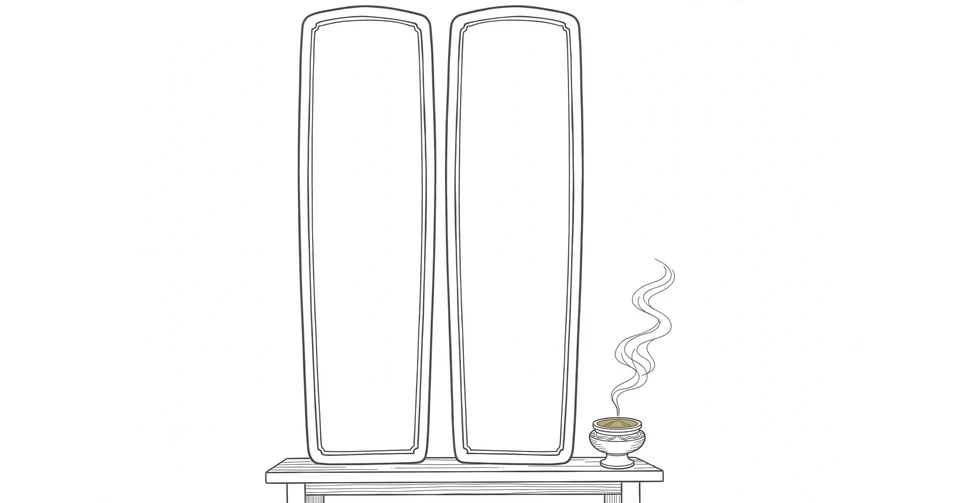
This article explains what an ihai is, how the name on it is chosen, how the tablet is made, and how a family lives with it day after day.
What an ihai is
An ihai is a wooden tablet that carries the posthumous Buddhist name of the dead, and the name is the whole point of the object. A flat upright board called the fuda rises from a small base, and the whole piece stands between 13 and 42 centimetres tall from base to tip. The posthumous name is engraved in gilded calligraphy on the front, and the age and date of death are engraved on the back. Its roots reach further back than Buddhism in Japan, to a blend of the folk belief in yorishiro, an object in which a spirit can reside, and the sotoba, the tall wooden tower set up behind a grave for the repose of the dead.
Nothing on the tablet shows what the person looked like, and that is exactly what sets it apart from the memorial photograph that usually stands nearby. The photograph shows a face. An ihai shows a name. The face belongs to the past, to the years when the person was alive. The name belongs to the present, to the life the dead now lead as ancestors in the household. A photograph asks to be remembered. An ihai asks to be addressed, greeted, and fed, as if the person were still part of the family and simply living in another room. I think this is the most honest difference between the two objects. A face fades from memory no matter how sharp the photograph is, but a name, spoken every morning, does not fade. It is renewed each time it is read aloud.
A name given after death
The name on an ihai is called a kaimyo, a posthumous Buddhist name, and it is not the name the person used in life. It is a new name, given by a priest, that marks the dead person's entry into the Buddhist path. The belief behind it is simple and serious: when a person passes into the Buddhist world, they need proof that they lived according to Buddhist teaching, and the kaimyo is that proof. The name is usually given at the funeral rites and written onto the tablet in gold.
The name is not the same in every school of Buddhism. Most schools call it a kaimyo, but Jodo Shinshu calls it a homyo, and the Nichiren school calls it a hogo. The characters added before the name also change with the sect. Zen adds the character for emptiness, Shingon adds a Sanskrit character that stands for the cosmic Buddha, Pure Land schools add a character that stands for Amida Buddha, and the Nichiren school adds characters from the Lotus Sutra. There is also a distinction between a tablet made before death, a gyakushu ihai with the name written in vermilion while the person lives, and one made after death, a junshu ihai, which is the usual case. When people simply say ihai, they almost always mean the second kind.
I find something quietly generous in the idea of a name given after death. In life, a name is given by parents and carried through school and work and marriage, and it gathers a history the person did not choose. The kaimyo is different. It is chosen for the person at the end, as a final gift, a name that says nothing about their job or their debts and everything about the hope that they are now at peace.
From plain wood to black lacquer and gold
The permanent tablet, the hon ihai, is made of wood coated in black lacquer, urushi, and decorated with gold leaf. The finest examples use chinkin, a technique where a design is engraved into the lacquer and gold leaf or powdered gold is pressed into the grooves, or makie, where gold or silver powder is sprinkled over a design drawn in lacquer. Making one is a craft that passes through several hands: a woodworker shapes the tablet, a lacquerer coats it, a carver cuts the letters, and a calligrapher supplies the writing. The best known production areas are Aizu-Wakamatsu, Kyoto, Nagoya, and Wakayama, and simpler, cheaper tablets are now produced in China and Vietnam as well.
The price varies widely. A study of Japanese memorial objects published in 2014 put the range at around 20,000 yen to 200,000 yen as of 2013, and often higher, depending on size, style, and optional features. That is a wide range, and it is honest about what the tablet is: at the low end a simple marker, at the high end a work of craft that a family will keep for a century. The full study is published in the academic study of Japanese memorial objects, and it is the best single source in English on the subject. Size is measured in a traditional way: only the height of the fuda is measured, in go. A tablet of four go has a fuda of about twelve centimetres, and permanent tablets generally range from 2.5 to 7 go.
The three kinds of ihai
An ihai is not a single object but a small family of objects, and each kind has its own moment in the life of a bereaved household. The three main types are the uchi ihai, the hon ihai, and the tera ihai, and understanding them is understanding the first weeks after a death.
The uchi ihai, also called the shiraki ihai, is a simple tablet of plain, unlacquered wood. The first version of it is the no ihai, the temporary tablet made immediately after death and used at the temporary altar and the funeral. It carries the posthumous name, the secular name from life, the date of death, and the age at death. When the person was cremated, the tablet is taken home and kept on a temporary home altar with the ashes until the memorial service on the forty-ninth day after death. When that period ends, the temporary tablet is burnt, and the spirit is understood to move from it into the permanent tablet.
The hon ihai is the permanent tablet, the lacquered one with gold lettering, made in time for the memorial service on the forty-ninth day. It is the ihai that will stand in the family altar for many years to come. There are two common forms. A fuda ihai has the name of one person, or a couple, inscribed on its surface. A kuridashi ihai encloses a row of thin wooden plates inside it, each plate inscribed with the name of one of the dead, so that a whole line of ancestors can be kept in a single object.
The tera ihai is the temple's copy. Along with the home tablet, a second tablet is presented to the family's temple, the bodaiji, together with a donation for memorial services. At the temple, these tablets are kept in the hall for tablets or in the main hall, and they are prayed to during the morning and evening devotions. The family keeps one tablet at home, the temple keeps one at the temple, and the dead are remembered in both places at once. I like that arrangement. It says that remembering is not a private hobby but a shared duty, split between the house and the temple, and neither place carries it alone.
How a tablet is ordered and made
Ordering an ihai is, for most families, a practical task carried out in the days after the funeral. The tablet is bought at a Buddhist altar shop or through an online shop, and the family chooses a shape and size that suits the altar and the image of the person. The lettering is then engraved, and that step usually takes ten days to two weeks, so the order is placed early, with the forty-ninth day service in mind. The plain wooden tablet from the funeral can serve as a reference for the names and dates if the family is unsure of the details. Once the name is engraved, it cannot be corrected, so the family and the maker check the characters, the date, and the age before the work begins.
The choice is wider now than it used to be. Alongside the traditional black lacquered forms there are simple, modern designs, and tablets made from new materials such as artificial marble and acrylic, made to suit a modern room and the image of the deceased. The honest advice from makers is that there is no wrong shape to choose. The important thing is that the tablet suits the place where it will stand and the person it is for.
A new ihai, however beautiful, is not yet an object of worship when it arrives. It becomes one through a ceremony called kaigen kuyo, the consecration, sometimes also called the ceremony of placing the soul, tamashii ire. A priest performs the rite, and by it the tablet is understood to become a place where the soul of the dead resides. The same kind of ceremony is performed for a new butsudan and for a new Buddhist statue. Families without a temple connection sometimes skip the ceremony, and makers say this is acceptable, advising the family to welcome the tablet with joined hands and gratitude when it first arrives. I think that advice is wise in its own way. A ceremony performed by a priest is one way to mark a beginning. A quiet moment of gratitude at home is another.
Where an ihai stands in the home
Inside the butsudan, an ihai stands one level below the principal image, the honzon, on the tier beneath the Buddha or the sacred scroll. The Buddha sits highest, and the dead sit just below, close enough to be in the same cabinet and low enough to show the order of things. When a family has several tablets, they are placed in alternate shifts to the right and left, so that the cabinet stays balanced and no ancestor is pushed to the edge.
The cabinet itself is worth understanding, because the tablet only makes full sense inside it. A butsudan is a small household Buddhist shrine, a cabinet with doors that open each morning and close each night, and the full story of how it came into Japanese homes is told in the account of a butsudan keeping the dead close in a Japanese home. The tablet is the part of the cabinet that belongs to the family alone. The statue belongs to the Buddha, the scroll belongs to the sect, but the tablet belongs to the dead of that house, and no other family's tablet could take its place.
There is a Shinto counterpart to the tablet, and the contrast is instructive. In Shinto, the spirit tablet is called a reiji, and unlike an ihai, which inscribes a name and honours it, a reiji is understood as the vessel into which the spirit itself is transferred. The Shinto home altar that holds such objects is the kamidana, and the differences between the two household altars are explained in the account of how a kamidana brings the shrine into the Japanese home. A household may keep both altars, but they are not placed facing each other, so that the two sacred places of the house do not stare at each other across the room.
A day of small offerings
The daily life of an ihai is a life of small acts, done regularly and without fuss. In the morning the family opens the cabinet, lights the candles and the incense, offers fresh water, tea, or rice, and rings the small bell. In the evening the doors are closed again. The offerings are simple, and their simplicity is the point. The altar does not ask for wealth. It asks for attention, given daily, in the place where the family already lives.
The dish of rice placed before the tablet is later eaten by the family, so nothing is wasted. The offering is a sharing, a portion of the family's own meal set aside for those who no longer eat at the table. Water is offered fresh each day, flowers are changed when they fade, and the bell is rung to announce that the family is present and paying attention. I think the morning routine is the most important thing about the tablet, more important than its lacquer or its gold leaf. A name written in gold is only a name. A name greeted every morning, with water and rice and a rung bell, is a relationship. The tablet does not preserve the dead by being beautiful. It preserves them by being used.
If there is one season when an ihai matters most, it is Obon, the summer festival when the dead are believed to return. During Obon the doors of the cabinet are opened wide, the offerings are fuller than usual, the candles burn longer, and the family gathers. The tablet is central to the welcome because it is where the welcome has been rehearsed all year. A family that greets the tablet every morning does not need to learn how to greet the dead at Obon. It already knows.
The sect that keeps no ihai
There is one important exception to everything in this article, and it is worth stating plainly. Jodo Shinshu, the largest school of Japanese Buddhism, generally does not use an ihai at all. The teaching of the school holds that the dead, through the vow of Amida Buddha, are already reborn in the Pure Land, and so they need no tablet to anchor them and no prayers for the repose of their souls. The posthumous name is still given, but it is recorded in the kakocho, the household register of the dead, or written on a homyo jiku, a hanging scroll, and honoured that way. The Nichiren Shoshu school takes a similar path: it does not make a permanent lacquered tablet either, and the name is recorded in the kakocho instead.
I respect the exception, because it shows that the tablet is a choice, not a habit. Most Japanese Buddhist schools keep an ihai because they believe the dead remain close and need care. Jodo Shinshu sets it aside because it believes the dead are already at peace. Both positions take the dead seriously. They simply disagree about where the dead are, and the tablet, or its absence, is the visible sign of that disagreement. A visitor who notices that a family's altar has no tablet has not found a family that forgot. They have found a family with a different answer to the oldest question of all.
The tablet is also changing in a newer way. More and more people have no sect and no relationship with a temple, and some of them still want a tablet for a person they loved. Makers now explain, plainly, that an ihai can be made without a posthumous Buddhist name at all, using only the secular name the person had in life, together with the date of death and the age at death. The guide to making such a tablet is published by the Kyoto altar workshop Nagomi Kobo, and it is written for exactly these families. A secular tablet follows the same layout as a traditional one, but it drops the Sanskrit character that marks the family's sect, since there is no sect to mark. This is, to my mind, the most hopeful thing in the whole story of the tablet. It means the ihai is not only a Buddhist object but a human one, a way of keeping a name alive that does not depend on belonging to a temple.
Why a name on wood still matters
An ihai is a small thing, a piece of lacquered wood no taller than a school ruler, and it is easy to walk past it in a Japanese home without noticing it. But it carries the largest job in the house. It keeps a name alive, not in a book or a database, but in a room where people eat and talk and sleep, greeted every morning with water and rice and a small rung bell.
The tablet works because it asks so little and gives so much. It asks for a minute a day, and in return it gives the family a daily reminder that the dead are not gone but changed, that a person can stop eating at the table and still be part of the household. It works because it is not a monument. A monument is visited on special days. A tablet is lived with, and living with something is a stronger kind of remembering than visiting it.
The lesson of the ihai has nothing to do with Buddhism alone. Every family, in every country, faces the same question: how do you keep a person present after they are gone? Photographs fade, stories shorten, and the details of a voice are lost within a generation. A name, written in gold on black lacquer and greeted each morning, lasts longer than all of them. It lasts because it is not stored away but used, and use is the only kind of preservation that never fails. As long as someone opens the cabinet in the morning and reads the name aloud, the person is still here, and that, quietly and without fuss, is enough.
More in Culture & Society
- A Butsudan Keeps the Dead Close in a Japanese Home
- Miyadashi Is the Moment the God Leaves Home
- Otabisho Is Where the God Rests on the Way Through Town
- Mikoshi Are the Portable Shrines Japan Carries on Its Shoulders
- Sanja Matsuri Turns Asakusa Into Tokyo's Loudest Weekend
- Waraji Straw Sandals Walked Japan for a Thousand Years
Latest posts
- An Engawa Is Neither Inside nor Outside, and That Is the Point
- Nikko and the Shrines Hidden in the Cedar Forest
- Minka Are the Folk Houses Japan Built Around the Hearth
- The Orangutan and the Vanishing Forests of Borneo
- Hozomon Guards the Treasure House Behind Senso-ji's Main Hall
- Nakamise Is the Shopping Street That Has Fed Pilgrims for Centuries
- Kaminarimon Is the Thunder Gate That Opens Asakusa to the World
- Sony, the Tokyo Workshop That Taught the World to Listen
- Fujin Carries the Wind That Arrives Before the Thunder
- Raijin Is the Thunder God Behind Japan's Summer Storms
- Tengu Is the Mountain Goblin Japan Still Meets on the Trail
- Kappa Is the River Imp Japan Still Warns Its Children About
- Calonarang Is the Night Rangda and Barong Finally Meet
- Yamata no Orochi Was Never Just a Monster to Slay
- Kit Kat Japan, the Flavours You Will Not Find Anywhere Else