Jamasan Washes a Blade Thinner Every Year
· 8 min read
Jamasan is the yearly ritual washing of heirloom keris blades in Java, done with lime juice, flower water and the arsenic wash called warangan. It keeps a pusaka clean and honoured, and over the centuries it slowly wears the blade thin.
Once a year, in the Javanese month of Suro, heirloom keris across Java come out of their sheaths and are given a bath. The ritual is called jamasan, and it is part cleaning, part prayer, part family duty. A blade that has stayed in one family for two hundred years may have been washed two hundred times.
Here is the strange part. Jamasan exists to preserve the blade, yet jamasan is also what slowly consumes it. The washing lifts away rust and renews the dark finish, but every bath takes a whisper of metal with it. The oldest pusaka blades in Java are visibly thin, worn down not by battle but by devotion.
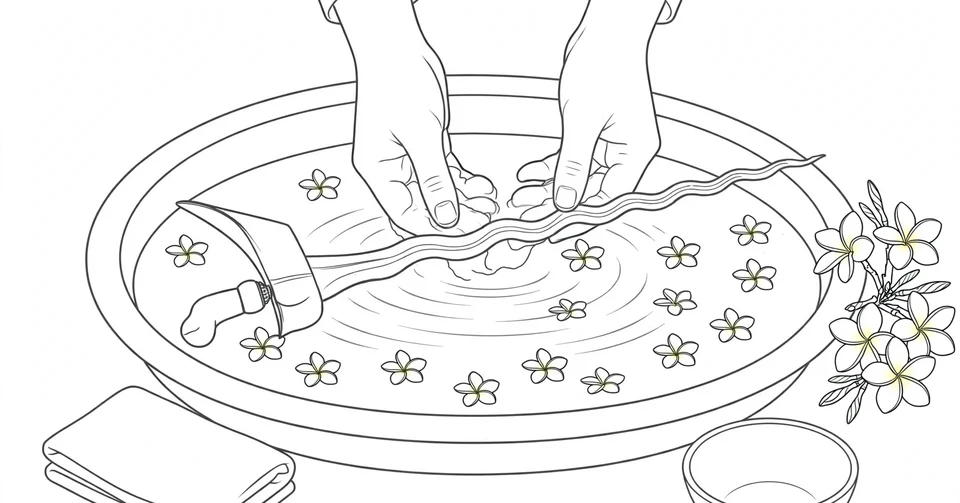
That tension sits at the heart of jamasan. To care for the blade is to change it, slightly, every single year, and to leave it alone is to let rust do slower and uglier work. Javanese families have accepted that bargain for centuries, and every Suro they go on accepting it, one basin of water at a time.
A bath that falls in the month of Suro
Jamasan belongs to Suro, the first month of the Javanese calendar, which coincides with Muharram in the Islamic calendar. Suro is regarded as a sacred and reflective month, a time for looking back over the year that has passed, and researchers who have studied the tradition note that the washing is traditionally done in the hope of safety and as a way of leaving the bad things of the old year behind. Those are beliefs, held by the people who perform the ritual, and they explain why a simple cleaning carries so much ceremony around it.
The keris is the most common object washed, but it is not the only one. Spears, other heirloom weapons and, at the palaces, even gamelan instruments and royal carriages go through their own versions of jamasan. What unites them is the idea of the pusaka, an inherited object that carries the memory and standing of a family or a court. In Java a keris is an heirloom first and a weapon second, and jamasan is the yearly appointment that relationship demands. Some communities fix the washing to particular nights within Suro, and in Surakarta the practice is so rooted that university researchers have been able to catalogue the plant materials of jamasan the way botanists catalogue a medicine.
Not everyone who keeps jamasan today does so for the old reasons. A study of the tradition published by researchers at Universitas Negeri Surabaya found that many people now describe their jamasan plainly as cultural preservation, a way of keeping the keris known and visible for the next generation, while others still perform it as an act of faith. The basin of water holds both motives comfortably. Jamasan has room for the believer and the heritage keeper at the same table.
What jamasan does to the metal
Strip away the ceremony and jamasan is still serious metalwork. The first stage is cleaning. Lime juice is the traditional cleanser, worked over the blade so that its acid lifts dirt and corrosion from the surface. Studies of the practice in Baosan Kidul, Ponorogo, recorded heirlooms being bathed in lime juice, and the same acidic wash appears in accounts of jamasan all over Java. Fruit acids are gentle enough to respect the blade and strong enough to strip a year of grime from it.
Then comes the step that gives jamasan its edge, in every sense. After cleaning, the blade is treated with warangan, a preparation based on arsenic compounds. Reference works describe the yearly jamasan and the warangan wash together, noting that the coating was done by washing the blade with acid and minerals containing arsenic, and that the details of the process were long kept as guarded knowledge among smiths. Warangan is genuinely poisonous, and in practised hands it is a tool, not a tonic. Nobody should read a description of it as an invitation to try it at home.
The supporting cast of the washing is gentler. The Surakarta study mentioned above recorded coconut water used for soaking the blade, bilimbi and soapnut working alongside the lime as cleansers, and fragrant oil from kenanga flowers applied at the end, so a finished blade smells faintly of flowers when it goes back into its sheath. Jamasan is chemistry, but it is chemistry arranged like a small ceremony, and the fragrance is part of the point. Nobody perfumes a tool they merely intend to store.
The reason for the risk is written on the blade itself. The arsenic treatment darkens the iron of the keris while the nickel bearing layers of the pamor stay bright, so the flowing pattern stands out again in silver against black. I wrote recently about the pamor and why no two blades ever share the same pattern, and jamasan is the moment that fingerprint is renewed. A freshly washed blade looks the way its maker intended it to look. Then it is rinsed, dried with care, given a film of oil, and returned to its sheath for another year.
Each of those steps is mild. That is precisely the point. Acid, however gentle, dissolves a little of what it touches, and two centuries of mild steps add up. The same reference tradition that describes jamasan notes that the yearly cleaning was required as part of the spirituality surrounding the weapon, and that it often left ancient blades worn and thin. Hold a very old keris and you can sometimes feel it, a blade that has become almost delicate, its edges softened by generation after generation of careful hands.
Jamasan behind palace walls
The most public jamasan in Java belongs to the palaces. At the Yogyakarta Palace, the washing is carried out by abdi dalem, the court's devoted servants, using flower infused water and recited prayers, as the Museum Sonobudoyo account of the tradition describes. The date is not left to convenience. Tuesday Kliwon or Friday Kliwon are chosen, days in the Javanese calendar believed to carry strong spiritual energy.
The palace jamasan often begins with one of the court's most revered possessions, the sacred spear Kanjeng Kiai Ageng Plered, washed curve by curve while the prayers continue. Students, researchers and tourists watch the proceedings, cameras busy but voices low. Nothing about it is hidden. The court washes its heirlooms in front of its people, and the openness is part of the message, that these objects belong to a living culture rather than a locked storeroom. Yogyakarta is not alone in this. Across in Surakarta, the Mangkunegaran court also washes its heirlooms during Suro, alongside its heirloom procession and nights of quiet contemplation, and the city's keris museum holds jamasan sessions of its own.
Even the water is treated as part of the heirloom. The water used in jamasan is never thrown away carelessly, because many people believe it carries a blessing from the objects it has touched. Some take a little home to sprinkle around their houses. Whether or not a visitor shares that belief, the gesture is easy to understand. People queue for a share of the water for the same reason they keep the blade, to stay connected to something older than themselves.
Jamasan in ordinary houses
Below the palace level, jamasan is quieter and more personal. For a family, the obligation runs in two directions at once. The blade came down from grandparents and great grandparents, and washing it is how the living report for duty. Skip the ritual and nothing dramatic happens, but a thread goes slack, and everyone in the family knows it. That quiet social weight, more than any fear of rust, is what keeps jamasan alive in ordinary houses.
Families handle the work in different ways. Some wash their own blades at home, following what an elder taught them. Others bring heirlooms to keris communities, or to the public jamasan sessions that museums now hold each Suro, where registered personal heirlooms are washed alongside collection pieces as a form of cultural preservation. The setting changes, a courtyard, a museum hall, a palace pavilion, but the sequence of water, lime, warangan and oil stays recognisably the same.
There is a real decision buried in all this, and each generation has to make it again. A descendant who no longer shares the old beliefs still has to choose, every Suro, whether the blade gets its bath. To wash it is to spend a little of the blade to honour it. To refuse is to keep every micron of metal and let the relationship lapse. I find the first choice easier to respect. Preservation that costs nothing usually preserves nothing but the object, and jamasan has never been only about the object.
What the tradition understands, and what a vault never will, is that an heirloom survives by being used in the life of a family, and use has a price. The thin old blades of Java are not failures of preservation. They are its receipts, proof of two hundred Suro months in which somebody cared enough to fill a basin, squeeze the limes, and wash a blade thinner, one careful year at a time.
More in Culture & Society
Latest posts
- Shimekasu Was Herring You Never Ate
- A Hana Donko Wears Its Cracks Like Flowers
- A Lembaga Perkreditan Desa Is a Bank the Village Owns
- Kaburiyu Is How You Talk Your Body Into the Bath
- Kuki Is the Spring the Sea Turned White
- Tatsuko Wished for Beauty and Became a Statue
- Warangan Is the Wash That Reveals the Pattern
- Ganbanyoku Is Bathing Without Water
- The Obuki Throws Out Nine Thousand Litres a Minute
- Every Village Writes Its Own Awig-Awig
- Sainokawara Is a Bath You Share With a Hundred Strangers
- Umaji Refused to Disappear
- Rwa Bhineda Keeps Opposites From Going to War
- Kasepekang Is Exile Without Leaving Home
- Herring Fed the Fields That Fed Osaka