The Sekaa Teruna Builds the Monsters
· 8 min read
Every ogoh-ogoh in Bali is built by a sekaa teruna, the youth organisation of the banjar, whose members join as teenagers and leave when they marry. This is the story of the young people behind the monsters, and of everything else they do during the rest of the year.
On the loudest night of the Balinese year, the monsters that fill the streets are not the work of professional artists or festival committees. They are built, carried and finally burned by teenagers. Behind almost every ogoh-ogoh in Bali stands a sekaa teruna, the youth organisation of the banjar, the neighbourhood association that organises so much of Balinese communal life.
The scale of what these young people take on is easy to miss if you only watch the parade. A large ogoh-ogoh can stand several metres tall, needs a frame strong enough to be carried on the shoulders of dozens of bearers, and represents weeks or months of evening work. The sekaa teruna does all of it with its own hands, its own money and its own arguments about what the monster should look like this year.
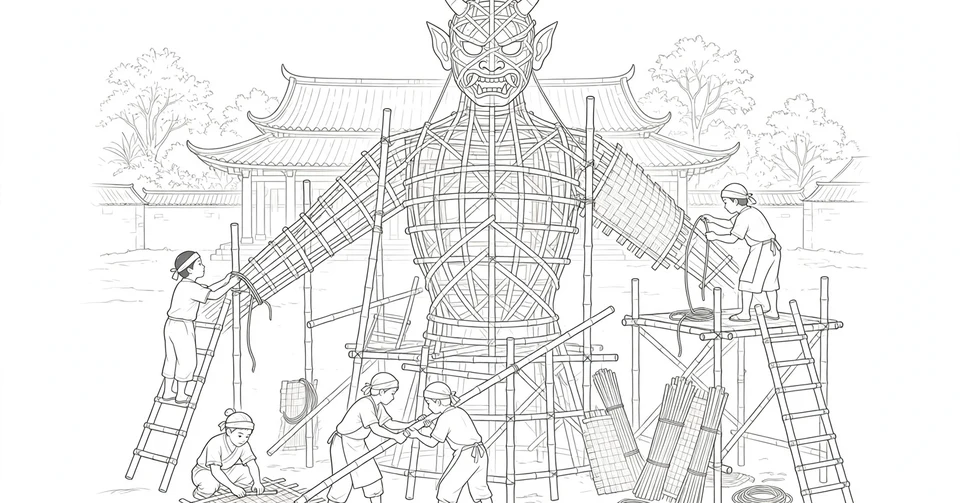
What makes the arrangement remarkable is that the organisation is designed to outlive every one of its members. You join a sekaa teruna as a teenager, you serve through the busiest and most creative years of your life, and then you leave, usually when you marry, and a new group of fourteen year olds takes your place. The monsters change every year. The sekaa teruna remains.
What a sekaa teruna actually is
The words are plain Balinese. Sekaa means a group or association, and teruna means youth. The young men's organisation is the sekaa teruna, the young women's is the sekaa teruni, and in most banjar today the two work as one body, the sekaa teruna teruni, usually shortened to STT. A study of the institution in the customary village of Intaran in Sanur describes the sekaa teruna, the banjar and the customary village as an interlocking trio: the village supports the youth organisation, and the youth organisation in return supports almost everything the village does.
Membership follows the shape of Balinese life rather than a fixed rulebook. In most banjar, the sekaa teruna gathers the unmarried young people of the neighbourhood, starting somewhere in the early to middle teens. The Intaran study puts the minimum age at twelve and describes membership as running up to the unmarried category, while other accounts describe members as typically sixteen and above, so the exact ages vary from village to village. What does not vary much is the exit door: marriage. A married man or woman belongs to the adult world of the banjar, and their years in the sekaa teruna are done.
In many banjar, joining is not really presented as a choice. The Intaran researchers describe membership as an obligation for Balinese adolescents, and the organisation runs on the written customary rules, the awig awig, that govern village life. There are elected officers, a chair, a secretary and a treasurer who must account for the group's money, and decisions are taken by deliberation until the group agrees. Customary and religious elders supervise and advise, but the daily running of the sekaa teruna belongs to the young people themselves.
I find that last detail the most telling. Many societies say they want to give young people responsibility, and then hand them token tasks with no real stakes. A sekaa teruna holds real money, answers to the whole neighbourhood, and works to deadlines set by the ritual calendar, which does not negotiate. The responsibility is not a simulation.
The monster is the annual exam
For most of the world, the sekaa teruna is visible for exactly one night a year. The ogoh-ogoh season begins weeks, sometimes months, before Nyepi, when the group settles on a concept, often a demon from Balinese or Hindu stories, sometimes a satirical figure aimed at greed, corruption or pollution. Then the work moves into the bale banjar, the neighbourhood pavilion, where the sekaa teruna gathers in the evenings after school and work to weave the bamboo and rattan frame, sculpt the body, and paint the face that thousands of people will judge on parade night.
None of this is free. Materials cost money even when the labour is volunteered, and a competitive ogoh-ogoh can carry a serious budget by village standards. The money comes from member contributions, from the banjar and the customary village, from local sponsors, and increasingly from government support: one account of the sekaa teruna teruni describes the regency of Jembrana formally handing funds to youth groups in recognition of the work they carry. Raising and spending that money in public, with a treasurer who has to explain every rupiah to the group and the elders, is a financial education that no classroom exercise quite matches.
This is why people in Bali so often describe the sekaa teruna as the island's real school of leadership. A sixteen year old who has negotiated a design dispute between two factions of his own friends, persuaded a local business to sponsor the paint, and then led a work crew through six weeks of late nights has already done the core tasks of adult organisational life. He has just done them early, in public, with the whole banjar watching. The ogoh-ogoh is the visible product, but the actual product of the season is the young person who emerges from building it.
There is also honest rivalry in it. Neighbouring banjar compare monsters, competitions judge them at village and regency level, and a strong ogoh-ogoh year becomes a point of pride that a sekaa teruna carries for a long time. The prestige is real, and it is earned by the youngest full members of the community, which is a rare thing in any society.
The work nobody photographs
It would be a mistake to think the sekaa teruna exists only for Nyepi. The parade is the peak of the year, not the whole of it. The same young people staff the banjar's ceremonies across the calendar, preparing the pavilion, carrying equipment, helping with offerings and processions, and doing the heavy physical work that Balinese ritual constantly requires. Where I come from, this kind of unpaid communal labour is exactly what ngayah means in Bali, and the sekaa teruna is where most Balinese first learn it as an organised duty rather than a family chore.
Between ceremonies, the programme of a typical sekaa teruna looks like a small cultural ministry. The Intaran study lists work programmes divided into sports, arts and culture, environment and social activities, and that village's groups are known for kite festivals, gamelan and traditional dance as well as ogoh-ogoh. Other groups run volleyball teams, blood donation drives, beach clean ups and charity collections. On big ceremonial nights the young members are also part of the practical machinery of the event itself, marshalling crowds and managing the route of the procession in the same streets where the pecalang, the customary security officers, keep order.
All of this rests on an idea that runs deep in Balinese Hindu life: that belonging to a place means working for it, visibly and repeatedly, from the age when you are first strong enough to carry something. The sekaa teruna is simply the institution that organises that idea for the years between childhood and marriage. Its members are not volunteers in the casual sense. They are office holders in the smallest unit of Balinese society, and everyone around them treats the role that way.
Leaving, and being pulled back
The hardest test for the modern sekaa teruna is geography. A generation ago, most members lived within walking distance of the bale banjar for their entire membership. Now many spend their late teens and twenties studying in Denpasar or Java, or working outside Bali altogether, and the group's busiest season can collide with exams, contracts and distance. The expectation, in most banjar, is still that members come home for the big obligations, and group chats and remittances now do some of the work that physical presence used to do. It is a genuine tension, and the sekaa teruna handles it the way it handles everything else, by deliberation, case by case.
I do not think the tension should be overstated. The institution has one enormous advantage over almost every other youth organisation in the world: it does not need to recruit. Membership arrives with adolescence and a Balinese address, the work is woven into the religious calendar rather than competing with it, and leaving is built into the design rather than treated as a failure. A sekaa teruna cannot die of old age, because nobody in it is old.
The monsters, in the end, are the least of it. They burn in a single night, and the photographs fade, but the structure that produced them quietly trains each new generation of a banjar to plan together, argue together, hold money honestly and finish what they start. Then that generation marries, steps aside, and watches from the edge of the crowd while a new group of teenagers picks up the bamboo. That handover, repeated every year in hundreds of villages, may be the most durable piece of engineering in Balinese culture.
More in Culture & Society
Latest posts
- Shimekasu Was Herring You Never Ate
- A Hana Donko Wears Its Cracks Like Flowers
- A Lembaga Perkreditan Desa Is a Bank the Village Owns
- Kaburiyu Is How You Talk Your Body Into the Bath
- Kuki Is the Spring the Sea Turned White
- Warangan Is the Wash That Reveals the Pattern
- Ganbanyoku Is Bathing Without Water
- The Obuki Throws Out Nine Thousand Litres a Minute
- Every Village Writes Its Own Awig-Awig
- Sainokawara Is a Bath You Share With a Hundred Strangers
- Umaji Refused to Disappear
- Rwa Bhineda Keeps Opposites From Going to War
- Kasepekang Is Exile Without Leaving Home
- Jamasan Washes a Blade Thinner Every Year
- Herring Fed the Fields That Fed Osaka