Soba, the Buckwheat Noodles Japan Slurps on the Last Night of the Year
· 10 min read
Soba is Japan's buckwheat noodle, and on the last night of the year it becomes more than dinner, a quiet bowl eaten to leave the old year behind.
Soba is the buckwheat noodle Japan reaches for when the year runs out. On December 31, in homes from Hokkaido to Kyushu, families sit down to a bowl of toshikoshi soba, literally year-crossing noodles, before the clock strikes midnight. It is not a feast. There is no ceremony around it, no special dress, no long preparation. It is a plain bowl of noodles in hot broth, eaten quietly at the end of a long day of cleaning and cooking, and it carries more meaning than most of the food served at New Year.
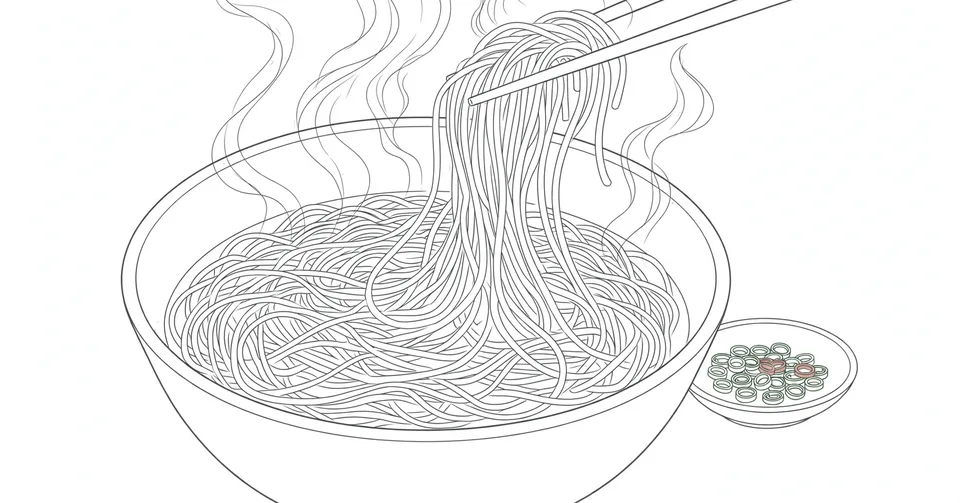
The custom sits at the quiet end of Japan's loudest holiday. January 1 belongs to osechi ryori, the layered boxes of symbolic food prepared days in advance. December 31 belongs to the noodle. One bowl, eaten in the evening, closes the year. The next morning starts fresh, and the noodles are part of how Japan draws that line.
What soba actually is
The noodle is made from buckwheat, which is not wheat at all. Buckwheat is a seed, related to rhubarb, and it grows in poor soil and cold weather where rice and wheat struggle. That hardiness is part of the noodle's story, and it is also why it tastes the way it does: nutty, earthy, a little grey-brown in colour, with a flavour that wheat noodles never have.
The purest form is juwari, made from 100 percent buckwheat flour and water, with nothing to hold it together except the skill of the maker. It is fragile, and it breaks easily. Most shops serve nihachi instead, eight parts buckwheat to two parts wheat flour, which gives the noodle enough strength to survive boiling and lifting without losing its character. Both are the real thing. The difference is a matter of texture and pride, not authenticity.
It comes hot or cold. Mori soba arrives in a plain heap on a bamboo tray, with a small cup of cold dipping sauce, sliced green onion, and grated wasabi on the side. You pick up a few strands, dip the ends, and eat. Kake soba comes in a bowl of hot dashi broth, the same clear, savoury stock that anchors so much of Japanese cooking. Add a piece of shrimp tempura and it becomes tempura soba. Add a slice of fried tofu and it becomes kitsune soba. The base never changes, only the company it keeps.
Nagano prefecture, in the mountains of central Japan, is the most famous noodle region. Its old name, Shinshu, still labels the style: Shinshu soba. But the noodle belongs to the whole country. At train stations, standing noodle shops called tachigui serve a bowl in minutes for a few hundred yen, eaten standing at a counter by commuters who have no time to sit. At the other end, small noodle restaurants in the countryside grind their own buckwheat and close when the day's noodles run out. The same food feeds both ends of Japan, and neither side apologises for it.
The last night of the year
Toshikoshi soba is eaten on omisoka, the last day of the year, usually in the evening and always before midnight. The name says what it does: toshikoshi means crossing from one year to the next, and the bowl is the crossing. Families eat it at home after a day of osoji, the big year-end cleaning, and many restaurants stay open late on December 31 just to serve it. About two-thirds of Japan's population eats the year-crossing noodles, according to Bokksu, which makes it one of the most widely kept food traditions in the country.
The custom is old, though nobody can pin down a single birthday for it. One story traces it to the Kamakura period, in the 13th century, when a Buddhist temple gave noodles to poor people at the turn of the year, and the people who ate it were said to have good fortune in the year that followed. By the Edo period, merchants in the cities had a habit of eating noodles on the last day of each month, misoka soba, to settle accounts and start clean. The monthly habit narrowed to the yearly one, and by 1814 the New Year's Eve version was a fixed custom in Osaka. From there it spread until it belonged to the whole country, as Japlore traces in its history of the tradition.
The bowl is often eaten while the television plays the Kohaku Uta Gassen, the New Year's Eve singing contest that NHK has broadcast for more than seventy years, and that pairing tells you what kind of tradition this is. It is not a ritual performed in silence. It is an ordinary evening made slightly special, a meal eaten with the family while the year ticks down in the background, one of the festivals and seasonal markers that shape the Japanese calendar.
Why these noodles, and not the others
Japan has no shortage of noodles. Udon is thicker and softer, ramen is richer, and both would fill a stomach just as well on December 31. The buckwheat noodle won the night for reasons that have little to do with taste.
The first reason is length. The noodles are long and thin, and their length is read as a wish for a long life, the same logic that makes long noodles a symbol of longevity across Asia. The second reason is the opposite: it breaks easily. A strand snaps cleanly where udon would stretch, and that easy break is read as cutting off the hardships and bad luck of the old year. You eat the noodles, and the year's troubles break with them. It is a small piece of kitchen magic, the kind that survives because it feels true even when you know it is only a story.
The third reason is the plant itself. Buckwheat grows where other crops fail, in thin soil and harsh weather, and it springs back after storms that would flatten wheat. That resilience turned into a symbol of strength and good health. There is even a story, repeated in Edo-period accounts, that goldsmiths used buckwheat dough to collect stray flecks of gold dust in their workshops, which tied the noodle to wealth and good fortune. Historians treat that one with caution, but it survives because people like what it promises.
There is also a practical reason, and it may be the most honest one. It is quick to cook and easy to digest, which matters on a night when the cook has spent the day preparing osechi for the next morning and nobody wants a heavy meal before midnight. During the beriberi epidemic in Edo, people also turned to the noodle as a remedy, because buckwheat is rich in B vitamins. The medicine was real even if the old explanation was not.
The rules of the bowl
The custom has one rule that everyone seems to know: finish before midnight. Eating the year-crossing noodles after the year has turned is considered bad luck, because it means carrying the old year's troubles into the new one. The bowl is meant to end with the year, not follow you into the next one.
Beyond that, the rules are relaxed. Some families eat early in the evening, as a light dinner. Others eat late, as the last thing before the countdown. The noodles can be hot or cold, plain or topped, homemade or ordered from the neighbourhood noodle shop. What matters is the timing, not the recipe.
Two small habits belong to the bowl. The first is slurping. In Japan, slurping noodles is not rude. It cools the noodles, pulls in air that carries the aroma, and signals that the food is good. A quiet bowl is a wasted bowl. The second is soba-yu, the cloudy water the noodles were boiled in. After a cold plate of mori soba, the shop brings a small pot of soba-yu, and you mix it into the leftover dipping sauce and drink it like soup. Nothing is wasted, not even the water.
Soba beyond New Year
Toshikoshi soba is the most famous bowl of noodles in Japan, but it is only one night out of 365. The rest of the year, it is an everyday food, and knowing the common styles makes ordering easier anywhere in the country. Japan's noodle culture runs deep, from these buckwheat noodles to the instant noodles that later conquered the world, and the buckwheat noodle is where that culture started.
| Style | How it is served | When to order it |
|---|---|---|
| Mori soba | Cold noodles on a bamboo tray, with dipping sauce | When you want to taste the noodle itself |
| Zaru soba | Cold noodles on a bamboo strainer, with dipping sauce | A summer lunch, or as a light meal |
| Kake soba | Hot noodles in clear dashi broth | A cold day, or a quick station lunch |
| Tempura soba | Hot noodles topped with shrimp tempura | When you want something more filling |
| Sansai soba | Hot noodles with mountain vegetables | In the mountains, or in spring and autumn |
The list is not a ranking. A bowl of mori soba in Nagano on a summer afternoon and a bowl of kake soba at a station counter on a winter night are the same food in different clothes, and regulars argue about which one is better the way people argue about anything they love. What I like most about it is that it never tries to impress you. It is cheap, fast, and honest, and it asks only that you pay attention while you eat it. Japan has fancier food, and Japan has richer food, but few dishes say as much about the country with as little fuss as a bowl of buckwheat noodles.
That modesty is probably why the New Year's Eve custom has lasted so long. Osechi is elaborate, and shrine visits are crowded, and the countdown on television is loud. It is the quiet part of the night, the moment before the year turns when a family sits together, eats something simple, and lets the old year go. The noodles break easily, and that is the point. What breaks with them stays behind, and the new year starts clean.
If you are in Japan on December 31, find a noodle shop before the evening rush, or buy a packet of dried noodles and make the bowl at home. Eat it before midnight, slurp without shame, and save the last sip of broth for the year that is ending. The next morning, when the osechi comes out and the shrines fill up, you will already have crossed over.
More in Food & Travel
- Udon in Kagawa, Where Noodles Are a Way of Life
- Shojin Ryori Is the Temple Food That Eats Like a Prayer
- Depachika and the Basement Food Halls Beneath Japan's Department Stores
- Yakitori and the Smoky Alleys Where Tokyo Learned to Love Chicken Skewers
- Okonomiyaki and the Savory Pancake Japan Cooks at the Table
- Takoyaki and the Ninety-Year-Old Shop That Still Serves the Original
Latest posts
- A Penjor Turns a Whole Street Into an Offering
- A Mokugyo Keeps the Beat of the Chant
- Garuda Pancasila Carries Five Principles on One Bird
- Saptawara Is the Seven-Day Week Inside Every Weton
- Janur Is the Young Coconut Leaf Bali Folds Into Everything
- Petungan Counts Your Neptu Before You Choose a Day
- The Pawukon Calendar Runs Bali on 210 Days
- Purnama Is the Full Moon Bali Prays By
- Galungan Welcomes the Ancestors Back to Bali
- Jatayu Flew at Ravana to Save Sita
- Kurma Held Up a Mountain So the Ocean Could Be Churned
- Yoshino Is the Mountain Shugendo Calls Home
- A Gomagi Carries Your Wish Into the Goma Fire
- Danjo Garan Is Where Koyasan's Teaching Began
- The Banryutei Turns Two Dragons Into a Rock Garden