Japanese Festivals, From Snow Sculptures to Summer Fireworks
· 12 min read
Japanese festivals run all year, from the snow sculptures of Sapporo in February to the fireworks and dancing crowds of summer. This guide covers the biggest matsuri, when they happen, and how to enjoy them.
Japan hosts more than 300,000 festivals a year, from tiny neighbourhood shrine days to spectacles that pull millions of people into the streets. The Japanese word is matsuri, and it covers almost everything: a Shinto ritual to drive away plague, a dance that has run for four centuries, a week of snow sculptures, or a single night of fireworks over a river. Japanese festivals are the rare moments when a famously reserved society lets loose in public, and for a visitor they are the best way to see the country at full volume.
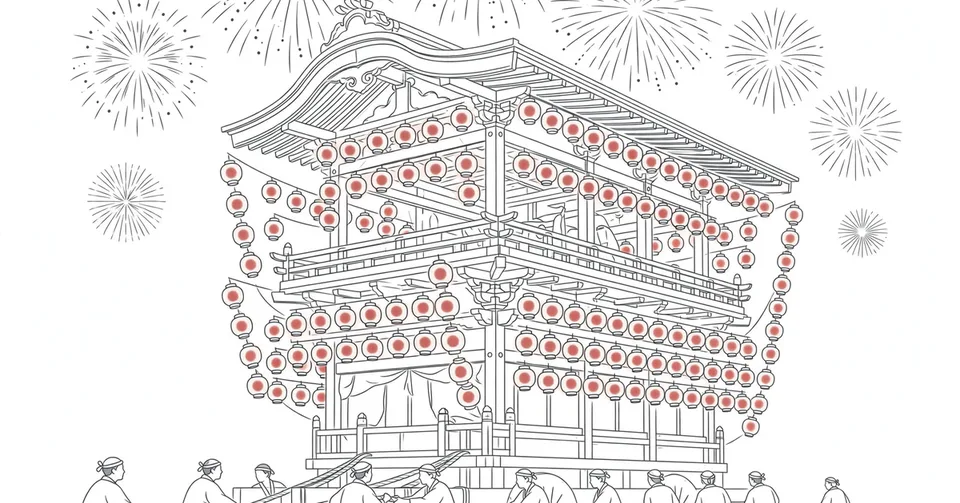
Most Japanese festivals began as prayers. A village asked the local kami, the Shinto deities, for a good harvest, for protection from disease, or for thanks after the rice was in. The portable shrine, the mikoshi, carried the deity through the streets so the blessing reached every house. The floats, the drums, the dancing, and the food stalls all grew around that simple act. Today the religious core is still there, even when the crowd around it is mostly there for the atmosphere. That is part of the charm: Japanese festivals are sacred and rowdy at the same time, and nobody in the crowd sees a contradiction.
What a matsuri actually is
A matsuri, like all Japanese festivals, belongs to a shrine, a temple, or a town, not to a tourism board. The people who pull the floats, carry the mikoshi, and beat the drums are usually local residents, often the same families who have done it for generations. Visitors are welcome to watch, to eat from the stalls, and in some festivals to join the dancing, but the event would happen with or without tourists. That is worth remembering when you go: you are a guest at someone else's celebration, and the best way to enjoy Japanese festivals is to follow the crowd's lead, stand where the locals stand, and leave the route clear when the floats move.
Japanese festivals follow the seasons, and the calendar below is the simplest way to plan around them. Winter has snow and light. Spring has shrine processions and flower season. Summer is the peak, with the biggest and loudest events of the year. Autumn closes with harvest festivals and one spectacular night festival in December. If you can only attend one, summer gives you the most choice. If you want the most beautiful, February or July will not disappoint.
Winter: the Sapporo Snow Festival
The year opens in the snow. The Sapporo Snow Festival, one of the most famous Japanese festivals, is held every February in Hokkaido and turns Odori Park into an open air gallery of snow and ice sculptures, some as tall as buildings. It began in 1950, when a group of students built six snow statues in the park. Today it draws more than two million visitors over about a week, with hundreds of sculptures spread across Odori Park's 1.5 kilometre promenade, plus an ice sculpture site in the Susukino entertainment district. The 2027 festival runs from February 4 to 11.
The sculptures are the draw, but this Japanese festival works because of the contrast. You walk between a snow replica of a castle and a food stall selling hot corn soup, your breath fogging, while the sculptures glow under coloured lights after dark. It is cold, around minus 4 degrees on an average February day, so the practical advice is simple: dress for standing still in the snow, not for walking. The festival is free to enter, and the best time to go is after sunset, when the lighting turns the sculptures into something closer to architecture than snow.
Winter in Hokkaido also rewards a side trip. The snow monkeys of Jigokudani, bathing in their hot spring while snow falls, are the same season's most photographed animals, and the contrast between their steam and the snow is the same contrast the festival plays with. If you plan a February trip around this Japanese festival, book hotels early. The city fills up, and rooms near Odori Park go first.
Spring: shrine festivals and the start of the season
Spring in Japan belongs to cherry blossoms, but the Japanese festival calendar has its own spring opening. The Sanja Matsuri in Asakusa, Tokyo, takes place on the third full weekend of May and is one of the capital's biggest street parties. More than a hundred portable shrines are carried through the streets around Asakusa Shrine and Senso-ji Temple, and around two million people come to watch over three days. It is loud, crowded, and joyful, and it is the closest Tokyo gets to a small town Japanese festival.
The Takayama Matsuri, one of the best known Japanese festivals in the mountains, is held in the preserved Edo period town of Takayama in the Japanese Alps, runs twice a year, in spring on April 14 and 15 and again in autumn on October 9 and 10. It is often listed among Japan's three most beautiful festivals, and the reason is the floats: ornate wooden yatai decorated with carvings, lacquer, and mechanical puppets, pulled through streets of dark timber merchant houses. The spring festival is the larger of the two, and the evening procession, when the floats are lit by paper lanterns, is the moment most visitors remember.
Spring is also when the smaller neighbourhood Japanese festivals start appearing, the ones with no English guide and no entry in any calendar. If you are in Japan in April or May and you hear drums from a side street, follow them. Some of the best Japanese festivals are the ones you stumble into, where the whole street has turned out and the food stall sells only one thing, made by the same family every year.
Summer: the peak of Japanese festivals
Summer is when Japanese festivals become unavoidable, and it starts with the most famous of them all. The Gion Matsuri in Kyoto, the most famous of all Japanese festivals, runs for the whole month of July, and its centrepiece is the Yamaboko Junko, the procession of towering wooden floats, on July 17 and again on July 24. The festival began in 869 as a purification ritual at Yasaka Shrine, held to drive away a plague. More than 1,150 years later it is still held by the same shrine, and its float ceremony was inscribed on UNESCO's Representative List of the Intangible Cultural Heritage of Humanity in 2009.
The floats are the stars. The largest, the hoko, stand up to 25 metres tall and weigh as much as 12 tons, built from wood and rope without a single nail, and decorated with tapestries so fine they are called moving museums. Thirty-four floats parade in total, 23 in the first procession and 11 in the second, pulled through central Kyoto by teams of men in traditional dress. The evenings before the main parade, the yoiyama street parties, fill the downtown with food stalls and crowds in yukata, and the floats stand on display, lit up, while visitors walk among them. If you go, arrive early on July 17 and stand near the Shijo-Karasuma intersection, where the procession starts at 9 in the morning.
A week later, Osaka answers with the Tenjin Matsuri on July 24 and 25, one of Japan's three great festivals alongside Gion and the Kanda Matsuri in Tokyo. Its climax comes on the evening of the 25th, when a procession of illuminated boats moves along the Okawa River and fireworks go off overhead. The combination of river, lanterns, and fireworks makes it the most photogenic of the big summer Japanese festivals, and the crowds along the riverbank are part of the show.
August belongs to Tohoku, the north-east. Three Japanese festivals run in the same week, and travellers sometimes try to catch all three. The Aomori Nebuta Matsuri, from August 2 to 7, parades enormous illuminated floats, paper warriors and mythical figures about 9 metres wide and 5 metres high, through the streets at night while costumed haneto dancers leap alongside to the drums. Around 20 floats follow a 3.1 kilometre course, and more than 2.5 million people come to watch. On the final evening, the floats are carried into the bay and fireworks close the festival. A few hours south, the Akita Kanto Matsuri, from August 3 to 6, is quieter and stranger: performers balance tall bamboo poles hung with dozens of paper lanterns on their palms, foreheads, and shoulders. In Sendai, the Tanabata Matsuri, one of the prettiest Japanese festivals, hangs thousands of colourful paper streamers from the shopping arcades from August 6 to 8, turning the whole downtown into a tunnel of colour.
Then comes the dancing. The Awa Odori in Tokushima, from August 12 to 15, is Japan's largest dance festival, running for more than 400 years, and one of the most joyful Japanese festivals. Groups of dancers in straw hats move through the streets in lines, chanting and swaying to shamisen and drums, and the audience is expected to join in. Around one million people attend, and the festival overlaps with Obon, the week when families honour their ancestors, which is why so many Japanese are travelling anyway. If you want to dance, this is the festival to choose. The steps are simple, the groups welcome strangers, and nobody minds if you are terrible at it.
Summer also means fireworks, and Japanese festivals include hundreds of hanabi taikai, fireworks displays, between July and August. The biggest is the Sumida River Fireworks in Tokyo, held on the last Saturday of July, where around 20,000 fireworks go off over the river in about 90 minutes. People arrive hours early to claim a spot on the riverbank, many in yukata, with picnic food from the convenience store. It is free, it is crowded, and it is the most Japanese way to spend a summer evening.
Autumn and winter: harvest, lanterns, and a night festival
Autumn is quieter, which is part of its appeal. The Takayama autumn festival in October repeats the spring event with different floats, and the autumn leaves turn the mountains around the town red and gold at the same time. November brings harvest festivals in farming towns across the country, smaller and more local than the big summer Japanese festivals, and often the best place to eat well, since the food stalls sell the new harvest.
The year closes with one more spectacle. The Chichibu Night Festival, held on December 2 and 3 in Saitama, is one of Japan's top three float festivals. Enormous illuminated floats are hauled up a steep slope through the town at night, accompanied by fireworks against the winter sky. It is cold, it is late, and it is worth it. December is also when the winter illuminations begin in cities across Japan, and the shrines fill with people for hatsumode, the first shrine visit of the new year, which is a festival of its own in all but name.
A calendar of the biggest Japanese festivals
| Festival | Where | When | What to expect |
|---|---|---|---|
| Sapporo Snow Festival | Sapporo, Hokkaido | Early February | Snow and ice sculptures, free entry |
| Sanja Matsuri | Asakusa, Tokyo | Third weekend of May | Portable shrines, huge crowds |
| Gion Matsuri | Kyoto | All July, parades July 17 and 24 | Towering wooden floats, UNESCO listed |
| Tenjin Matsuri | Osaka | July 24 and 25 | River boats, lanterns, fireworks |
| Aomori Nebuta Matsuri | Aomori | August 2 to 7 | Illuminated warrior floats at night |
| Sendai Tanabata Matsuri | Sendai | August 6 to 8 | Paper streamers, shopping arcades |
| Awa Odori | Tokushima | August 12 to 15 | Street dancing, join in |
| Sumida River Fireworks | Tokyo | Last Saturday of July | Around 20,000 fireworks |
| Takayama Matsuri | Takayama | April 14 to 15, October 9 to 10 | Ornate floats, lantern evenings |
| Chichibu Night Festival | Chichibu, Saitama | December 2 and 3 | Illuminated floats, winter fireworks |
Exact dates for Japanese festivals shift slightly from year to year, so always check the city's current schedule before booking. The big summer festivals fill hotels three to six months ahead, and the same is true for Sapporo in February.
How to enjoy Japanese festivals like a local
A few practical habits make the difference between a good day at a Japanese festival and a frustrating one. Arrive early for the main event and claim a spot on the route, then stay there. The crowds move slowly, and trying to follow a float through the streets usually means watching the back of someone else's head. Eat from the stalls: takoyaki, yakisoba, grilled corn, and kakigori shaved ice are festival food, and the stalls are part of the experience, not a fallback. Carry cash, since most stalls do not take cards. Wear comfortable shoes and light clothes in summer, and dress warmer than you think you need in February.
The deeper habit is the one Japanese festivals themselves teach. A matsuri is not a show put on for you. It is a town doing something it has done for centuries, and you happen to be there. The best Japanese festivals reward patience: stand still, watch the float pass, listen to the drums, and let the crowd carry the mood. You can arrive at a festival understanding nothing of the ritual and still feel you have seen something real, because the people pulling the ropes clearly do. That is the honest appeal of these events. They are not polished for visitors. They are alive, and they let you stand close enough to feel it.
Japanese festivals are also the easiest way to understand the country beyond its famous sights. A temple is beautiful, but it is quiet. A festival is the same culture with the volume turned up: the same craftsmanship in the floats, the same reverence at the shrine, the same attention to food, all of it happening at once in a crowded street. Plan one of these Japanese festivals into your next trip, even if it means shifting your dates by a week. The cities will still be there. The festival will not wait.
More in Culture & Society
- The Daruma Doll, Japan's Round Symbol of Perseverance
- Shichi-Go-San and the Day Japan Dresses Its Children in Kimono
- Desa Pakraman Is the Name the Law Gave the Old Village
- A Primbon Reads Your Life From the Day You Were Born
- Pasaran Is the Five-Day Week Java Never Gave Up
- A Ceper Folds a Coconut Leaf Into a Crescent Moon
Latest posts
- Sushi, the Japanese Dish That Conquered the World
- Kotatsu, Japan's Heated Table That Warms Winter
- Kakiage and the Tempura Bowl That Towers Over Rice
- The History of the Bicycle From Wooden Wheels to Japanese City Bikes
- the-javanese-of-suriname-and-the-language-they-kept-alive
- Kanban and the Japanese System That Organized Work
- Your Neptu Is the Number Hidden Inside Your Birthday
- Tilem Is the Dark Moon Bali Counts Its Year By
- The Saka Calendar Sets Nyepi on a Different Date Every Year
- On Tumpek Kuningan Bali Feeds Its Ancestors
- Garuda Carried a Mountain to the Middle of the Ocean
- Vasuki Was the Rope That Churned the Ocean of Milk
- En No Gyoja, the Mystic Shugendo Calls Its Patriarch
- A Saito Goma Burns Its Prayers Outdoors
- Kongobuji Still Governs the Mountain Kukai Left Behind