Umeshu Is the Liqueur Japan Makes From Unripe Plums
· 18 min read
Umeshu is a sweet and sour Japanese liqueur made by steeping green ume plums in shochu with rock sugar, and it tastes like early summer kept in a bottle.
Umeshu is the drink that waits for the plum blossom season to end. Long after the pale flowers have fallen from the branches in February, the same trees carry small green fruit into early summer, and that fruit becomes a liqueur that is sweet, sour, fragrant and quietly strong. If you have ever wondered what Japan does with plums that are too sour to eat raw, this is the answer, and it is a good one.
The first time I tasted it, I expected something sharp and medicinal. What arrived instead was softer, rounder and more generous than I had imagined. It smelled of green plum and almond, it tasted of honey and citrus, and it finished with a gentle warmth that asked for another slow sip rather than a quick one. That first glass taught me that umeshu is not a drink to rush. It is a drink to sit with, preferably in the evening, preferably with someone you like talking to.
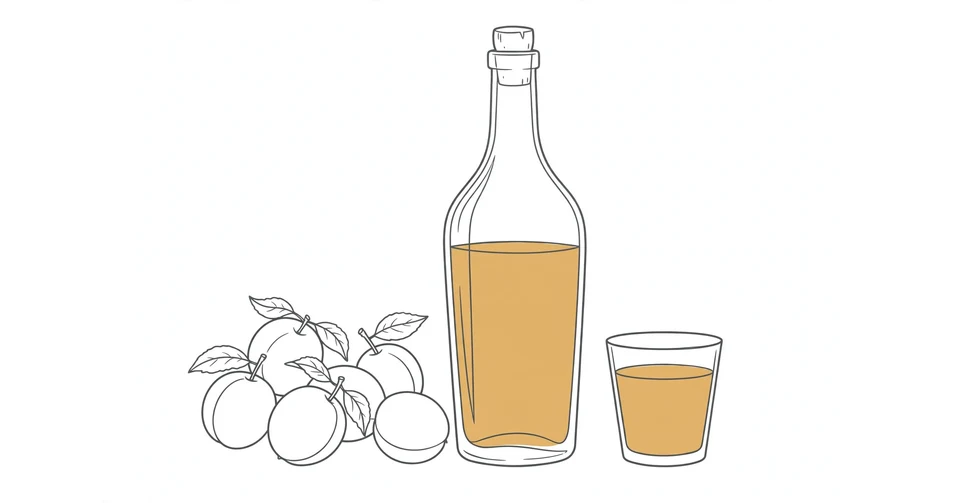
A bottle of umeshu looks simple on a shelf, but the simplicity is the point. There are no strange colours and no loud flavours competing for attention. The liqueur is usually a clear amber gold, sometimes with one or two whole plums resting at the bottom like a small promise. Pour it over ice and it turns into something bright and refreshing. Pour it with hot water on a cold night and it turns into something that warms your hands as much as your throat. Either way, it carries the same calm character, and that character is what keeps people coming back to it year after year.
What umeshu actually is
Umeshu is a Japanese liqueur made by steeping unripe ume plums in liquor and sugar. The liquor is usually shochu, the clear Japanese spirit, and the sugar is usually rock sugar, which dissolves slowly and gives the finished drink a clean sweetness. The result has a sweet and sour taste, and an alcohol content of around 10 to 15 percent, according to Wikipedia. That puts it in a friendly middle ground. It is stronger than beer and most wine, but gentler than whisky or straight shochu, and it is easy to drink in small, unhurried measures.
The word itself is simple. Ume means the Japanese plum, and shu means liquor or alcohol, so umeshu is quite literally plum liquor. The fruit is not a plum in the Western sense, even though English calls it that. Ume, whose scientific name is Prunus mume, is closer to an apricot, and it is far too sour and astringent to eat straight from the tree. Steeping it in alcohol and sugar is not a trick to hide a poor fruit. It is the sensible way to turn a fruit that cannot be eaten raw into something delicious, and Japan has been doing it for centuries.
It is also worth knowing that not every bottle labelled umeshu is made in the same way. Some commercial versions are made from real plum fruit, while others use additive flavours and perfumes to imitate the taste of plums. Wikipedia notes that umeshu made exclusively from plum fruit, without additives, can be labelled Honkaku Umeshu, and will typically be made only from ume fruit, sugar and alcohol. The word honkaku means authentic, and the label is a useful guide when you are choosing a bottle. If you want real umeshu, look for that word, and check the ingredient list for just three things: ume, sugar and alcohol.
How umeshu is made at home
Making umeshu at home is one of the most approachable home brewing traditions in Japan, and it is also one of the most patient. The classic recipe recorded on Wikipedia is disarmingly simple: 1 kilogram of ume fruit, 500 grams to 1 kilogram of rock sugar, and 1.8 litres of shochu. The fruit is washed, dried and pricked or left whole, then layered with the sugar in a clean glass jar and covered with the shochu. After that, there is nothing to do except wait, and waiting is the whole skill.
The jar should be kept in a cold and dark place, and the liqueur is ready to be consumed after three months, although it is better to wait at least six months. Wikipedia adds that umeshu should be allowed to mature for at least nine months, and that advice matches what Japanese home makers say. Three months gives you a drink that is bright and a little raw around the edges. Six months gives you something rounder and more settled. Nine months or a full year gives you the version that people remember, with a deeper amber colour, a softer sweetness and an aroma that smells faintly of almond and honey.
There is a practical note here that matters. Home made alcohol is regulated differently in different countries, and in Japan the home production of umeshu was once prohibited by law, a story I will return to below. If you want to make it where you live, check your local rules first, and use a base spirit that is legal and safe for the purpose. The recipe above is a traditional Japanese home recipe, not a suggestion to ignore the law in your own country. For most travellers, the easier and better path is simply to buy a good bottle and enjoy it, and let someone else do the waiting.
Why green plums, rock sugar and time matter
Every ingredient in umeshu has a job, and changing one of them changes the drink. Green plums are picked before they ripen, while they are still firm, sour and full of the aromatic compounds that give the finished liqueur its character. Ripe ume would be softer and sweeter, but they would also be less fragrant and more likely to break apart in the jar. The green fruit holds its shape, releases its flavour slowly, and gives the drink its clean, bright sourness. That sourness is the backbone of umeshu, and without it the liqueur would be merely sweet.
Rock sugar matters for a similar reason. It dissolves slowly, which means the sugar enters the liquid gradually rather than all at once, and the slow pace suits a drink that is already in no hurry. Ordinary white sugar would work, and some makers do use it, but rock sugar is the traditional choice, and it gives a clearer, cleaner sweetness that lets the plum flavour stay in front. The amount matters too. The traditional range of 500 grams to 1 kilogram of rock sugar for each kilogram of fruit lets the maker choose how sweet the result will be, and that choice is a matter of taste rather than right or wrong. I prefer the middle of the range, sweet enough to soften the sourness, but not so sweet that the drink feels like syrup.
Time is the third ingredient, and it is the one you cannot buy in a shop. In the first weeks, the liquid is pale and the flavour is sharp. As the months pass, the sugar draws juice from the fruit, the alcohol draws aroma from the skin and the stone, and the colour deepens from pale gold to amber. Scientific research on the aroma of umeshu has identified dozens of volatile compounds in the drink, and one study cited on Wikipedia found 38 aromatic substances, with benzaldehyde, the compound that smells faintly of almond, starting high and declining during storage as the flavour grows more complex. You do not need to know the chemistry to taste the result, but it is reassuring to know that the change you taste in the glass is real, and that it comes from the fruit itself rather than from a flavouring added at the end.
How to drink it
There is no single correct way to drink umeshu, and that flexibility is part of its charm. Japanese restaurants serve many different varieties of the liqueur, and they also make cocktails with it. Wikipedia lists the most popular serves: on the rocks, called rokku, sour, called sawa, tonic with tonic water, and soda with carbonated water. It is sometimes mixed with green tea, in a serve called o-cha-wari, or with warm water, called o-yu-wari. It can be served chilled or with ice, at room temperature, or hot in the winter, and each temperature brings out a different side of the drink.
My own preference for umeshu is simple, and it changes with the season. In summer, I like umeshu with soda water and plenty of ice, in a tall glass, with the fruit from the bottle dropped in at the end. The soda lifts the aroma, the ice keeps it cold, and the drink stays light enough for a warm evening. In winter, I like it with hot water, in a small cup, in the ratio of roughly one part liqueur to one part hot water, though I adjust that to taste. The warmth opens up the almond and honey notes, and the drink feels closer to a tea than to a cocktail. On the rocks is the middle path, and it is the best way to taste a new bottle for the first time, because nothing hides the flavour.
If you are ordering in Japan and you are not sure what to ask for, start with a soda mix or on the rocks, and ask what brand the bar is pouring. Many bars keep two or three bottles, and the difference between a light, fresh style and a dark, aged style is easy to taste once you try them side by side. Some commercial bottles contain whole ume fruits, and if your glass arrives with a plum in it, eat it at the end. It will be soft, boozy and sweet, and it is one of the small pleasures of the drink.
| Serve | How it tastes | Best season |
|---|---|---|
| On the rocks | Rich, direct, full plum flavour | Any time |
| With soda water | Light, bright, refreshing | Summer |
| With hot water | Warm, soft, honey and almond notes | Winter |
| With green tea | Gentle, earthy, easy to drink | Any time |
The table above is a guide, not a rule, and the best serve is the one you enjoy most. A bottle of umeshu that has waited nine months in a jar does not need to be hurried, and it does not need to be served in a complicated way. A clean glass, good ice or hot water, and a little attention are enough.
Umeshu, sake and Western plum wine are not the same thing
People often confuse umeshu with sake, and sometimes with Western plum wine, but the three drinks are made in different ways, and they taste different as a result. Sake is a brewed rice wine, made by fermenting rice with water, yeast and koji mould, and it contains no fruit at all. Its flavour comes from rice, water and fermentation, and it can be dry, sweet, floral or earthy depending on how it is made. Umeshu is not brewed at all. It is a liqueur made by steeping fruit in alcohol, and its flavour comes from the plum, the sugar and the time spent in the jar. The two drinks share a Japanese table, but they do not share a method, and once you have tasted both, the difference is obvious.
Western plum wine is a closer cousin, but it is still a different drink. Plum wine in the Western sense is usually made by fermenting plums, in the same way that grape wine is made by fermenting grapes, and the alcohol comes from that fermentation. Umeshu gets its alcohol from the shochu or neutral spirit it is steeped in, and the fruit is never fermented. That is why umeshu tastes cleaner and more direct to me. The plum flavour is not changed by yeast in the same way, and the sweetness is set by the maker rather than by the fermentation. The Korean drink maesil-ju and the Chinese drink suanmeitang are related traditions, and they show that the idea of preserving plums in liquid is shared across East Asia, but umeshu is the Japanese version, and it has its own character.
There is a useful comparison inside Japan too, and it comes from the same tree. The plum blossom that opens the year in February belongs to the same ume tree that gives us umeshu in summer, and the connection is worth remembering when you drink it. In the article on plum blossom, the flower is described as the first sign of spring, blooming while the air is still cold. It is what happens when that early promise is allowed to grow, ripen and rest. One is a flower you look at, the other is a drink you taste, and both belong to the same slow seasonal rhythm.
The quiet history behind it
Umeshu has a long history in Japan, and the official history published by CHOYA, one of the best known makers, tells it in stages that are easy to follow. The ume tree itself has been cultivated for thousands of years, and CHOYA traces its existence back more than 4,000 years, with the fruit arriving in Japan from the Yangtze River basin of China during the Yayoi period. It was first valued as a Chinese herbal medicine, and later for its beautiful blossoms, and only much later for the liqueur that bears its name. The flower came first, the medicine came second, and the drink came last, which feels right for a tree that has always been appreciated slowly.
There are no written records of exactly when umeshu was created and became popular in Japan, but the recipe for making it was mentioned for the first time in Honcho-shokkan, a Japanese cuisine book published about 300 years ago. At that time, sugar was an extremely valuable item, so CHOYA believes the liqueur was only enjoyed by the wealthy class. That detail matters, because it explains why umeshu feels a little luxurious even now. It began as a drink for people who could afford sugar, and it kept that quiet sense of occasion even after sugar became cheap and the drink became common.
By the late Edo period, making umeshu and umeboshi at home was already a well established culture. An agricultural book from the period, Koueki Kokusan Kou, recommended planting ume and selling ume processed foods as a side business for farmers, and CHOYA notes that both the consumption of processed ume and its cultivation were encouraged. In other words, the home made jar in the cupboard was not just a hobby. It was part of a small rural economy, and a way for farming families to turn a sour fruit into something they could eat, drink and sell. I like that part of the story, because it makes the drink feel practical as well as poetic. It was never only for celebration. It was also for making a living.
The modern history of umeshu is more surprising. CHOYA started producing it commercially in 1959, although making it at home was already a common practice in many households at the time. The surprise is that home production was actually prohibited by law. When the revision of the Liquor Tax Law effectively lifted the ban in 1962, a boom in making umeshu at home began, and it became a favourite of many people. That three year gap between the first commercial production and the lifting of the ban tells you something about Japan in that period. The drink was loved at home long before it was legal to make it there, and the law had to catch up with the culture rather than the other way around.
The most recent chapter is about authenticity. CHOYA notes that there are many brands on the market today, and their products vary widely in quality, including some that use mostly artificial additives instead of ume but are nonetheless called umeshu. On January 23, 2015, the Japan Spirits and Liqueurs Makers Association set a regulation determining that only liqueur made with the traditional method, using solely ume fruit, sugar and alcohol, can be called Honkaku Umeshu, or Authentic Umeshu. CHOYA describes it as its mission to protect and spread the tradition and culture of the drink that has been passed down for some 300 years, and I think that mission is worth supporting with your wallet. When a label tells you exactly what is inside, you can trust it, and when it does not, you can choose another bottle.
What happens to the plums after the bottle is finished
One of the kindest details of umeshu is that nothing is wasted. After the liqueur is strained and bottled, the plums left in the jar are still good to eat. They are soft, sweet, fragrant and lightly alcoholic, and they can be eaten as they are, chopped into desserts, cooked into sauces, or dropped into a glass as a garnish. Some commercial bottles keep whole ume fruits inside for exactly this reason, so the drinker gets the fruit as well as the liquid. The plum that gave its flavour to the drink gets a second life on the plate, and that feels like the right ending for a fruit that has already waited a year in a jar.
The same spirit of using the whole fruit runs through the other great ume preserve, umeboshi. The sour pickled plum that sits in the middle of a rice ball and the sweet liqueur in the glass come from the same tree, the same harvest, and often the same household, and they show two different answers to the same question: what do you do with a fruit too sour to eat raw? One answer is salt, the other is sugar and alcohol, and both answers are good. The article on umeboshi describes the pickled plum as the sour note that Japan puts in every bento, and I think of umeshu as its gentler sibling, the one that stayed in the cupboard a little longer and came out a little sweeter.
Where to try it in Japan
Umeshu is easy to find in Japan, and you do not need to go to a specialist bar to try a good one. Most izakaya list it among their drinks, most department store basement food halls stock several bottles, and most supermarkets carry at least one or two. The range can be confusing at first, because the bottles look similar and the labels are often in Japanese, but a few simple guides help. Look for the word honkaku if you want the authentic style, check the alcohol content, which is usually around 10 to 15 percent, and look for a bottle that lists only ume, sugar and alcohol among its ingredients. If the label lists flavourings, it is not necessarily a bad drink, but it is not the traditional one, and it will taste flatter for it.
A short note on drinking it responsibly
It tastes gentle, and that gentleness can be misleading. At around 10 to 15 percent alcohol, it is stronger than it tastes, and the sweetness makes it easy to drink more quickly than you intended. The honest advice is simple: drink it slowly, in small glasses, with food and water beside it, and stop while you are still enjoying it. The drink was made to be sipped over a long evening, not finished in a hurry, and it tastes better that way. If you are driving, pregnant, under the legal drinking age, or taking medicine that does not mix with alcohol, the right choice is to skip it, and to enjoy the plum blossom and the pickled plum instead. There is no pleasure in a drink that costs you the next morning.
It is not the most famous Japanese drink, and it is not the most dramatic one. Sake has the ceremony, whisky has the prestige, and beer has the crowds. What it has is quieter: a green fruit picked in early summer, rock sugar, shochu, a dark cupboard, and nine months of waiting. The result is a liqueur that tastes of the season it was made in, and of the patience that made it. Pour a small glass of umeshu, add ice or hot water as the weather asks, and let it sit for a moment before you drink it. The first sip will tell you what the plum blossom promised in February, and what the green fruit kept until summer. It is a small, sweet, sour promise, kept in a bottle, and it is worth keeping.
More in Food & Travel
Latest posts
- Hello Kitty and the Cat Who Conquered the World
- Baikasai Serves Tea Under the Plum Blossom at Kitano Tenmangu
- Plum Blossom Opens Japan's Year Before the Cherry Trees Wake
- Tenjin Engi Emaki Paints a Storm God Into a Saint of Learning
- The Flying Plum Tree That Followed a Scholar Into Exile
- Kitano Tenmangu Turns Plum Blossom Into a Prayer for Exams
- Japanese Geisha and the World Behind the Painted Face
- Tenjin Is the Storm God Who Became Japan's Patron of Learning
- Queen Is the Crown Japan Gives Its Best Woman Karuta Player
- Japanese Pottery and the Six Kilns That Turned Clay into Culture
- Meijin Is the Title Every Karuta Player Dreams of Wearing
- Dazaifu Tenmangu Is Where Japan Still Prays to a Scholar God
- Sugawara No Michizane Became the God Students Still Pray To
- Wakamizu Is the First Water Japan Draws for Good Luck
- Japanese Kabuki and the Theatre That Paints Its Actors