Kecap Manis and the Sweet Soy Sauce of Indonesia
· 12 min read
Kecap manis is Indonesia's thick, sweet soy sauce, dark as molasses and sweetened with palm sugar. This is how it was born on Java, how it flavours nasi goreng and satay, and how it differs from every other soy sauce.
Walk into almost any warung in Indonesia and you will find the same bottle on the table, dark glass, red label, waiting beside the sambal. It is kecap manis, and it is the flavour most Indonesians reach for without thinking. A spoonful darkens a plate of fried rice, a brush of it glazes satay over charcoal, and a dip of it turns plain fried tofu into something worth eating slowly.
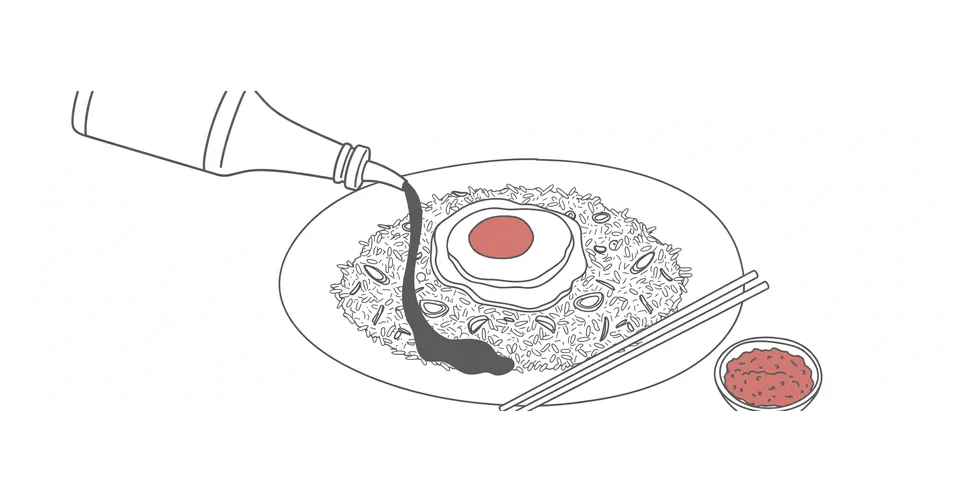
Kecap manis is Indonesia's sweet soy sauce, and it is unlike any other soy sauce in the world. It starts life as ordinary fermented soy sauce, then it is simmered with palm sugar until it turns thick, dark and syrupy, almost like molasses. The result is sweet and salty at once, with a deep caramel note and a rich umami backbone. It is the single most popular condiment in Indonesia, and by one often quoted estimate, around 90 percent of the soy sauce produced in the country is used to make it.
That dominance is no accident. Kecap manis is not a sauce Indonesians add to a dish. It is a sauce that defines dishes. Nasi goreng without it is just fried rice. Satay without it is grilled meat waiting for its flavour. This article looks at what kecap manis is made of, how it was born from the meeting of Chinese and Javanese cooking on Java, how it is used across the Indonesian kitchen, and how it stands apart from the soy sauces of Japan and China.
Kecap Manis and How It Is Made
At its simplest, kecap manis has two parents: soy sauce and palm sugar. The soy sauce itself is made the traditional way, from soybeans fermented with salt water and koji mould, then pressed to draw out the dark liquid. In traditional Indonesian practice the beans are usually black soybeans, known as kedelai hitam, which give a deeper colour and a more earthy taste than the yellow soybeans used for most Chinese and Japanese soy sauces.
Then comes the step that makes kecap manis what it is. The soy liquid is cooked down with a generous amount of palm sugar, and the mixture is simmered until it thickens into a glossy, almost black syrup. The sugar is the point. By weight, palm sugar can make up more than half of the finished sauce, which is why kecap manis pours slowly, coats a spoon, and clings to food instead of running off it. Many makers also add aromatics while the sauce simmers, most often star anise, garlic, shallots and galangal, which give it a warm, spiced background behind the sweetness.
The palm sugar itself matters as much as the soy. The traditional sweetener is gula aren, made from the sap of the sugar palm, or gula jawa, made from coconut palm sap. Tappers collect the sap from cut flower stalks and boil it down in open pans until it sets into dark brown cakes. It is smoky and caramel-like, as different from white sugar as molasses is, and it gives kecap manis a warmth that no refined sugar can copy. Ask a maker what marks a good bottle and the answer is usually the same: real palm sugar, used generously.
The finished kecap manis is thick, almost black, sweet and salty at once, with a rich umami depth. It is closer to a glaze than to a seasoning sauce, and that is exactly how Indonesian cooks treat it. They brush it, pour it, and stir it through dishes, and a little of it goes a long way.
How Kecap Manis Was Born on Java
The story of kecap manis begins with trade. Soy sauce reached the Indonesian archipelago centuries ago with Chinese traders and settlers, who brought their fermented sauces to Java and the other islands. The word itself carries that history. Kecap comes from the Hokkien word ke-tsiap, a fermented fish sauce, and it is the same root that gave English the word ketchup. In the Malay world, kecap came to mean fermented sauces, and later mainly soy-based ones.
What happened next was a Javanese invention. The local palate on Java has a well documented love of sweetness, and the island was rich in palm sugar. Javanese cooks began to simmer the salty foreign soy sauce with the dark, smoky sugar of their own land, and the result was something new: a thick, sweet sauce that belonged to neither China nor Java alone. One widely repeated account, told by Serious Eats, dates the creation to around the mid-19th century, when Chinese settlers on Java noticed the local taste for sweetness and added coconut palm sugar to their soy sauce. Other accounts place the arrival of soy sauce itself much earlier, in the 17th century. The honest version is that the sauce grew out of centuries of contact, and the sweet version as Indonesians know it took shape on Java in the 1800s.
The Dutch spelling gives away the next chapter. Outside Indonesia, kecap manis is still sold in Dutch shops as ketjap manis, a leftover of colonial history, and the Dutch were the ones who carried the word kecap back to Europe in the 17th and 18th centuries, where it eventually became ketchup. So the most famous condiment in the English-speaking world and the most popular condiment in Indonesia share a single ancestor, a fermented sauce that travelled from China to Java and then to the world.
Today the sauce is an industry. The two best known national brands are Bango, established in 1928 and now owned by Unilever, and ABC, the Heinz ABC brand now under Kraft Heinz. Bango has built its marketing around a specific black soybean variety grown by partner farmers on Java. ABC's bottle, with its red label, is the familiar sight in warungs across the country, and for many Indonesians it is simply what soy sauce looks like.
Kecap Manis in the Kitchen
The best way to understand kecap manis is to watch what it does to a dish. It does two things at once: it darkens and it sweetens, and in a cuisine that loves the balance of sweet, salty and spicy, that double job makes it indispensable.
Nasi goreng is the clearest example. The fried rice that Indonesia gave the world gets its colour and its signature sweet-savoury flavour from kecap manis, stirred through the rice as it fries. Without it, the dish is pale and flat. With it, the rice turns a deep brown and the sweetness plays against the salt of the soy, the heat of the chilli and the richness of the fried egg on top. My guide to the dish itself is here: nasi goreng, Indonesia's fried rice the world loves.
Mie goreng follows the same logic. The noodles are tossed with the sauce until they shine, and the sweetness rounds off the garlic and the chilli. Satay uses kecap manis twice, once as a glaze brushed over the skewers as they grill, and again as the base of the peanut sauce served beside them. A spoonful stirred into soto deepens the broth. A little in rendang adds a dark sweetness behind the spice. And semur, the slow braised beef of Java, is practically built on it: meat simmered in a dark, sweet gravy that would not exist without the bottle.
It is also a table sauce. A small dish of kecap manis with sliced chillies is a common companion to fried foods, from fried tofu and tempeh to fried chicken and fish. Diners dip, drizzle and adjust to taste, and the sauce is forgiving: a little more sweetness rarely ruins a dish in a cuisine that welcomes it.
That versatility explains why the bottle never leaves the table. It is seasoning, glaze, dip and colouring in one, and it asks for no skill to use well. A cook who has nothing else in the kitchen can still make a decent plate of fried rice with rice, egg, chilli and kecap manis, and many Indonesian students and workers do exactly that.
Kecap Manis Against the Other Soy Sauces
Because kecap manis looks like soy sauce, visitors often treat it as soy sauce, and that is a mistake. It is a different condiment wearing a similar colour. A short comparison makes the difference clear.
| Sauce | Origin | Texture | Taste | Main use |
|---|---|---|---|---|
| Kecap manis | Indonesia | Thick, syrupy, almost like molasses | Sweet and salty, caramel notes | Nasi goreng, mie goreng, satay, semur |
| Kecap asin | Indonesia | Thin, like water | Salty, sharp | Seasoning, dipping, soups |
| Shoyu | Japan | Thin | Salty, clean, brewed flavour | Sushi, sashimi, cooking |
| Chinese light soy sauce | China | Thin | Salty, light | Seasoning, stir-fries |
| Chinese dark soy sauce | China | Slightly thick | Less salty, mainly for colour | Colouring braised dishes |
The first comparison is the one inside Indonesia itself. Kecap asin is the salty soy sauce, thin and sharp, used for seasoning the way salt is used. Kecap manis is its sweet twin, and the two sit side by side in Indonesian kitchens for different jobs. If a recipe calls for one and you use the other, the dish will still be edible, but it will not be the dish.
The Japanese comparison is the one most travellers make, because shoyu is the soy sauce they know. Shoyu is brewed and thin, built to season cleanly without adding sweetness. Kecap manis is simmered with sugar until it is thick enough to glaze, and it adds sweetness as its main gift. The two are not substitutes for each other. A sushi chef would never reach for kecap manis, and a satay seller would never reach for shoyu.
Chinese soy sauce is closer in family, since Indonesian soy sauce descends from it, but the difference is still large. Chinese light soy sauce is thin and salty, made for seasoning. Chinese dark soy sauce is thicker and mainly used for colour. Neither is as sweet as kecap manis, and neither carries the smoky caramel flavour of palm sugar.
Kecap manis is also not interchangeable with the sweet sauces people sometimes reach for instead. It is not teriyaki, which is a glaze built on mirin and sake, and it is not hoisin, which is built on fermented soybean paste with its own spice blend. Each of those has its own identity, and kecap manis has its own: part soy, part spice, part sugar, and entirely Indonesian.
How to Choose and Use Kecap Manis
For most people, the choice is simple: buy ABC or Bango. The two brands dominate the market for good reason, and both are consistent, widely available and fairly priced. ABC is the bottle most warungs keep on the table. Bango leans on its black soybean story and its long history since 1928. Smaller artisanal brands exist, and some are excellent, but a first bottle should be one of the big two, so you learn the standard flavour before exploring.
When choosing, look at the label. A good kecap manis lists palm sugar high among the ingredients and pours slowly from the bottle. If it runs like water, it is not the real thing. If it is very dark and coats a spoon, it is. Some cheaper sauces use refined sugar and thickeners instead of palm sugar and slow reduction, and the difference shows in the flavour: flat sweetness without the smoky caramel depth.
Using it is easy, but a few habits help. Add it early when you want its colour and sweetness cooked into a dish, as in nasi goreng, and add it late when you want its glaze to shine, as on satay. Start with a tablespoon and taste before adding more, because its sweetness builds quickly. And remember that it already contains salt, so a dish seasoned with kecap manis usually needs less added salt than you think.
Storage is simple. Keep the bottle in a cool, dark place and it will last for months, and it does not need refrigeration after opening, though a cool cupboard is kinder to it than a hot kitchen shelf. If the sauce thickens a little over time, that is normal for a syrup, and a few seconds in warm water will loosen it.
Outside Indonesia, kecap manis is easy to find in Asian grocery stores and in Dutch supermarkets, where it is sold as ketjap manis. Online, the big brands ship worldwide. If you cook Indonesian food at home, it is the single most useful bottle to own, because so many dishes lean on it, from rendang, once named the world's best food to a simple plate of fried rice.
Why One Bottle Carries a Whole Cuisine
There is a simple lesson in the bottle on the warung table. Kecap manis is not an ancient recipe handed down unchanged from some distant past. It is a practical invention, made by people who took a foreign sauce and adjusted it until it tasted like home. That is how most great food is made: not by guarding a tradition, but by tasting, adding, and keeping what works.
I think that is worth remembering whenever a cuisine is described as if it were frozen in time. Indonesian food is not a museum. It is a living kitchen, and kecap manis is the proof: a Chinese sauce, Javanese sugar, and a Dutch spelling, mixed together into something that now tastes, to hundreds of millions of people, simply like Indonesia. The bottle is small and cheap and easy to overlook, and that is part of its charm. The most important flavours are often the ones sitting quietly on the table, waiting to be noticed.
More in Food & Travel
Latest posts
- Manza Onsen Bathes at 1,800 Metres
- Irezumi Was an Art Before It Was a Warning
- The Oshi Kept Fuji's Pilgrims Fed, Housed, and Devout
- Japan's Population Decline and the Villages It Leaves Behind
- KRL Commuterline and the Trains That Move Jakarta
- Loma Linda's Long Lives Run on Saturdays
- The Three Sisters Grow Better Together
- Half the Old Springs in Japan Thank Kobo Daishi
- Tatamiishi Terraces Filter a River Through Stone
- Wasabi-Zuke Puts the Whole Plant in Sake Lees
- Konyoku Is Still Out There, Past the Last Train Station
- Karo Is the Tengger's Other Great Gathering
- Dry January Lasts a Month on Purpose
- Urashima's Dragon Palace Had a Name, Ryugu
- Petruk's Nose Arrives Before He Does