Nasi Goreng, Indonesia's Fried Rice the World Loves
· 10 min read
Nasi goreng is Indonesia's most loved dish, fried rice darkened with kecap manis and served with a fried egg, crackers and pickles. This is what makes it different, and where to eat it.
Nasi goreng is Indonesia's answer to the question of what to do with leftover rice. It is fried rice, but that plain description misses the point. In 2011 CNN ranked nasi goreng the second most delicious food in the world, just behind rendang, and Indonesians were not surprised. They eat it for breakfast, for lunch, for dinner, and at two in the morning from a cart on a street corner.
The dish is simple on paper. Day-old rice, fried fast in a hot wok with garlic, shallots, chilli and sweet soy sauce, then served with a fried egg, crackers and pickles. The simplicity is the point. Nasi goreng is the food Indonesia turns to when the fridge is nearly empty, when guests arrive without warning, and when the night is still young and the stomach is not ready to sleep.
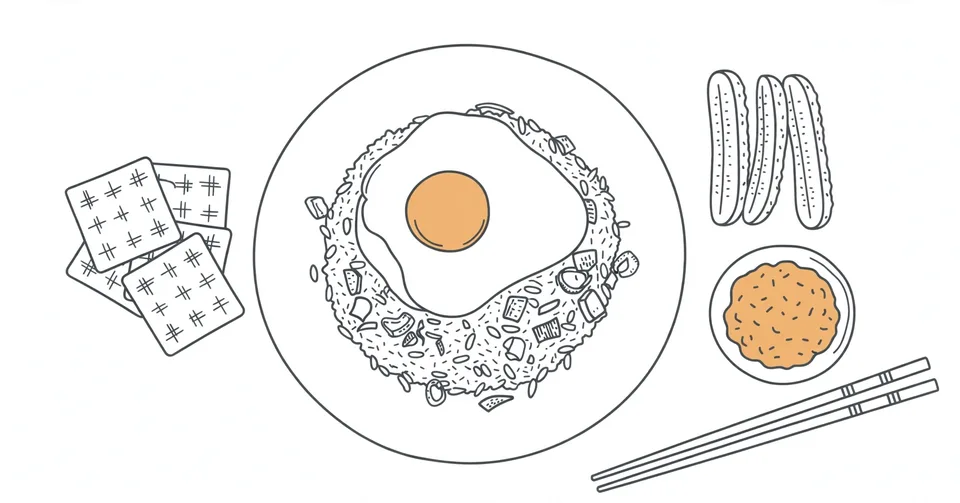
What follows is a guide to what makes nasi goreng different from every other fried rice, how a plate is put together, where to eat it, and why a dish born from leftovers ended up on a world ranking. It is also, quietly, a dish about not wasting food, and that is a value worth keeping.
What makes nasi goreng different
Every country in Asia has a fried rice. What sets nasi goreng apart is kecap manis, the thick sweet soy sauce that is poured into the wok as the rice fries. It darkens the grains to a deep brown, coats them in a sweet and salty glaze, and gives nasi goreng its colour before a single topping is added. Without kecap manis, the dish is just fried rice. With it, the dish is unmistakably Indonesian.
The second difference is the rice itself. Nasi goreng is made from leftover rice, ideally cooked the day before and left to dry out in the fridge overnight. Fresh rice is too soft and too wet, and it turns to mush in the wok. Day-old grains stay separate, so each one fries properly and picks up the smoky flavour of the wok. This is why nasi goreng is a morning dish in many Indonesian homes. Yesterday's rice becomes today's breakfast, and nothing is thrown away.
The third difference is the base of flavour, the bumbu. Shallots, garlic and red chilli are pounded or blended into a paste and fried first, until the kitchen smells of something warm and sharp. Some cooks add a little shrimp paste, terasi, for depth. The paste goes into the wok before the rice, so the flavour is in every grain rather than sitting on top of it. The heat matters too. A good nasi goreng is cooked fast over a high flame, and the brief kiss of smoke, the wok hei that Chinese cooks prize, is part of the taste.
None of this is complicated, and that is the point. Nasi goreng does not need rare ingredients or special equipment. It needs yesterday's rice, a hot wok, and a cook who is not afraid of the heat.
How a plate comes together
A plate of nasi goreng is more than the rice. The toppings are part of the dish, and each one has a job. The fried egg, telur mata sapi, sits on top with its yolk still runny. Break it and the yolk runs through the rice, turning the sweet and salty grains rich and soft. It is the part of the plate that makes the dish feel complete.
Krupuk, the crackers, add the crunch the soft rice does not have. They are usually prawn crackers, thin and pale, and they shatter when you bite them. Acar, the pickled cucumber and carrot, adds the sharp and sour note that cuts through the sweetness of the kecap manis. Fried shallots, bawang goreng, are scattered over the top for a final savoury crunch. Slices of cucumber and tomato sit at the side, cool and fresh.
The balance is the whole idea. Sweet from the sauce, salty from the soy and the shrimp paste, hot from the chilli, sour from the pickles, soft from the rice and the egg, crisp from the crackers. A good plate of nasi goreng does not have one flavour that wins. It has five flavours that agree with each other, and the egg yolk holds them together.
This is also why the dish is so forgiving. A cook can leave out the shrimp paste, swap the chilli for a milder one, or add extra egg, and the plate still works. The structure stays the same. Rice, sauce, egg, crunch, pickle. Change the details as you like, but keep the balance.
From the night cart to the restaurant table
The most famous nasi goreng does not come from a restaurant. It comes from a cart, a gerobak, pushed through the streets at night, with a wok and a gas burner and a small lamp. The cook fries to order while customers wait on plastic stools, and the smoke drifts down the street and pulls in more people. The cart is where nasi goreng is cheapest, often a fraction of the restaurant price, and regulars will tell you it is also where the dish tastes best.
The warung, the small family eatery, is the next step up. The menu is short, the rice is cooked in bigger batches, and the cook knows the regular customers by name and by order. Restaurants serve it too, of course, and hotel buffets put it out for breakfast, but the dish never really leaves the street. Even in the most expensive restaurant, nasi goreng is still, at heart, street food that has been given a plate and a chair.
The dish itself came to Indonesia through Chinese traders, who brought fried rice with them centuries ago. Indonesians made it their own by adding kecap manis, chilli and shrimp paste, and by turning it into a way to use up leftover rice. That history is written into the name. Nasi means rice, goreng means fried, and the simplicity of the name matches the simplicity of the dish. It is not a dish that hides behind a fancy title.
Today nasi goreng is widely considered Indonesia's national dish, and it is eaten across the whole country, from Aceh to Papua, with local cooks adding their own touches. The version in Jakarta is not quite the version in Yogyakarta, and the version in Makassar has its own character again. That variety is part of the charm. There is no single official nasi goreng, only a thousand local ones.
The main variants
Most plates of nasi goreng fall into a few familiar types. The names tell you what is in the wok, and the rest of the plate stays the same.
| Variant | What is in it | Where to find it |
|---|---|---|
| Nasi goreng kampung | Village style, with anchovies, long beans and chilli, often the spiciest version | Warung and street carts across Java |
| Nasi goreng ayam | Chicken, usually shredded, sometimes with a fried egg on top as well | Everywhere, the safe choice for first timers |
| Nasi goreng seafood | Prawns, squid and sometimes fish, with a little more chilli to match | Coastal towns and restaurants near the sea |
| Nasi goreng kambing | Goat meat, often cooked with more spices and served with extra pickles | Jakarta, especially in the evenings |
The kampung version is the one to try if you like heat. It is the plainest in appearance and the boldest in flavour, and it is the version most Indonesian cooks make at home. The kambing version is the richest, and the goat meat makes it a heavier meal, best eaten when you are properly hungry. The seafood version changes with the catch, so it is never quite the same twice.
There are stranger ones too. Nasi goreng gila, literally crazy fried rice, is a Jakarta street style loaded with sausage, meatballs, egg and whatever else the cook has to hand. It is more a dare than a recipe. But the four in the table are the classics, and any of them will show you what the dish is.
Why the world fell for it
The CNN ranking in 2011 did not invent nasi goreng's fame. It confirmed it. The list, CNN's World's 50 Best Foods, put rendang first and nasi goreng second, and the two dishes have been introduced to the world together ever since. For many people outside Indonesia, nasi goreng was the first Indonesian dish they ever ate, and often the first they learned to cook at home.
The diaspora helped. Indonesian restaurants in the Netherlands, Australia, Malaysia and Singapore put nasi goreng on the menu, and Dutch Indonesian restaurants, a legacy of the colonial era, made it a standard part of the rijsttafel spread. Home cooks carried the recipe further. The ingredients are forgiving, and kecap manis is now sold in supermarkets around the world, so a cook in London or Sydney can make a decent plate without a trip to a specialist shop.
It also travels well because it is honest about what it is. Nasi goreng does not pretend to be fine dining. It is a dish for feeding people well with what you already have, and that idea crosses borders easily. Like instant noodles, it belongs to the group of foods that people reach for when they want comfort without ceremony, and it rarely disappoints.
The ranking gave the dish a story to tell, but the story was already there. A dish that turns yesterday's rice into today's best meal does not need an award to matter. It only needs someone hungry and a hot wok.
A dish that wastes nothing
The best nasi goreng I have eaten came from a cart, late at night, for the price of a coffee. The rice was smoky, the egg yolk ran through the grains, and the pickles were sharp enough to wake me up. A restaurant version, eaten the next week with a proper chair and a proper bill, was fine, but it was not better. The cart had the smoke, and the smoke is half the flavour.
That is the lesson of the dish, and it is a gentle one. Good food does not need to be expensive, and it does not need to be new. Sometimes it only needs yesterday's rice, a hot wok, and a cook who knows that nothing in the kitchen should be wasted. Nasi goreng is Indonesia's reminder that the humblest ingredients, treated with respect, can become the food the whole world wants to eat. Cook it at home, eat it from a cart, or order it in a restaurant. Just do not throw the rice away.
More in Food & Travel
- Numazu Deep Sea Aquarium and the Creatures of Suruga Bay
- Numazu Himono and the Art of Dried Fish
- Numazu Port and the Freshest Seafood in Shizuoka
- Bullet Climbing Mount Fuji, the Overnight Ascent Japan Is Trying to Stop
- Climbing Mount Semeru, Java's Highest Volcano
- Tamago Sando and Japan's Konbini Egg Sandwich
Latest posts
- Love Live Sunshine and How Anime Changed Numazu
- Numazu Imperial Villa and Japan's Seaside Imperial Retreat
- Disaster Vending Machines in Japan That Give Their Drinks Away
- The E33G Remote Worker Visa and How to Legally Work from Bali
- Wabi-Sabi and the Japanese Beauty of Imperfect Things
- Women Only Train Cars in Japan and the Problem They Answer
- Maneki Neko and Japan's Beckoning Lucky Cat
- The Baduy People and Life Without Modern Technology
- The Salaryman and Japan's Loyal Office Culture
- Onsen Tattoo Rules in Japan and How They Are Slowly Changing
- Key Money in Japan and Why Renting Costs Four Months Up Front
- Sento, Japan's Everyday Public Bathhouse
- The Fuji Five Lakes and the Best Views of Mount Fuji
- The Obon Festival, Japan's Week for Honouring Ancestors
- Visiting the Ghibli Museum and Ghibli Park in Japan