Maruten Numazu and the Towering Kakiage Bowl of the Port
· 12 min read
Maruten Numazu is the seafood restaurant at Numazu Port famous for a kakiage bowl stacked like a tower, plus sashimi and simmered fish straight from Suruga Bay. Here is what to order, which of the two shops to choose, and how to beat the queue.
At Numazu Port, the queue outside Maruten Numazu starts before the doors open, and the reason is visible the moment the first plates come out. It is a tower of golden tempura, a cylinder of fried shrimp and vegetables stacked so high above the bowl that it looks like it should fall over, and it does not. People point at it, photograph it, and then work out how to eat it. Maruten Numazu is the restaurant that built its name on that tower, and it is also one of the best places in Shizuoka to eat the fish that Suruga Bay landed that same morning.
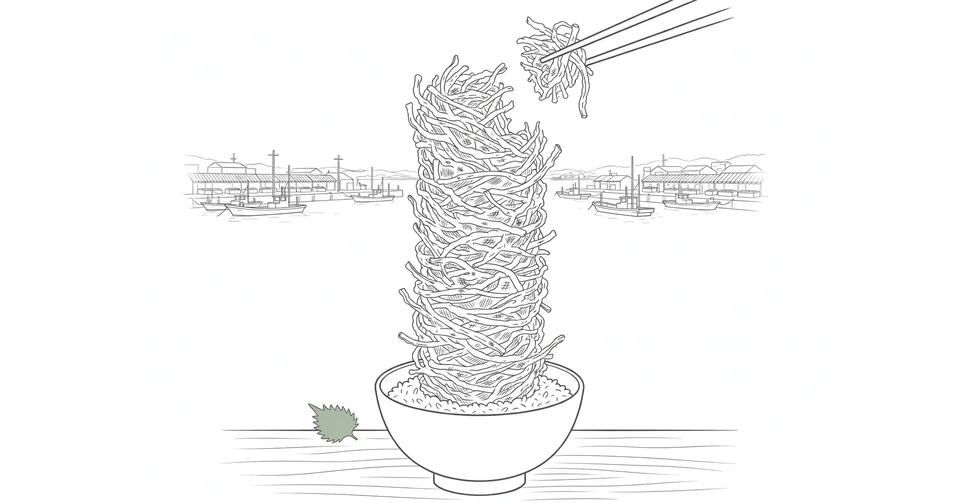
Maruten Numazu is the common name for Uogashi Maruten, a seafood restaurant in the Numazu fish market area of Shizuoka Prefecture. The full name, Uogashi Maruten, means roughly the round sky of the fish market, and the restaurant lives up to it. It sits among the market buildings on Senbonminatocho, a short walk from the water, where the morning auctions decide what the town eats for lunch. The fish on your plate at Maruten Numazu may have been swimming in Suruga Bay a few hours earlier, and that short distance from sea to table is the whole point of coming here.
That distance matters because of where Numazu sits. Numazu Port is the gateway to Suruga Bay, the deepest bay in Japan at 2,500 metres, and its waters hold an unusual range of fish, from the tiny sakura ebi shrimp to deep sea kinmedai. The port has been a working fishing harbour for generations, not a theme park, and the restaurants around it feed fishermen, market workers, and travellers at the same tables. Numazu Port and the freshest seafood in Shizuoka is the place to start if you want the wider story of the harbour, but Maruten Numazu is where that story becomes lunch.
Maruten Numazu and the Two Shops on One Street
The first thing to know about Maruten Numazu is that there are two of them, on the same street, a few minutes apart on foot. This confuses first time visitors, and it is also useful, because the second shop gives you a fallback when the first one has a long queue. The main store, also called the Gozenya store, stands at 114-1 Senbonminatocho and can be reached on 055-963-0202. The Minato store stands at 100-1 Senbonminatocho, inside the Shio-sai Market building, and its phone number is 055-954-1028. Both serve the same famous dishes, and both fill up at lunchtime.
The main store of Maruten Numazu is the original, a busy port restaurant with a market atmosphere and a menu that runs from breakfast into the early afternoon. It opens at 8:00 on weekdays and at 7:00 on weekends and holidays, and it closes at 15:00 on weekdays and 15:30 on Saturdays and Sundays, though sources differ slightly on the exact Sunday closing time, so it is worth checking the official Maruten Numazu website before you go. The main store is cash only, which surprises visitors who expect card payment in a restaurant this popular. Bring yen, and bring more than you think you need, because the menu rewards a second look.
The Minato store of Maruten Numazu opened on 20 December 2016, inside the Shio-sai Market, and it keeps longer hours for people who arrive later in the day. It generally opens in the late morning and serves until around 20:00, and it is closed on Thursdays, or on Wednesday when Thursday is a public holiday. The Minato store has the same kakiage tower and the same sashimi, and its setting inside the market hall feels a little more spacious than the main store. If the main store of Maruten Numazu has a queue spilling onto the street, walking to the Minato store is the simplest plan, and it works more often than people expect.
The Towering Kakiage Bowl of Maruten Numazu
Kakiage is a Japanese fritter made by mixing chopped vegetables and small shrimp in batter and frying the mixture as one crisp cluster. Most kakiage are flat discs, roughly the size of a palm, laid on rice or noodles. The version at Maruten Numazu is different. It is shaped into a tall cylinder, a three dimensional tower of tempura that rises well above the rim of the bowl, packed with shrimp and cherry shrimp from Suruga Bay and plenty of onion and other vegetables. The previous president of Maruten Numazu is said to have taken great care in developing the shape, and the method of making it is even said to be patented. Whatever the paperwork says, the result is a dish that looks like a small golden building and eats like the sea.
The tower is the reason most people come to Maruten Numazu, and it is worth understanding what is inside it before you order. The filling is not decoration. The shrimp give it a sweet, firm bite, the sakura ebi add a delicate crunch and a colour that marks the dish as Suruga Bay cooking, and the onion softens and sweetens as it fries. The batter stays crisp on the outside while the inside stays moist, and the sweet and salty sauce poured over the top soaks slowly into the layers. A seafood kakiage rice bowl at the Minato store of Maruten Numazu is listed at 1,100 yen, which makes the tower one of the cheapest spectacles in Japanese food. Prices change, so treat that figure as a guide from the current menu rather than a promise, but the point stands. This is not a luxury dish. It is a port dish, priced for the people who work at the port.
Eating the tower takes a small change of approach. The usual advice from regulars at Maruten Numazu is to break the cylinder apart with your chopsticks and mix it with the sauce and the rice, rather than trying to lift the whole tower in one piece. The fritter is taller than it is wide, so it will lean and then fall, and that is fine. Once it is broken up, it becomes a generous tempura rice bowl, the kind where every mouthful has a different mix of shrimp, onion, and crisp batter. Some visitors try to eat it neatly from the top down. That works for the first few bites, and then gravity takes over, and the honest way to finish it is to break it apart and enjoy the mess.
Beyond the Tower at Maruten Numazu
A restaurant that only had one famous dish would be a poor reason to cross town, and Maruten Numazu is better than that. The menu is wide, the portions are generous, and almost everything on it comes from the same morning catch that supplies the tower. The kaisendon, a bowl of rice topped with sashimi, starts from around 1,600 yen, and the balance of fish to rice is the thing regulars praise most. It is not a mountain of rice with a little fish on top. It is a proper seafood bowl, where the fish leads and the rice supports it.
The sashimi at Maruten Numazu deserves its own mention, because it shows what Suruga Bay can do when the kitchen trusts the catch. The Minato store menu offers a platter of nine kinds of fresh fish from the bay, including sakura ebi, shirasu, and horse mackerel, for 1,850 yen. Nine kinds in one platter is a small tour of the bay, and it changes with the season and the day. The tiny pink sakura ebi shrimp that only Suruga Bay catches are the highlight for most visitors, because they are eaten whole, shell and all, and they taste of the sea in a way that larger shrimp do not. The shirasu, small whitebait, are mild and soft, and the horse mackerel is oily and rich, a good counterpoint to the delicate shrimp.
Simmered kinmedai is another dish that regulars at Maruten Numazu ask for by name. Kinmedai is a deep sea fish with red skin and white flesh, and it is simmered in a sweet soy sauce until the flesh takes on the flavour of the broth. It is a quieter dish than the tower, and it is the one that tells you whether a restaurant really knows fish. The version at Maruten Numazu is widely praised by reviewers, and it is a good choice if you want something warm and comforting rather than crisp and showy. Grilled fish and himono sets round out the menu, and the himono, dried fish grilled over a flame, is a Numazu tradition in its own right. Numazu himono and the art of dried fish explains why the town dries its fish the way it does, and the sets at Maruten Numazu are a practical way to taste it without ordering a whole fish.
The menu at Maruten Numazu also includes a few bowls that show the kitchen has a sense of humour about its own fame. The Uogashi Niko Niko Bowl piles ten kinds of ingredients on rice for 2,000 yen, and the Fish Market Marutendon tops rice with eight kinds of seasonal seafood for 1,560 yen. The names are cheerful, the portions are large, and the fish soup that comes with them is a proper bowl of broth rather than an afterthought. If the tower feels like too much of a performance, one of these bowls gives you the same fish in a more ordinary shape.
How to Visit Maruten Numazu
Maruten Numazu does not take reservations, and that single fact shapes the whole visit. The restaurant is ranked first among 1,484 restaurants in Numazu on Tripadvisor, and the queue is the price of that ranking. The practical advice is simple. Arrive before noon, and earlier is better. The main store opens at 7:00 or 8:00 depending on the day, and the first hour is the calmest time to eat. Popular items can sell out after 1pm, so a late lunch is a gamble, and the tower is one of the dishes that disappears first.
The queue itself is part of the experience, and it is worth treating it that way. People wait outside the main store of Maruten Numazu because the food is good and the prices are fair, not because waiting is fashionable. Bring cash for the main store, since cards are not accepted there, and expect to pay about 1,500 to 3,000 yen per person for a full lunch. That range covers the tower, a kaisendon, or a sashimi platter with soup, and it is a fair price for fish that was in the bay that morning. If you are travelling with children or with someone who cannot stand for long, the Minato store inside the market hall is the better choice, because the wait there is usually shorter and there is somewhere to sit while you decide.
Getting to Maruten Numazu is straightforward. The restaurant stands in the Numazu Port area, about ten to fifteen minutes by bus from JR Numazu Station, and the port itself is worth an hour of your time before or after lunch. Walk along the water, look at the fishing boats, and visit the market stalls that sell dried fish, sakura ebi, and local snacks. The Deep Sea Aquarium nearby is a good stop if you want to see the creatures of Suruga Bay alive before you eat their neighbours, and the port area has enough to fill a morning without ever feeling like a tourist trap.
| Branch | Address | Phone | Hours | Closed |
|---|---|---|---|---|
| Main store (Gozenya) | 114-1 Senbonminatocho | 055-963-0202 | Weekdays 8:00-15:00, weekends and holidays 7:00-15:30 | Irregular days |
| Minato store | 100-1 Senbonminatocho, inside Shio-sai Market | 055-954-1028 | Late morning to around 20:00 | Thursdays, or Wednesday when Thursday is a public holiday |
Hours and prices at Maruten Numazu change with the season and the catch, and the two branches keep different schedules, so the table above is a starting point rather than a guarantee. The official Maruten Numazu website lists the current hours, and the menu pages of the Minato store confirm the current prices. Checking before you travel takes a minute, and it is the difference between a smooth lunch and a closed door. The same care applies to the tower itself. It is a dish built on the morning catch, and on a day when the boats bring in less, the kitchen may run out early. That is not a failure of the restaurant. It is the honest consequence of cooking with what the sea provides.
There is a simple lesson in the tower at Maruten Numazu, and it has little to do with size. The dish works because the restaurant respects the fish first and the spectacle second. The kakiage is tall, but it is also well made, the shrimp are fresh, the batter is crisp, and the sauce is balanced. A tower of poor tempura would be a joke that nobody returns for, and Maruten Numazu has been full for years, which tells you the cooking holds up once the photographs are taken. Eating here is a reminder that the best meals in Japan are often not the most expensive ones. They are the ones closest to where the food comes from, served by people who know the fishermen by name, at a price that lets the town eat there too. That is worth queuing for, and it is worth eating slowly once you sit down.
More in Food & Travel
Latest posts
- Manza Onsen Bathes at 1,800 Metres
- Irezumi Was an Art Before It Was a Warning
- The Oshi Kept Fuji's Pilgrims Fed, Housed, and Devout
- Japan's Population Decline and the Villages It Leaves Behind
- KRL Commuterline and the Trains That Move Jakarta
- Loma Linda's Long Lives Run on Saturdays
- The Three Sisters Grow Better Together
- Half the Old Springs in Japan Thank Kobo Daishi
- Tatamiishi Terraces Filter a River Through Stone
- Wasabi-Zuke Puts the Whole Plant in Sake Lees
- Konyoku Is Still Out There, Past the Last Train Station
- Karo Is the Tengger's Other Great Gathering
- Dry January Lasts a Month on Purpose
- Urashima's Dragon Palace Had a Name, Ryugu
- Petruk's Nose Arrives Before He Does