Shochu and the Quiet Spirit of Japan
· 15 min read
Shochu is Japan's distilled spirit, made with koji mold from sweet potato, barley, rice, brown sugar or buckwheat. It is drunk more widely across Japan than sake, yet almost nobody outside the country knows it. Here is what it is, how the five main kinds differ, and how to drink it.
Order a drink in a Tokyo izakaya and the glass that arrives may not be sake. It may be shochu, clear as water, served in a small ceramic cup or a tall glass of soda, and the person next to you will probably be drinking it too. Shochu is the spirit Japan drinks at home, through dinner, after work, and at family gatherings, and it is strange how little the rest of the world knows about it. Sake travels the world in elegant bottles. Shochu mostly stays in Japan, quietly outselling its famous sibling.
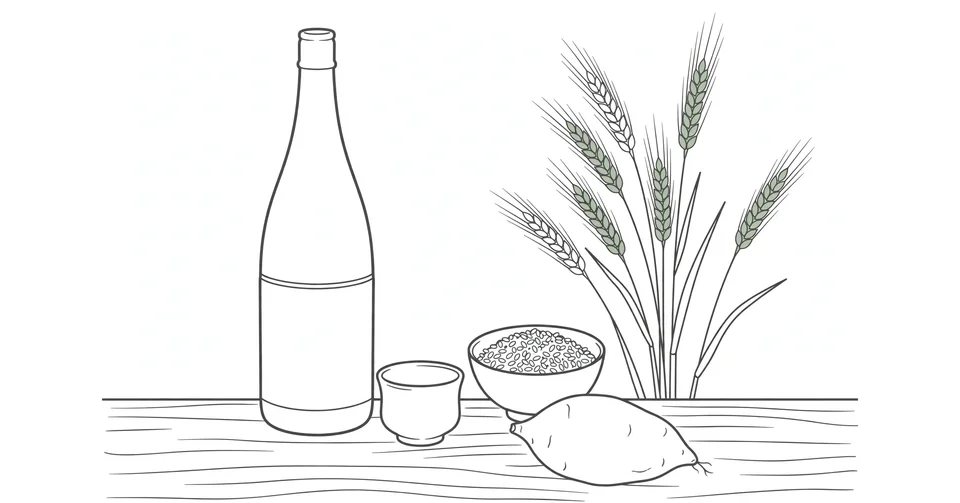
Shochu is a distilled spirit, and that single fact separates it from sake. Sake is brewed, like beer, by fermenting rice. Shochu is fermented first and then distilled, like whisky or vodka, which is why a bottle can reach 25 percent alcohol while sake stops at about 15. The base ingredient can be sweet potato, barley, rice, brown sugar or buckwheat, and the law permits more than fifty of them. What ties them together is koji, the mould that turns starch into sugar before fermentation, the same quiet worker behind sake, miso and soy sauce. The spirit is, in a sense, the whole of Japanese fermentation poured into one glass.
That is also why it is worth learning about. Shochu is not a novelty or a curiosity. It is a working drink with about five centuries of history, more than six hundred distilleries, and a geography that runs from the volcanic fields of Kagoshima to the islands of Okinawa. It is drunk more widely across Japan than sake, and yet most visitors leave the country without ever tasting it properly. This is a guide to what it is, how the main kinds differ, and how to order your first glass without feeling lost.
Shochu and Sake Are Not the Same Drink
The confusion is understandable. Both are Japanese, both are served in small cups, and both appear on the same menus. But shochu and sake are made in opposite ways. Sake is brewed. Rice is polished, steamed, mixed with koji and yeast, and fermented, and the result is bottled as it is. The spirit in question is distilled. Its makers ferment a base ingredient with koji, then heat the mash in a still and collect the vapour, which condenses into a clear, stronger liquid. That one extra step changes everything about the flavour, the strength and the way it is drunk.
Strength is the most obvious difference. Most bottles land at 20 or 25 percent alcohol, and 25 is the standard you will see most often. Sake sits around 15 percent. The law sets the ceiling at 45 percent for single-distilled shochu and under 36 percent for the column-distilled kind, though almost nothing on a shop shelf comes close to those limits. Producers add water before bottling, which is why the number on the label is usually a calm 25.
The second difference is character. Sake tastes of rice, delicately, and its flavours come from the brewing itself. Shochu tastes of its base ingredient, because distillation carries that flavour through. A sweet potato bottle smells sweet and earthy, a barley bottle smells nutty and clean, and a rice bottle smells soft and faintly floral. If you want to understand the drink, start there. Ask what it is made from, and you have already understood half of it. The full story of the brewed cousin is in Japanese Sake and the Rice Wine Japan Has Brewed for Centuries, but the distilled one plays by different rules.
Honkaku Shochu and the Two Ways to Distil
Japanese law splits the spirit into two categories, and the split matters more than it sounds. Honkaku shochu, written with characters meaning authentic, is distilled once in a pot still. Korui shochu is distilled many times in a continuous column still. The first keeps the flavour of its base ingredient. The second comes out almost neutral, much like vodka, and is the spirit that goes into canned chuhai and mixed drinks. This article is about honkaku, the craft category, because that is where the flavour lives.
A pot still is a simple piece of equipment, a heated vessel with a neck that carries the vapour away, and the distiller runs the mash through it exactly once. The mash going in is 14 to 19 percent alcohol, and what comes out is 37 to 45 percent, carrying the aroma of the sweet potato or barley with it. That single pass is the whole point. Distil it again and the character starts to fade. The makers also use two kinds of pot still: an ordinary atmospheric still and a vacuum still, which boils the mash at a lower temperature and keeps the lighter, fruitier aromas that heat would destroy. Vacuum-distilled bottles tend to smell brighter and cleaner, while atmospheric ones smell richer and deeper.
The label tells you which kind you are holding. Only pot-still products may carry the words honkaku shochu, so look for those two words on the bottle. Korui bottles say so too, or say nothing at all about honkaku. Blends exist as well, and the label states which type dominates. The rule is simple enough to remember in a shop: if the bottle says honkaku, the ingredient's character will show. If it does not, you are probably holding the neutral kind, which has its uses but is not what this article is about.
Koji, the Mould That Makes Shochu Possible
Every bottle starts with koji, and koji is the most Japanese ingredient in the whole story. Koji is a mould, Aspergillus oryzae and its relatives, grown on steamed rice or grain until the grains are covered in a pale, fragrant fuzz. It produces enzymes that turn starch into sugar, and yeast then turns that sugar into alcohol. Without koji there is no sake, no miso and no soy sauce, and there is no shochu either. The full story of this mould is told in Koji Mold and the Quiet Engine Behind Japanese Food, and it is worth reading, because koji is the thread that runs through the entire Japanese kitchen.
Honkaku shochu is the only distilled spirit in the world that uses koji to convert starch into sugar before fermentation. Whisky uses malted barley, vodka uses enzymes or grain, and rum uses sugar cane, but only this spirit starts with a bed of mouldy rice. The makers use three kinds of koji, and each one shapes the result. White koji is the modern standard, clean and reliable. Black koji is the older kind, and it makes citric acid, which protects the mash from bacteria in the warm climate of Kyushu. Yellow koji is the kind used for sake, delicate and aromatic, and it appears in some rice bottles.
The process runs in two stages, and the method has changed little in centuries. First the makers build a small starter mash of koji, water and yeast, and let it ferment for a few days. Then they add the main ingredient, steamed sweet potato or barley or rice, and the second fermentation begins. The mash that results is distilled once, and the clear liquid that comes out is left to rest before bottling. It is a slow, patient way of making a drink, and the patience shows in the glass.
The Five Main Bases of Shochu
Five ingredients account for almost everything on the shelf, and each one has a home region, a character and a best way to drink it. Sweet potato and barley together make up nearly nine tenths of the market, so most first bottles will be one of those two. The other three are smaller in volume but no less interesting.
| Base | Home region | Character | Best first try |
|---|---|---|---|
| Imo (sweet potato) | Kagoshima and Miyazaki | Rich, earthy, sweet | Cut with hot water |
| Mugi (barley) | Oita and Iki Island | Light, nutty, clean | With soda or on the rocks |
| Kome (rice) | Kuma valley, Kumamoto | Soft, refined, faintly floral | Cut with cold water or on the rocks |
| Kokuto (brown sugar) | Amami Islands only | Mellow, gently sweet | On the rocks |
| Soba (buckwheat) | First made in Miyazaki, 1973 | Dry, nutty, aromatic | With hot water |
Imo shochu is the most famous of the five, and it belongs to Kagoshima. The prefecture's volcanic soil grows sweet potatoes and not much rice, so the local drink grew out of what the land could provide. The potatoes came to Okinawa through trade in the early seventeenth century and reached Kyushu in 1705, and they spread quickly. The standard potato is Kogane Sengan, a variety bred for the purpose, and the best known bottles carry the Satsuma Shochu name, a protected geographical indication that means the spirit was made in Kagoshima from local sweet potatoes. An imo bottle smells warm and sweet, almost like roasted potato, and it is the richest of the five.
Mugi shochu belongs to Oita and to Iki Island in Nagasaki, and it is the easiest first bottle for most people. It is light, nutty and clean, with none of the earthy weight of the sweet potato kind. Oita's method uses only barley, including barley koji, and that was only possible from the 1970s onwards, when the technique was worked out. Iki shochu is its own protected name, and the island's makers have been distilling barley for generations. If the sweet potato kind is a winter drink, the barley kind is a summer one, and a tall glass of it with soda is one of the most refreshing things in Japanese drinking.
Kome shochu comes from the Kuma valley in Kumamoto, where the local rice spirit carries the Kuma Shochu name, another protected indication. It is soft and refined, closer in feeling to sake than the other kinds, and it suits cold water or ice. Kokuto shochu is made only on the Amami Islands, from brown sugar, and it is mellow and gently sweet, the rarest of the five on a mainland shelf. Soba shochu is the youngest, first produced in Miyazaki in 1973, dry and nutty and aromatic, and it remains a small share of the market. More than fifty ingredients are permitted by law, from pumpkin to milk, but these five are the ones that define the drink.
Shochu and Its Home in Kyushu
The spirit belongs to the south. Kyushu and Okinawa make more than ninety percent of it, and the map of distilleries is a map of the region's farming. There are more than six hundred distilleries in Japan, and the largest share sits in the south. Miyazaki prefecture has 38 distilleries and ranks first in the country for shipment quantity, while Kagoshima is the home of the sweet potato kind and Kumamoto is the home of the rice kind. The drink is, in the most literal sense, a product of the land it comes from.
That geography shapes the flavour. Kagoshima's volcanic ash soil drains fast and holds heat, which suits sweet potatoes and not rice, so the prefecture built its drinking culture on the potato. Oita's barley fields and Iki Island's sea air suit a lighter spirit. The Kuma valley in Kumamoto has clean water and good rice, so its spirit is soft. None of this is an accident. The drink is what the land could spare, distilled.
Okinawa has its own version, and it deserves a note of its own. Awamori is the rice spirit of Okinawa, made with Thai rice and black koji, and it is the oldest of the family, with a history going back more than five hundred years. It is technically a separate category under the law, but it belongs to the same tradition, and a bottle of awamori is the closest thing to tasting the drink as it was first made. If you visit Okinawa, it is the bottle to look for.
How to Drink Shochu
The spirit is built for drinking through a meal, and the way it is served is part of the pleasure. There are four standard ways to drink it, and each one suits a different kind. Oyuwari means cut with hot water, mizuwari means cut with cold water, soda-wari means topped with soda, and there is also the simple option of ice, or a splash of tea. The water does more than weaken the drink. Hot water opens the aroma, cold water keeps it crisp, and soda turns it into a long, refreshing highball.
The usual ratio is about six parts spirit to four parts water, and some distillers suggest equal parts with water at around 70 degrees for the hot version. The point is not precision. The point is that the drink is meant to be lengthened, not knocked back. A bottle at 25 percent becomes a gentle 15 percent in the glass, and it stays drinkable across a whole evening of food. Imo suits hot water, which lifts its sweet, earthy smell. Mugi suits soda or ice, which keeps it light. Kome suits cold water or ice, which protects its softness. These are starting points, not rules, and every drinker in Kyushu has a preference they will defend.
Food is the other half of the habit. The spirit is made to sit beside a table, and its clean, dry character suits grilled fish, fried chicken, pickles and rich, salty dishes. A glass of mugi with soda beside a plate of karaage is an ordinary pleasure in Japan, and it is one of the best. The same spirit, diluted and sold in cans as chuhai, is the drink you will find in every convenience store in the country, and the cans are the easiest first step for a curious visitor. Konbini and Why Japan's Convenience Stores Rule Daily Life explains how those stores work, and the drinks shelf is a good place to start experimenting for a few hundred yen.
A Short History of Shochu
The drink is about five centuries old, and its first chapter is a story of trade. Distillation reached Japan through the southern islands, carried along trade routes from the continent and Southeast Asia, and it arrived in Kyushu and Okinawa in the fifteenth century. The oldest foreign record comes from 1546, when the Portuguese merchant Jorge Alvarez wrote that people in the south were drinking a spirit made from rice. The oldest Japanese record is stranger and better. In 1559, two carpenters repairing the roof of a shrine in Kagoshima wrote a complaint on a roof tile, saying the stingy head priest had never once offered them the drink. That grumble is the first time the word appears in written Japanese, and it is a fitting start for a working-class spirit.
For centuries it stayed in the south, a regional drink made by farmers from whatever surplus crops they had. Sweet potatoes arrived in the early sixteen hundreds and changed everything, because Kagoshima's soil grew them well. The drink spread through Kyushu, became a prized gift in the Edo period, and stayed local while sake took the national stage. The Meiji era brought the column still from Britain, which made cheap, high-volume spirit possible during a period of chronic rice shortage, and that is how the neutral kind was born. The single-distilled kind kept its place in the south, and it is only in recent decades that it has travelled, first to Tokyo bars and then abroad, carried by bartenders who discovered that a spirit made from sweet potato could stand beside whisky on a shelf.
How to Choose Your First Bottle of Shochu
Start with barley. A bottle of mugi honkaku is the gentlest entry point, light and nutty, and it is forgiving however you serve it. Look for the word honkaku on the label, check that the strength is 25 percent, and pick a bottle from Oita or Iki Island. Drink it with soda and a squeeze of lemon, or on the rocks, and see whether you want to go further. If you like it, the next bottle should be imo, the sweet potato kind from Kagoshima, cut with hot water, which is the classic way to drink it and the best way to meet its earthy character.
Buying is easy. Department store liquor floors and specialist shops carry the best range, and the staff will usually let you ask questions. Convenience stores carry cans of chuhai, which are the cheapest way to try the flavour, though the cans use the neutral kind rather than honkaku. In Tokyo, the Japan Sake and Shochu Information Center near Toranomon station offers tastings for a few hundred yen a glass, and it is the best place in the country to compare several kinds side by side before committing to a bottle. The official guide to the spirit from the makers' association is a good reference if you want to go deeper, and a general guide to the drink at Food in Japan covers the categories and the serving styles in plain language.
There is a quiet lesson in the way this drink has survived. It never chased the world. It stayed in the south, made by small distilleries from local crops, drunk by the people who grew them, and it waited for the world to come to it. The world is slowly arriving, one bar at a time, and the drink has not changed to meet it. That is worth respecting. The next time you sit down in Japan and the menu offers a small ceramic cup of something clear, order it, cut it with hot water, and drink it slowly through the meal. The spirit has been waiting five centuries for you to notice it, and it is in no hurry.
More in Food & Travel
Latest posts
- Manza Onsen Bathes at 1,800 Metres
- Irezumi Was an Art Before It Was a Warning
- The Oshi Kept Fuji's Pilgrims Fed, Housed, and Devout
- Japan's Population Decline and the Villages It Leaves Behind
- KRL Commuterline and the Trains That Move Jakarta
- Loma Linda's Long Lives Run on Saturdays
- The Three Sisters Grow Better Together
- Half the Old Springs in Japan Thank Kobo Daishi
- Tatamiishi Terraces Filter a River Through Stone
- Wasabi-Zuke Puts the Whole Plant in Sake Lees
- Konyoku Is Still Out There, Past the Last Train Station
- Karo Is the Tengger's Other Great Gathering
- Dry January Lasts a Month on Purpose
- Urashima's Dragon Palace Had a Name, Ryugu
- Petruk's Nose Arrives Before He Does