Love Live Sunshine and How Anime Changed Numazu
· 9 min read
Love Live Sunshine turned the quiet port city of Numazu into a pilgrimage site for anime fans around the world. Here is how a fictional school idol group changed a real town, from wrapped buses and manhole covers to the small streets of Uchiura.
Numazu is a working port city on Suruga Bay, and on most mornings the first sounds are fishing boats and gulls. Step off the train at Numazu Station today, though, and you may hear a different sound first, the chatter of young visitors comparing screenshots on their phones to the street in front of them. They have not come for the fish. They have come because of Love Live Sunshine, the anime that turned this quiet corner of Shizuoka into one of the most visited anime towns in Japan.
Love Live Sunshine is the second series in the Love Live! franchise, and it first aired in 2016. It follows nine girls at Uranohoshi Girls' High School in the seaside district of Uchiura, who form a school idol group called Aqours, pronounced aqua, to save their small school from closing. The school is fictional, the town is not, and that is the whole trick of Love Live Sunshine. Every street, beach, and shrine gate in Love Live Sunshine has a real address in Numazu, and fans have spent the years since the first episode walking them one by one.
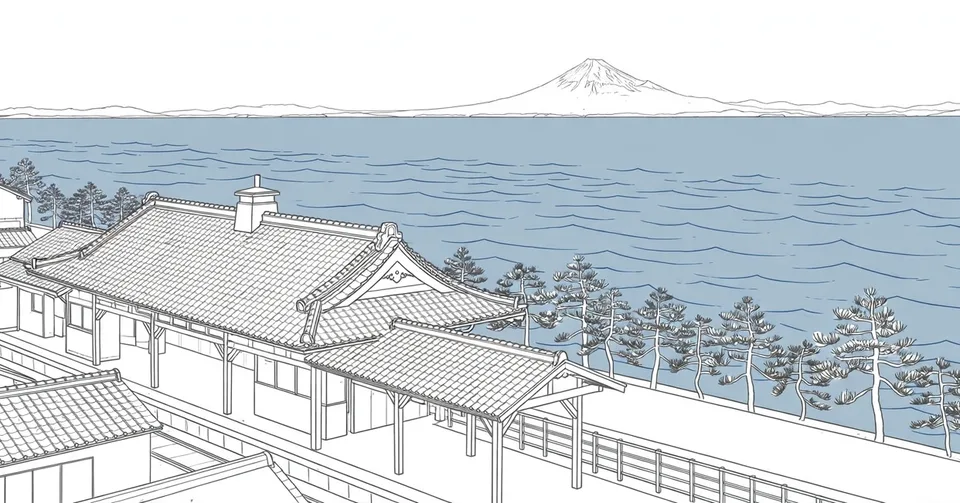
Before the anime, Numazu was known for other things. It sits on Suruga Bay, the deepest bay in Japan, dropping to about 2,500 metres and home to roughly 1,000 species of fish. The port lands the catch every morning, the fish market sells it by noon, and on a clear day Mount Fuji rises across the water. About 190,000 people live here, which makes Numazu the fourth largest city in Shizuoka Prefecture, and it is roughly an hour by Shinkansen from Tokyo to nearby Mishima, then a short local train ride to Numazu itself. It was a pleasant regional city, not a destination, and that is exactly what Love Live Sunshine changed.
How Love Live Sunshine Found Its Town
The setting was not an accident. When the next Love Live! series was being planned, the decision to set it in Numazu was made in cooperation with city officials, and the show was built from the start to promote the city it was set in. The opening shot of the first episode looks out over Uchiura Bay toward Mount Fuji, and the camera keeps returning to places a visitor can actually stand in. Love Live Sunshine treats Numazu as a character in its own right, not as a backdrop, and the town returned the favour.
The story of Love Live Sunshine is simple, and that simplicity is part of the appeal. Chika Takami, a second year student who idolises the legendary group μ's from the first Love Live! series, decides her school needs a school idol group of its own. Eight classmates join her, one by one, until Aqours has nine members. They practise on the beach at Mito, they hand out flyers in front of Numazu Station, and they film a promotional video to show off their small town. The town of Uchiura is the reason any of it matters. A second season followed in 2017, and by then the pilgrimage had already begun.
Uchiura, the Real Town Behind the Anime
Uchiura, pronounced oo-chee-oo-rah, is a quiet district south of the city centre, and it was once an independent village before it became part of Numazu. Love Live Sunshine is set there, and the real Uchiura is easy to recognise. The beach at Mito, where the girls train, looks out over the same bay, and the small island of Awashima sits offshore, reached only by boat. The school in Love Live Sunshine is modelled on the former Nagaisaki Junior High School, which stands on a hill above the bay, and its exterior is one of the most photographed buildings in the city. There is no rail line to Uchiura, so visitors take a bus from Numazu Station, and the Sannoura General Information Centre near the shore has become the unofficial base for fans, its walls covered in the notes and drawings they leave behind.
The rest of Numazu appears too. The port boardwalk, the big floodgate at the harbour, and the station itself all show up in Love Live Sunshine, and a full day in the city can cover the main spots if you plan around the buses. Guides to the locations list more than a dozen stops, from the Sannoura centre to the Cinema Sunshine multiplex in the city centre, and Screen Pilgrimage keeps a mapped list of the Love Live Sunshine locations across Shizuoka for planning a route. The bay that opens the series is the first thing most visitors want to see.
Seichi Junrei, the Anime Pilgrimage
The Japanese word for what these visitors are doing is seichi junrei, written 聖地巡礼 and read sei-chi jun-rei, which literally means a pilgrimage to sacred places. Fans borrowed the language of religious pilgrimage for a secular trip: visiting the real places that appear in a favourite work, standing where a scene happened, and taking the same photograph. The habit is older than Love Live Sunshine. It goes back at least to fans of Lucky Star visiting Washinomiya Shrine in 2007, but the Love Live Sunshine pilgrimage took it further than almost any town before it, because the town itself joined in.
Walk through Numazu today and the collaboration is hard to miss. Manhole covers carry Aqours characters, city buses run in Love Live Sunshine wrapping, and shops display character standees in their windows. Restaurants serve dishes named after the nine girls, hotels offer Aqours themed stay packages, and an official stamp rally sends visitors to dozens of participating shops around the city. One guide to the series puts it plainly: the town fully embraced the partnership, and the port, the boardwalk, Awashima island, and the hills above Uchiura all appear in the anime. The result is a town where the fiction is not hidden away in a museum. It is painted on the buses and set into the pavement.
A City That Said Yes
What makes the Love Live Sunshine effect unusual is not that an anime was set there. Anime is set in real towns all over Japan. What is unusual is how completely the city said yes. The setting was chosen with the city's cooperation, the show was designed to promote it, and the local government, the shops, and the transport companies all moved in the same direction. Other towns have tolerated anime fans, or tried to manage them, or quietly wished they would go away. Numazu built them a welcome, and the welcome is why the fans keep coming back and bringing their friends.
The effect is visible in the streets. A town of 190,000 people that most travellers would once have passed through on the way to somewhere else now has visitors who plan their whole trip around it, and the shops near the station and the port sell to people who arrived knowing the name of every street. That is a rare kind of tourism, and Love Live Sunshine is the reason it exists here, because it is built on affection rather than novelty. People do not come to Numazu to tick a box. They come because a story they love happened here, and they want to stand inside it for a day.
The Port City Underneath the Posters
It would be a mistake to think Love Live Sunshine replaced the town. Numazu is still a working port, and the fish market still opens before dawn. The deep water of Suruga Bay still brings in the catch, the dried fish makers still work in the streets behind the port, and Mount Fuji still appears across the bay on clear mornings, the same view that opens the first episode of Love Live Sunshine. The Fuji Five Lakes on the far side of the mountain draw their own crowds, and the view from Numazu is the quieter side of the same mountain, seen from the water rather than from the shore of a lake.
That is the part I keep coming back to. An anime can put a town on the map, but it cannot make the town worth staying in. Numazu works as a destination because the place underneath the posters is a real one, with a real bay, a real market, and real people who decided to welcome strangers instead of resenting them. I think the lesson is a modest one, and it cuts both ways. A story can open a door, but only a town that is already alive can invite people through it, and only visitors who behave like guests deserve to be invited back.
What the Rest of Japan Can Learn from Numazu
Other towns ask how to copy Numazu, and the honest answer is that you cannot copy a result, only the attitude behind it. The city treated the anime as a partner, not as free advertising, and the fans treated the town as a home, not as a theme park. Studio Ghibli proved years earlier that a story can change how people feel about a place, and the films still send visitors to the museum in Mitaka and to the park in Aichi. Love Live Sunshine did the same thing for a small port city, with one difference. Ghibli built its own places for fans to visit, while Numazu opened the doors of a town that was already there.
If you go, go gently. Uchiura is a quiet residential district, not a set, and the school is a real building whose exterior is the only part fans should photograph. Take the bus, walk the shore, eat at the port, and leave the town as you found it. The fans who came before you built this welcome over years, and it is easy to spend. Numazu is a small city that did something generous: it let a cartoon become part of its identity. The least a visitor can do is act like it matters.
Love Live Sunshine is nearly a decade old, and the crowds have not gone away. New fans find Love Live Sunshine every year, and every year some of them get on a train to Numazu to see the bay, the beach, and the hill above Uchiura for themselves. That is a strange and wonderful afterlife for a television show about nine girls trying to save their school. The school in the story was fictional. The town is real, and it is still there, waiting at the end of the train line with the sea on one side and the mountain on the other.
More in Music & Entertainment
Latest posts
- The Dalang, the Single Voice Behind Every Wayang Puppet
- Yadnya Kasada, the Festival That Feeds the Crater of Mount Bromo
- Chankonabe, the Hot Pot That Feeds a Sumo Stable
- The 8050 Problem, When Retired Parents Still Carry Their Adult Children
- Koji Mold, the Quiet Engine Behind Japanese Food
- Moai, Okinawa's Lifelong Circles of Friends
- Anak Krakatau, the Child of Krakatoa That Keeps Growing
- Otohime, the Small Sound That Protects Privacy in Japanese Toilets
- Yozakura, Japan's Cherry Blossoms After Dark
- Nomikai, the After-Work Drinks That Are Part of the Job in Japan
- Coelacanth and the Living Fossil of the Deep Sea
- Sakura Ebi and the Tiny Shrimp Only Suruga Bay Catches
- Senbon Matsubara and the Pine Grove of Numazu
- Shirasu and the Whitebait Bowls of Shizuoka
- Uchiura and the Quiet Fishing Village Behind Love Live Sunshine