The Fuji Five Lakes and the Best Views of Mount Fuji
· 9 min read
The Fuji Five Lakes sit at the northern foot of Mount Fuji, and they hold the best views of the mountain for anyone who does not want to climb it. Here is each lake, the seasons, and how to get there from Tokyo.
You do not have to climb Mount Fuji to see it properly. In fact, some of the best views of the mountain are from the ground, across still water, with the cone reflected in a lake. The Fuji Five Lakes sit at the northern foot of the mountain, five lakes in a row, and together they are the easiest way to spend a day or two with Japan's most famous peak.
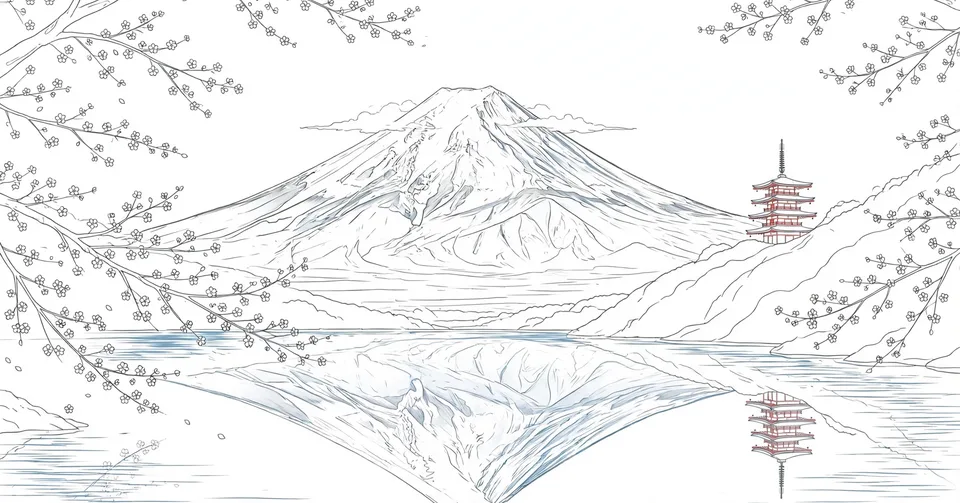
Each lake has its own character. Kawaguchi is the busy one, with a town, hotels, and a ropeway. Yamanaka is the biggest and the quietest for a long walk. Saiko and Shoji are small and calm, and Motosu is the one on the money, the view printed on the back of the 1,000 yen note. The Fuji Five Lakes are not a single place but a small region, and the right lake depends on what kind of day you want.
This is the guide I wish I had before my first trip: which lake to choose, when the mountain actually shows itself, and how to get there from Tokyo without a car. The Fuji Five Lakes reward a slow day. They punish a rushed one, because the mountain hides behind cloud whenever it pleases, and the best view is the one you wait for.
The Fuji Five Lakes at a glance
The Fuji Five Lakes, known in Japanese as Fujigoko, formed thousands of years ago when lava flows from Mount Fuji dammed rivers and created five separate lakes along the mountain's northern foot. They sit in Yamanashi Prefecture, about 100 kilometres west of Tokyo, and all five are inside Fuji-Hakone-Izu National Park. A bus from Shinjuku takes about two hours, which makes the Fuji Five Lakes one of the easiest escapes from the city.
| Lake | What it is known for |
|---|---|
| Kawaguchi | The main base: town, hotels, and the ropeway |
| Yamanaka | The largest lake, best for long walks |
| Saiko | Quiet shores and lava caves |
| Shoji | The smallest lake, a favourite of photographers |
| Motosu | The deepest lake, and the view on the 1,000 yen note |
The lakes are close together, and a local bus connects them, but they feel different enough that choosing matters. Kawaguchi suits a first visit, because everything is there: the town, the hotels, the restaurants, and the ropeway. Yamanaka suits a slow day on foot or by bicycle, with open water and wide skies. Saiko and Shoji suit people who want quiet, and Motosu suits photographers, because the view from its southern shore is the one Japan chose for its money.
Lake Kawaguchi, the easy base
The Fuji Five Lakes are best approached from Lake Kawaguchi, and most visitors never need to go further. The town of Kawaguchiko sits on the lake's eastern shore, and it has everything a short trip needs: hotels from budget to luxury, restaurants, a station, and a bus terminal. From the shore the mountain rises straight across the water, and on a clear morning the reflection doubles it.
The Kachi Kachi Ropeway runs from the lakeside up Mount Tenjo, and the viewing deck at the top is one of the best viewpoints in the area. On a clear day you see the whole lake below and the cone of Fuji behind it. It is a short ride, and it is busy on weekends, so go early. The ropeway takes its name from a Japanese folktale, the story of Kachi Kachi Yama, and the summit has statues of the tanuki and the rabbit from that tale.
Lake Kawaguchi is also the most developed of the Fuji Five Lakes, which is both its strength and its weakness. Nothing is hard to find, but nothing feels hidden either. If you want the mountain to yourself, you will need to leave the lakeside town and walk further along the shore, where the crowds thin out quickly.
Lake Yamanaka, the largest of the five
Lake Yamanaka is the largest of the Fuji Five Lakes, and it is the one that feels most like open country. The shoreline is longer, the town is smaller, and the lake is wide enough that the wind builds small waves. It is the lake for walking, cycling, and sitting on the grass with nothing to do.
Swans are part of the scenery here, and boat rides run across the lake in the warmer months. The southern shore has the best views of the mountain, and the lake is also the closest of the five to the Gotemba side of Fuji, which makes it a good base if you plan to visit the mountain's southern slopes. After a day by the water, the hot springs around Yamanaka are a good way to finish, and the area follows the same bathing manners as Japan's hot springs everywhere else in the country.
Saiko, Shoji and Motosu, the quiet lakes
Saiko sits between Kawaguchi and Shoji, and it is the lake most visitors skip, which is exactly why it is worth a stop. The western shore has lava caves formed by old eruptions, and the lakeside is quiet enough that you can hear the water. Saiko is also the lake where the Fuji Five Lakes feel oldest, because the forest comes right down to the shore.
Shoji is the smallest of the five, and it is the lake photographers love most after Motosu. Its small size means the mountain fills the frame, and at dawn the water is often so still that the reflection is sharper than the mountain itself. There is almost nothing here: a few lodges, a small beach, and a view.
Motosu is the deepest of the Fuji Five Lakes, and the most famous view of the five belongs to it. The southern shore of Lake Motosu is the view on the back of the 1,000 yen note: Mount Fuji rising across calm water, with a cherry tree in the foreground. The note has changed over the years, but the view has not, and photographers still come at dawn to catch it.
The Chureito Pagoda, the view everyone photographs
Near Lake Kawaguchi, in the town of Fujiyoshida, stands the most photographed view of Mount Fuji in Japan. The Chureito Pagoda is a five-storey red pagoda on a hillside in Arakurayama Sengen Park, and behind it the mountain rises in full. Climbing the roughly 400 steps to the pagoda is the price of the photograph, and it is worth paying.
In spring the pagoda is framed by cherry blossom, and in November it is framed by red maple leaves. In both seasons the park is crowded, and the best light is in the morning, before the sun moves behind the mountain. Go on a weekday if you can, and go early, because the steps fill up by mid-morning.
When to go for the best view
The Fuji Five Lakes are a year-round destination, but the mountain is not. Fuji hides behind cloud for much of the summer, and a trip in July or August can mean two days of grey sky with no mountain at all. The mountain is shy in summer and generous in winter, and the seasons decide what you will actually see.
Spring brings cherry blossom to the lakeshores, usually in mid-April, a little later than Tokyo. November brings autumn leaves to the Fuji Five Lakes, and the Momiji Corridor along Lake Kawaguchi's northern shore is one of the most popular leaf-viewing spots in the region. Winter brings the clearest air: cold, dry days when the mountain stands sharp against a blue sky and the reflection in the lakes is at its best. If seeing the mountain is the point of your trip, winter is the safest bet, and a weekday in January will give you the lakes almost to yourself.
How to get there from Tokyo
Getting to the Fuji Five Lakes from Tokyo is simple, and you do not need a car. The easiest way is the highway bus from Shinjuku, which takes about two hours and drops you at Kawaguchiko Station. Book ahead on weekends and in autumn, because the buses fill up. Japan Guide has a clear overview of the Fuji Five Lakes bus and train options for planning the trip.
By train, take the JR Chuo Line from Shinjuku to Otsuki, then change to the Fujikyu Railway for Kawaguchiko. The whole trip takes about two and a half hours. On some days a direct limited express, the Fuji Excursion, runs from Shinjuku to Kawaguchiko with no change at all. From Kawaguchiko Station, local buses run to all five lakes, and a day pass covers the routes around Kawaguchi and Saiko. The official Yamanashi tourism site lists the lakes, viewpoints, and transport for the whole area.
Getting around by bicycle
Cycling is one of the best ways to see the Fuji Five Lakes. The loop around Lake Kawaguchi is about 20 kilometres, mostly flat, and an easy half day, and rental bicycles are available near the station. Riding the lakeside road is the slowest and best way to see the mountain, because you can stop whenever the cloud lifts and the cone appears. Yamanaka has rental bicycles too, and its longer shoreline makes a full day of riding possible for anyone who wants it.
Climbing Mount Fuji is a summer project, but the Fuji Five Lakes are for the rest of the year. Come for a day, walk the shore of one lake, take the ropeway or climb to the pagoda, and let the mountain decide when to show itself. The best view of Fuji is not always from the top. Sometimes it is from the water, at dawn, with the mountain reflected back at you and nobody else around.
More in Food & Travel
Latest posts
- The Dalang, the Single Voice Behind Every Wayang Puppet
- Yadnya Kasada, the Festival That Feeds the Crater of Mount Bromo
- The 8050 Problem, When Retired Parents Still Carry Their Adult Children
- Moai, Okinawa's Lifelong Circles of Friends
- Anak Krakatau, the Child of Krakatoa That Keeps Growing
- Otohime, the Small Sound That Protects Privacy in Japanese Toilets
- Nomikai, the After-Work Drinks That Are Part of the Job in Japan
- Coelacanth and the Living Fossil of the Deep Sea
- Uchiura and the Quiet Fishing Village Behind Love Live Sunshine
- Love Live Sunshine and How Anime Changed Numazu
- Numazu Deep Sea Aquarium and the Creatures of Suruga Bay
- Numazu Himono and the Art of Dried Fish
- Numazu Imperial Villa and Japan's Seaside Imperial Retreat
- Numazu Port and the Freshest Seafood in Shizuoka
- Disaster Vending Machines in Japan That Give Their Drinks Away