Senbon Matsubara and the Pine Grove of Numazu
· 8 min read
Senbon Matsubara is a pine grove of tens of thousands of black pines along Senbonhama beach in Numazu, with a thousand-year history, a monk's replanting, and one of the finest views of Mt. Fuji in Shizuoka.
There is a place in Numazu where the city simply stops and lets the trees take over. Senbon Matsubara is a pine grove that runs for about ten kilometres along the shore of Suruga Bay, a wall of dark green between the town and the sea, and on a clear day the snow-capped cone of Mt. Fuji rises above it all. It is free, it is open all day, and it is one of the quietest famous places in Japan.
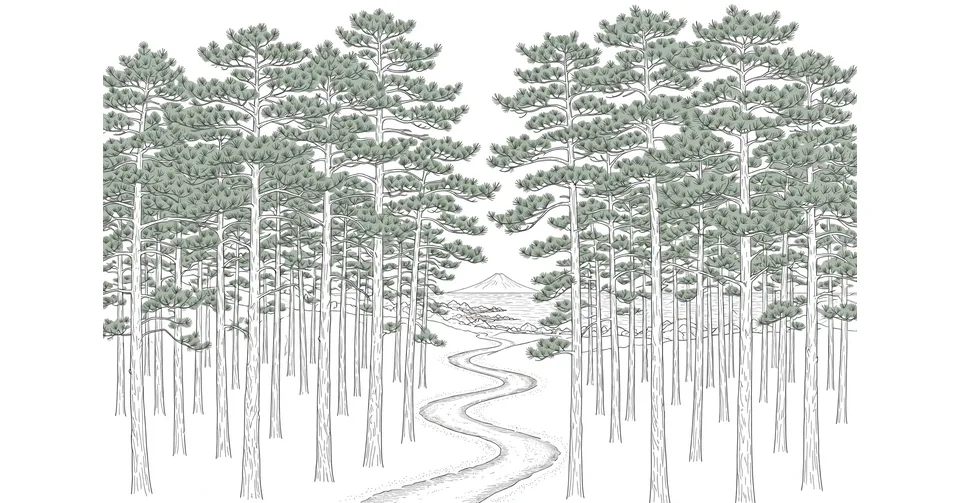
The name gives the scale away. Senbon means a thousand, and matsubara means a pine grove, though the real number is far larger. Tens of thousands of Japanese black pines stand in Senbon Matsubara, planted and replanted over four centuries, and the grove has been counted among Japan's top one hundred beachside pine forests. Walkers come for the shade, the sea air, and the view, but the trees themselves carry the history.
Senbon Matsubara is also easy to reach and easy to underestimate. It has no ticket gate and no grand entrance, just a forest that starts where the streets end. That plainness is part of its charm. It rewards the visitor who slows down, and it has been doing so for about a thousand years.
What Senbon Matsubara Is
Senbon Matsubara is a coastal pine forest, not a park that happens to have pines. It stretches for about ten kilometres along the Suruga Bay coast, from the mouth of the Kano River to Tagonoura, and covers about ninety hectares. The trees are almost all Japanese black pine, known to botanists as Pinus thunbergii, a salt-tolerant species that thrives where other trees give up. The forest was planted and replanted by hand over four hundred years, and it still does the job it was planted for, breaking the sea wind and shielding the farms and houses behind it from storms and salt.
The shape of the trees tells you this is a working forest, not a garden. Many of the pines in Senbon Matsubara grow tall and straight, more like cedar or zelkova than the twisted, wind-bent pines of other coasts. The straight trunks are one of the things visitors notice first, a colonnade of dark trunks under a high green roof, with the sea glittering through the gaps.
The grove sits on the same stretch of coast as Numazu Port, where the Kano River meets the bay, so the two places belong to one walk. Eat at the port in the morning, then follow the shore into the pines. The contrast is the point. The port is noise, gulls, and fish on ice. Senbon Matsubara is the quiet that comes after.
What makes the grove famous, though, is the view. From the beach at Senbonhama, the pines frame Suruga Bay and, on a clear day, Mt. Fuji stands across the water with its snow cap. At sunset the sky over the bay turns red behind the trees, and the whole grove seems to glow. It is the view that earned Senbon Matsubara its place among Japan's top one hundred beachside pine forests, and it is the view that keeps photographers coming back. If Fuji is your reason for coming to this coast, the Fuji Five Lakes offer the classic viewpoints inland, while Senbon Matsubara offers the same mountain from the sea.
How Senbon Matsubara Grew Back from War
Senbon Matsubara is old, but it is not untouched. A traveler recorded it almost a thousand years ago as a splendid pine grove, and it was already famous then. In the late 1500s, the grove was destroyed in the fighting between the Takeda clan and the Later Hojo clan, and the forest that had stood for centuries was razed. Without the trees, strong winds and sea salt battered the villages behind the shore.
The grove came back because one man refused to accept the loss. Zoyo Shonin, a Buddhist monk who passed through the stricken area, is said to have planted a thousand pine trees, chanting a sutra for each one, and then appealed to the authorities to protect the saplings strictly. The forest was slow to regenerate, and the work took generations. Over five years the monk led the replanting, and over the centuries that followed, villagers kept planting and guarding the trees until the grove stood again.
That story matters because it explains what Senbon Matsubara is. It is not a wilderness that survived by luck. It is a forest that people rebuilt on purpose, tree by tree, and then kept rebuilding for four hundred years. Every straight trunk in the grove is the result of someone deciding that the next generation would need shade and shelter too.
The grove has also been celebrated by poets and writers, and plaques dedicated to them stand in the part of the forest that has been turned into a park. The poet Wakayama Bokusui loved Senbonhama beach, and his memorial hall stands just inland from the grove, on a street the city calls the road of literature. The poems on the monuments are easy to walk past without noticing, but they are the reason the grove feels like more than a windbreak. People have been writing about these pines for centuries.
Walking Senbon Matsubara Today
The easiest way to see Senbon Matsubara is to walk it. Senbonhama Park sits inside the grove, and it is free and open all day. Trails run through the pines to a rocky beach where visitors hunt for driftwood, fish from the rocks, and spread picnics in the shade. The Shionone Promenade, a cycling and jogging course along the breakwater, runs beside the sea, and it is the best way to cover a long stretch of the grove without tiring.
| Senbon Matsubara at a Glance | |
|---|---|
| Length | About 10 km along the coast |
| Area | About 90 hectares |
| Trees | Tens of thousands |
| Main species | Japanese black pine |
| Recognition | One of Japan's top 100 beachside pine forests |
Getting there is simple. From Numazu Station, Senbon Matsubara is about a 25 to 30 minute walk, or a short bus ride to the Senbonhama Park stop. The walk itself is pleasant and flat, through residential streets and small shops, and the moment the pines appear the temperature seems to drop a few degrees. The shade is real, and on a hot Shizuoka afternoon it is the best reason to come.
Sunset is the best time. The sun sets over Suruga Bay, and the sky turns red behind the pines while Fuji fades to a dark silhouette. Photographers gather on the beach, but the grove is large enough that a short walk in either direction leaves you alone with the trees. Morning is the second best time, when the light comes over the land and the fishing boats are out on the bay.
The grove pairs well with the rest of the Numazu coast. The Numazu Imperial Villa stands on the same shoreline, a short distance away, and a day that starts in the pines, passes the villa gardens, and ends with dinner at the port is one of the easiest good days in Shizuoka. Nothing on this coast demands a schedule. That is the whole appeal.
Why Senbon Matsubara Still Matters
A pine grove that took four centuries to build can be lost in a generation, and the people who study Senbon Matsubara say so plainly. The old pines are declining, and broad-leaved trees are moving into the gaps, changing the forest from a pure pine stand into something else. Conservation work now means cutting back the invading trees and replanting pines, the same work the monk started and the villagers continued. The forest survives only because someone keeps choosing to keep it a pine forest.
That is why Senbon Matsubara is worth a slow visit rather than a quick photo. A beach is a beach, and Fuji is Fuji, but a forest that was destroyed in war, replanted by hand, and guarded for four hundred years is something rarer. It is proof that a place can be rebuilt, and that rebuilding is a job for generations rather than a single lifetime. The pines do not hurry, and neither should the visitor.
Walk into the grove, stand under the straight trunks, and listen. The wind moves through the needles, the sea sounds through the gaps, and the town disappears behind the trees. A thousand years of travelers have stood in this same shade and felt the same relief. Senbon Matsubara is not the loudest sight in Numazu, and it does not try to be. It is the quiet one, and it lasts.
More in Food & Travel
- Dashi, the Quiet Stock Under Almost Everything Japan Cooks
- Ayu, the Sweetfish That Rules Japan's Clear Rivers
- Sake Kasu, the Sake Lees Japan Cooks With Instead of Throwing Away
- Kopi Tubruk and the Indonesian Way to Drink Coffee
- Subak and the Rice Terraces of Bali
- Nara Deer and the Sacred Animals of the Old Capital
Latest posts
- Fuji Ko, the Pilgrim Societies That Climbed Mount Fuji Together
- Gensen Kakenagashi, the Onsen Water That Never Circles Back
- Shiko, the Leg Stamp That Starts Every Sumo Day
- Semar, the God Who Chose to Work as a Servant
- Kyushoku and the Japanese School Lunch
- Sumadori, Japan's Smart Drinking for People Who Do Not Drink
- Bureiko, the Drinking Party Where Rank Is Left at the Door
- Kagami Biraki, Japan's Ceremony of Breaking Things Open
- Capsule Hotels and Sleeping in a Pod in Japan
- Hiroshima and the City That Chose Peace
- Shinnenkai, Japan's New Year Parties That Start the Year Over
- Punakawan, the Clown Servants Who Steal Every Wayang Show
- Kashikiri, the Private Onsen Bath You Book by the Hour
- Nomi-Hara, When After-Work Drinks in Japan Turn Into Harassment
- Shio Koji, Japan's Salted Ferment That Seasons Everything