Sakura Ebi and the Tiny Shrimp Only Suruga Bay Catches
· 9 min read
Sakura ebi is the tiny pink shrimp caught commercially only in Suruga Bay, Shizuoka, fished at night in two short seasons and eaten raw, fried, or dried. Here is what makes it rare, how it is caught, and where to try it.
There is a shrimp in Japan so small that it fits on a fingertip, so pink that it looks like a cherry blossom petal, and so rare that the whole country gets it from a single bay. Its name is sakura ebi, cherry blossom shrimp, and if you want to eat it fresh, you have to come to Shizuoka.
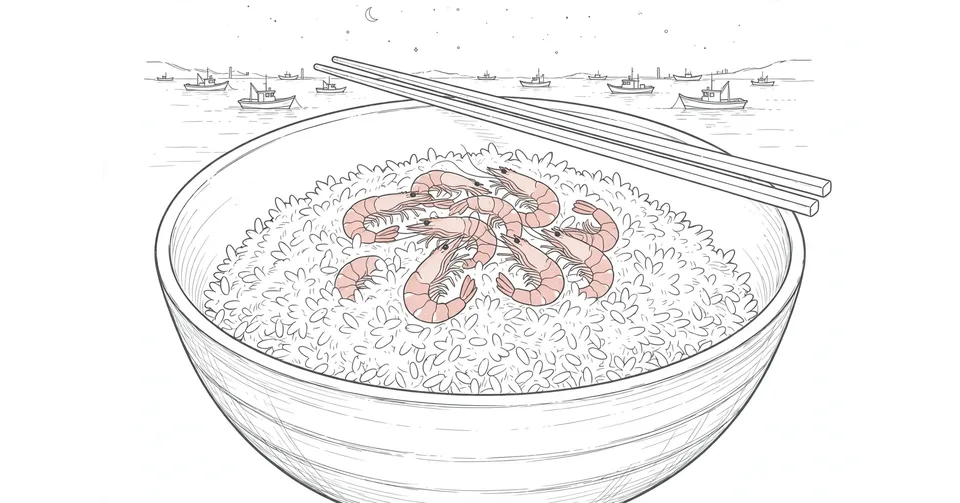
Sakura ebi lives in Suruga Bay, the deepest bay in Japan, and the bay is the only place in the country where fishermen hold licences to catch it commercially. The shrimp also turns up in the waters off Taiwan, but nowhere else in Japan has a fishery for it. That single fact shapes everything about sakura ebi: the short seasons, the night fishing, the price, and the fierce local pride that surrounds it.
Most visitors to Shizuoka never hear of sakura ebi until a bowl of pink rice arrives at the table. This is the story of that shrimp, the bay that hides it, and the fishermen who chase it in the dark.
What Sakura Ebi Actually Is
A sakura ebi grows to about four or five centimetres long, barely the length of a thumbnail. In the water it is almost see-through, but once it reaches the shore its body turns a soft cherry pink, dotted with more than 160 tiny light sensitive spots. The spots glow faintly in the dark, which is why locals call the shrimp the jewel of Suruga Bay.
The colour explains the name. Sakura means cherry blossom, and ebi means shrimp, and the pink of a fresh catch really does look like a petal that fell into the sea. The flavour is just as delicate: sweet, clean, and full of umami, with a soft crunch that fresh shrimp from anywhere else rarely has.
The shrimp spends its life in the deep water of Suruga Bay, which drops to around 2,500 metres, the deepest bay in Japan. By day it stays 200 to 350 metres down, out of reach. At night it rises to 20 to 60 metres below the surface to feed, and that nightly rise is the one habit the whole fishery is built on. The deep water is also why the bay is home to so many strange creatures, from the coelacanth at the Numazu Deep Sea Aquarium to the fish that fill the stalls at Numazu Port.
How Sakura Ebi Is Caught at Night
Sakura ebi fishing happens after dark, and it takes two boats to do it. About 120 licensed vessels work in pairs out of the Yui, Kambara, and Oigawa districts, and each pair drags a single net between the two boats through the shallow layer where the shrimp have risen to feed. When the net closes, the crew sucks the shrimp up through large hoses and moves them into containers, then hurries back to port before morning.
Every catch lands at just two ports, Yui Port and Oigawa Port, and the morning auctions there set the price for the whole country. The shrimp waits in refrigerators overnight, and by breakfast time it is already on its way to restaurants and markets across Shizuoka.
Nobody planned this fishery. In 1894, two fishermen from Imajuku, now part of Yui, went out at night to catch horse mackerel. When Mochizuki Heishichi and Watanabe Chubei hauled in their net, it held about 150 kilograms of pink shrimp they had never seen in such numbers. The accident became an industry, and Yui became its centre. Today the story is told at the Yui Sakura Ebi Museum, the small Yui Sakura Ebi Kan in the town, where visitors can learn how the net, the boats, and the auction work.
The Two Short Seasons of Sakura Ebi
You cannot eat fresh sakura ebi all year, and that is by design. By prefectural rule, fishing stops from June 11 to September 30 so the shrimp can spawn in peace. What is left are two short windows: spring, from mid-March to early June, and autumn, from October to December. The exact dates shift a little each year, because the fishermen run trial catches first and shorten the season when the stocks look weak. The Shizuoka Prefecture food guide lists the fresh season the same way: late March to early June, and late October to December, with frozen shrimp available all year.
| Season | When | What to expect |
|---|---|---|
| Spring | Mid-March to early June | The main season, the freshest catch, the busiest auctions |
| Autumn | October to December | A smaller catch, still fresh, often a little sweeter |
| Summer | June 11 to September 30 | No fishing, spawning season, frozen or dried only |
The calendar is the first thing a visitor should check. A trip to Yui in July will find the museum open and the dried shrimp for sale, but no fresh catch on the boats. A trip in April or November is a different experience entirely, with the port working at full speed and the restaurants serving the shrimp the same morning it was caught.
How to Eat Sakura Ebi
The simplest way to eat sakura ebi is raw. The classic serving is gunkanmaki, a small boat of rice wrapped in seaweed and topped with a mound of the pink shrimp, eaten in one bite. The other classic is nishokudon, a rice bowl topped with sakura ebi on one side and raw shirasu, whitebait, on the other, so the pink and the silver white sit side by side. The contrast is the point: the shrimp is sweet and soft, the whitebait is mild and silky, and the two together taste like the bay itself.
Cooked, the shrimp turns up most often as kakiage, a fritter of shrimp and shredded vegetables fried crisp and served with dipping sauce or on top of soba and udon. Dried sakura ebi is another staple. The shrimp is spread out to dry in the sun, traditionally on the wide riverbed of the Fuji River, where the pink sheets can stretch as far as the eye can see, and the dried shrimp keeps for months as a souvenir, a soup stock, or a topping for rice. Frozen sakura ebi is available all year, and it is good, but everyone in Shizuoka will tell you it is not the same as fresh.
If the dried shrimp sounds familiar, it shares a shelf with the other preserved seafood of the bay, including the himono, the salted and sun dried fish of Numazu. A good overview of the shrimp, its seasons, and the best ways to eat it is the sakura shrimp guide at Food in Japan.
Why Sakura Ebi Nearly Disappeared
For a long time the fishery looked unbreakable. Annual landings ran between 3,000 and 5,000 tons, and the shrimp was a reliable local industry. Then the numbers fell off a cliff. In 2018 the catch dropped to 312 tons, and the year after it fell further, to around 100 tons. Boats stayed in port, restaurants took the dish off the menu, and the town that had built itself around the shrimp had to ask whether the shrimp would come back at all.
The reasons are still argued over. One study points to heavy spring fishing that left too few adults to spawn, and a spawning peak that has drifted from early summer into late summer and autumn, so fewer young shrimp stay inside the bay. Another points to the slow loss of the bay's productivity after decades of coastal development. The honest answer is probably a mix of both, and the fishermen do not pretend otherwise.
What changed was the response. In 2019 Shizuoka University started a joint resource regeneration project with the local cooperatives, and the fishermen imposed some of the strictest self limits in Japan, running trial operations before each season and cutting it short when the stocks looked weak. Signs of recovery appeared from the autumn of 2021, and the catch has improved slightly since 2023, though it is still far from the old peaks. The recovery is fragile, and everyone involved knows it.
There is something admirable about a town that chose to catch less of the thing it is famous for. It would have been easy to fish harder while the shrimp lasted and worry later, and plenty of fisheries around the world have done exactly that. Yui did the opposite, and the shrimp is still there because of it. Eating sakura ebi in season, and only in season, is not a restriction to work around. It is the reason the shrimp still exists to eat, and a bowl of it tastes better when you know the wait behind it.
Where to Try Sakura Ebi
The best place to start is Yui itself, the small port town in Shimizu Ward of Shizuoka City where the fishery began. Yui has a street named after the shrimp, Yui Sakura Ebi Street, and fishermen run their own restaurants and bars near the port, serving the night's catch until early afternoon. The Yui Sakura Ebi Museum is a short walk away, and the morning auction at Yui Port is the heart of the whole trade.
Shizuoka City has the widest choice of restaurants, and Numazu Port, an hour or so down the coast, serves the shrimp alongside its own famous catch. Outside the two seasons, look for frozen sakura ebi or the dried version, which travels well and keeps its flavour. And if the fresh shrimp is on the menu, order it. The season is short, the catch is small, and the next chance is months away.
Sakura ebi is a small thing, four centimetres of pink shrimp from a single bay, but it carries a whole story with it: a bay deeper than any other in Japan, a fishing method invented by accident, a town that learned to hold back, and a flavour that only exists for a few weeks a year. That is what makes it worth the trip, and what makes it worth waiting for.
More in Food & Travel
- Dashi, the Quiet Stock Under Almost Everything Japan Cooks
- Ayu, the Sweetfish That Rules Japan's Clear Rivers
- Sake Kasu, the Sake Lees Japan Cooks With Instead of Throwing Away
- Kopi Tubruk and the Indonesian Way to Drink Coffee
- Subak and the Rice Terraces of Bali
- Nara Deer and the Sacred Animals of the Old Capital
Latest posts
- Fuji Ko, the Pilgrim Societies That Climbed Mount Fuji Together
- Gensen Kakenagashi, the Onsen Water That Never Circles Back
- Shiko, the Leg Stamp That Starts Every Sumo Day
- Semar, the God Who Chose to Work as a Servant
- Kyushoku and the Japanese School Lunch
- Sumadori, Japan's Smart Drinking for People Who Do Not Drink
- Bureiko, the Drinking Party Where Rank Is Left at the Door
- Kagami Biraki, Japan's Ceremony of Breaking Things Open
- Capsule Hotels and Sleeping in a Pod in Japan
- Hiroshima and the City That Chose Peace
- Shinnenkai, Japan's New Year Parties That Start the Year Over
- Punakawan, the Clown Servants Who Steal Every Wayang Show
- Kashikiri, the Private Onsen Bath You Book by the Hour
- Nomi-Hara, When After-Work Drinks in Japan Turn Into Harassment
- Shio Koji, Japan's Salted Ferment That Seasons Everything