Koji Mold, the Quiet Engine Behind Japanese Food
· 8 min read
Koji mold is the quiet engine behind miso, soy sauce, sake and mirin. This is what Aspergillus oryzae is, how its enzymes turn starch into sweetness and protein into umami, and how Japan came to call it the national fungus.
Almost every Japanese flavour you know runs through koji mold. The miso in the soup, the soy sauce over the rice, the sake in the cup and the mirin in the simmering pot all begin with the same living ingredient, a pale mold grown on steamed grain. Koji mold does no glamorous work. It sits in warm rooms and quietly performs the chemistry that Japanese cooking is built on.
The mold has a formal name, Aspergillus oryzae, and it holds an honour no other microbe in the world can claim. In 2006 the Brewing Society of Japan declared koji mold the national fungus of Japan. It was less a prize than an acknowledgement, because koji mold has been turning plain rice and soybeans into the tastes Japan calls its own for well over a thousand years.
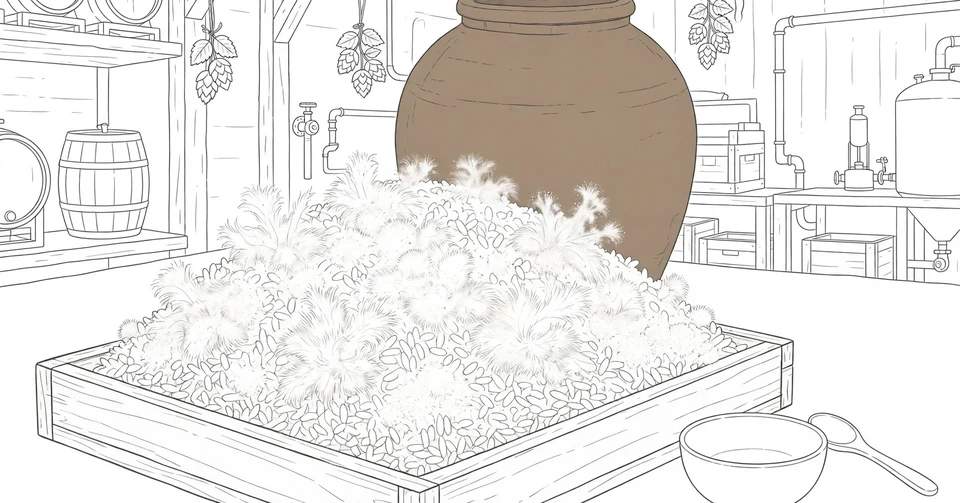
The clearest place to see what it does is Japanese sake, where the craft around the mold reached its most refined form. Rice has starch but no sugar, and yeast cannot eat starch. Something has to translate. That translator is koji mold, and once you understand it, half the Japanese pantry stops being mysterious.
What koji mold actually is
Koji mold is a filamentous fungus, a mold that grows in fine threads across whatever it is fed. In Japanese it is called koji-kin, and strictly speaking the word koji refers to the grain the mold has colonised, not the mold alone. Grown on steamed rice it becomes rice koji, on barley it becomes barley koji, and on soybeans it becomes soybean koji.
The important thing about koji mold is that it is domesticated. This is not a wild mold that drifts in from the air and spoils food. Japanese makers have selected and raised strains of it for centuries, the way farmers select seed, keeping the ones that work hardest and taste best. Japan's humid climate helps it thrive, and over generations the mold and the cuisine grew up together.
Written records reach back a long way. A court manual completed in 927 already mentions sprouted rice, an early form of the starter that koji makers still use today. By the time sake, miso and soy sauce became everyday staples, koji mold was already the shared foundation under all of them.
The enzymes do the real work
What koji mold sells to the cook is enzymes. As the mold grows through a grain of rice, it releases tools that dismantle the food around it and rebuild it as flavour.
- Amylase breaks starch down into sugars, which is where the gentle sweetness in amazake and the fermentable sugar in sake come from.
- Protease breaks protein down into amino acids, including glutamate, the amino acid the tongue reads as umami.
- Lipase breaks down fats, adding aroma and depth as fermentation proceeds.
This is why koji mold matters far beyond brewing. Sugar and amino acids are the two currencies of Japanese flavour, sweetness and savouriness, and koji mold mints both of them at once. In miso making, for example, roughly a third of the soybean protein is broken down into amino acids as the paste ferments, and glutamate rises steadily through the early weeks. The Umami Information Center describes koji mold as an indispensable component of Japanese food culture, and the chemistry backs that up.
There is a patience to it that I find appealing. The mold cannot be hurried without cost. It works at the speed of a living thing, and every maker of miso, soy sauce or sake organises the calendar around its pace rather than the other way round.
How koji mold becomes rice koji
Making rice koji is simple to describe and fussy to do. Rice is polished, washed, soaked and steamed, then spread out and allowed to cool. The maker dusts it with tane-koji, a powder of koji mold spores, and carries it into a warm, humid room. For sake, that room is the koji muro, kept hot and damp while workers turn the rice by hand.
Over about two days the mold spreads through the grains, until each one is white to the core and the tray smells faintly sweet. The Wikipedia overview of koji puts the general craft at two to three days at around 30 degrees Celsius under high humidity, which matches the sake brewer's two days of hand tending. Cool the rice too early and the mold stalls. Let it overheat and the mold spoils its own work. The margin is small, and skilled hands are the real equipment.
The finished koji looks unremarkable, just rice with a white bloom. But it is loaded with enzymes and ready to work, and from this one tray the paths divide toward almost every fermented food Japan makes.
One mold, a whole pantry
Follow koji mold through the kitchen and it appears everywhere. In sake it converts rice starch to sugar so yeast can make alcohol. In miso it teams with salt and soybeans and spends months building savoury depth. In soy sauce it grows over steamed soybeans mixed with roasted wheat, the starting point of a mash that will mature for months before pressing. In mirin it gives the sweet cooking wine its mellow body. Amazake, the thick sweet drink served at shrines in winter, is little more than rice koji allowed to sweeten itself, with almost no alcohol. Rice vinegar begins here too.
This is why the seasonings underneath a refined meal all trace back to the same organism. A kaiseki dinner may look like a parade of separate skills, but the miso in the soup, the soy brushed on the fish and the mirin in the simmered vegetables were all unlocked by koji mold long before the chef picked up a knife.
My favourite member of the family is also the humblest. Shio koji is just rice koji mixed with salt and water and left to ferment into a thick, sweet smelling paste. It never becomes a finished food at all. It exists to make other foods better, which feels like the purest expression of what this mold is for.
A national fungus, and the shops behind it
The 2006 title had a practical side. Koji mold is an industry as much as an ingredient, and at the top of that industry sit a handful of specialists called moyashi-ya. These are shops that do one thing only: they grow and sell tane-koji, the spore starter every brewer, miso maker and soy sauce producer depends on.
The trade is old. About 600 years ago, in the Muromachi period, Japanese makers learned to grow different strains of koji mold separately and keep each strain pure. Selling starter became a business of its own, sometimes described as the world's first bio-business. Today only around ten moyashi-ya remain, and their spores still supply thousands of food makers across Japan. Nearly the whole fermented pantry of a nation rests on a few small shops and the strains they guard.
In December 2024 the craft received a second honour, when UNESCO listed Japan's traditional sake making with koji mold as Intangible Cultural Heritage. A mold on a world heritage list sounds strange until you see it the Japanese way. What is being protected is not the organism itself but the thousand years of hands that learned how to raise it.
Koji mold in the home kitchen
You do not need a cedar lined koji room to use it. Packs of dried rice koji sit on ordinary supermarket shelves in Japan, next to the miso. Mixed with salt and water, the shio koji paste I mentioned earlier keeps for months in the fridge, and a spoonful rubbed on chicken, fish or pork before cooking tenderises the surface and deepens the flavour in a way plain salt cannot, because the enzymes keep working while the food rests.
Home cooks use koji mold in other small ways too. Amazake can be made in a rice cooker with nothing but rice koji and warm water. Quick pickles gain a rounded sweetness from a bed of koji. Even a simple bowl of miso soup at home starts with a paste that koji mold spent months building. My own habit is shio koji on chicken the night before, and it has quietly replaced most other marinades in my kitchen.
None of this requires expertise. It requires only a willingness to let a mold do slow work that no shortcut has ever matched.
The quiet engine
Strip Japanese food of its knives, its fish markets and its famous chefs, and much of it would still stand, because the foundation is microbial. Koji mold turns starch into sweetness and protein into umami, asks only for warmth and time, and has done so in Japan for more than a thousand years. A country that names a mold its national fungus is not being eccentric. It is simply admitting, out loud, who has been doing the cooking all along.
More in Food & Travel
- Dashi, the Quiet Stock Under Almost Everything Japan Cooks
- Ayu, the Sweetfish That Rules Japan's Clear Rivers
- Sake Kasu, the Sake Lees Japan Cooks With Instead of Throwing Away
- Kopi Tubruk and the Indonesian Way to Drink Coffee
- Subak and the Rice Terraces of Bali
- Nara Deer and the Sacred Animals of the Old Capital
Latest posts
- Fuji Ko, the Pilgrim Societies That Climbed Mount Fuji Together
- Gensen Kakenagashi, the Onsen Water That Never Circles Back
- Shiko, the Leg Stamp That Starts Every Sumo Day
- Semar, the God Who Chose to Work as a Servant
- Kyushoku and the Japanese School Lunch
- Sumadori, Japan's Smart Drinking for People Who Do Not Drink
- Bureiko, the Drinking Party Where Rank Is Left at the Door
- Kagami Biraki, Japan's Ceremony of Breaking Things Open
- Capsule Hotels and Sleeping in a Pod in Japan
- Hiroshima and the City That Chose Peace
- Shinnenkai, Japan's New Year Parties That Start the Year Over
- Punakawan, the Clown Servants Who Steal Every Wayang Show
- Kashikiri, the Private Onsen Bath You Book by the Hour
- Nomi-Hara, When After-Work Drinks in Japan Turn Into Harassment
- Shio Koji, Japan's Salted Ferment That Seasons Everything