The 8050 Problem, When Retired Parents Still Carry Their Adult Children
· 9 min read
The 8050 problem is the name Japan gives to households where parents in their 80s still support withdrawn children in their 50s. Here is how families reach that point, what happens when the parents can no longer cope, and what help exists.
In Japan, some of the quietest households carry the heaviest loads. The 8050 problem is the name given to homes where parents in their 80s still cook, clean, shop and pay the bills for a child in their 50s who has withdrawn from the world and barely leaves the house. Nobody planned this arrangement. It formed slowly, over decades, and for a long time it simply worked.
The child in these homes is usually a hikikomori, someone who has pulled away from school, work and social life for six months or far longer. A Cabinet Office survey carried out in 2022 counted about 1.46 million people aged 15 to 64 living this way. What makes the 8050 problem different is time. The parents and the child have grown old together, and the support runs in a direction that cannot last forever.
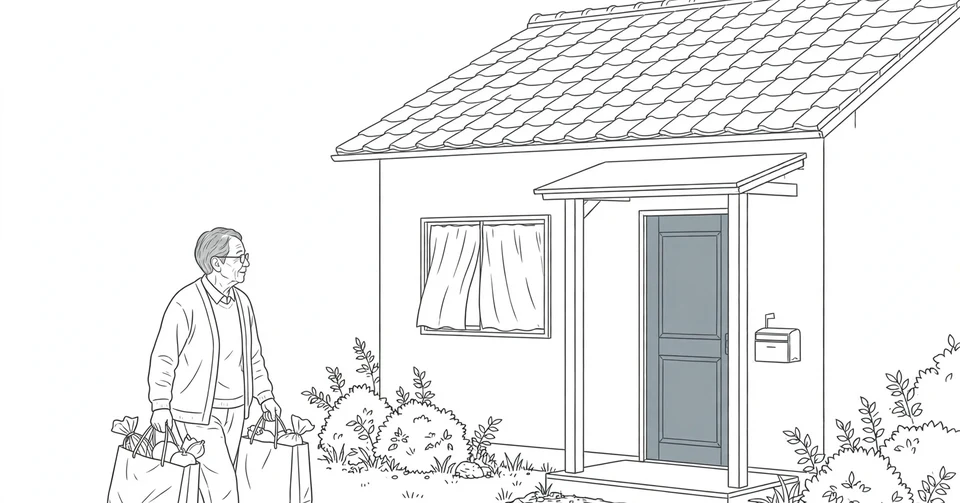
This is a look at how families slide into the 8050 problem without ever deciding to, what happens when the parents die or become too frail to cope, and what kind of help Japan has built for households that have spent years avoiding exactly that kind of contact.
What the 8050 problem means
The numbers in the name are ages. Eighty stands for the parents, fifty for the child, and the problem is the gap between what the household needs and what either generation can still give. The term is credited to Reiko Katsube, a social welfare official in Toyonaka, Osaka, and it spread through Japanese media in the late 2010s as welfare workers kept meeting the same household shape.
For decades, hikikomori was talked about as a problem of the young. Psychiatrist Tamaki Saito described it in the 1990s, when the average age of withdrawal was around 15. But withdrawal did not always end. Government estimates caught up with that fact in 2019, when an official survey put 613,000 people aged 40 to 64 in a hikikomori state, more than the 541,000 counted among those aged 15 to 39.
The ageing continues. In a recent survey of 280 families by the KHJ federation of hikikomori families, the average age of the withdrawn person was 36.9, up from 33.1 when the federation began tracking the population in 2014, and about one in eight were in their 50s or older. The relatives carrying them averaged 66.3 years old. Support workers now speak of a 9060 problem behind the 8050 problem, parents in their 90s with children in their 60s, waiting its turn.
How a family arrives at the 8050 problem
Almost every story starts small. A teenager is bullied at school and stops going. A graduate cannot find a job, or loses one, and stops looking. In the Cabinet Office survey, the most common trigger named by people aged 40 to 64 was leaving or losing a job, given by 44.5 percent of respondents. The withdrawal that follows is rarely dramatic. It is a door that closes a little more each year.
The working culture outside that door does not make return easy. This is the Japan of the salaryman, where a lifetime of loyal work has long been the measure of a respectable adult. Measured against that standard, a person without a job can feel like a person without a place, and shame keeps many inside long after the original setback has faded.
Inside the home, love and shame pull in the same direction. Parents leave meals outside the door, pay the bills and tell the neighbours as little as possible. The household quietly reorganises itself around the parents' pension, which becomes the only income. Families carry the situation alone for years, and NHK reporting on the 8050 problem found that even when help was offered, it was often the parents who refused it, insisting that they were all right and would get by somehow.
That is how the 8050 problem sets in. Nothing breaks. The years simply pass, skills fade, the gap in the work history widens, and one day the family looks up and the carers are in their 80s.
The money cliff at the heart of the 8050 problem
A household shaped by the 8050 problem usually runs on one income, and that income has an expiry date. The parents' pension pays for food, utilities and the house. When the parents die, the pension stops, and the child is left with no earnings, often no recent experience of banks, bills or official paperwork, and sometimes a house whose ownership papers still need sorting out.
Japan does have safety nets. Public assistance exists for people with no income, and some withdrawn people qualify for a disability pension. But every one of these requires an application, a visit to an office and an explanation of a life, which is almost exactly the contact the person has spent decades avoiding. The net is there. Reaching it is the hard part.
The cliff can arrive before death, too. A parent in their mid 80s who needs nursing care may still be the only carer of a child in their 50s. Japanese media call the worst version of this oyako tomodaore, parent and child collapsing together.
Saito, the psychiatrist who first described hikikomori, advises parents to plan for the years after their own deaths while they are still able: check pension entitlements, prepare applications, put the household's money in order. Few families manage it, because planning means saying the situation out loud, and silence has been the family's way of coping for a very long time. To me, that silence is the saddest part of the 8050 problem. It begins as protection, and it ends by making the ending harder.
When nobody opens the door
The deepest risk in these households is not poverty on its own. It is disappearance. A home where an elderly parent dies and the adult child tells no one can stay invisible for weeks or months, because invisibility was already its normal state.
Police figures show where that can lead. In 2023, 52 people in their 50s and 31 in their 60s were investigated in Japan for leaving a deceased parent's body unattended, the highest numbers for those age groups since 2014. In many cases the parent had died of natural causes, and the child, with no income and no one to call, could not arrange or pay for a funeral.
An NHK documentary team that followed households living with the 8050 problem found cases on the other side of the same door. One man of 56 was found dead in his home, severely underweight, ten years after the death of the father who had supported the household. He had refused repeated visits from a city social worker. In another case, a man of 54 had lived for more than six months alongside his father's uncollected body. Support workers told the programme a hard truth: an adult who says they are fine cannot legally be forced to accept help, however clear the need looks from outside.
These households sit inside a wider landscape of people dying unnoticed. In the first half of 2024 alone, police recorded 37,227 people who had been living alone and were found dead at home. Nearly 4,000 of them were discovered more than a month after death. Not all were hikikomori, but this is the same quiet pattern, and the 8050 problem belongs to it.
The spring the 8050 problem became an argument
In the spring of 2019, two violent cases dragged the subject onto the front pages. In May, a man of 51 who had lived withdrawn for years in the home of his elderly uncle and aunt attacked children and adults at a school bus stop in Kawasaki, killing a girl of 11 and a man of 39 before taking his own life. Days later, a retired senior government official, aged 76, killed his son, aged 44, at home in Tokyo. He told police he had feared his son might one day harm someone.
The cases were shocking, and they were also unrepresentative. Family associations urged the public not to equate withdrawal with danger, and the evidence supports them: most hikikomori harm no one, and their fear of the world is far more typical than any threat from them. What the spring of 2019 really exposed was simpler and sadder. Behind two terrible headlines stood the same household pattern as the 8050 problem itself, ageing carers and middle aged children, hidden from view until something broke.
What help exists for the 8050 problem
Help does exist, and it has been built slowly, in layers. The health ministry counts 85 regional support centres for hikikomori across Japan, and city and town halls run consultation desks where a worried parent can talk to someone even if the child refuses every meeting. The KHJ federation, a national network of family associations, has supported parents for more than two decades, and much of its work is simply convincing families that asking for help is not a betrayal of their child.
The law is beginning to treat this as a public matter rather than a private shame. An act on loneliness and isolation came into force in April 2024, and in January 2025 the health ministry issued a support handbook that tells workers to build trust through dialogue rather than trying to drag anyone out of a room.
In practice, the first step is almost always the family, not the person behind the door. A consultation. A worker who visits and is turned away, and visits again. Paperwork prepared while the parents are alive to help with it. The goal is modest on purpose: a household the outside world can see, and a person who has at least one name to call when the worst happens.
For a household deep in the 8050 problem, that modest goal is not small at all. It is the difference between a crisis handled by people who know the family and a crisis discovered by strangers.
The 8050 problem is often described as a time bomb, but that is not how it feels from inside the house. From inside, it feels like a family coping, year after year, until coping runs out. If the problem has a hopeful side, it is that Japan is learning to talk about it earlier, while there is still time for a conversation instead of an emergency. A household like this does not need to be rescued. It needs to be reached, gently, and in time.
More in Culture & Society
Latest posts
- Dashi, the Quiet Stock Under Almost Everything Japan Cooks
- Ayu, the Sweetfish That Rules Japan's Clear Rivers
- Gensen Kakenagashi, the Onsen Water That Never Circles Back
- Sumadori, Japan's Smart Drinking for People Who Do Not Drink
- Sake Kasu, the Sake Lees Japan Cooks With Instead of Throwing Away
- Bureiko, the Drinking Party Where Rank Is Left at the Door
- Kopi Tubruk and the Indonesian Way to Drink Coffee
- Capsule Hotels and Sleeping in a Pod in Japan
- Subak and the Rice Terraces of Bali
- Shinnenkai, Japan's New Year Parties That Start the Year Over
- Nara Deer and the Sacred Animals of the Old Capital
- Punakawan, the Clown Servants Who Steal Every Wayang Show
- Kashikiri, the Private Onsen Bath You Book by the Hour
- Nomi-Hara, When After-Work Drinks in Japan Turn Into Harassment
- Shio Koji, Japan's Salted Ferment That Seasons Everything