Uchiura and the Quiet Fishing Village Behind Love Live Sunshine
· 9 min read
Uchiura is the quiet fishing village in Numazu where Love Live! Sunshine!! is set, a real place of beaches, boats and a small school that anime fans now cross the world to see.
There is a village on the shore of Suruga Bay where the loudest sound on a weekday afternoon is the wind in the pine trees. Uchiura is small, quiet, and easy to miss on a map of Japan, yet anime fans around the world know its name by heart. It is the real place behind Love Live! Sunshine!!, the anime about nine schoolgirls who form an idol group to save their tiny school from closing.
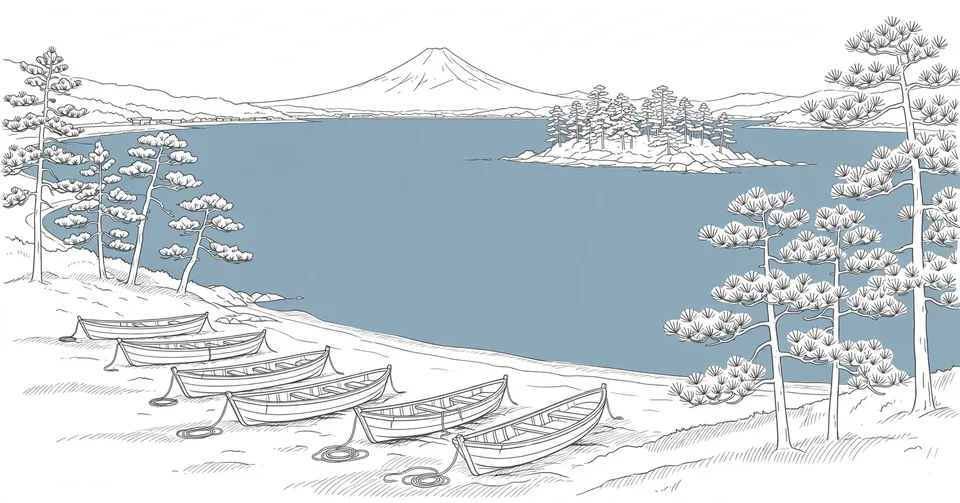
That is the strange double life of Uchiura. On an ordinary day it is a fishing village in Numazu, Shizuoka, where boats come and go and the beach at Mito is mostly empty outside summer. On the map of anime, it is a pilgrimage site, one of the most visited in Japan, where fans arrive with cameras and checklists, looking for the exact slope, the exact beach, and the exact bus stop from the show. The village does not advertise any of this very loudly, and that is part of its charm.
Uchiura rewards the slow visitor. There is no train here, and the bus from Numazu Station takes its time along the coast. That slowness is the point. The anime did not invent this place, it pointed a camera at it, and the village that the camera found is still here, fishing, growing mandarins, and watching the sun go down over the deepest bay in Japan.
How Uchiura Became the Home of Aqours
Love Live! Sunshine!! began as a media project in 2015, and the television anime followed in two seasons, the first from July to September 2016 and the second from October to December 2017. The story is set in Uchiura, where nine girls at the small seaside school Uranohoshi Girls' High School form the idol group Aqours, pronounced "aqua", to save their school from closing. The school in the story has only 74 students, and the threat of closure is what drives the whole plot.
The school itself is real, or close to it. Uranohoshi was modelled on the former Nagaisaki Junior High School in Uchiura, a small school on a cape above the bay, surrounded by mandarin orange groves. The real school was about as small as the fictional one, with around 50 students as of 2020. In April 2021 it reopened as an integrated elementary and junior high school, after merging with two nearby elementary schools, and it is still in use today. That matters for visitors. The grounds are not open to the public, and the right way to see the place is from the bus stop and the public road in front of it, not by walking in.
The name Uranohoshi itself fits Uchiura well. It is often read as a star by the water, and the school in the anime sits where the land reaches out into Suruga Bay. The town of Uchiura gave the anime its setting, and the anime gave the town a second life. The city of Numazu embraced the partnership openly, with Aqours manhole covers, wrapped buses, character standees in local shops, and a stamp rally that sends fans walking from spot to spot. None of that changed what Uchiura is. It only made more people look at it.
What to See in Uchiura
Mito Beach is the natural starting point. Known in Japanese as Mito Kaisuiyokujo, it is the swimming beach of Uchiura Bay, a curve of sand with the mountains of the Izu Peninsula behind it and Mount Fuji across the water on a clear day. In the anime it is where the girls train on the sand, and in real life it is where the village comes together on the first day of the beach season. The anime shows a local tradition of floating lanterns that morning, and whether or not you catch that exact scene, the beach itself is the heart of the village in summer and a quiet walk the rest of the year.
A short way offshore sits Awashima, a small forested island that can only be reached by boat. The seabus crossing takes about three minutes, and on the island there is Awashima Marine Park, a small aquarium with sea lions, penguins, and a frog house that regulars call the highlight. The park keeps the hours 9:30 to 17:00, and the boats run on a fixed timetable, so it pays to check the schedule before you go. The island also holds Awashima Shrine and its torii gate, and the Awashima Hotel, a hotel that can only be reached by boat. Visitors often mention the island cats, who have become a small attraction of their own.
Back on the mainland, the Sannoura General Information Centre is the fan hub of Uchiura. Its Japanese name is Sannoura Sogo Annaijo, and it is the place to pick up maps, ask directions, and find out what is happening in the area. It sits near the coast road, and it is a good first stop for anyone who arrives by bus and is not sure where to begin. From there, the pilgrimage spots of Uchiura are mostly a walk apart along the shore.
The most photographed spot is also the simplest. The bus stop at the entrance of the school, Nagaisaki Shochu Ikkan Gakko Iriguchi, appears in the opening and ending of the anime, and the slope that rises from it is where the girls train in the show. Numazu City's own tourism site points visitors to this exact bus shelter and slope. A few minutes' walk away stands Bentenjima Shrine, another location from the anime. The rule for all of this is simple. Look from the public road, take your photo, and leave the school alone. The children who study there did not ask to be part of a tour.
Between the spots, Uchiura shows its other face. Mandarin groves climb the hills behind the coast, fishing boats rest on the sand, and the road follows the bay past houses that have nothing to do with anime at all. That is the village the anime borrowed, and it is worth seeing on its own terms, not only through the frame of the show.
| Stop | What it is | Notes |
|---|---|---|
| Mito Beach | The swimming beach of Uchiura Bay | Best in summer, quiet the rest of the year |
| Awashima | Island with a marine park and shrine | Boat only, about 3 minutes by seabus |
| Sannoura Information Centre | Fan hub and visitor information | Good first stop after the bus |
| School bus stop | The slope and shelter from the anime | View from the public road only |
| Bentenjima Shrine | Small shrine near the school | A few minutes on foot |
A detailed pilgrimage guide lists 13 spots around Numazu and Uchiura, and it is worth reading before you go. The table above is a walking plan more than a checklist. Uchiura is compact enough to cover on foot once the bus drops you off, and the gaps between the spots are where the village actually lives. Give yourself a full day, and leave room for the bus home to be late. It happens.
How to Get to Uchiura
There is no train to Uchiura, and that shapes the whole visit. The way in is the Tokai Bus from Numazu Station. From bus stop 3 at the south exit, take a bus bound for Kisho Nokyo and get off at Nagaisaki Shochu Ikkan Gakko Iriguchi, the school entrance stop, after about 40 minutes. Buses for Awashima leave from the same area. From Tokyo, the trip is about 90 minutes by Shinkansen to Mishima, then a short local train to Numazu, then the bus. Plan the return as carefully as the arrival, because the buses are infrequent and the last ones fill up, especially on weekends when fans and beachgoers share the same ride.
That awkwardness is not an accident of planning. Uchiura grew up as a fishing village at the end of a coastal road, not as a town built around a station, and the anime chose it partly for that feeling of being a little out of reach. The extra effort is the filter. The fans who make it here tend to be the ones who care enough to check a timetable, and the village is better for it. Bring cash for the bus, keep your phone charged for the return times, and remember that a taxi back to Numazu is always an option if the bus is full.
Why Uchiura Stays With You
Uchiura works because the anime never had to invent it. The small school, the beach, the island offshore, and the bay that drops to 2,500 metres are all real, and they were all here long before any camera arrived. The show gave the world a reason to look, but what people find when they look is an ordinary Japanese fishing village doing ordinary things, and that ordinariness is exactly what the story was about. A school with 74 students matters because it is small. A village matters because it is the kind of place that can be overlooked, and the people in it decided it was worth saving anyway.
That is the honest lesson of Uchiura, and it is bigger than anime. Places do not need to be famous to be worth keeping, and attention, when it finally arrives, is a gift that has to be handled gently. The fans who walk quietly, buy lunch from a local shop, and leave the school gates alone are doing more for Uchiura than any poster could. The village will still be here after the pilgrimage fades, with its boats, its mandarins, and its view across Suruga Bay. The best souvenir is not a photo of a bus stop. It is the afternoon you spent in a place that asked for nothing except that you notice it.
More in Food & Travel
- Dashi, the Quiet Stock Under Almost Everything Japan Cooks
- Ayu, the Sweetfish That Rules Japan's Clear Rivers
- Sake Kasu, the Sake Lees Japan Cooks With Instead of Throwing Away
- Kopi Tubruk and the Indonesian Way to Drink Coffee
- Subak and the Rice Terraces of Bali
- Nara Deer and the Sacred Animals of the Old Capital
Latest posts
- Fuji Ko, the Pilgrim Societies That Climbed Mount Fuji Together
- Gensen Kakenagashi, the Onsen Water That Never Circles Back
- Shiko, the Leg Stamp That Starts Every Sumo Day
- Semar, the God Who Chose to Work as a Servant
- Kyushoku and the Japanese School Lunch
- Sumadori, Japan's Smart Drinking for People Who Do Not Drink
- Bureiko, the Drinking Party Where Rank Is Left at the Door
- Kagami Biraki, Japan's Ceremony of Breaking Things Open
- Capsule Hotels and Sleeping in a Pod in Japan
- Hiroshima and the City That Chose Peace
- Shinnenkai, Japan's New Year Parties That Start the Year Over
- Punakawan, the Clown Servants Who Steal Every Wayang Show
- Kashikiri, the Private Onsen Bath You Book by the Hour
- Nomi-Hara, When After-Work Drinks in Japan Turn Into Harassment
- Shio Koji, Japan's Salted Ferment That Seasons Everything