Shirasu and the Whitebait Bowls of Shizuoka
· 8 min read
Shirasu is the tiny young sardine of Suruga Bay, eaten raw over rice within hours of the catch. Here is what it is, how Shizuoka serves it, and where to find the freshest bowl.
At a small restaurant by Tagonoura Port, lunch is a bowl of rice covered in a trembling layer of tiny translucent fish. They glisten like wet glass, they taste of the sea and nothing else, and they were swimming in Suruga Bay that morning. That is shirasu, and it is one of the simplest and most local dishes in Japan.
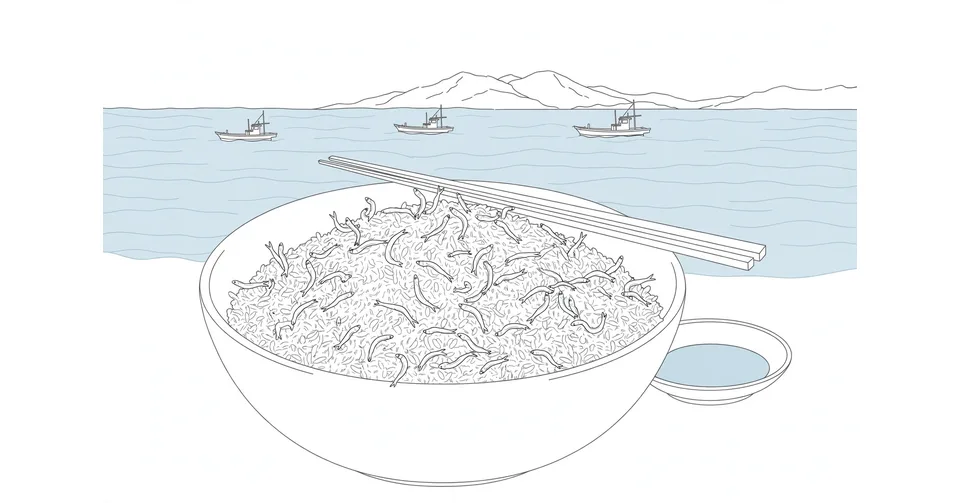
Shirasu are the young of sardines and anchovies, caught before their scales develop. In Shizuoka they are a point of pride, and the prefecture is the leading source of whitebait in Japan. The fish are so small and so quick to spoil that the best version of the dish only exists near the port, on the day of the catch.
This is a guide to what it is, the three ways Shizuoka serves it, and the ports where a bowl of it is worth a detour.
What Shirasu Actually Is
Shirasu is the fry of clupeoid fish, mainly the Japanese sardine known as katakuchi-iwashi, with anchovy fry mixed in. The fish are harvested young, before their scales develop, which is why they look translucent and feel soft on the tongue. A single fish is barely a mouthful, so it is always eaten by the spoonful, piled high over rice.
Suruga Bay is the heartland. The bay is the deepest in Japan, dropping to about 2,500 metres, and its northern end, around Tagonoura, is fed by nutrients carried down from Mt. Fuji and the Southern Alps. That rich water supports the sardine fry, and Shizuoka has become the leading source of whitebait in the country. The fish are not farmed or imported. They are caught in the bay, landed at the ports along its shore, and eaten within hours.
The name is plain, and the dish is plain too. There is no elaborate technique and no expensive ingredient. The quality comes entirely from freshness, which is why the story of the fish is really the story of a place and a morning.
How Shirasu Is Eaten
The classic form is nama-shirasu, raw whitebait over rice. The fish are piled on warm rice with strips of nori, shredded shiso leaf, and a drizzle of soy sauce, sometimes with grated daikon or ginger on the side. Eaten this way, it tastes clean and briny, with a soft, almost slippery texture and a faint sweetness. It is the version that regulars travel for, and it is the version that cannot wait.
The second form is kamaage-shirasu, whitebait boiled straight from the pot. The hot water firms the fish and curls each one into a plump curve, said to resemble the hiragana character shi. The boiled kind is milder and a little saltier than the raw kind, and it keeps longer, so it is the form most people outside Shizuoka have met. In Shizuoka City it is also stuffed into abura-age, fried tofu, as a local speciality.
The third form is the nishokudon, the two-colour bowl. Raw whitebait shares the rice with raw sakura ebi, the tiny pink shrimp caught only in Suruga Bay, so the bowl holds two of the bay's most local catches at once. The contrast is the point: the whitebait is soft and pale, the shrimp is sweet and pink, and neither would taste the same far from the water they came from.
It also turns up in omelets, on chirashi-zushi, and dried for cooking at home. But the bowl is the dish that defines it. Shizuoka has a habit of letting the catch decide the cooking, and dried fish is the other half of that habit, as the story of Numazu himono shows. Where himono preserves the catch for the months ahead, the raw bowl celebrates it on the day it is caught.
Why Raw Shirasu Stays Near the Port
The raw kind is a local-only treat because it spoils fast. The fish lose their transparency and their texture within hours of leaving the water, and no amount of careful packing brings them back. The only way to eat nama-shirasu properly is to be near the port on the day the boats come in.
The fishermen know this, and the way they fish is built around it. At Tagonoura, the boats use a single-boat net method called issobiki, one boat drawing the net instead of two. It damages fewer fish and brings them back to port faster. The catch is cooled in a large amount of ice the moment it comes aboard, then carried straight to the restaurants and shops by the harbour.
There is something reassuring about a dish that refuses to travel. It cannot be shipped, frozen into sameness, or eaten out of season without losing what makes it worth eating, so the only way to have it is to go where it lives. In a food culture full of things available everywhere at any hour, the fish still asks the eater to make the trip, and the trip is part of the flavour.
Where to Eat Shirasu in Shizuoka
Tagonoura Port in Fuji City is the first place to go. Its shirasu is registered as a geographical indication, a mark given only to products tied to one place and one way of making them. The Tagonoura Fisherman's Cafeteria, run by the local fisheries cooperative since 2011, serves the raw whitebait bowl from April to December, and more than 70,000 visitors a year come to eat it. Around the port, a street known as Shirasu Kaido holds a dozen or so restaurants and shops selling the fresh catch.
Mochimune Fishing Port in Shizuoka City is the second. The port has fished for more than 300 years, and whitebait is now its main activity. On a fishing morning, more than 50 boats leave the harbour together between 6 and 7 in the morning, and the cooperative's Donburi House at the port serves the fresh bowl on the days the fleet is out. Mochimune is a five-minute walk from JR Mochimune Station, which makes it the easiest of the ports to reach without a car.
Numazu Port is the third, and the most familiar to visitors already exploring the bay. The port's seafood bowls and market stalls include whitebait among the day's catch, so a bowl of it fits naturally into a morning spent eating through Numazu Port. The same Suruga Bay that fills the port with deep-sea fish also supplies the whitebait, and the two sit side by side on the same menus.
| Port | What to try | When to go |
|---|---|---|
| Tagonoura, Fuji City | Raw whitebait bowl at the Fisherman's Cafeteria | April to December |
| Mochimune, Shizuoka City | Fresh whitebait bowl at Donburi House | Mid-March to mid-January, on fishing days |
| Numazu Port | Whitebait among the seafood bowls | Year round, best in the morning |
The table is a starting point, not a promise. Fishing depends on the weather and the sea, and the restaurants follow the boats. A port can be quiet on a day the fleet stays in, and the best plan is to arrive early, ask what came in that morning, and order that.
When Shirasu Tastes Best
The season on Suruga Bay runs from late March to mid-January, with the fleet fishing for most of the year. The peak months are spring, from March to May, and autumn, from September to November, when the fry are plentiful and the water is at its best. The restaurants follow the same calendar. Tagonoura's cafeteria opens in April and closes at the end of December, and Mochimune's Donburi House serves on the days the boats go out.
Outside the season, the fish does not disappear. Kamaage-shirasu and the dried kind keep well, and frozen raw whitebait is sold through the year. They are good in their own way, but they are not the dish this article is about. The fresh bowl is a seasonal thing, and its season is the reason to plan the trip around it rather than treating it as an afterthought.
If you go, go hungry and go early. Order the raw bowl first, before the catch of the day runs out, and eat it slowly enough to notice what makes it different from the boiled kind. The fish are small, the bowl is simple, and the whole experience is over quickly. That is the point. Some dishes are worth a journey precisely because they cannot be carried home, and the whitebait bowl is one of them. The bay gives it for a few months a year, the port serves it for a few hours a day, and the memory of it lasts much longer than the meal.
More in Food & Travel
- Dashi, the Quiet Stock Under Almost Everything Japan Cooks
- Ayu, the Sweetfish That Rules Japan's Clear Rivers
- Sake Kasu, the Sake Lees Japan Cooks With Instead of Throwing Away
- Kopi Tubruk and the Indonesian Way to Drink Coffee
- Subak and the Rice Terraces of Bali
- Nara Deer and the Sacred Animals of the Old Capital
Latest posts
- Fuji Ko, the Pilgrim Societies That Climbed Mount Fuji Together
- Gensen Kakenagashi, the Onsen Water That Never Circles Back
- Shiko, the Leg Stamp That Starts Every Sumo Day
- Semar, the God Who Chose to Work as a Servant
- Kyushoku and the Japanese School Lunch
- Sumadori, Japan's Smart Drinking for People Who Do Not Drink
- Bureiko, the Drinking Party Where Rank Is Left at the Door
- Kagami Biraki, Japan's Ceremony of Breaking Things Open
- Capsule Hotels and Sleeping in a Pod in Japan
- Hiroshima and the City That Chose Peace
- Shinnenkai, Japan's New Year Parties That Start the Year Over
- Punakawan, the Clown Servants Who Steal Every Wayang Show
- Kashikiri, the Private Onsen Bath You Book by the Hour
- Nomi-Hara, When After-Work Drinks in Japan Turn Into Harassment
- Shio Koji, Japan's Salted Ferment That Seasons Everything