Narazuke Pickles Spend Years Asleep in Sake Lees
· 11 min read
Narazuke are the deep amber pickles of Nara, made by salting vegetables and burying them in sake lees for years at a time. Here is how narazuke are made, why they take so long, and why a thin slice still tastes of the sake it slept in.
Most pickles are in a hurry. A cucumber can be salted in the morning and eaten as a pickle by dinner, and much of Japan's everyday tsukemono works on that kind of schedule. Narazuke, the pickles named after the ancient capital of Nara, keep a different calendar entirely. The vegetables are salted first, then buried in sake lees, the fragrant solid left over from brewing, and left there not for days but for years. One to three years is a normal stay, and some batches sleep far longer. The narazuke that finally come out of the tub are dark amber, still crisp, and saturated with the flavour of the brew they rested in.
The first slice is a small shock. The colour is the deep brown of strong tea or tortoiseshell, the smell is unmistakably a brewery, and the taste lands with a savoury, faintly boozy force that has almost nothing in common with the mild vegetable that went in. First time tasters reach for comparisons and often land on strong cheese. A little goes a very long way, which is just as well, because every slice represents years of waiting.
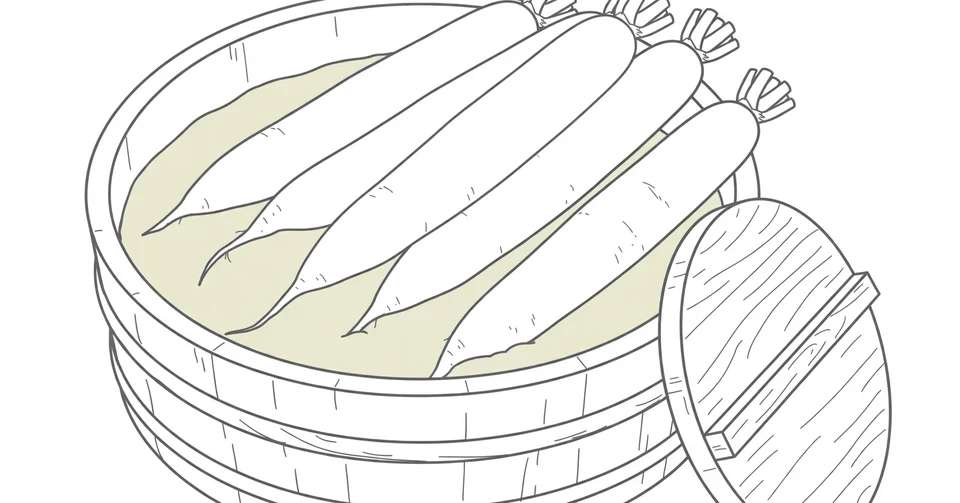
Today narazuke are Nara's signature souvenir, sold in wooden tubs and neat gift packs in the streets around Todaiji temple. But behind the souvenir stands one of the oldest pickle traditions in Japan, and it grew up alongside the city's other famous craft. Nara was a great sake town long before it was a tourist town, and where there is sake, there are lees looking for a second job.
What narazuke is, and what it is not
The name is simple geography. Nara gives the first half, and zuke means pickling, so narazuke are quite literally Nara pickles. They belong to the wider family called kasuzuke, foods pickled in sake kasu, the soft white lees pressed out of a finished batch of sake. If the ingredient is new to you, sake kasu, the sake lees Japan cooks with instead of throwing away explains what the lees are and the many other jobs they do in a Japanese kitchen, from winter soup to fish marinades.
Plenty of kasuzuke is quick. A fillet of salmon or a few cucumber spears might spend a night or two in a lees bed and come out gently flavoured, ready for the grill or the rice bowl. Narazuke sit at the far, patient end of the same family. The difference is not just time. Makers in Nara will tell you that if the lees are changed only once, the result is ordinary kasuzuke. Narazuke earn the name through repetition, round after round of fresh lees, across seasons and years, until the vegetable and the brew have thoroughly traded places. It is less a recipe than a long appointment between a vegetable and a tub.
Salt first, then the long sleep
Every narazuke begins with salt. Fresh vegetables are packed in salt and left until they give up much of their water, wilting and shrinking as the moisture drains away. This step is not seasoning, it is engineering. A watery vegetable would spoil or turn soft in the tub, while a salted one enters the lees firm, concentrated and ready to keep for years.
Only then does the vegetable meet the lees. The pickling bed is usually sake kasu kneaded with mirin, sugar and a little more salt, though purist makers use nothing but kasu and the salt already in the vegetables. Buried in that bed, the exchange slowly reverses. Salt migrates out of the vegetable, while the flavour, sweetness and alcohol of the lees migrate in. The prefecture's own explanation of the craft puts it in two words: salt does the first work, and then the lees do the second.
The bed does not stay the same. After months in the tub, the vegetables are lifted out and repacked into fresh lees, and then again, and again. One long established Nara maker changes the lees about five times for a single batch. Each fresh bed deepens the colour a shade further and pushes the flavour down another layer. When to change the bed, and how to blend it, is left to the maker's judgement, built up over decades and adjusted to the vegetable, the season and the state of the lees. Wikipedia's overview of kasuzuke puts the total pickling time at one to three years, noting that the younger pickles tend to be eaten locally in summer while the older ones, turned fully amber, are the ones distributed and sold as narazuke.
There is something I find quietly admirable in a process that cannot be hurried by any technology. No machine shortens it, no shortcut survives tasting. The maker's skill is mostly the skill of waiting well, and of knowing, by smell and by touch, when a tub is ready for the next change of lees.
What goes into the tub
The classic narazuke vegetable is shirouri, the white Oriental pickling melon, which has been grown in the Nara Basin and pickled in lees since the earliest records of the craft. Daikon radish is the other staple, including long regional radishes bred for the purpose, and it is daikon that most visitors meet first. Cucumber, eggplant and ginger all take the treatment, along with watermelon and its rind, plums, burdock, turnips and bamboo shoots. Fruits go in too, and modern makers have tried everything from persimmon to avocado.
Not everything survives. A vegetable destined for years in the lees needs structure, a firm flesh that can lose its water to salt, drink in alcohol for a thousand days, and still meet the knife with some resistance. The short list of regulars is really a list of vegetables tough enough to finish the journey.
A history that starts on a wooden tablet
Narazuke makers like to say their craft is 1,300 years old, and unusually for such claims, there is an artefact behind it. An eighth century wooden tablet excavated at the old Heijo-kyo capital site in Nara is inscribed with the words kasuzuke uri, edible gourd pickled in sake lees. Lees pickling, in other words, was already being written down while Nara was still the capital of Japan. The earliest version probably used the thick lees of doburoku, the cloudy unfiltered sake of the time, as a preserving bed for salted vegetables.
The pickle took its modern shape when the sake did. Nara's great temples were centres of brewing, and the clear sake developed there, known in its temple form as soboshu, was famous across the country. Once brewers were pressing clear sake, they had proper sake kasu in quantity, and by around the fifteenth century the lees pickle of Nara had a name of its own. Nara Prefecture's guide to the culture of narazuke traces that naming and notes that the word turns up in Edo period documents, including a Japanese and Portuguese dictionary from 1603 that defines narazuke simply as a kind of Japanese pickle.
Its commercial life belongs to the Edo period. A Nara physician named Itoya Sosen is often credited with turning shirouri narazuke into a product, pickling melons in lees and selling them around the turn of the seventeenth century. By the end of the period, travellers who came to Nara for its temples and its celebrated sake were carrying the pickles home as proof of the trip, and the name of the city travelled with them.
Durability was the original selling point. A lees pickle keeps for years without spoiling, and records describe Buddhist monks serving kasuzuke to samurai as provisions that would survive a campaign. It is a strange double life for a pickle, battlefield ration first and gift shop delicacy later, but both jobs rest on the same fact: almost nothing grows or rots inside a tub of sake lees. Shops founded on that trade are still at work. Mori Narazuke, to name one, has been selling its pickles in front of the great gate of Todaiji since 1869.
Amber, crisp, and quietly alcoholic
Time in the tub changes everything except the crunch. A pale melon that enters the lees in its first year comes out the colour of tortoiseshell, darker the longer it has slept, sometimes almost translucent at the edges. Yet slice it and the knife still meets resistance. The salt drew the water out early, and the alcohol and salt in the bed kept the texture set, so the finished pickle snaps rather than bends. The flavour is the lees, distilled by years into something deep and savoury, with the rice sweetness of kasu riding under a clear note of sake.
That note of sake is not just a flavour. Raw sake kasu holds around 8 percent alcohol, and narazuke keep a share of it, a few percent in the finished pickle even after years in the tub. It is why the pickles are treated with a measure of respect at the table. They are not a snack for children, and nobody sensible works through a plate of them before driving. Makers suggest a gentler trick for home eaters: slice the pickle and let it rest in the refrigerator for half a day, and some of the alcohol edge drifts away, leaving the sweetness of the lees more room to show.
The lees also leave more than flavour behind. Sake kasu is rich in enzymes, B vitamins and amino acids, and some of that goodness moves into the vegetable along with the alcohol, one more reason the pickle was valued as serious preserved food and not just a treat.
The same lees sit behind a far milder pleasure, too. Loosened in hot water with a little sugar, sake kasu becomes one kind of amazake, the sweet fermented drink of Japanese winters. It says something about the ingredient that it can produce both the gentlest cup of the New Year season and the most assertive pickle in the country.
A thin slice beside the rice
Narazuke are not eaten by the chunk. The clinging lees are wiped or rinsed away, and the pickle is cut into thin slices, sometimes close to translucent, and set beside a bowl of plain hot rice. A single slice seasons several mouthfuls. The slices go into ochazuke, rice with tea poured over it, they sit next to a cup of tea in the afternoon, and they make a serious companion for sake itself, where the echo between the glass and the pickle is part of the pleasure.
Younger makers are finding new work for the old pickle. In Nara, the Mori shop has served narazuke melted under cheese on toast and folded into a Basque cheesecake, which sounds like heresy until you remember that tasters have been comparing the flavour to cheese for years. At home, a small amount chopped fine will wake up a fried rice or a potato salad in the same way a strong pickle always does.
For travellers, the pickles are easy to find and easier to carry. Shops line the approaches to Todaiji and the lanes of Naramachi, selling whole vegetables in their lees or ready sliced packs. Salt and alcohol make narazuke patient travellers, and an unopened pack keeps well. Once opened, the refrigerator is the place for it, where it will wait, in its own unhurried way, for the next bowl of rice.
Japanese cooking has a strong instinct for freshness, for the fish served the day it was caught and the vegetable picked that morning. Narazuke argue the opposite case, that time is an ingredient too, and that a pale melon buried in the leftovers of a brew can come out years later darker, firmer in character and far more interesting than it went in. Eating a slice in Nara, you are tasting two crafts at once, the farmer's and the brewer's, joined by nothing more than salt, lees and patience.
More in Food & Travel
Latest posts
- Loma Linda's Long Lives Run on Saturdays
- Half the Old Springs in Japan Thank Kobo Daishi
- Konyoku Is Still Out There, Past the Last Train Station
- Karo Is the Tengger's Other Great Gathering
- Dry January Lasts a Month on Purpose
- Urashima's Dragon Palace Had a Name, Ryugu
- Petruk's Nose Arrives Before He Does
- Ikaria Runs on Island Time
- Why Nicoya Cooks Its Corn in Lime
- A Ngaben Can Take a Village Years to Prepare
- Juryo Is Where Sumo Starts Paying
- Nobody Eats the Daidai, and That Is the Point
- There Are Only 105 Toshiyori Shares in All of Sumo
- Kasuzuke Pickles Almost Anything in Sake Lees
- The Usho Answers to the Imperial Household