Omamori, Japan's Pocket-Sized Amulets of Protection
· 12 min read
An omamori is a small brocade pouch from a Japanese shrine or temple, carried closed for about a year to protect its holder or help one specific wish come true.
An omamori is a small brocade pouch you buy at a shrine or temple in Japan, carry close to your body, and never open. Inside, sealed away from every curious eye, sits a paper or wooden tablet inscribed with a prayer. The pouch is the point. It is protection you can hold in your palm, and it works on one condition: you trust it enough to leave it closed.
The word comes from mamoru, to protect, and the charm does exactly what the name promises. An omamori is made for one wish at a time. One guards your health, another watches over your car, a third quietly roots for your exam results. You pick the wish that matters most right now, you pay a small offering, usually between 500 and 1,500 yen, and you carry the pouch with you until its year is done.
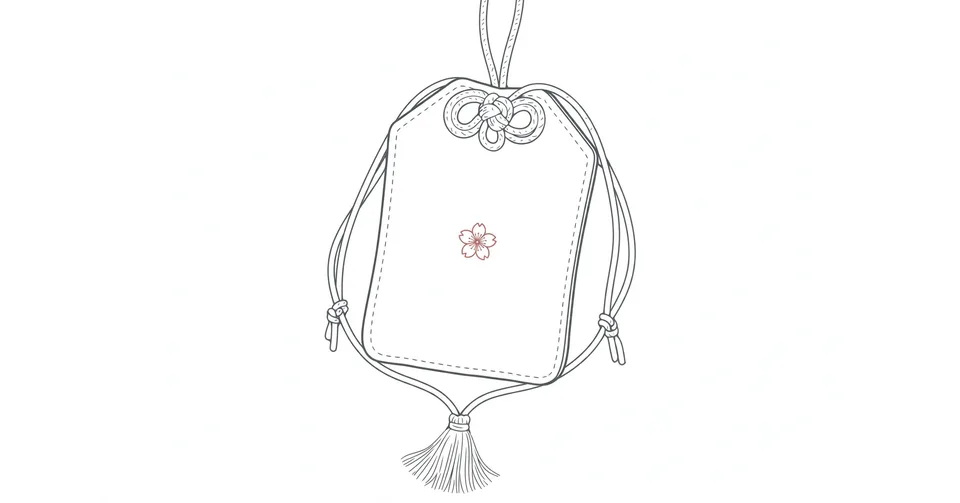
I first noticed omamori the way most visitors do, in a glass case at a shrine shop, row after row of bright pouches with cords and tassels, each one labelled in kanji I could not read. They looked like souvenirs. They are not souvenirs, or not only souvenirs. Behind each pouch is a priest or monk who has prayed over it, and behind the prayer is a tradition that has lasted more than a thousand years. That is a lot of weight for something the size of a matchbox, and it is exactly why the little pouches are worth understanding before you buy one.
What an Omamori Is
An omamori is a protective charm sold at Shinto shrines and Buddhist temples across Japan. The pouch itself is usually made of brocade silk, tied with a cord, and small enough to fit in a pocket, a purse, or a school bag. Inside is a tablet, paper or wood, inscribed with the name of a deity or a sacred prayer. A priest or monk consecrates the charm in a ritual before it is sold, and that blessing is what makes an omamori different from a keychain. You are not buying fabric. You are receiving a prayer that has been folded up and handed to you.
The tradition is old. Omamori in recognisable form date back to the Heian period, more than a thousand years ago, when people carried small sacred objects for protection on journeys and in daily life. The form has changed with the centuries, brocade instead of rough cloth, bright colours instead of plain ones, but the idea has not. A person with a worry asks a shrine or temple for help, and walks away carrying the answer in a pocket.
That answer is always specific. An omamori does not cover everything at once. It covers one thing, the thing written on its front. This is the first thing to understand, because it changes how you choose. You do not buy the prettiest pouch. You buy the pouch that names your worry.
The Rule You Must Not Break: Never Open an Omamori
Every person who carries an omamori learns one rule quickly, and it is the only rule that truly matters. Never open the pouch. The blessing is believed to live inside the sealed tablet, and opening the pouch is believed to release it. Curiosity ends the charm. The knot that ties the pouch shut is a seal, not packaging, and the correct response to a seal is to leave it alone.
This rule surprises visitors, because the pouch is so small and so tempting. It looks like it wants to be opened. It does not. The point of an omamori is trust, and trust here is practical. You carry something you cannot inspect, for a year, because you believe the prayer inside is doing its work whether you can see it or not. I find that oddly honest. Most of the things we rely on every day, medicine, engineering, other people, work the same way. We trust them without opening them up.
The rule also explains why an omamori makes a poor souvenir for someone who only wants a pretty object. If the person who receives it does not know the rule, they may open it on the first evening home. Give one only to someone who will keep it closed, or explain the rule when you hand it over. The explanation is part of the gift.
The Main Types of Omamori
Shrines and temples usually sell twenty or more types, and the big ones sell forty. The names on the front tell you what each omamori protects, so learning a few words turns a wall of pouches into a readable menu. These are the types you will meet most often.
| Type | Japanese | What it protects |
|---|---|---|
| Traffic safety | Kotsu anzen | Drivers, travellers, and anyone on the road |
| Love and matchmaking | Enmusubi | Romance, marriage, and good connections with people |
| Academic success | Gakugyo joju | Students facing entrance exams and study goals |
| Good fortune | Kaiun | General luck and better days ahead |
| Health | Kenko | Health and recovery from illness |
| Warding off evil | Yakuyoke | Protection from bad luck in unlucky years |
| Business prosperity | Shobai hanjo | Shops, companies, and a thriving trade |
| Family safety | Kanai anzen | The safety and health of the whole household |
Traffic safety is the most practical of the lot, and one of the most widely bought. A kotsu anzen omamori often comes flat, sized to sit in a wallet or hang from a car mirror, and drivers across Japan carry one without thinking about it twice. Students buy gakugyo joju omamori in autumn and winter, as entrance exam season approaches, and the blue and white pouches sell out at famous shrines like Yushima Tenmangu in Tokyo, a shrine long associated with learning. Enmusubi, the love charm, is the most popular category of all, and Tokyo Daijingu, a shrine famous for weddings, is one of the best known places to receive one. A detailed guide to omamori types, meanings, and prices lists real examples from shrine price lists, including the traffic safety charms at Fushimi Inari and Yushima Tenmangu.
The colours are part of the language too. White and gold usually mean general good fortune. Pink is linked to love, green to health and study, red to warding off illness, black to warding off evil. The colours are conventions, not laws, and they vary from shrine to shrine. Read the label on the front before you trust the colour.
Modern life has added new types to the old list. Kanda Myojin, a shrine in Akihabara, sells an omamori for IT safety, shaped like a small card, meant to protect computers, data, and systems from crashes and attacks. There are charms for safe childbirth, for pets, for finding lost things, and for passing a driving test. The tradition grows because the worries grow, and a new worry gets a new pouch.
Where Omamori Come From
Nobody can point to a single inventor of the omamori, and that is fitting. The charm grew out of the way shrines and temples have always worked in Japan, as places where people bring a specific worry and ask for help with it. In the Heian period, priests and monks began giving visitors small sacred objects to carry home, a piece of the shrine's protection that could travel. Over the centuries the object became the brocade pouch we know today.
Each shrine and temple makes its own omamori, and the famous ones are famous for a reason. Meiji Jingu in Tokyo, the shrine to Emperor Meiji, is one of the most visited places in Japan to receive an omamori, and its guidance on carrying and returning charms is quoted across the country. Fushimi Inari Taisha in Kyoto, the shrine of ten thousand vermilion gates, asks visitors to renew their charms once a year. Yushima Tenmangu is the shrine for students. Kanda Myojin is the shrine for workers in technology. Gotokuji in Setagaya, the temple of the beckoning cat, draws visitors who already believe a small object can carry a large wish, and its story belongs to the same family of beliefs as the omamori, a cat that beckoned a lord out of a storm and into good fortune.
That family is worth noticing. Japan's lucky objects tend to travel together. The daruma doll sets a goal and watches you keep it. The beckoning cat of Maneki Neko invites customers and fortune through the door. An omamori is the quietest of the three. It does not sit on a shelf and stare at you. It hides in a pocket and works without being watched.
How to Carry an Omamori, and When to Let It Go
Carrying an omamori is simple. Keep it close to whatever it protects. A traffic safety charm goes in the car or on a bag you take driving. A study charm goes in a school bag. A health charm stays in a pocket or purse. Meiji Jingu's guidance says an omamori can be attached to a bag, kept in a pocket, or carried inside one, until it has fulfilled its purpose. The only requirements are closeness and respect. Do not toss it in a drawer and forget it. Do not leave it on the floor. Treat it like something that is doing a job for you, because that is what it is.
An omamori is also a charm with an expiry date, and this is the part visitors most often miss. The blessing is generally understood to last about a year. After a year, or once the prayer has been answered, the custom is to return the omamori to a shrine or temple and receive a new one. Most people do this at hatsumode, the first shrine visit of the New Year, when the old year is put away and the new one is begun. Fushimi Inari Taisha asks visitors to renew their charms once a year, and the rhythm makes sense. A wish is not a permanent condition. It changes as life changes, and the charm changes with it.
Returning an omamori is a small ceremony of its own. Shrines keep a box for old charms, and everything collected is burned in a sacred fire in a rite called otakiage. The fire returns the spirit of the charm to the heavens with gratitude. Never throw an omamori in the bin. If you cannot return to the shrine where you bought it, almost any shrine or temple will accept an omamori from another place for the same burning. If you live overseas and cannot visit Japan within the year, the accepted advice is to keep the charm in a clean place with gratitude until your next visit. Holding on to it respectfully is not considered harmful. Throwing it away is.
There is a gentleness in this cycle that I keep coming back to. Nothing is kept forever, nothing is discarded carelessly. The charm serves for a year, it is thanked, it is burned, and a new one takes its place. It is a tidy way to treat hope, with a beginning, a working life, and a proper ending.
Buying an Omamori as a Gift
An omamori is a good gift, and a better one than most souvenirs, because it is chosen for a person rather than for a place. A friend starting a new job gets a business prosperity charm. A student facing exams gets a study charm. A new driver gets traffic safety. The price is small, usually between 500 and 1,500 yen, so the gift is the thought and the prayer, not the money. Choose the wish first, then the pouch. If you are still deciding between types, a guide to Japanese good luck charms explains the six main kinds and what each one protects.
A few practical points help. Buy from the shrine or temple itself, not from a reseller online, where fakes are common and the blessing is absent. Check the label, not only the colour, because colours vary between shrines. If you are buying for someone else, tell them the rule about never opening it, and tell them about the one year and the return. A gift with instructions is kinder than a gift that gets opened by mistake.
Visitors sometimes ask whether they can carry more than one omamori at a time. The honest answer is that people do, and shrines do not forbid it. One charm per wish is the custom, so carrying two or three for different wishes is ordinary. Carrying a dozen is not. The point is not to collect pouches. The point is to name what matters and carry it with you.
A Small Pouch Worth Taking Seriously
Japan is full of objects that carry meaning beyond their size, and the omamori is one of the smallest and most serious of them. It asks for very little, a small offering, a pocket, a year of trust, and a respectful return. In exchange it gives a person something to hold on to while they wait for an exam result, a recovery, a journey, or a new love. That is not magic in the sense of a trick. It is closer to a promise you make to yourself, folded up and carried where you can feel it.
If you visit a shrine, look for the counter where the omamori are sold. It is usually near the main hall, staffed by shrine attendants, and the pouches are laid out by purpose. Take your time. Read the labels. Think about what you actually want protected, and choose that one. Then put it in your pocket, leave it closed, and let it do its quiet work. A year from now, when you return it to the fire, you will know whether the wish came true, and you will have a new wish ready for the pouch that replaces it.
More in Culture & Society
- Japanese Festivals, From Snow Sculptures to Summer Fireworks
- The Daruma Doll, Japan's Round Symbol of Perseverance
- Shichi-Go-San and the Day Japan Dresses Its Children in Kimono
- Desa Pakraman Is the Name the Law Gave the Old Village
- A Primbon Reads Your Life From the Day You Were Born
- Pasaran Is the Five-Day Week Java Never Gave Up
Latest posts
- Sushi, the Japanese Dish That Conquered the World
- Kotatsu, Japan's Heated Table That Warms Winter
- Kakiage and the Tempura Bowl That Towers Over Rice
- The History of the Bicycle From Wooden Wheels to Japanese City Bikes
- the-javanese-of-suriname-and-the-language-they-kept-alive
- Kanban and the Japanese System That Organized Work
- A Ceper Folds a Coconut Leaf Into a Crescent Moon
- Your Neptu Is the Number Hidden Inside Your Birthday
- Tilem Is the Dark Moon Bali Counts Its Year By
- The Saka Calendar Sets Nyepi on a Different Date Every Year
- On Tumpek Kuningan Bali Feeds Its Ancestors
- Garuda Carried a Mountain to the Middle of the Ocean
- Vasuki Was the Rope That Churned the Ocean of Milk
- En No Gyoja, the Mystic Shugendo Calls Its Patriarch
- A Saito Goma Burns Its Prayers Outdoors