Sushi, the Japanese Dish That Conquered the World
· 11 min read
Sushi began as a way to keep fish from rotting and became the most famous Japanese dish on earth. This is how a fermented preservation trick turned into nigiri, maki, and a global obsession.
Walk into almost any city on earth and you will find sushi. It sits in supermarket chillers in London, spins on conveyor belts in Jakarta, and anchors tasting menus in New York that cost more than a weekend away. No other Japanese dish has travelled so far, and none has changed so much on the way.
What surprises most people is that sushi did not start as a luxury, or even as a meal anyone would choose for pleasure. It started as a way to keep fish from rotting. The rice was thrown away, the fish was sour enough to make your face tighten, and the whole point was survival, not taste. The journey from that pungent preserved fish to the neat piece of nigiri on a ceramic plate took more than a thousand years, and it is one of the best stories in food.
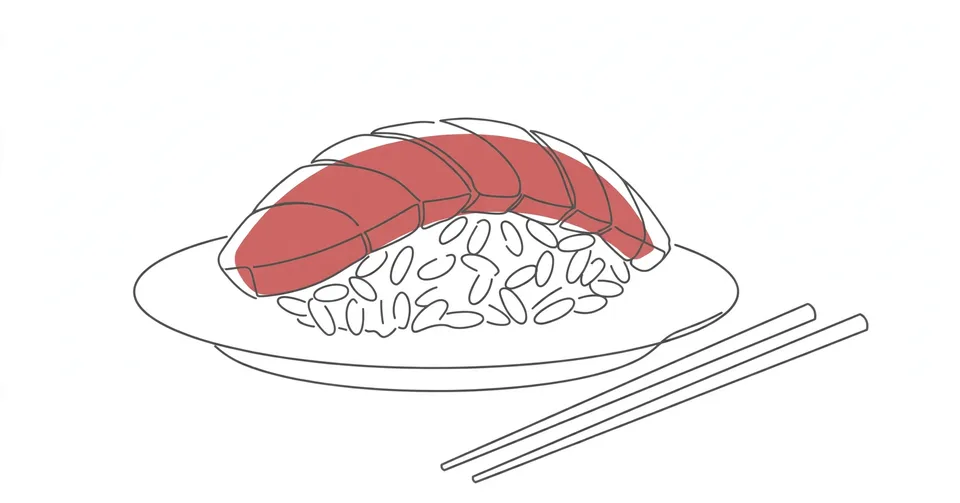
The first surprise is how old sushi really is. Long before it belonged to Japan, people around the Mekong River in Southeast Asia were packing freshwater fish in salt and cooked rice, then leaving the mixture to ferment for months, sometimes years. The lactic acid did the preserving, and when the fish was finally eaten, the rice was discarded. This was narezushi, and most food historians trace its roots to sometime between the 3rd and 5th centuries BC. Sushi, in other words, is older than the country it now defines.
Sushi started as a way to keep fish, not feed people
Sushi reached Japan centuries later, and the earliest Japanese written record of it appears in the Yoro Code of 718, a legal text that listed sushi among the goods that could be paid as tax. That tells us two things. First, the dish was already established enough to be taxed. Second, it was still a preserved food, valued because it lasted, not because it was delicate.
The oldest surviving form of narezushi in Japan is funazushi, still made today around Lake Biwa in Shiga Prefecture. It uses nigorobuna, a crucian carp found only in that lake, packed with rice and left to ferment for years. The result is famously strong, closer to cheese than to anything most people would call sushi, and it remains a point of local pride. If you ever taste it, you are tasting something close to what sushi meant for most of its history.
Change came slowly. During the Muromachi period, from 1336 to 1573, a shorter fermentation style called namanare appeared, and people began eating the rice along with the fish. The dish was moving from preservation toward cooking, but it still took days. The real shortcut was vinegar. In the Genroku era, from 1688 to 1704, cooks began mixing rice vinegar into the rice, which gave it the sour note of fermentation without the wait. This was haya-zushi, or quick sushi, and it turned a months-long process into something that could be ready the same day. Some accounts credit a cook named Matsumoto Yoshiichi with the vinegared rice in the early 17th century, though the exact date is still debated. The vinegar itself came from a long tradition of fermentation that starts with koji mold, the quiet engine behind Japanese food.
A street vendor in Edo invented the sushi we know
The decisive moment came in Edo, the city we now call Tokyo. By the early 19th century Edo was one of the largest cities in the world, with more than a million people, and it was full of workers who needed food that was fast, cheap, and ready to eat standing up. A vendor named Hanaya Yohei, who lived from 1799 to 1858, answered that need. In 1824 he opened a stall in the Ryogoku district and began pressing a slice of fresh fish onto a small mound of vinegared rice by hand, with a dab of wasabi between the two. No fermentation, no waiting, no wooden box. It was made to order and eaten on the spot.
This was edomae-zushi, named for Edo Bay, the bay in front of the city, where much of the fish was caught that same morning. The word edomae literally means in front of Edo, and it described fish from local waters. Yohei's nigiri was much bigger than the pieces served today, roughly two to four times the size, because it was a working lunch, not a tasting portion. It caught on fast. According to the 1852 publication Morisada Manko, there were twelve sushi restaurants within a single city block, while you might have to walk twelve blocks to find a single soba shop. Sushi had become the fast food of Edo, and the city ate it standing up, with its hands, between errands.
That street food origin still shapes the dish. Nigiri is meant to be eaten soon after it is made, before the rice cools and hardens and the fish warms. A good chef presses the rice loosely enough that it falls apart in your mouth, and firmly enough that it holds together on the way there. It is a small act of engineering, and it is the reason a sushi counter, where the chef makes each piece in front of you, feels so different from a plate that has been sitting in a fridge.
The many shapes of sushi
Nigiri is the form most people picture, but it is only one branch of the family. Sushi kept splitting into new shapes as it spread, and each shape solved a different problem.
| Form | What it is | Where it comes from |
|---|---|---|
| Nigiri | A slice of fish pressed onto vinegared rice by hand | Edo, 1820s |
| Maki | Fish and rice rolled in seaweed and sliced | Edo, as a portable snack |
| Uramaki | The inside-out roll, rice on the outside | Los Angeles, 1960s to 1970s |
| Temaki | A hand-rolled seaweed cone, eaten at once | Japan, as a casual home style |
| Chirashi | Fish and toppings scattered over a bowl of rice | Home cooking, no shaping needed |
| Inari | Vinegared rice tucked into sweet fried tofu pockets | Japan, named for the fox god Inari |
| Oshizushi | Rice and fish pressed in a wooden box, then sliced | Osaka, the older pressed style |
| Funazushi | Carp fermented with rice for years | Lake Biwa, the oldest surviving form |
Every form still depends on the same two things: fresh fish and well-seasoned rice, and the deep savoury note that umami, the fifth taste Japan gave the world, explains. Maki was portable food for workers and travellers. Oshizushi, the pressed box sushi of Osaka, predates nigiri and survives as a regional style. Chirashi is what you make at home when you want sushi without the shaping. And funazushi is the living fossil, a reminder of where it all began. When people argue about what counts as real sushi, the honest answer is that the dish has been reinventing itself for two thousand years, and every form on that list was once the new idea.
How sushi conquered the world
Sushi left Japan in earnest after the Second World War, carried by Japanese emigrants and by a growing curiosity about Japanese food abroad. The turning point in the United States came in Los Angeles in the 1960s and 1970s, where chefs began adapting sushi for American customers. The California roll, with crab, avocado, and cucumber, and the rice on the outside, hid the seaweed that put newcomers off, and it worked. A businessman named Noritoshi Kanai helped spread the trade through his company Mutual Trading, supplying the restaurants that turned a niche food into a national habit.
Then came the conveyor belt. In 1958, a restaurateur named Yoshiaki Shiraishi opened the first kaitenzushi, or conveyor belt sushi restaurant, in Osaka, and the idea of cheap sushi on a moving belt made the dish accessible to everyone. Today you can eat decent sushi for the price of a sandwich, or spend a small fortune at a counter where the chef decides the menu. That menu, called omakase, means I leave it to you, and it is the purest form of the dish: no choices, just the chef's judgement, piece by piece.
The numbers show how far it went. A 2023 survey by Japan's Ministry of Agriculture, Forestry and Fisheries counted about 187,000 Japanese restaurants outside Japan, more than triple the count a decade earlier. Sushi is no longer a Japanese export. It is a global food with local versions everywhere, from the salmon-heavy rolls of Norway to the cream-cheese rolls of Brazil, and purists complain about every one of them. The complaints miss the point. Sushi has always adapted to the place it lands in, just as ramen travelled from China to become Japan's soul food. That is how it survived for two thousand years.
How to eat sushi without embarrassing yourself
There is a small set of customs that will make a sushi meal better, and none of them is complicated. Nigiri can be eaten with your fingers or with chopsticks, and nobody at a proper counter will judge you for using your hands. That is how Edo workers ate it. When you dip nigiri in soy sauce, dip the fish side down, not the rice side, or the rice will soak up the sauce and fall apart. The pickled ginger on the side is a palate cleanser between pieces, not a topping to pile on top. And the wasabi is already inside the nigiri, between the fish and the rice, so there is no need to stir more into the soy sauce. Eat each piece promptly, while the rice is still at the right temperature.
I have come to think the best sushi meal is not necessarily the most expensive one. A small counter where the chef works a few feet away, makes each piece to order, and watches you eat it is a different experience from a tasting menu that treats sushi as theatre, and both are different again from a conveyor belt lunch, which has its own honest charm. What matters is the fish and the rice, and whether they were put together minutes ago. Price is a weak guide. A busy neighbourhood shop with a line outside will usually beat a quiet expensive one, because the fish turns over fast and nothing sits around.
There is one quiet truth worth knowing before you order. Most of the green paste served as wasabi outside Japan is not real wasabi at all. It is horseradish, mustard, and green colouring, because real wasabi is hard to grow, expensive, and loses its heat within minutes of grating. That is fine. The paste does its job, and a little goes a long way. But if you ever eat at a counter in Japan and the chef grates a fresh knobbly root in front of you, pay attention. That sharp, clean heat that fades fast is the real thing, and it is one of those small details that makes you understand why people take this dish so seriously.
The rice was once trash, and now it is the star
Sushi began as a trick for keeping fish edible, and the rice was the part you threw away. Today the rice is the part chefs obsess over. They argue about the vinegar blend, the temperature, the exact pressure of the hand, and the variety of rice, because a perfect piece of nigiri is mostly rice, with the fish as the accent. That reversal is the whole story in miniature. A preservation method became a craft, a street snack became a ceremony, and a dish that once smelled of fermentation now defines Japanese food for the rest of the world.
The next time you pick up a piece of sushi, it is worth remembering how much history is balanced on that small mound of rice. It carries the Mekong River, a tax code from the year 718, a carp from Lake Biwa, a street stall in Edo, and a conveyor belt in Osaka. That is a lot for one bite, and it is the reason sushi is more than a meal. It is a record of how food travels, adapts, and refuses to stand still, and it is still changing. The version your grandchildren eat will look different from the one on your plate today, and that, for sushi, has always been the point.
More in Food & Travel
Latest posts
- Omamori, Japan's Pocket-Sized Amulets of Protection
- Japanese Festivals, From Snow Sculptures to Summer Fireworks
- The Daruma Doll, Japan's Round Symbol of Perseverance
- Kotatsu, Japan's Heated Table That Warms Winter
- The History of the Bicycle From Wooden Wheels to Japanese City Bikes
- the-javanese-of-suriname-and-the-language-they-kept-alive
- Kanban and the Japanese System That Organized Work
- Shichi-Go-San and the Day Japan Dresses Its Children in Kimono
- Desa Pakraman Is the Name the Law Gave the Old Village
- A Primbon Reads Your Life From the Day You Were Born
- Pasaran Is the Five-Day Week Java Never Gave Up
- A Ceper Folds a Coconut Leaf Into a Crescent Moon
- Your Neptu Is the Number Hidden Inside Your Birthday
- Tilem Is the Dark Moon Bali Counts Its Year By
- The Saka Calendar Sets Nyepi on a Different Date Every Year