Kakiage and the Tempura Bowl That Towers Over Rice
· 12 min read
Kakiage is the mixed fritter at the heart of Japan's most spectacular tempura bowls, from a towering seafood stack in Numazu to a 42-piece wall in Tokyo. This is what kakiage is, where it came from, and how to eat it.
Some dishes announce themselves quietly. Kakiage does the opposite. It arrives as a tower, a golden stack of fried shrimp and vegetables rising high above the rim of the bowl, and the first thing you do is stare at it and wonder how you are supposed to eat it. The answer, it turns out, is slowly, and with both hands on your chopsticks.
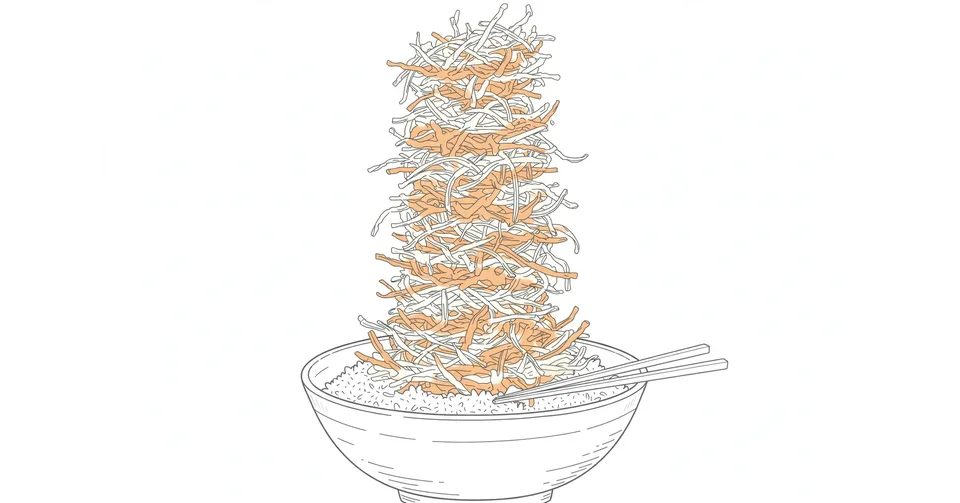
The short version is simple. Kakiage is a type of tempura made from small pieces of seafood and vegetables, mixed together in batter and deep fried as one cluster. The Wikipedia entry on kakiage describes it the same way, a fritter of small pieces fried together rather than one piece at a time. Where ordinary tempura fries each piece on its own, a shrimp here and a slice of sweet potato there, kakiage throws everything into the same pan and lets it become a single lacy disc. It is tempura with the volume turned up, and it is one of the most satisfying things you can order in Japan for the price of an ordinary lunch.
What I like about kakiage is that it refuses to be fancy. Tempura at a high end counter in Tokyo can cost as much as a hotel room, with a chef frying one piece at a time in front of you and a long list of rules about how to eat it. It belongs to the other side of the same tradition, the side that fed workers at soba stands and families at home. It is honest food, made from whatever is at hand, and the best versions of it are proud of that. A tower of it is a joke and a meal at the same time, and Japan is very good at that particular combination.
What kakiage actually is
The name gives the method away. Kakiage comes from kakimazeru, to mix together, and ageru, to deep fry. The cook takes small pieces of seafood and vegetables, tosses them in tempura batter, and drops the whole handful into hot oil. The pieces fuse into a disc, crisp at the edges and soft in the middle, and it comes out of the oil as one thing rather than many. The name is a recipe in two syllables.
The classic ingredients are small shrimp, thinly sliced onion, julienned carrot, and green beans, with sweet potato, burdock root, and mitsuba parsley often joining in. Seafood versions add squid or small scallops. The shrimp most often used is shiba ebi, a small shrimp that fries whole, shell and all, and in Shizuoka the tiny sakura ebi, cherry shrimp, shows up in kakiage all along the coast. There are no strict rules about what goes in. That is the point. Kakiage is the dish a cook makes with what is in the kitchen, and two restaurants in the same town can serve versions that taste completely different.
Eaten on its own, it is served the way all tempura is served, with tentsuyu dipping sauce and grated daikon radish, or with a pinch of seasoned salt. But it rarely stays on its own for long. It is a topping looking for a bowl, and it finds three of them. The first is rice, as kakiage donburi, a bowl of steamed rice with a piece of kakiage on top and a drizzle of sweet and savory sauce. The second is hot soba, where the fritter sits on buckwheat noodles in dashi broth and slowly softens at the edges. The third is hot udon, the same idea with thicker noodles. In a standing soba shop, where office workers eat in ten minutes, kakiage soba is one of the most ordered things on the menu, because it is fast, filling, and cheap.
Tempura came from Portugal, kakiage stayed Japanese
Tempura itself is an import. Portuguese missionaries and traders brought the technique of battering and frying food to Japan in the 16th century, and the word comes from tempora, the Latin word for the Ember Days of Lent, when Catholics ate fish instead of meat. In the Edo period, tempura became street food in the new capital, sold from stalls to workers who ate it with their fingers on the way home.
Kakiage grew out of that street food tradition, but it stayed closer to ordinary life than the tempura of the fine counters. It was a way to use up small pieces of seafood and leftover vegetables, things too small to fry on their own. A soba shop could take the shrimp too small for a whole tempura, the ends of the onions and carrots, and turn them into something worth selling. It was frugal cooking that tasted like a treat, and that combination kept it on menus for centuries. Today you can find kakiage everywhere in Japan, from convenience store bento boxes to department store basements, and it still costs very little.
The home version keeps the same spirit. Japanese home cooks make it to clean out the fridge at the end of the week, using whatever vegetables are left, and the recipe books are cheerful about it. The batter is a slightly thinner version of regular tempura batter, and the trick is to keep it cold and not to overmix it, so the fritter stays light. Just One Cookbook has a good kakiage don recipe that shows the method step by step. It is the kind of dish that forgives a beginner, which is another reason it has survived so long.
The tower in Numazu
If kakiage has a capital, it might be Numazu, a port city in Shizuoka where I live. At the port, the restaurant Uogashi Maruten serves a seafood kakiage bowl that has become famous across Japan, and the reason is visible the moment it reaches the table. The fritter is not a flat disc. It is built upward, a three-dimensional tower of fried shrimp and vegetables rising from the rice, and it looks less like lunch than like a small golden mountain.
The tower is not an accident. The method behind it was developed by a previous president of the restaurant and is said to be patented, and the ingredients are the pride of Suruga Bay, shrimp and sakura ebi caught in the bay, mixed with plenty of onion. The menu lists the seafood kakiage rice bowl at around 1,200 yen, which makes the spectacle even better. This is not a luxury dish. It is a port lunch that happens to look like a monument.
Maruten is worth a visit for more than the tower. The restaurant serves simmered kinmedai, sashimi sets, and grilled fish from the morning catch, and the port itself is a good half day out from Tokyo. I wrote about the restaurant and its towering bowl in more detail in my piece on Maruten Numazu and the towering kakiage bowl of the port, and if you go, arrive hungry and expect a queue at peak times. The bowl is much larger than first-time visitors expect, and that is part of the fun.
The wall in Tokyo
Numazu is not the only place where kakiage escaped the plate. In Kunitachi, a city about half an hour west of central Tokyo, the restaurant Fukugawa Tsuribune serves a kakiage bowl that became a legend in 2013, when a Sora News 24 reporter went to try it and found something that barely qualified as a bowl at all.
The story is that the bowl originally came topped with just three pieces of the fritter, but every time a customer finished the whole thing, the restaurant added another three pieces for the next person who ordered it. By the time the reporter visited, the count had reached 42 pieces, stacked into a wall about 35 centimeters tall that blocked the view across the table. The restaurant serves only one of these bowls a day, reservations run about two months ahead, and customers get a 40-minute time limit to finish it. The reporter counted 42 pieces and noted, with some relief, that the fritter itself was delicious, crispy, full of shrimp flavor, and not particularly oily.
The Fukugawa Tsuribune bowl is a stunt, and it knows it. But it also shows something real about the dish. Because the fritter is a cluster rather than a single piece, it scales. You can stack it, pile it, and build with it in a way you cannot do with a single shrimp. The dish invites excess, and a few restaurants have accepted the invitation with both hands. You can read the original report on Sora News 24.
Kakiage beyond the bowl
The towers get the photographs, but the everyday version is the one most Japanese people actually eat. At a soba shop, kakiage soba is a standard order, and the fritter does something clever in the hot broth. The outside stays crisp for the first few bites, then the edges soften and the broth takes on a faint sweetness from the batter. It is a small transformation, and regulars time their eating around it, getting the crisp bites first and letting the rest melt into the soup.
Regional versions keep the same idea and change the ingredients. In Bungotakada, in Oita Prefecture, the local specialty is Misaki kakiage don, made only from small shrimp caught in the Suo Nada Sea, served over rice with a sweet and salty sauce. The Japan Tourism Agency lists it as a regional specialty, and it shows how a dish with no fixed recipe adapts to whatever the local sea provides. In Hokkaido, scallops and corn find their way into the mix in summer. In every region, the formula is the same: small things, mixed, fried, and eaten hot.
The dish has even found its way into pop culture. In the Demon Slayer series, the Flame Hashira Rengoku eats a huge bowl of kakiage soba at a city noodle counter before a mission, and the scene has sent fans to soba shops looking for the same bowl. It is a fitting cameo. Rengoku is a character who eats with total enthusiasm, and the dish rewards exactly that.
How to order and eat it
Ordering kakiage is easy, and that is part of its charm. At a soba or udon shop, look for the kakiage soba or kakiage udon on the menu. At a tempura or tendon restaurant, look for the don or tendon version, the rice bowl with sauce. At a department store basement or a supermarket deli, you will find it sold by the piece, ready to eat at home with a little tentsuyu or salt. A single piece usually costs a few hundred yen.
Eat it the way the Japanese do. If it comes with tentsuyu, dip, do not drown. If it comes with salt, a pinch is enough. If it sits on rice, break it apart with your chopsticks and let the sauce reach the rice underneath. If it sits on soba, eat the crisp edges first, then let the rest soften. There is no ceremony to it, and nobody will mind if you eat it quickly. It is fast food in the oldest sense, food made fast and eaten fast, and it tastes best when it is still hot from the oil.
One practical note. A tower of it is a lot of fried food. The Numazu bowl and the Tokyo wall are both meant to be shared or tackled on an empty stomach, and there is no shame in leaving some behind. The restaurants that serve the big bowls know exactly what they are doing, and they have seen plenty of confident customers slow down halfway through.
A small dish with a big appetite
Kakiage is not the most refined dish in Japan, and it does not try to be. It is the dish that turns scraps into a meal, leftovers into lunch, and a quiet bowl of rice into a tower that people photograph before they eat. It carries the whole history of tempura in it, from Portuguese frying pans to Edo street stalls to the soba shops of today, and it does it for the price of an ordinary lunch.
That is why I think it deserves its own story, separate from the tempura counters and the fine dining guides. The best food writing in Japan is not only about the most expensive meal. It is also about the dish that a port town turned into a landmark, and a Tokyo restaurant turned into a wall, and a home cook turns into dinner on a Friday night with whatever is left in the fridge. It is all three at once, and it is still, after all these centuries, just mixed things, fried together, eaten hot. If you want a fuller picture of how a bowl of noodles became a Japanese institution, my piece on how a bowl of noodles changed the world is a good companion to this one. And if you want to see the tower for yourself, the train to Numazu is an easy day trip, and the view from the port is worth the journey on its own. The bullet train will get you most of the way there, and the kakiage will do the rest.
More in Food & Travel
Latest posts
- The History of the Bicycle From Wooden Wheels to Japanese City Bikes
- the-javanese-of-suriname-and-the-language-they-kept-alive
- Kanban and the Japanese System That Organized Work
- Shichi-Go-San and the Day Japan Dresses Its Children in Kimono
- Desa Pakraman Is the Name the Law Gave the Old Village
- A Primbon Reads Your Life From the Day You Were Born
- Pasaran Is the Five-Day Week Java Never Gave Up
- A Ceper Folds a Coconut Leaf Into a Crescent Moon
- Your Neptu Is the Number Hidden Inside Your Birthday
- Tilem Is the Dark Moon Bali Counts Its Year By
- The Saka Calendar Sets Nyepi on a Different Date Every Year
- On Tumpek Kuningan Bali Feeds Its Ancestors
- Garuda Carried a Mountain to the Middle of the Ocean
- Vasuki Was the Rope That Churned the Ocean of Milk
- En No Gyoja, the Mystic Shugendo Calls Its Patriarch