Maneki Neko and Japan's Beckoning Lucky Cat
· 10 min read
A maneki neko is the small ceramic cat with a raised paw that sits in shops and homes across Japan, beckoning good fortune. This is what it is, where it comes from, and what its paw and its colours are said to mean.
Walk into almost any small shop or family restaurant in Japan and you will find a small ceramic cat sitting near the door, one front paw raised in the air. It is a maneki neko, and it is one of the most recognised symbols of Japan in the world. The name is Japanese for beckoning cat, and the figure is doing exactly what its name says. It is not waving hello, and it is not waving goodbye. It is calling good fortune toward the person who keeps it.
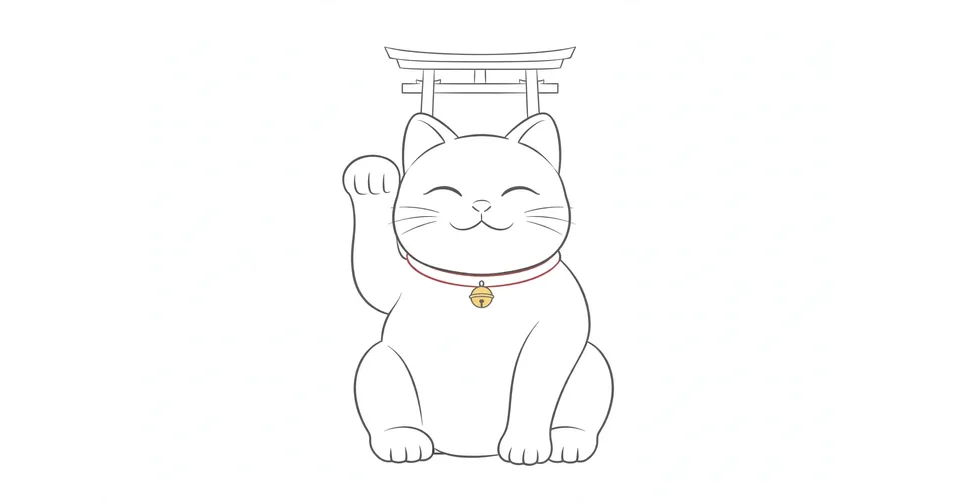
The maneki neko is easy to recognise and easy to misunderstand. Most visitors read the raised paw as a friendly wave, and most assume the cat is Chinese, because gold versions fill Chinatowns and Asian shops around the world. Both readings are wrong. The cat is Japanese, and its meaning has grown out of two old Tokyo legends, from a temple and a shrine.
This article explains what a maneki neko is, how to read its paw and its colours, and where the famous ones live.
What a Maneki Neko Is
A maneki neko is a figurine of a seated cat with one paw raised, usually ceramic and often painted white, gold, or calico. The name joins two Japanese words, maneku, to beckon, and neko, cat, and the written form is 招き猫. In Japan, you call someone toward you with the palm facing down and the fingers pointing down. The cat is not saying hello. It is saying come here.
The classic figure sits upright with its tail curled around its feet, wearing a collar with a small bell, and often holding a koban, an oval gold coin of the Edo period. The best known figures are ceramic, from pottery towns such as Tokoname and Seto in Aichi Prefecture. A ceramic maneki neko from a pottery town is a craft object. A plastic one from a vending machine is a souvenir.
Why the Cat Is Japanese, Not Chinese
The confusion is understandable. Gold cats with raised paws stand in the windows of Chinese restaurants and shops around the world, and most people who see them assume they come from China. They do not. The maneki neko comes from Japan, from the city of Edo, which is present day Tokyo, and every part of it, from its name to its gesture to its legends, is Japanese.
The figure belongs to the Edo period, which ran from 1603 to 1868. The earliest known image of the cat is a woodblock print from 1852 by Utagawa Hiroshige, showing the small figures being sold at a market in Edo. National Geographic makes the point plainly in the National Geographic piece on the history of the waving lucky cat. The cats are not Chinese at all. They are Japanese, and their stories all begin in Japan.
Japan has a habit of turning real animals into lasting symbols. The most famous example is Hachiko, the Akita dog who waited at Shibuya Station for an owner who would never come home. The story of Hachiko, the dog who waited nine years is about loyalty, while the maneki neko is about luck. In Japan, an animal can carry a whole idea, and the idea can outlive the animal by centuries.
The Raised Paw and What It Beckons
The raised paw is the whole point of the figure, and it is also the part most people get wrong. In the West, a raised hand with the palm facing out means hello or goodbye. In Japan, the beckoning gesture is made with the palm facing down and the fingers pointing down, as if scooping the air toward yourself. The maneki neko is making that gesture. It is pulling good fortune in, not pushing a greeting out.
Which paw is raised is said to change what the cat beckons. A right paw is said to invite money and good fortune. A left paw is said to invite people, which for a shop means customers. Both paws are said to invite both. Shop owners usually choose the left paw, and people buying a cat for the home usually choose the right paw.
This is a modern convention, not an ancient law, and makers and regions read the paws differently. Gotokuji Temple has a meaning of its own. Every cat at Gotokuji raises its right paw and holds no coin at all. The temple explains that its cat brings people and good connections, a word the Japanese call en, written 縁, but it does not hand out good fortune itself. The opportunity arrives. What you do with it is up to you.
The Legends of Gotokuji and Imado
Nobody knows for certain where the maneki neko began. Two places in Tokyo tell the two best known stories, and both are told as legends, not as history.
The first legend belongs to Gotokuji, a Zen Buddhist temple in the quiet district of Setagaya in Tokyo. In the 1630s, the feudal lord Ii Naotaka of the Hikone domain was returning from falconry when he passed the temple gate. A cat sitting at the gate raised its paw and seemed to beckon him inside. He followed it in, and moments later a violent thunderstorm broke. Grateful to the cat for saving his life, the lord became patron of the struggling temple, which later became the family temple of the Ii clan. In some tellings the cat is called Tama.
The second legend belongs to Imado, near Asakusa in Tokyo, and dates to 1852. An old woman living in Imado was so poor that she could no longer feed her pet cat, and she was forced to let it go. That night the cat appeared to her in a dream and said that if she made dolls in its image, it would bring her good fortune. She shaped small clay cats from Imado ware and sold them at a shrine. The figures became popular, the woman escaped poverty, and the early Imado cats, known as maru-shime no neko, became one root of the figure we know today. The American Ceramic Society tells both legends side by side in its account of the figure.
The two stories do not agree, and they do not need to. One is about a lord and a temple. The other is about a poor woman and a shrine. What they share is the idea at the heart of the figure, that a cat can invite good fortune.
The Colours of a Maneki Neko
The colour of a maneki neko is said to change the kind of luck it brings, just as the paw changes what it beckons. The meanings below are the ones most commonly given by shops and makers in Japan today.
| Colour | Said to bring |
|---|---|
| White | General good fortune and purity, the most classic choice |
| Calico | General good luck, the most traditional pattern |
| Gold | Wealth and prosperity |
| Black | Protection, and good luck that wards off evil |
| Red | Health, and protection against illness |
| Pink | Love and good relationships |
White and calico are the oldest choices, and they are still the ones you see most often in Japan. Calico, the three coloured coat, is the traditional pattern of the lucky cat, and it is the pattern of the cats at Gotokuji. Gold is the colour most often sold to tourists, because it looks like wealth. Black is said to protect the home and ward off evil. Red is given for health, and pink for love. As with the paws, these meanings are modern conventions, not ancient rules.
Where to See a Maneki Neko
The best place to see a maneki neko is Gotokuji Temple itself. The temple stands in a quiet neighbourhood in Setagaya, a short walk from Miyanosaka Station, and its grounds are open every day from 6 in the morning to 5 in the afternoon, with free entry. Inside, a small hall holds rows upon rows of white cats left by visitors. The temple office sells its own cats, in white, with the right paw raised and no coin, from 500 yen, and it closes at 3 in the afternoon. The temple asks visitors not to write on the cats themselves. Wishes go on a wooden ema plaque instead. The temple explains all of this on its official site.
Imado Shrine, near Asakusa, is the other great place to see the figure. The shrine is known for matchmaking, and its paired male and female cats are said to bring good relationships. Visitors stroke the stone cats by the main hall and wish for love or marriage. The shrine is small and easy to miss.
The pottery towns of Seto and Tokoname in Aichi Prefecture make many of the best ceramic figures, and Seto holds a lucky cat festival on a weekend in late September.
Japan's love of cats does not stop at figurines. On Tashirojima, a small island in Miyagi Prefecture, cats outnumber people, and the island is known around the world as cat island. The story of the island where cats outnumber people is a different kind of cat story, but it comes from the same affection. Temples in Japan are living places, not museums. The week of the Obon festival, when Japan honours its ancestors is one of the best times to see a temple as it is really used.
Maneki Neko Day and the Cat Today
The maneki neko even has its own day. The 29th of September is Maneki Neko Day in Japan, a commemorative day, not a national holiday. The date was chosen as a wordplay. Read as numbers, 9-2-9 echoes kuru fuku, which means fortune comes. The day was set in 1995 by the Japan Maneki Neko Club, and it is marked with festivals in ceramic cities such as Seto and Ise. Today the maneki neko is everywhere, and not only in Japan. Most of the cats sold outside Japan are gold, most of them are plastic, and most of them come with no story at all.
A Small Cat With a Serious Idea
I like the Gotokuji version of the cat best, because it refuses to sell luck as a finished product. Its cat brings you a meeting, a connection, or an open door, and then it stops. The rest is yours. Luck, in that version, is not a prize you buy. It is an invitation you still have to answer, and the answering is the work.
That is also why the cat deserves a little respect. It began in temples and shrines, and it still belongs to them in a way that a souvenir does not. If you buy one, buy it from a maker or a temple, not from a stall selling a hundred identical copies. A maneki neko is a small thing, but it carries a serious idea, that good fortune often arrives quietly, in the form of a stranger, a shelter, or a cat at a gate, and that noticing it is half the luck.
More in Culture & Society
- The Dalang, the Single Voice Behind Every Wayang Puppet
- Yadnya Kasada, the Festival That Feeds the Crater of Mount Bromo
- The 8050 Problem, When Retired Parents Still Carry Their Adult Children
- Anak Krakatau, the Child of Krakatoa That Keeps Growing
- Coelacanth and the Living Fossil of the Deep Sea
- Numazu Imperial Villa and Japan's Seaside Imperial Retreat
Latest posts
- Chankonabe, the Hot Pot That Feeds a Sumo Stable
- Koji Mold, the Quiet Engine Behind Japanese Food
- Moai, Okinawa's Lifelong Circles of Friends
- Otohime, the Small Sound That Protects Privacy in Japanese Toilets
- Yozakura, Japan's Cherry Blossoms After Dark
- Nomikai, the After-Work Drinks That Are Part of the Job in Japan
- Sakura Ebi and the Tiny Shrimp Only Suruga Bay Catches
- Senbon Matsubara and the Pine Grove of Numazu
- Shirasu and the Whitebait Bowls of Shizuoka
- Uchiura and the Quiet Fishing Village Behind Love Live Sunshine
- Love Live Sunshine and How Anime Changed Numazu
- Numazu Deep Sea Aquarium and the Creatures of Suruga Bay
- Numazu Himono and the Art of Dried Fish
- Numazu Port and the Freshest Seafood in Shizuoka
- Disaster Vending Machines in Japan That Give Their Drinks Away