Sapporo Snow Festival and the Ice City That Rises Every February
· 11 min read
The Sapporo Snow Festival turns Odori Park into a city of giant snow sculptures every February. Here is when to go, what the three sites offer, and how to plan the 2027 edition.
Every February, the middle of Sapporo turns into a city built from snow. For eight days, a park in the centre of Hokkaido's capital fills with sculptures taller than houses, streets glow with carved ice, and about two million people walk through it all in the cold. The Sapporo Snow Festival is Japan's most famous winter event, and it is also one of the simplest to enjoy, because the whole thing is free to enter.
The 77th Sapporo Snow Festival runs from Thursday, February 4 to Thursday, February 11, 2027, across three sites: Odori Park, Susukino, and Tsudome. The dates are already confirmed by the organising committee, so if February is on your mind, this is the week to circle. The closing day, February 11, is National Foundation Day, a public holiday in Japan, which makes the final day the busiest of the eight.
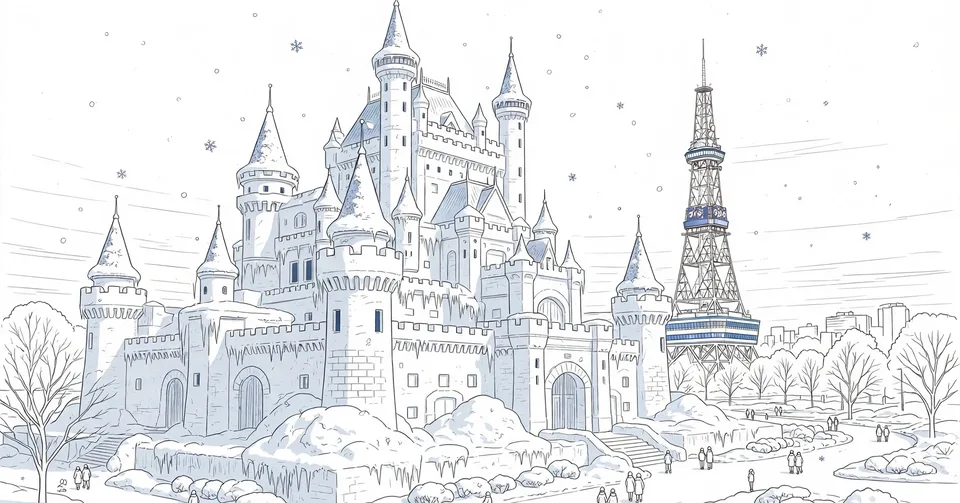
What makes the Sapporo Snow Festival special is not only its size, though the size is hard to believe until you stand in front of it. The largest sculptures reach about 15 metres high and 25 metres wide, which is roughly the height of a five storey building carved entirely from packed snow. It is the fact that the whole thing began with six small statues made by schoolchildren, and that ordinary people still build most of it today.
How the Sapporo Snow Festival Began
The Sapporo Snow Festival began in 1950, in the hard winters after the war. A group of local junior high and high school students built six snow statues in Odori Park, and people came to look. The next year it happened again, and then it kept happening, growing a little each time. Soldiers from the Japan Ground Self-Defense Force joined in the 1950s, bringing the trucks, the manpower, and the engineering skill to build sculptures on a scale no school group could manage.
By the 1970s the Sapporo Snow Festival had become an international event. The International Snow Sculpture Contest began in 1974, inviting teams from other countries to carve side by side with Japanese sculptors. The 2026 contest was the 50th, with ten teams taking part, from Austria, Finland, Poland, Mongolia, Thailand, Singapore, Indonesia, Hawaii, and the sister cities of Daejeon in South Korea and Portland in the United States. Finland won. The contest runs at Odori Park's 11-chome block, and visitors can watch the teams work during the first days of the festival, which is often more interesting than seeing the finished pieces.
The numbers tell the rest of the story. The 2026 Sapporo Snow Festival had about 210 snow and ice sculptures in total, 136 at Odori, 60 at Susukino, and 14 at Tsudome. The official count recorded about 2,539,000 visits at Odori and Tsudome combined, plus 1,378,000 at Susukino, though the sites count visits separately, so these are not unique visitors. The all time record is 2,737,000, set in 2019 at the 70th festival. For a city of about two million people, that is a remarkable crowd to absorb in eight days.
Three Sites, Three Different Moods
The Sapporo Snow Festival is not one place but three, and each one feels different. Knowing which is which saves a lot of walking in the cold.
Odori Park is the main site and the one most people mean when they say the Sapporo Snow Festival. The park is a long strip of green, or white in February, running about 1.5 kilometres through the centre of the city, from West 1-chome to West 11-chome, with the Sapporo TV Tower standing at the eastern end. The five large snow sculptures of the 2027 edition stand in blocks 4, 5, 7, 8, and 10, along with dozens of medium and small sculptures, citizen built statues, food stalls, and projection mapping shows on the biggest pieces after dark. Odori is lit until 22:00 each night. The sensible route is to enter at Odori Station, between blocks 3 and 4, walk west past the giants, and leave from Nishi-11-chome Station at the far end, so you never backtrack.
Susukino is the night site. Along Ekimae-dori, between South 4-jo and South 6-jo in Sapporo's entertainment district, about 60 ice sculptures stand in the neon light, lit until 23:00, or 22:00 on the final day. The ice is clear, almost glass like, and the sculptures catch the signs around them, so the whole street glows in colours that snow alone could never produce. There are ice bars where you can drink from a glass made of ice, which sounds like a gimmick until you try it and realise it is exactly the kind of small joy a winter festival is for.
Tsudome is the family site, a domed sports facility a little out of the centre. It has snow slides, snow rafting, and space for children to play, with opening hours of 10:00 to 16:00 and some activities charged separately. Tsudome usually opens a little earlier than the other two sites and closes a little earlier too, so check the official dates before planning a trip around it. If you are travelling with children, Tsudome is the part of the Sapporo Snow Festival they will remember longest. If you are travelling without them, Odori and Susukino are enough.
One change to know for 2027: the Japan Ground Self-Defense Force will build only one large snow sculpture, down from two in earlier years. And block 2 of Odori Park becomes a venue for the Sapporo International Art Festival 2027, so that stretch will not hold snow sculptures this time. These are small changes, but they show the festival keeps shifting shape instead of repeating itself exactly.
What the Sculptures Are Made Of
It is easy to assume the giant sculptures are carved from solid blocks of snow, like ice sculptures cut from a frozen lake. They are not. Each large sculpture starts as a wooden frame, and snow is packed around it, layer by layer, then shaped with chainsaws, chisels, and hand tools. The snow comes from Sapporo itself, trucked in from parks and open ground across the city, and the building takes weeks. The Self-Defense Force teams start work in January, long before the festival opens.
That is why the sculptures at the Sapporo Snow Festival can be so detailed. A castle, a temple, a famous building from another country, a character from an anime, all of it emerges from packed snow that has been shaped like clay. The themes change every year, and the full list is published on the official site from mid-December, along with the projection mapping schedule. If a particular sculpture is the reason for your trip, wait for that announcement before booking anything.
The citizen sculptures are the quiet heart of the Sapporo Snow Festival. In 2026, 79 of them stood at Odori, built by school groups, neighbourhood associations, and companies. They are smaller, rougher, and often funnier than the giants, and they are the direct descendants of those first six statues from 1950. Walking past them is a reminder that this festival was never meant to be a professional art show. It started as neighbours making something beautiful out of the snow they had to shovel anyway.
Planning a Visit to the Sapporo Snow Festival
The first decision is when to visit the Sapporo Snow Festival. The opening days are best for watching the International Snow Sculpture Contest teams at work, while the final weekend is best for the full display, with every sculpture finished and lit. The middle days are the calmest. February in Sapporo is properly cold, with an average daily maximum of about 0.4 degrees Celsius, so the cold is not a detail to plan around, it is the whole point. Dress for standing outside for two or three hours: insulated boots with grip, layers you can add or remove, gloves you can work a camera with, and something warm to drink between sites.
The second decision is where to sleep. Hotels near Odori Park sell out early, and central Sapporo hotels were largely sold out by late October 2025 for the 2026 festival. Book as early as you can, and if the centre is full, look at hotels near Sapporo Station, which is a ten to fifteen minute underground walk from Odori, or along the subway lines. The festival itself costs nothing to enter, so the budget goes to the hotel, the food, and the warming drinks.
Getting there is straightforward. Sapporo is about ninety minutes by air from Tokyo, and New Chitose Airport connects to the city by train in about forty minutes. Odori Station sits on three subway lines, and the park is directly above it. If you arrive by train from elsewhere in Hokkaido, Sapporo Station is the hub, and the underground walkway to Odori is heated, which matters more than it sounds after a day outside.
One practical note: the sculptures start coming down the morning after the festival closes. There is no extra week to catch them. If your flight lands on February 12, you have missed it, though the Sapporo Snow Sports Park runs February 12 to 14, 2027 at the Daiwa House Premist Dome, with snow activities for families who arrive just after the festival ends.
What to Eat Between the Sculptures
A winter festival in Hokkaido is also a food festival, and the food stalls of the Sapporo Snow Festival are part of the experience. Sapporo is the home of miso ramen, rich and warming, and a bowl of it after an hour in the cold is one of the best meals in Japan. Soup curry, another Sapporo invention, is the other local classic: a thin, spiced broth with chicken and vegetables, served with rice on the side. The stalls also sell grilled scallops and corn from Hokkaido farms, and hot amazake, the sweet fermented rice drink that warms your hands as much as your stomach.
My own view, after reading how visitors describe the festival year after year, is that the food stalls matter more than they look. The sculptures are the reason you come, but the stalls are the reason you stay for three hours instead of one. A festival you only look at is a museum. A festival you eat your way through is a memory. The Sapporo Snow Festival understands this, which is why the food is spread along the whole length of Odori Park instead of tucked away in one corner.
If you want a sit down meal, the Susukino area has ramen alleys and soup curry restaurants within a few minutes of the ice sculptures, and they stay open late, which suits a festival that is best seen after dark. Book ahead if you can, because the whole city is full that week.
Why the Sapporo Snow Festival Still Matters
There are bigger festivals in Japan, and there are older ones. What the Sapporo Snow Festival has that few others do is a direct line from its beginning to its present day. The students who built six statues in 1950 did not set out to create a tourist attraction. They made something out of the winter they were living in, and the city kept doing it, year after year, until the world started coming to see it.
That is also why the festival feels different from a theme park version of winter. The sculptures melt. The teams know it, the visitors know it, and the eight day limit is part of the appeal. You have to be there, in that week, in that cold, or you miss it entirely. In a world where almost everything can be watched later on a screen, the Sapporo Snow Festival is stubbornly, wonderfully tied to one place and one week.
The 2027 Sapporo Snow Festival runs February 4 to 11, 2027. The dates are confirmed, the sites are free, and the sculptures are already being planned. If you have ever wanted to see Japan in winter at its most theatrical, this is the week to go. Dress warmly, arrive hungry, and stay until the lights go out at Odori, because the park at 22:00, with the crowds thinning and the giants glowing against the snow, is the moment the whole festival makes sense. For more on Japan in winter, see Japan's Winter Illuminations Turn Dark Nights Into Light, and for the hot spring side of a cold trip, see Onsen Etiquette and the Unwritten Rules of Japan's Hot Springs. Practical details for the 2027 edition are covered in the Sapporo Snow Festival 2027 guide by WaTabi and the self-guided planning guide by Self Guide Japan.
More in Food & Travel
- Satay and the Smoke That Carries Indonesia to the World
- Tumpeng Is the Rice Cone Java Serves When It Wants to Say Thanks
- Japan's Winter Illuminations Turn Dark Nights Into Light
- Lake Toba and the Supervolcano That Made the World's Largest Volcanic Lake
- Raja Ampat and the Coral Kingdom at the Edge of Indonesia
- Tokyo Skytree and How Japan Built the World's Tallest Tower
Latest posts
- Rangda Is the Witch Queen Bali Never Lets Win
- The Japanese School Uniform and the Story Behind the Sailor Suit
- Aikido and the Martial Art That Refuses to Fight Back
- Barong Is the Lion Bali Calls Out When the Village Needs Protection
- Onsen Etiquette and the Unwritten Rules of Japan's Hot Springs
- Setsubun, the Bean Throwing Festival That Chases Winter Away
- Karate, the Empty Hand That Became Japan's Most Exported Martial Art
- Kemari Is the Ball Game Japan Played Without Trying to Win
- Chagama Is the Kettle That Never Leaves the Tea Room
- Judo, the Gentle Way Japan Gave the World
- Matsumoto Temari Turns Mountain Cocoons Into Wishes You Can Hold
- Nambu Tekki Is the Iron That Outlasted the Lords Who Ordered It
- Forest Bathing in Japan, the Quiet Science of Shinrin-Yoku
- Tokyo Tower and the Orange Giant That Refused to Be Replaced
- Emoji, the Tiny Pictures Japan Gave the World