Goshuin Collects Your Shrine Visits One Red Stamp at a Time
· 20 min read
A goshuin is a hand written seal and calligraphy record of a visit to a shrine or temple in Japan, collected in a special accordion book called a goshuincho for a small offering of a few hundred yen.
Walk into a shrine office in Japan and you may see a small queue of people holding open books, waiting for a priest or a staff member to write a goshuin in them with a brush. They are not buying a ticket. They are collecting a hand written seal that records their visit in red ink and black calligraphy.
A goshuin is proof that you were there, made by hand, on the day, in a book you carry from place to place. Each one is different, because each one is written by a different hand, in a different season, at a different shrine or temple. Over time the book becomes a diary of your travels that no camera can quite match.
That is the simple appeal of the custom. It costs only a few hundred yen, it takes only a few minutes, and it turns an ordinary sightseeing stop into a small ceremony. The rest of this article explains what the stamp is, how the custom began, what it costs, and how to collect your first one without getting anything wrong.
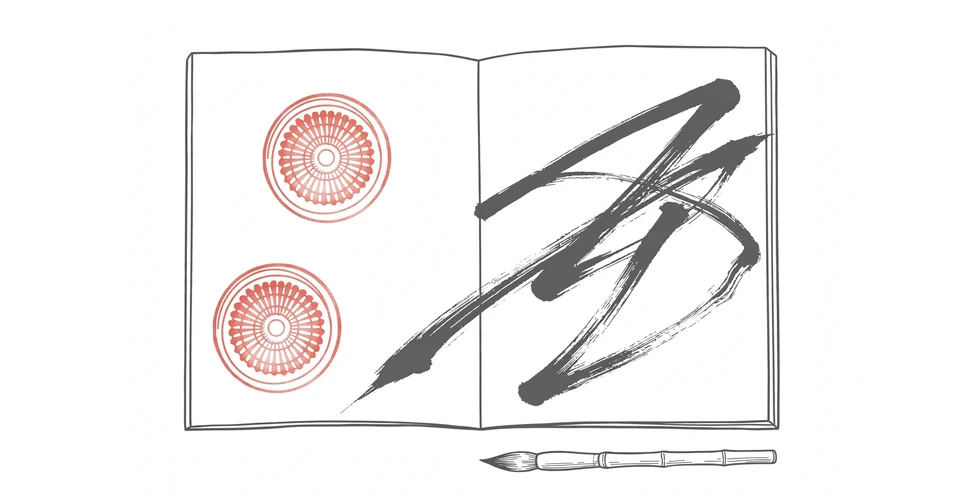
The word itself gives the first clue. Goshuin means honorable vermilion seal, and the vermilion is the red of the stamp pressed onto the page. Over that red seal, someone writes the name of the shrine or temple and the date of your visit in black ink, usually with a brush. The combination of red seal and black writing is what makes a goshuin recognizable at a glance, and it is also what makes each page feel like a small piece of art.
You do not need to be a believer to receive one, and you do not need to speak Japanese. Anyone can ask for one, tourists included, and the people behind the counter are used to visitors who are collecting their first. The only real requirement is a proper book to receive it in, and a little patience while it is written.
What a goshuin actually is
A goshuin is a record of a visit, not a souvenir in the usual sense. It is given at Shinto shrines and Buddhist temples as proof that you came, prayed, and were received. The red seal is the mark of the place, pressed with a carved stamp, and the black calligraphy names the shrine or temple, often with the name of its deity or its main hall, and the date.
No two goshuin are ever the same. Even at the same shrine, the writing changes a little with the person holding the brush and the season of the visit. Some are bold and spare, a few strong strokes and one large seal. Others are elaborate, with several seals and flowing characters that fill the page. Collectors talk about this the way art lovers talk about prints, and in a sense that is what a goshuin is, a small original made for one person on one day.
That is also why the seal is not a stamp from a stamp rally. A stamp rally asks you to collect marks as proof of where you have been, and the marks are all identical. A goshuin is closer to a protective charm, a record of a bond between you and the place you visited. For many Japanese people, the book is a personal object, almost private, and it is not something to give away or sell. Each page holds a visit, and the visits add up to a life.
The distinction matters because it shapes how you should treat the book. You do not flip through someone else's goshuin book the way you would flip through a photo album, and you do not ask a shrine to write a goshuin in an ordinary notebook. The book is dedicated to this one purpose, and the pages inside it belong to the places that filled them.
Where the custom began
Nobody knows exactly how the custom began. The common view, repeated by guides who have studied the history, is that several hundred years ago pilgrims copied out Buddhist scriptures, offered the copies to temples, and received a seal in return as a receipt. The seal proved that the offering had been made and the pilgrimage completed. Today you do not need to offer anything. Visiting is enough, and the small offering you pay at the counter has replaced the copied scripture.
That history explains why the goshuin feels both religious and practical. It began as paperwork, a receipt for a sacred transaction, and it kept the form of a receipt even after the transaction changed. The date on the page is still there, like a date on a receipt, and the seal is still the stamp of the institution that received you.
It also explains why the custom belongs to both shrines and temples. The custom grew out of Buddhism, but Shinto shrines adopted it, and today you can collect a goshuin at both kinds of place. The two traditions have lived side by side in Japan for centuries, sharing buildings, festivals, and customs, and the goshuin is one of the things they share. Japan Guide notes that the architecture and features of Shinto shrines and Buddhist temples have melted together over the centuries, and the stamp book is a small, portable example of that long blending.
My own feeling is that the receipt origin is what keeps the goshuin honest. It was never meant to be a product, and it still is not one, quite. You pay a small offering, you receive a record, and the record is worth more than the money because a person made it for you while you waited. That is a fair exchange, and it is one of the few exchanges in modern travel that still feels personal.
The goshuincho, and why the book matters
A goshuin is received in a goshuincho, a dedicated accordion fold book made for this one purpose. The book opens out like a paper screen, with thick washi paper that takes brush and ink without bleeding through. It is not a diary and not a sketchbook. Only goshuin go in a goshuincho, and that rule is taken seriously enough that many shrines will refuse to write in an ordinary notebook.
You can buy your first goshuincho at almost any major shrine or temple, usually at the same counter that sells charms. The first page often already holds that place's goshuin, so your collection begins the moment you buy the book. Bookshops and stationery shops sell them too, and some of those are beautiful objects in their own right, with covers in indigo, crimson, or gold leaf patterns. A goshuincho from a shrine or temple usually costs between 1,000 and 2,500 yen, while a designer book from a shop can cost 2,000 to 6,000 yen, according to a detailed guide to goshuin costs.
The size matters less than the paper. Most books are about the size of a small paperback, and they fold out to give the writer a flat surface. Because the pages are folded rather than bound, a writer can open the book at exactly the page you want, write across the fold, and hand it back without disturbing the pages around it. It is a clever design, and it has barely changed in centuries.
Choose a cover you like, because you will carry this book for years. The covers are part of the pleasure, and collectors often own several books at once, one for each region or each trip. Some keep a separate book for shrines and a separate book for temples, a question I will come back to below. Others keep a single book for everything and let the pages mix. Either way, the book is yours, and the choice of cover is the first small decision in a hobby that is full of small decisions.
How much a goshuin costs
A standard goshuin costs about 300 to 500 yen. That figure appears in guide after guide, and it is the figure given in the earlier article on this site about the offering coin, which notes that a goshuin stamp typically asks for a small offering of around 300 to 500 yen. It is a small sum, roughly the price of a coffee, and it has stayed small because the payment is understood as an offering, not a price.
There is some doubt at the edges, and it is worth stating plainly. A few recent guides note that 500 yen is now the standard at some well known shrines and temples, and that special or elaborate goshuin can cost 1,000 yen or more. The 300 to 500 yen range is still the safest general figure, but it is no longer universal, and a famous shrine with a seasonal design may ask for more. The honest advice is to carry small change and check the sign at the counter, because the fee is usually posted there.
The book itself is the larger expense, and only once. A goshuincho from a shrine or temple costs about 1,000 to 2,500 yen, and a cover for the book, if you want one, adds another 1,000 to 5,000 yen. After that, each new page costs only the price of the stamp. It is one of the cheapest hobbies in Japan, and the cost stays low even if you collect for years, because the only thing you are paying for, page after page, is a few hundred yen and a few minutes of a stranger's time.
Cash is still king at the goshuin counter. Most places take cash only, so carry plenty of 100 yen coins and a few 500 yen coins. Do not hand over a 10,000 yen note at a sacred counter and expect change to be easy. The offering is called hatsuhoryo, a first fruits offering, and the name itself tells you how it is understood. It is an offering, not a retail purchase, and treating it as one keeps the exchange in the right spirit.
How to ask for one, step by step
Collecting one is simple, and the whole process takes only a few minutes. The order matters, though, because the goshuin is proof of a visit, and the visit comes first.
First, pray. Go to the main hall, offer your coin, and make your prayer before you ask for anything. The small coin you drop into the offering box is saisen, and the short ritual that follows it is the heart of the visit. If the shrine is busy, it is fine to hand over your book first and pray while you wait, but the prayer should not be skipped. A stamp without a visit is just a piece of paper.
Second, find the counter. It is usually near the place that sells charms, and a sign reading the characters for goshuin marks the spot. At a large shrine there may be a separate window, and at a small one the counter may be the shrine office itself. If you cannot find it, ask. The words "goshuin, please" are enough, and the staff will understand.
Third, open your book and hand it over. Open it at the page you want the goshuin written on, and present it open. If there is a queue, you may receive a number ticket and be called later. While the goshuin is being written, wait quietly and do not take photographs of the person writing. The writing is a small act of care, and watching it in silence is part of the experience.
Fourth, pay in cash. The fee is usually paid when you hand over the book or when you collect it. Have the coins ready, and receive the book with both hands when it is returned to you. Look at the page before you put the book away. The ink may still be damp, and the seal may need a moment to settle.
On busy days and festival days, you may receive a goshuin written in advance on a sheet of paper, called a kakioki goshuin, instead of one written directly into your book. Glue it into your book at home with a glue stick or tape glue, and avoid liquid glue, which makes the paper wrinkle. The sheet is a real goshuin, made for visitors when the counter cannot keep up with the queue, and it counts just the same.
One book or two
One question comes up in almost every guide to the goshuin, and the guides do not fully agree. Should you keep separate books for Shinto shrines and Buddhist temples, or is one book for everything fine?
The strict view is that shrines and temples should be kept apart. Some traditionalists consider it disrespectful to mix the two in a single book, and a few strict temples, particularly in the Nichiren school and at some ancient Kyoto shrines, will refuse to write in a book that already holds seals from the other tradition. The cautious advice is to keep one book for shrines and one for temples, and that is what many serious collectors do.
The relaxed view is that there is no rule. Many shrines and temples today will write in any book you hand them, and plenty of casual collectors use a single book for everything without ever being refused. One detailed guide puts it plainly, saying there is no rule, some people do mind, and separate books are the safe choice.
My own view is that the safe choice is the kind one, and it costs so little that there is no reason not to take it. A second book costs about the same as a few stamps, and carrying two books is a small burden. If you collect with two books, you will never be the person a temple turns away, and you will never have to wonder whether you have caused offense. The doubt itself is the reason to separate them. When the sources disagree and the cost of caution is tiny, caution wins.
There is one more separation worth knowing. Temples of the Jodo Shinshu school, such as Nishi Honganji and Higashi Honganji in Kyoto, do not give goshuin at all, as a matter of policy. If you arrive at one of those temples with your book open, you will be politely refused, and the refusal is not personal. It is doctrine, and the kindest response is to accept it, put the book away, and enjoy the temple for what it is.
Where to collect your first goshuin
You can collect a goshuin at many temples and shrines across Japan, and the best first one is usually the first major place you visit. In Kyoto, for example, you can collect several in a single day, each one different, each one dated the same day, each one a record of a different corner of the city.
Kifune Shrine, north of Kyoto beside a mountain river, is a good place to start. It is the head shrine of the god of water, and it is known for its water fortunes, paper that reveals its words when floated on water. The goshuin counter is at the main shrine, and the walk up through the forest is part of the visit.
Kiyomizu-dera, the temple famous for its wooden stage, has three counters in its grounds, each with a different goshuin, and all of them sit inside the paid area, so you pay the entrance fee too. It is quiet between 8 and 9 in the morning, and an early visit means a short queue at the counter.
Fushimi Inari Taisha, the shrine of a thousand red gates, has a counter near the main hall and more counters along the path of gates, and some goshuin are only given to people who climb. The climb is long, and the higher counters are quieter, which makes the stamp at the top feel earned in a way the one at the bottom does not.
Kinkaku-ji, the temple of the golden pavilion, keeps its counter at Fudo Hall, near the exit, so the goshuin is the last thing you collect before you leave. That order feels right. You see the pavilion, you walk the gardens, and then, on your way out, you receive the record of the visit.
If you are visiting at New Year, be ready for a crowd. The first shrine visit of the year, hatsumode, draws millions of people to famous shrines in the first days of January, and the goshuin counters are among the busiest places in the grounds. Some shrines stop giving goshuin during the busiest days, and some give only prewritten sheets. If the stamp matters to you, visit on an ordinary day, when the writer has time and the queue is short.
The special ones worth knowing about
Most stamps are black ink and a red seal, and that is enough. But some places offer special goshuin that exist only there, or only for a short time, and those are the ones collectors talk about.
Seasonal goshuin change with the time of year. A shrine may offer a cherry blossom design in spring, a maple leaf in autumn, or a snow scene in winter, each one available for a few weeks and then gone. The design is usually printed or stamped in color, with the calligraphy added by hand, and the price is higher than a standard goshuin, sometimes 800 to 1,500 yen.
Paper cut goshuin are the most striking of the special kinds. The design is cut from Japanese paper, in the shape of a temple hall or autumn leaves, and the result looks more like a piece of art than a stamp. Ninna-ji in Kyoto offers a seasonal paper cut goshuin of its Kannon Hall wrapped in autumn colors, priced at 1,500 yen, and many people frame it instead of gluing it into their book. It is a goshuin and a picture at once, and the price reflects that.
Limited goshuin mark anniversaries, festivals, and special occasions. A shrine celebrating a rebuilding, a temple marking a founder's anniversary, or a place hosting a rare festival may issue a goshuin that will never be made again. These are the ones that draw queues before the counter opens, and the ones that collectors travel for. They are also the ones most likely to be sold on afterwards, which is a pity, because a goshuin is proof of your own visit, and a bought one proves nothing except that someone else went.
My own advice is to collect the ordinary ones first. A standard goshuin, written by hand on an ordinary day, is the heart of the custom, and the special ones are decorations on top of it. If you chase only the rare designs, you will spend your trip in queues, and you will miss the quiet shrines where the writer has time to make a beautiful page. The ordinary goshuin, collected slowly, makes the better book.
Mistakes visitors make, and how to avoid them
Most mistakes around the stamp are small, and none of them will ruin a visit. But a few are worth knowing, because they are easy to avoid.
The first is asking for the goshuin before you pray. The stamp is proof of a visit, and a visit means standing before the hall, offering your coin, and taking a moment to pray. Handing over the book first and praying while you wait is accepted when the shrine is busy, but skipping the prayer entirely turns the goshuin into a purchase, and that misses the point of the custom.
The second is using the wrong book. An ordinary notebook, a diary, or a sketchbook will usually be refused, and the refusal is not rudeness. The goshuin belongs in a goshuincho, with its thick washi paper and accordion folds, because the paper is part of the craft. If you forgot your book, many places will give you a goshuin on a sheet of paper, and you can also buy a new book on the spot. There is almost always a way forward, and asking politely is all it takes.
The third is photographing the writing. While the goshuin is being written, wait quietly and do not take photos of the person at work. The writing takes concentration, and a camera pointed at the counter breaks it. You can photograph your own page afterwards, once the ink is dry, and that photograph is yours to keep.
The fourth is treating the goshuin as a gift. Do not give goshuin away, and do not buy one for someone else, because a goshuin is proof of your own visit. A page written for you, in your book, on the day you were there, cannot be transferred to another person without losing what makes it meaningful. If a friend wants a goshuin, the kindest gift is a blank goshuincho and an invitation to come with you next time.
The fifth is giving the book away to be sold. Goshuin are sometimes listed for sale online, especially the rare and limited ones, and the trade is frowned upon by almost everyone who collects seriously. The custom is personal by design, and selling a record of your own visit turns a sacred object into merchandise. Keep the book, even the pages you do not love, because the collection is the story of where you have been.
The sixth is expecting every place to offer one. Not every shrine and temple gives goshuin, and some stop during festivals, purification ceremonies, or busy periods. Check the shrine website for suspension notices before traveling specifically for a stamp, because a wasted journey is an avoidable disappointment. The counter may also close early, or run out of prewritten sheets, and the staff will not always be able to explain why in English. Accept the answer with grace and move on. The shrine is still worth the visit.
Why a small red stamp stays with you
The custom survives because it asks so little and gives so much in return. It asks for a few hundred yen, a few minutes, and a proper book. In exchange, it gives you a record that is made by hand, dated, and unique, a page that no one else in the world owns.
That is a rare thing in modern travel. Photographs are free and infinite, and they blur together in a phone within weeks. A goshuin is the opposite. It is scarce, because it can only be made in one place on one day, and it is physical, because it is ink on paper that you can hold. Years later, when you open the book, the page will bring back the weather, the walk, the sound of the gravel, and the person you were with. A photograph shows you what the shrine looked like. A goshuin shows you that you were there.
The custom also teaches something quiet about how to travel. A goshuin cannot be collected quickly, because each one requires a visit, a prayer, a queue, and a wait. It slows you down, and slowing down is the point. A trip measured in stamps is a trip measured in places you actually stood in, not places you passed through. The book fills slowly, one page at a time, and the slowness is what makes it worth keeping.
So buy a book at the first shrine you visit, and let it fill at its own pace. Offer your coin, make your prayer, hand over the open page, and wait while someone writes your visit into it. Then put the book away carefully, step aside for the next person, and walk on. The red stamp will dry, the ink will settle, and the page will be there years from now, still holding the day you collected it.
More in Culture & Society
- Hamaya Is the Arrow That Breaks Demons at New Year
- Saisen Is the Small Coin You Offer Before You Pray
- Japanese Gardens and the Quiet Art of Borrowed Scenery
- A Himorogi Is the Shrine Before Shrines Had Walls
- Sakaki Is the Sacred Tree Shinto Cannot Do Without
- Tamagushi Is the Sakaki Branch You Offer to the Kami
Latest posts
- Tenkasu Turns Tempura Scraps Into Japan's Favorite Crunch
- Tanuki Udon Is the Bowl Named After a Raccoon Dog
- Wagyu Beef and Why One Small Steak Costs More Than Dinner
- Inari Sushi Turns Fried Tofu Into a Portable Feast
- Aburaage Is the Fried Tofu Japan Simmers Sweet
- The Miko Who Dance Between People and Kami
- Kotodama and the Spirit That Lives Inside Japanese Words
- Japanese Cheesecake and the Fluffy Cake That Jiggles
- Kagura Is the Sacred Dance Shinto Still Performs
- Norito Give a Shinto Ceremony Its Voice
- The Gohei Wand Carries the Kami Into the Ceremony
- Kitsune Udon Is the Bowl the Fox Would Order
- Origami and How a Single Sheet of Paper Became Japan's Quiet Art
- A Hishaku Is the Bamboo Ladle That Starts Every Shrine Visit
- A Kitsune Is the Fox Messenger Who Guards the Shrines of Japan