The Heart Sutra Fits the Whole of Buddhism on One Page
· 10 min read
The heart sutra is the shortest famous text in Mahayana Buddhism, and it still carries the whole teaching in about 260 Chinese characters. This is what it says, where it came from, and why Japanese temples chant it every day.
It takes about three minutes to chant the Heart Sutra from beginning to end, and in those three minutes a hall full of voices says something extraordinary. The text denies the existence of form, feeling, perception, the senses, the Four Noble Truths, and even wisdom itself, then ends with a cheerful mantra and everyone bows. A first time listener could be forgiven for wondering whether they heard it right.
They did. The Heart Sutra is famous precisely because it says the unsayable in the smallest possible space. Its Sanskrit title, Prajnaparamita Hrdaya, means the Heart of the Perfection of Wisdom, and the text lives up to the name. It is a summary of a whole library of wisdom literature, the Prajnaparamita sutras, some of which run to 100,000 lines, compressed into a single page that a child can memorise.
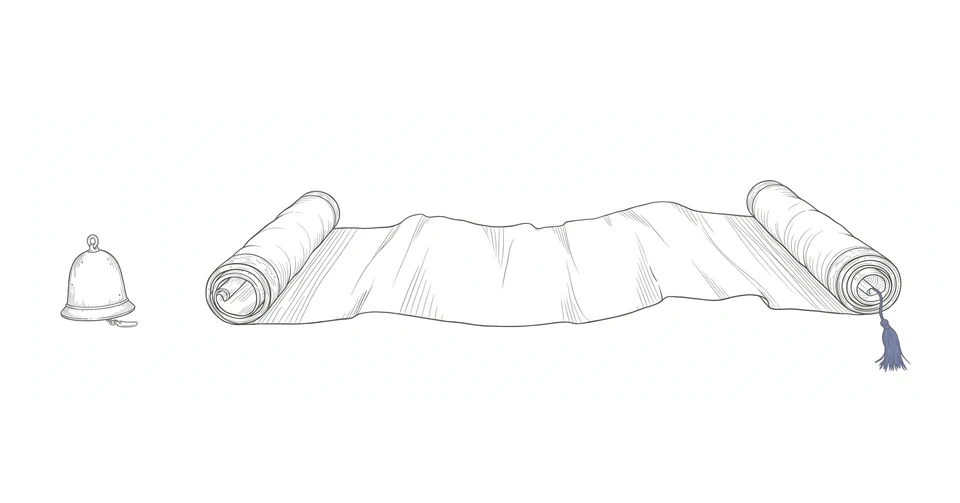
That compression is why the Heart Sutra is chanted every day across Japan, in Zen temples, Shingon temples, Tendai temples, and in ordinary homes at the family altar. It is, by one careful estimate, the most frequently used and recited text in the entire Mahayana Buddhist tradition, and the single most commonly recited, copied, and studied scripture in East Asian Buddhism. When a temple needs one text that says what Buddhism is, this is the one it reaches for.
What the heart sutra actually says
The Heart Sutra is a conversation, not a lecture. The bodhisattva Avalokitesvara, known in East Asia as Guanyin or Kannon, is deep in meditation on the perfection of wisdom when the monk Sariputra asks him how a person should practise. Avalokitesvara answers, and his answer is the whole text.
His first claim is the one everyone remembers. Looking at the five aggregates that make up a human being, form, feeling, perception, mental formations, and consciousness, he sees that all five are empty. Then comes the line that has echoed for more than a thousand years. Form is emptiness, emptiness is form. Feeling, perception, mental formations, and consciousness are the same.
The Heart Sutra then does something bolder. It walks through the core teachings of Buddhism one by one and says that, in emptiness, none of them apply. There is no eye, no ear, no nose, no tongue, no body, no mind. There is no ignorance and no end of ignorance. There is no suffering, no cause of suffering, no end of suffering, and no path. There is no wisdom and no attainment. A reader meeting Buddhism for the first time could be forgiven for thinking the text has just cancelled the religion it belongs to.
It has not. The point is subtler, and it is the reason the Heart Sutra has survived so long. The text is describing what reality looks like from inside a deep state of meditation, a state in which sense experience has fallen away and the practitioner is conscious but no longer grasping at anything. In that state there is nothing to see, nothing to hold, and nothing to attain, and the Heart Sutra reports that honestly. The teachings are not false. They are descriptions of the ordinary world, and in the state the sutra describes, the ordinary world has dropped out of view.
Then the Heart Sutra turns practical. Because there is nothing to attain, the bodhisattva who relies on the perfection of wisdom has no fear and no obstruction in the mind, and so reaches nirvana. All the buddhas of past, present, and future rely on the same wisdom. The text ends with a mantra, a short string of syllables to be chanted rather than analysed. Gate gate paragate parasamgate bodhi svaha, which is usually translated as gone, gone, gone beyond, gone completely beyond, awakening.
How the heart sutra reached Japan
The Heart Sutra travelled to Japan the way most Buddhist texts did, through China. The version chanted in Japanese temples is the Chinese translation made by the pilgrim and translator Xuanzang, and it runs to just 260 Chinese characters. Xuanzang learned the text from a teacher in Sichuan before his famous journey to India, and according to his biography he chanted it whenever he was in danger on the road. He did not translate it until some years after his return to China, and his version was the first to use the title Heart Sutra.
That short Chinese text became the standard across East Asia. It is chanted in Sino-Xenic pronunciation by Chan, Zen, Seon, and Thien schools in China, Japan, Korea, and Vietnam, and it is the version carved on temple walls, copied by calligraphers, and printed in prayer books. The earliest dated copy we still have is a stone stele from 661 CE, engraved only twelve years after Xuanzang made his translation. An even older undated Sanskrit manuscript on palm leaf, kept at Horyu-ji Temple in Japan and now in the Tokyo National Museum, may date to the 7th or 8th century.
There is a twist in the story that scholars only worked out in recent decades. For a long time everyone assumed the Heart Sutra was composed in India in Sanskrit and then translated into Chinese. In 1992 the scholar Jan Nattier argued the opposite, that the text was composed in China, assembled from passages of the Large Perfection of Wisdom Sutra in Kumarajiva's 5th century Chinese translation, and only later translated back into Sanskrit. Later research has confirmed much of her argument, including the presence of a distinctly Chinese idiom in the Sanskrit version. The Heart Sutra article on Wikipedia lays out both sides of this debate in full, including the scholars who still defend an Indian origin.
I find this argument oddly reassuring rather than troubling. A text about emptiness turns out to have no single fixed origin either, and it survives the discovery perfectly well. Nobody in a Japanese temple stopped chanting the Heart Sutra because a scholar suggested it was written in China. The text works in practice, and practice is where it lives.
Why the heart sutra is chanted every day
The Heart Sutra is short enough to chant daily and deep enough to spend a lifetime on, and that combination explains its place in Japanese temple life. In the dawn service called gongyo, the Heart Sutra is often the centrepiece, chanted while the hall is still dark and the day has not properly begun. The chanting is kept on pace by a mokugyo, the hollow wooden fish drum whose steady knock holds a whole hall of voices together, one beat at a time.
The rhythm matters. A long sutra chanted by dozens of people drifts apart within a page or two, some voices hurrying, some dragging. The Heart Sutra is short, so the whole hall can hold it together, and the mokugyo keeps the pace honest. The result is less like reading and more like breathing together, and that shared breath is part of the teaching. The text says there is no separate self to hold on to, and the chanting gives the body a brief experience of what that might feel like.
The Heart Sutra is also chanted at funerals, at memorial services, and at home before the family altar. It is copied by hand as an act of devotion, a practice called shakyo, in which writing out the 260 characters slowly, one by one, becomes a form of meditation in itself. Some temples offer shakyo sessions to visitors, and the Heart Sutra is the usual text, because a beginner can finish it in one sitting and still feel they have done something complete.
There is a practical reason the Heart Sutra suits memorisation so well. Its structure is a list of negations, and lists are easy to hold in the mind. No form, no feeling, no eye, no ear, no suffering, no path, no attainment. The chant moves forward by taking things away, and each removal lightens the load a little more, until there is nothing left to carry and the mantra arrives like a release.
What emptiness means in practice
Emptiness is the word that causes the most trouble in the Heart Sutra, because in English it sounds like nothingness, a void, a denial that anything exists. The Sanskrit word is sunyata, and it means something closer to absence than to nothingness. Things are empty of a fixed, independent self, not empty of existence. A cup is empty of being a cup forever, since it was clay once and will be shards one day, but it still holds tea.
Recent scholarship has pushed this reading further. In a history of the Heart Sutra at Tricycle, the scholar Jayarava Attwood argues that the text is best read as a description of a meditation practice, the yoga of nonapprehension, in which the practitioner withdraws attention until sense experience ceases altogether. Read that way, the negations are not metaphysical claims about the world. They are a report from inside the practice. There is no form because, in that state, form is not being experienced.
That reading makes the Heart Sutra less of a riddle and more of an instruction. The text is not asking the reader to believe that the world does not exist. It is saying that if you sit still long enough and let go of grasping, the world as you usually experience it, as a collection of solid things with fixed names, quietly stops appearing. What remains is not nothing. It is awareness without an object to cling to, and the Heart Sutra calls that freedom.
I think this is why the Heart Sutra keeps finding new readers outside Buddhism as well. Its claim is testable in a small, ordinary way. Anyone who has ever been so absorbed in a task that the room disappeared knows a faint version of what the text describes. Attention narrows, the sense of self thins out, and for a moment there is only the work. The Heart Sutra takes that familiar experience and follows it to its end.
A short text that keeps working
The Heart Sutra has been chanted, copied, carved, and argued over for more than thirteen centuries, and it shows no sign of wearing out. Scholars still debate where it was written and what exactly it means. Calligraphers still copy its 260 characters. Monks still chant it before sunrise. That durability is the best evidence for the text's own claim. A teaching that fits on one page, that survives translation, scholarly doubt, and the slow drift of centuries, has earned its place at the centre of the tradition.
The Heart Sutra does not ask for belief. It asks for three minutes of attention, a steady beat to follow, and a willingness to let one thing after another go. For a text that says there is nothing to attain, it has attained something remarkable. It has become the page the whole of Buddhism fits on.
More in Culture & Society
Latest posts
- Sambal Matah Wakes Up Every Balinese Plate Raw
- The Javanese of Suriname and the Language They Kept Alive
- Nembutsu Is the Name Japan Calls Out to Amida
- Sate Lilit Wraps Bali's Feast Around a Lemongrass Stick
- Babi Guling Turns a Whole Pig Into a Balinese Feast
- Konpon Daito Towers Over Koyasan in Vermilion and Gold
- Lawar Is the Dish Bali Serves When the Whole Village Eats
- Goma Dofu Is the Forty Minute Tofu Ground by Hand
- Garuda Wisnu Kencana Rises Above Bali's Southern Cliffs
- Wuku Gives Every Week in Bali a Name
- A Penjor Turns a Whole Street Into an Offering
- A Mokugyo Keeps the Beat of the Chant
- Soba, the Buckwheat Noodles Japan Slurps on the Last Night of the Year
- Udon in Kagawa, Where Noodles Are a Way of Life
- Garuda Pancasila Carries Five Principles on One Bird