The History of Ramen, From China to Japan's Soul Food
· 9 min read
The history of ramen begins with Chinese wheat noodles in Yokohama and ends with a bowl that Japan made its own. This is how it travelled, changed, and became a national habit.
Ramen is the most ordinary miracle in Japan. A bowl of wheat noodles in hot broth, eaten standing at a counter or sitting shoulder to shoulder with strangers, costs less than 1,000 yen and takes ten minutes. Yet the history of ramen stretches back more than a century, across the sea from China, through war and hunger, and into every corner of Japanese life.
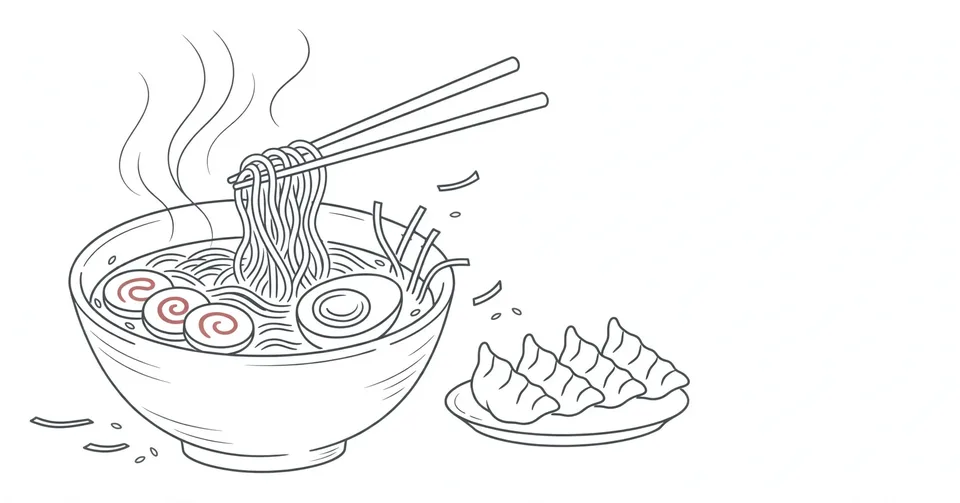
The short answer is that ramen is Chinese food that Japan adopted, adapted, and then made entirely its own. The noodles came from China in the late 19th century, through the port of Yokohama. The soup, the toppings, and the rules of eating it are Japanese. The instant version, invented by Momofuku Ando in 1958, is a separate story, told in full in the article about how a bowl of noodles changed the world. This article is about the fresh bowl, the one made to order in a ramen shop, and the history of ramen that made it possible.
That history of ramen is worth knowing, because it explains why ramen tastes the way it does, why it costs so little, and why a dish that arrived as foreign food now feels more Japanese than almost anything else on the menu.
How ramen came from China
The history of ramen begins in Yokohama, the port city that opened to the world in 1859. Chinese traders and workers settled in the Chinatown there, and they brought wheat noodles with them. The dish they served was a simple soup noodle, and in the early years it was sold as Chinese food, not Japanese food.
One of the first places to serve it to a Japanese audience was a restaurant called Rairaiken, which opened in the Asakusa district of Tokyo in 1910. Its founder, Ozaki Kanichi, had worked in Yokohama, and he hired Chinese cooks from the port city. The shop became famous, and its way of making the dish, wheat noodles in a clear soy sauce broth with slices of roast pork, set the pattern for what Tokyo ramen would become.
At this stage the dish did not yet have a settled name. Early menus called it Shina soba, meaning Chinese soba, a name that later fell out of use. The word ramen itself comes from the Chinese lamian, the hand pulled noodle, though the Japanese version was cut rather than pulled. Names changed, but the idea stayed the same: a hot bowl, eaten quickly, that left you full. That is the first lesson of the history of ramen. The name changed, the bowl stayed.
The history of ramen in these early decades is a story of ports and cities. It travelled from Yokohama to Tokyo, and from Tokyo to the other big cities, carried by cooks and by demand. It was working food from the start, cheap and fast, and that never changed.
The post-war boom
The history of ramen changed completely after the Second World War. Japan in the late 1940s was short of food, and wheat flour arrived in large amounts as American aid. At the same time, many people were moving to the cities for work, and they needed meals that were cheap, quick, and filling.
Ramen answered all three needs at once. Street stalls, called yatai, appeared in cities and near stations, and factory workers and students queued for them. The broth was made from pork bones, chicken, or dried fish, whatever was at hand, and the noodles were made from the cheap wheat flour that was suddenly everywhere.
By the 1950s and 1960s the bowl had spread across the whole country. Small shops opened in every town, and each region began to develop its own version. The post-war years turned a port-city import into a national habit, and the habit stuck because it solved a real problem. People were busy, money was tight, and a bowl of ramen gave them a hot meal for the price of loose change.
It is worth remembering that this part of the history of ramen happened without any plan or promotion. No company and no government decided that ramen should become Japanese. The history of ramen is the story of thousands of small shops, each adjusting the recipe to what their customers wanted, until the dish belonged to the country.
The history of ramen in five bowls
The most visible result in the history of ramen is the regional variety. Japan did not settle on one ramen. It settled on dozens, and each one reflects the place it comes from. Five of them are enough to understand the whole map.
| Style | Home | Broth | What makes it different |
|---|---|---|---|
| Tokyo shoyu | Tokyo | Soy sauce | Clear brown broth, straight thin noodles, the oldest style |
| Sapporo miso | Hokkaido | Miso | Rich, salty, with butter and sweetcorn on top |
| Hakata tonkotsu | Fukuoka | Pork bone | Milky white broth, very thin noodles, pickled ginger |
| Kitakata | Fukushima | Soy sauce | Thick, wavy noodles in a light broth |
| Yokohama iekei | Yokohama | Pork and soy sauce | Thick broth with spinach and a sheet of seaweed |
Tokyo shoyu is the original, the descendant of the Rairaiken bowl, and it remains the reference point. Sapporo miso was created in the 1950s, when a cook added miso paste to the broth at a customer's request, and it became the taste of the cold north. Hakata tonkotsu comes from Kyushu in the south, where the broth is boiled for hours until the pork bones turn it cloudy and white, and the noodles are so thin that they cook in under a minute.
Kitakata is a small city in Fukushima that somehow became famous for its thick, chewy noodles, and Yokohama iekei is a younger style, from the 1970s, that combines pork bone broth with soy sauce and serves the bowl with spinach and seaweed. The history of ramen lives in these differences. Each bowl is a record of a place, its climate, and what its people had to cook with.
If you visit Japan, trying two or three regional styles is the fastest way to taste the history of ramen. The differences are not subtle, and they are the reason ramen never gets boring.
How to order a bowl
Part of the history of ramen is the way it is served, and that has barely changed since the post-war stalls. Most ramen shops use a ticket machine by the door. You choose your bowl, pay at the machine, and hand the ticket to the staff. The machine looks complicated the first time, with its rows of small buttons, but the top row is usually the house recommendation. The ticket machine is a small piece of the history of ramen, a post-war invention that kept the queue moving.
Once you sit down, the bowl arrives quickly, often within five minutes. Eat it straight away, while the noodles are still firm. Slurping is normal and expected. It cools the noodles, and it tells the cook that the bowl is good. Nobody will think you are rude. In fact, eating quietly is the unusual thing.
You do not tip in Japan, and a ramen shop is no exception. The price on the ticket is the price you pay, and the whole meal usually costs under 1,000 yen. Water is free, and it is usually on the counter. If you want more noodles, many shops offer a second serving, called kaedama, for a small extra charge.
A few practical points help. Most small shops take cash only, so carry coins and 1,000 yen notes. The seats are often counter seats, with no table of your own, and the meal is short. People come in, eat, and leave, and the queue outside keeps moving. That is the system, and it works.
Why ramen stayed cheap
There is a question the history of ramen answers almost by itself: why does a dish this good cost so little? The answer is scale and simplicity. A ramen shop sells one thing, it sells a lot of it, and the ingredients are basic: wheat, water, pork bones, soy sauce, salt. The cook's skill is the real ingredient, and that skill is learned over years.
The cheap price is also why ramen survived every change in Japanese life. When the economy grew, ramen stayed cheap. When convenience stores spread across the country and began selling their own noodles and onigiri, ramen shops still had a queue. The two worlds live side by side, and the history of ramen and the history of the konbini run on the same idea: fast, cheap, good food, served without fuss. The konbini is part of the same story of fast, cheap, good food, which is why why Japan's convenience stores are a destination belongs to the same Japan.
The history of ramen also explains why it travelled so well. A bowl that was built for hungry workers in a ruined city turned out to be a dish the whole world wanted. Today there are ramen shops in London, New York, and Jakarta, and the lines outside them look a lot like the lines in Tokyo in the 1950s.
It is tempting to call that success, and it is, but the more honest word is usefulness. Ramen did not become famous because anyone advertised it. It became famous because it worked, every day, for ordinary people. That is a harder thing to build than a brand, and it lasts longer.
The next time you sit down with a bowl, it is worth remembering how much of the history of ramen is in it. The noodles came from China, the broth was shaped by a war and its aftermath, the regional styles were built by small towns, and the price was set by workers who needed lunch. The history of ramen is not a story about a recipe. It is a story about how a country feeds itself, and what happens when a foreign dish is given a century to become a habit.
More in Food & Travel
- Dashi, the Quiet Stock Under Almost Everything Japan Cooks
- Ayu, the Sweetfish That Rules Japan's Clear Rivers
- Sake Kasu, the Sake Lees Japan Cooks With Instead of Throwing Away
- Kopi Tubruk and the Indonesian Way to Drink Coffee
- Subak and the Rice Terraces of Bali
- Nara Deer and the Sacred Animals of the Old Capital
Latest posts
- Fuji Ko, the Pilgrim Societies That Climbed Mount Fuji Together
- Gensen Kakenagashi, the Onsen Water That Never Circles Back
- Shiko, the Leg Stamp That Starts Every Sumo Day
- Semar, the God Who Chose to Work as a Servant
- Kyushoku and the Japanese School Lunch
- Sumadori, Japan's Smart Drinking for People Who Do Not Drink
- Bureiko, the Drinking Party Where Rank Is Left at the Door
- Kagami Biraki, Japan's Ceremony of Breaking Things Open
- Capsule Hotels and Sleeping in a Pod in Japan
- Hiroshima and the City That Chose Peace
- Shinnenkai, Japan's New Year Parties That Start the Year Over
- Punakawan, the Clown Servants Who Steal Every Wayang Show
- Kashikiri, the Private Onsen Bath You Book by the Hour
- Nomi-Hara, When After-Work Drinks in Japan Turn Into Harassment
- Shio Koji, Japan's Salted Ferment That Seasons Everything