Sake Kasu, the Sake Lees Japan Cooks With Instead of Throwing Away
· 8 min read
Sake kasu is the pale, fragrant solid left behind when sake is pressed, and Japanese cooks turn it into pickles, winter soup, marinades and sweet drinks rather than throwing it away.
Every batch of sake ends with two products coming out of the press. One is the clear drink that goes into bottles. The other is a pale, soft, fragrant solid that stays behind, and it is called sake kasu, the lees of the brew. In many brewing countries that solid would be scraped out and discarded. In Japan, it goes to the kitchen.
Sake kasu is sold in flat sheets and soft blocks in the refrigerated aisles of supermarkets. It pickles vegetables until they turn the colour of dark amber, it thickens the hearty winter soup called kasujiru, it marinates fish before grilling, and it melts into hot water to become one kind of amazake. By any honest measure it is a leftover, and it is also one of the hardest working ingredients in Japanese cooking.
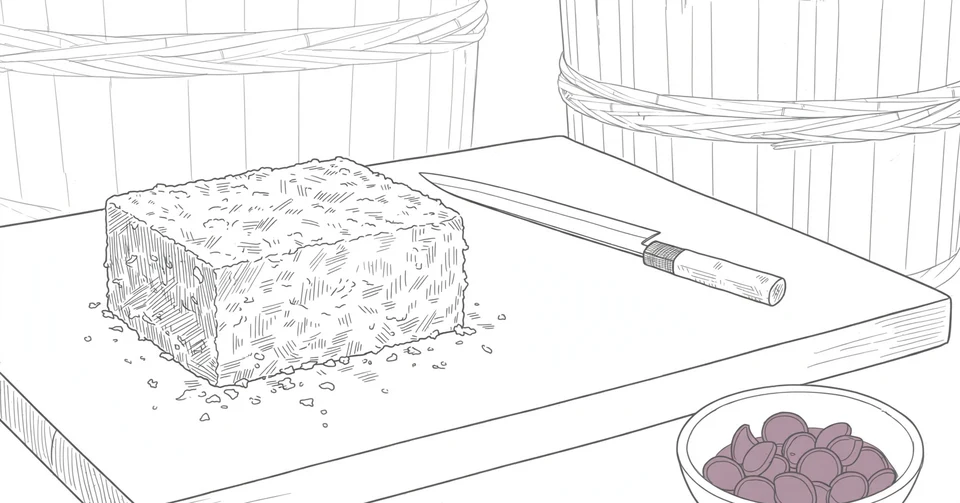
Part of the reason is plain thrift. The rice in that mash was polished, washed, steamed and then fermented for weeks, and the solid left behind still holds much of what the rice and the fermentation had to give. Throwing it away would waste all of that work, so generations of cooks simply refused to, and found job after job for it instead.
What sake kasu actually is
Sake begins as steamed rice worked on by koji mould, whose enzymes turn rice starch into sugar, and then by yeast, which turns the sugar into alcohol. The result is a thick, bubbling mash called moromi. The full journey from rice to bottle is a long one, and it is told in the story of Japanese sake, the rice wine Japan has brewed for centuries. When fermentation is finished, the moromi is pressed, a step called joso. The liquid is drawn off as young sake, and the compressed residue that remains in the press is sake kasu.
There is a lot of it. Brewers measure the yield of lees against the polished rice they started with, and for ordinary sake it runs at roughly 25 to 30 percent, while the gentle pressing used for ginjo and daiginjo grades leaves even more behind. One American sake brewer estimates that his brewery produces about 250 litres of sake kasu for every 700 litres of sake, which gives a fair sense of the scale.
How it looks depends on how it was pressed. Machine pressing squeezes the mash between panels and produces firm, flat sheets known as ita kasu, the board like slabs stacked in supermarket fridges. Softer crumbs are sold as bara kasu, and lees kneaded into a smooth paste, neri kasu, are the form cooks reach for when pickling. A guide to the ingredient at Food in Japan sorts these forms by texture, and adds two more worth knowing: moist, fruity ginjo kasu from premium brewing, and aged lees that have fermented on for months until they turn brown and mellow.
The pressing method matters more than it might sound. Premium sake is often pressed gently, stacked in bags inside a long wooden box, or, for the finest grades, hung in bags so that only the sake that drips out under its own weight is collected. That gentleness leaves more of the drink behind in the solids, so ginjo and daiginjo lees stay moister, sweeter and more aromatic than the everyday kind, and cooks who can get hold of them treat them as the prize of the pressing season.
Still sake, in solid form
Sake kasu tastes fruity and close to sake itself, which is no surprise, because it still is partly sake. Raw sake kasu typically holds around 8 percent alcohol, trapped in the solid during pressing. Cooking drives much of that alcohol off, but gentle or brief heating may not remove all of it, so dishes made with the lees are treated with some care where children are concerned.
What else it holds is the real surprise. The lees carry protein, amino acids and peptides from the broken down rice, along with carbohydrates, fibre and B vitamins. Japan's official food composition tables put a 100 gram portion at about 215 kilocalories, with roughly 14.9 grams of protein and 5.2 grams of dietary fibre, a nutritional profile closer to a food than to a waste product. Researchers have taken an interest in one component in particular, a resistant protein that passes through digestion much like fibre does.
My own view is that the health claims made for sake kasu should be kept modest, because many of the studies behind them are early and small. The honest selling point is flavour. The lees are concentrated, savoury and faintly sweet, and a spoonful can change a plain soup completely. The nutrition is a welcome bonus on top of that, not the reason the ingredient survived.
Pickled in lees, from kasuzuke to narazuke
The oldest famous job for sake kasu is pickling. In kasuzuke, cooks build a pickling bed by mixing the lees with miso, mirin or sake, sugar and salt, then bury vegetables, fish or meat in it. Cucumber, daikon, salmon and chicken all take the treatment well. Resting in the bed does more than flavour the surface. The enzymes and fermentation compounds in the lees raise the level of inosine monophosphate in the food, one of the substances behind umami, so a kasuzuke fish comes out tasting deeper than it went in. Fish shops across Japan sell salmon and cod already resting in their pale beds, ready for the grill.
Narazuke takes the same idea to an extreme. It is the specialty of Nara, where white melon is first salted, then packed into aged sake kasu, and left there not for days but for months, sometimes years. The melon comes out dark brown, firm and intensely flavoured, with a savoury punch that first time tasters often compare to cheese. The kasu used for narazuke is itself aged until it browns, so the pickle is really two slow fermentations meeting in one jar. It is sold all over Nara as a souvenir, and a small piece goes a very long way at the table.
Kasujiru, the soup of the cold months
If kasuzuke is the lees at their most patient, kasujiru is sake kasu at its most comforting. The soup loosens crumbled lees into dashi stock with a little miso, then simmers daikon, carrots and burdock root until tender, usually with pieces of salted salmon, though pork appears in some regions. The result is milky, warming and filling in a way that clear soups are not, and it is eaten all over Japan in the coldest weeks of the year.
The timing is no accident. Sake is traditionally brewed through the winter, so pressing season runs from late autumn into early spring, and that is exactly when fresh sake kasu appears in brewery shops and market stalls. In a brewing town in January, the smell of fresh lees hangs around the brewery gates, sweet and yeasty, and the kasujiru on the stove at home is part of the same season. Fresh ginjo lees, fragrant and soft, are a seasonal treat of those months, even though packaged kasu is sold all year round.
Drinks, sweets and other second lives
The other great liquid use of sake kasu is amazake. Melted into hot water with a little sugar, the lees make the older, gently alcoholic kind of the drink, quite different from the sweet, alcohol free version brewed from rice koji. The two drinks share a name and a season, and the full story of both is told in amazake, the sweet fermented drink of Japanese winters. Shrines serve hot amazake around New Year, and on a cold morning it hardly matters which kind is in the cup.
Modern kitchens keep finding new work for the lees. Home bakers fold sake kasu into bread, cakes and ice cream, and a flattened piece toasted on a grill becomes kasu senbei, a crisp snack with a flavour somewhere between cracker and cheese. The lees also turn up outside the kitchen entirely, in face packs and skin creams, helped along by an old tale about a brewery worker whose hands stayed smooth and young looking from constant contact with the ferment while his face aged normally.
And what the kitchen does not use, the farm often does. Sake kasu has long gone into livestock feed and back onto fields as fertiliser, and some of it is distilled into shochu. Breweries sell their lees to restaurants, or package them for convenience stores and supermarkets, yet even so, a large amount of sake kasu is still discarded as industrial waste. Wikipedia's overview of sake kasu describes it as part of Japan's "no waste" culture, and that is mostly true, but the honest picture is that the culture is still catching up with the volume its breweries produce.
None of this makes sake kasu glamorous. It will never be the name on the bottle or the reason a bottle is bought. But a cuisine reveals itself in what it refuses to waste, and Japan looked at the pale solid left in the press and saw pickles, soup, marinades and a hot sweet drink where most of the world would have seen rubbish. Next time you pass a flat white block of it in a Japanese supermarket, it is worth remembering that you are looking at the other half of the bottle, still working.
More in Food & Travel
Latest posts
- Japan's Population Decline and the Villages It Leaves Behind
- KRL Commuterline and the Trains That Move Jakarta
- Loma Linda's Long Lives Run on Saturdays
- The Three Sisters Grow Better Together
- Half the Old Springs in Japan Thank Kobo Daishi
- Tatamiishi Terraces Filter a River Through Stone
- Wasabi-Zuke Puts the Whole Plant in Sake Lees
- Konyoku Is Still Out There, Past the Last Train Station
- Karo Is the Tengger's Other Great Gathering
- Dry January Lasts a Month on Purpose
- Urashima's Dragon Palace Had a Name, Ryugu
- Petruk's Nose Arrives Before He Does
- Ikaria Runs on Island Time
- Why Nicoya Cooks Its Corn in Lime
- A Ngaben Can Take a Village Years to Prepare