Sumadori, Japan's Smart Drinking for People Who Do Not Drink
· 8 min read
Sumadori is short for smart drinking, the idea from Asahi Breweries that everyone at the table should pick a drink at their own strength, from full alcohol down to zero. Its showcase is a bar in Shibuya where the same cocktail comes at 0, 0.5 or 3 percent.
In Shibuya, one of Tokyo's loudest drinking districts, there is a bar run by one of Japan's biggest brewers where the most important decision on the menu is not what you drink, but how strong it is. Every cocktail can be made at three strengths, and one of them is zero. The idea behind it is called sumadori.
Sumadori is short for smart drinking, and the pitch is simple. Drinkers and people who do not drink should be able to sit at the same table, order from the same menu, and each choose the strength that suits them that evening. Nobody has to explain themselves, and nobody has to leave early.
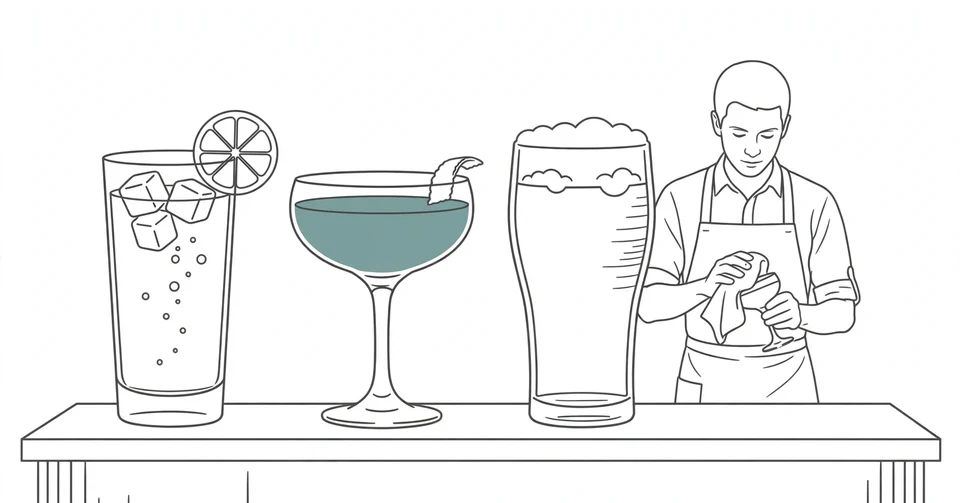
It sounds like a small thing, a wider menu. But in a country where the shared drink has carried social weight for generations, giving the glass itself a dial is a bigger change than it first appears.
What sumadori actually means
The word sumadori is the shortened Japanese form of "smart drinking", and it belongs to Asahi Breweries, which has built a whole campaign, a company and a bar around it. Smart drinking, in Asahi's framing, means choosing a drink that matches your health, your mood and the occasion, rather than drinking whatever the table is drinking because the table is drinking it.
That framing matters because of who is saying it. Asahi is not a temperance group. It is the maker of Super Dry, one of the best known beers on earth, and sumadori is not an argument against alcohol. It is an argument that the person holding the glass gets to decide what is in it, night by night and drink by drink. A joint venture between Asahi Breweries and Dentsu Digital, also called Sumadori, now runs the project and develops products and places around the idea.
I find the honesty of that position refreshing. A brewer admitting that its future customers include people who will never touch its flagship product could sound like surrender. Sumadori treats it instead as hospitality: if half the room cannot or will not drink, the answer is not to seat them somewhere else, but to make the room work for them too.
A bar where the strength is part of the order
The showcase is the Sumadori Bar, which opened in June 2022 on Center Gai, Shibuya's busy entertainment street. The first floor is a long counter for a quick drink, the second has sofas and tables, and the interior is a bright, marbled rainbow, closer to a cafe than to a smoky old izakaya. As Asahi Group tells it, the bar offers more than 100 menu items, and the craft drinks come at 0, 0.5 or 3 percent alcohol, so customers choose a drink that matches their own preference and pace.
The detail that tells the story is the price. Staff at sumadori say around 70 percent of the bar's customers are in their twenties, and the sumadori menu is deliberately built around a one coin price point of 500 yen for many drinks. For someone who does not usually drink, paying 1,000 yen for a cocktail can feel like a pointless hurdle. Halve the price and the bar becomes a place to drop into, not a commitment.
There is theatre in it too. A signature drink, the Marbling Rain, arrives topped with a puff of pink and yellow cotton candy that dissolves as soda water is poured over craft lemonade and nonalcoholic gin. It is the kind of drink made to be photographed, and that is not an accident. The bar also works as a test kitchen for Asahi, a place to watch what younger customers actually order and feed that back into product development.
Japan is drinking less than it used to
Sumadori did not appear from nowhere. The idea for the bar grew out of an Asahi survey in 2021 that estimated that of Japan's roughly 90 million adults, more than half, some 50 million people, do not drink. Many of them, the research found, still liked the atmosphere of bars and pubs. They were not avoiding the room. They were avoiding the alcohol that seemed to be the price of admission.
The official numbers point the same way. According to National Tax Agency figures reported by Nippon.com, per capita alcohol consumption in Japan was 75.4 litres in fiscal 2022, down 25 percent from thirty years earlier, and domestic alcohol sales have been falling since they peaked in 1996. National surveys suggest around 60 percent of people in their twenties now drink little or no alcohol at all.
The habit data tells the same story from another angle. Habitual drinking, defined as drinking a set amount on three or more days a week, has fallen across every male age group over the past two decades, with the steepest drops, some 20 to 30 percentage points, among men in their forties and fifties, once the heaviest drinkers of all. Government health checkups aimed at metabolic syndrome, introduced in 2008, pushed working adults to look at their own numbers. Researchers note one crossover that would have been hard to imagine a generation ago: women in their forties to sixties now drink regularly at higher rates than men in their twenties. This slow, broad retreat from the daily drink is the ground that sumadori grew from.
The reasons are layered. Health awareness has grown, and in February 2024 the health ministry published its first guidelines on the risks of drinking. The pandemic raised a cohort who turned twenty, the legal drinking age, when big parties were cancelled, and who simply never picked up the habit. Smartphones, games and streaming compete for the same evenings and the same money. And yet the same surveys show many young employees still like meeting face to face and even enjoy a year end party. What they are cooling on is not the gathering. It is the assumption that gathering means drinking at full strength.
The shelf is changing along with the bar
Walk into a convenience store in Japan today and the low and no alcohol shelf is no longer a sad corner. Asahi's Dry Zero is the country's best selling nonalcohol beer style drink, and its shipments climbed to a record high in 2024, while the newer Asahi Zero, made by removing the alcohol from real beer, has sold fast enough for the company to raise its targets. Asahi has set a goal of taking 20 percent of its sales from non and low alcohol drinks by 2030. Kirin, its great rival, has launched nonalcohol versions of its chuhai brands, betting on the same customer.
Japan did not invent the mood, either. The phrase sober curious appeared in the United States around 2018 and has circulated in Japan for about five years, naming people who are reassessing their relationship with alcohol without necessarily quitting it. Sumadori is the corporate, very Japanese answer to the same mood: not a pledge, not a diagnosis, just a menu with more settings. Ordinary pubs have begun to stock serious low alcohol options as well, and younger drinkers, who never tasted the watery nonalcohol beers of the early years, carry none of the old prejudice against them. What sumadori is really selling, in other words, is permission.
The most telling detail is the language. An Asahi spokeswoman has admitted that the word "nonalcoholic" does not move younger customers, especially people who never drank in the first place. Newer products are presented less as substitutes and more as drinks in their own right, even as a kind of nighttime soda. That is the whole sumadori trick in miniature. The drink is not framed as an apology or an excuse. It is framed as a style.
A quieter fix for the work table
Nowhere does this matter more than at work. The after work nomikai has long been part of the job in Japan, a place where the real talk happens after the office lights go off. But the pressure built into that ritual now has a name of its own, nomi-hara, and surveys find that almost 80 percent of people consider criticism for skipping a drinking party, or for not pouring drinks, to be a form of harassment.
Sumadori does not solve that problem, and a bar in Shibuya will not rewrite office culture. But it points at a practical answer. If the menu itself offers every strength, the colleague who orders the 0 percent drink has not opted out of anything. There is nothing to confess and nothing to forgive. The toast still happens, the glasses still meet, and the bonding the nomikai was always supposed to deliver no longer depends on everyone keeping pace.
My own view is that this is why sumadori is spreading beyond one company's marketing. It does not lecture drinkers, and it does not pity non drinkers. It simply widens the definition of joining in. For a country working out, sometimes awkwardly, how to keep its rituals while dropping their compulsory parts, that widening may be the most useful idea on the menu.
The last word belongs to the glass itself. A drink used to say only one thing about the person holding it. At the sumadori table it can say something quieter and more personal: this is my pace tonight. That seems like a reasonable thing for a night out to offer.
More in Life & Style
Latest posts
- Japan's Population Decline and the Villages It Leaves Behind
- Kecap Manis and the Sweet Soy Sauce of Indonesia
- In Mamoiada, Two Hundred Families Still Make Wine at Home
- Shochu and the Quiet Spirit of Japan
- A Dried Shiitake Is Louder Than a Fresh One
- Maruten Numazu and the Towering Kakiage Bowl of the Port
- The Three Sisters Grow Better Together
- Half the Old Springs in Japan Thank Kobo Daishi
- Tatamiishi Terraces Filter a River Through Stone
- Wasabi-Zuke Puts the Whole Plant in Sake Lees
- Karo Is the Tengger's Other Great Gathering
- Urashima's Dragon Palace Had a Name, Ryugu
- Petruk's Nose Arrives Before He Does
- Why Nicoya Cooks Its Corn in Lime
- A Ngaben Can Take a Village Years to Prepare