Kashikiri, the Private Onsen Bath You Book by the Hour
· 8 min read
A kashikiri is a private onsen bath you reserve for your own group, usually for 45 to 60 minutes at a time. It is the simplest way in Japan to soak without strangers, whether you have tattoos, small children, or just want the water to yourself.
Not everyone wants their first onsen to be a large tiled room full of strangers. If that thought has been putting you off, there is a quieter option hiding in plain sight at inns and bathhouses all over Japan. It is called kashikiri, a hot spring bath that you reserve for yourself, or for your own small group, for a set block of time.
The word is plain once you hear it explained. Kashikiri means reserved, or chartered, and a kashikiri bath works exactly like that. You book a slot, you take the key, you lock the door behind you, and for the next 45 to 60 minutes the water belongs to nobody else.
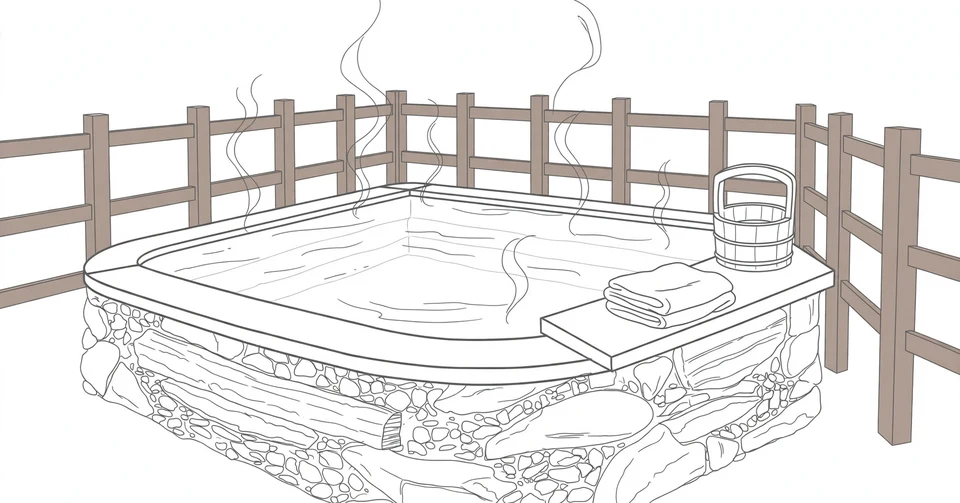
You will also see the same baths advertised as kazoku-buro, which means family bath, and the two terms overlap so much that many places use them interchangeably. Some are indoors. Some are rotenburo, open air baths behind a fence or a screen of bamboo. A few are large enough for grandparents and grandchildren together. All of them share the same simple promise: one booking, one group, no audience.
What kashikiri means and how it works
Kashikiri baths exist because the standard onsen setup does not suit everyone. The classic Japanese bath is communal and separated by sex, and it runs on trust: everyone washes before entering, everyone keeps the water clean, and everyone shares. That model works beautifully for most people, most of the time. But it leaves out couples who want to soak together, parents travelling with a toddler, and anyone who would simply rather not be naked in company.
The kashikiri system plugs that gap without changing the water or the rules. At a ryokan, the private baths are usually separate rooms away from the main bath, often a little grander than you would expect, with stone or cypress tubs and sometimes a garden view. At a day use facility, they are smaller rooms that you rent by the session. Either way, staff clean the bath between guests, and the water is the same spring water that feeds the public bath down the corridor. If you care about the quality of that water, the words to look for are gensen kakenagashi, which means the spring water flows fresh from the source rather than being recirculated.
The baths themselves vary more than the brochures suggest. A modest day use kashikiri might be a tiled room with a tub for two and a shower in the corner. A ryokan's private rotenburo can feel like a small garden of its own, a stone bath under the open sky with snow or maple leaves drifting in, depending on the season. What you are paying for, when you pay at all, is rarely size. It is the door, and the lock on it.
Think of kashikiri as the onsen equivalent of booking a private room at a karaoke box instead of singing in a bar. The song is exactly the same. The room is just yours.
How much a kashikiri session costs
Prices are gentler than many visitors expect. At a ryokan, a kashikiri bath is frequently free for staying guests. You simply reserve a slot, sometimes as part of check in, and no charge ever appears on your bill. Where a fee does apply, it is usually modest. Day use facilities and inns that charge separately typically ask somewhere around 1,000 to 3,000 yen for a session, with the fancier private baths at resort hotels climbing above that.
A session usually lasts 45 to 60 minutes, although some places trim it to 40 or 50 minutes at busy times. The fee, when there is one, covers the whole group rather than each person, which makes kashikiri one of the cheaper comforts in Japanese travel. A family of four pays once, not four times.
The in room bath is the other route to privacy, and it works differently. A room with its own open air tub folds the cost into the room rate, so there is nothing to book and no clock running. You pay for it in the nightly price instead, and those rooms sit at the premium end of the rate card. Kashikiri is the flexible middle ground: a proper private soak, without paying suite prices for the room around it.
Who books a kashikiri bath, and why
Families are the most obvious users, which is why kazoku-buro, the family bath, is the other name you will see on the door. Public baths split parents by sex and send small children with one parent or the other. A kashikiri bath lets everyone pile in together, and nobody minds a toddler splashing.
Couples book kashikiri for a similar reason. Japan's communal baths are strictly single sex, so a private bath is more or less the only way two partners can share the water on a trip together.
Then there is the group that kashikiri quietly serves best: people with tattoos. Many communal baths still refuse tattooed bathers, a policy with old roots that is only slowly softening. I have written before about how those onsen tattoo rules work, and how they are changing. Behind a locked kashikiri door, the question mostly disappears, because nobody else is there to see. The workaround is so standard now that entire directories track private onsen listings alongside their tattoo policies. One word of caution is still fair: a small number of properties restrict tattoos even in their private baths, so if that is your reason for booking, confirm the policy with the inn before you arrive rather than assuming.
Shy first timers round out the list, and honestly, I count this as a perfectly good reason on its own. A first soak in a kashikiri bath teaches you the rhythm of washing, rinsing and soaking without an audience, and it makes the big communal bath feel far less intimidating the next day.
The rules do not stop at the door
Private does not mean anything goes. The etiquette that keeps shared water clean applies just as much in a kashikiri bath, because the next guests inherit the bath after you. Wash and rinse thoroughly at the taps before you get in. Keep your small towel out of the water. Tie long hair up so it stays dry. These are the same habits you would use in a neighbourhood sento, where the whole system depends on strangers looking after one another, and they still matter when the strangers are simply an hour behind you.
There is also the clock to respect. Your slot ends when it ends, because the staff need time to clean and the next group is already waiting. Treat the 45 or 60 minutes as a shape for the experience rather than a challenge to use up. In my experience the water does its work quickly anyway. Ten quiet minutes in genuinely hot spring water leaves most people pleasantly drowsy, and the rest of the slot is for lingering, not endurance.
How to book a kashikiri bath in practice
Booking is refreshingly analogue at most inns, as this guide to private onsen in Japan describes from experience. At check in, the staff may show you a sheet or a board with the day's time slots, and you point at the one you want. The popular slots go first: the hour before dinner and the early morning ones are the contested territory. When your time comes, you collect a key, or an occupied sign, from the front desk, and you hand it back when you finish.
Smaller ryokan sometimes skip reservations entirely. The sign on the bath door says vacant or occupied, and if it says vacant, the bath is yours. Flip the sign, lock the door, and remember to flip it back when you leave. It is a trusting little system, and in a small inn it works because everyone can see the sign.
Day use kashikiri takes a little more planning. Private baths that accept visitors who are not staying the night are less common than the overnight kind, and they are genuinely rare in the big cities. Onsen towns are your best bet, and Beppu in Kyushu is the famous exception, a city where private family baths are a day use institution. Wherever you end up, booking ahead in peak season is wise. Kashikiri slots are few by definition, because privacy does not scale.
A calm way into the water
Japan's communal baths deserve their reputation, and I would not trade away the big tiled rooms and their quiet rituals. But the bathing culture is generous enough to hold two ideas at once: the bath as a shared social space, and the bath as a small room of your own behind a wooden fence.
If the shared version has been the thing stopping you, book the kashikiri. One hour, one lock, water as hot as you like. It is the gentlest introduction to onsen there is, and for plenty of travellers it stays the favourite long after the nerves are gone.
More in Life & Style
Latest posts
- Japan's Population Decline and the Villages It Leaves Behind
- Kecap Manis and the Sweet Soy Sauce of Indonesia
- In Mamoiada, Two Hundred Families Still Make Wine at Home
- Shochu and the Quiet Spirit of Japan
- A Dried Shiitake Is Louder Than a Fresh One
- Maruten Numazu and the Towering Kakiage Bowl of the Port
- The Three Sisters Grow Better Together
- Half the Old Springs in Japan Thank Kobo Daishi
- Tatamiishi Terraces Filter a River Through Stone
- Wasabi-Zuke Puts the Whole Plant in Sake Lees
- Karo Is the Tengger's Other Great Gathering
- Urashima's Dragon Palace Had a Name, Ryugu
- Petruk's Nose Arrives Before He Does
- Why Nicoya Cooks Its Corn in Lime
- A Ngaben Can Take a Village Years to Prepare