Nara Deer and the Sacred Animals of the Old Capital
· 9 min read
Nara deer are the free-roaming sika deer of Nara Park, sacred messengers of Kasuga Taisha that bow for crackers in Japan's first permanent capital.
You are standing on a lawn in Nara Park with a packet of crackers in your hand, and a deer is bowing to you. Not a quick nod, but a slow, deliberate dip of the head, the way a person bows to a guest. You bow back, because it feels rude not to, and the deer bows again. This is the first thing most visitors learn about the Nara deer: they have manners, and they expect you to have some too.
About 1,465 Nara deer roam the park today, according to the July 2025 census by the Nara Deer Preservation Foundation, the highest number since the counts began in 1953. They are sika deer, the same species found across Japan, but no other herd in the country lives quite like this one. The Nara deer wander across 660 hectares of lawns, temple grounds, and city streets without fences, nap under the pine trees, and gather wherever a visitor opens a cracker packet.
The deer are the reason many people come to Nara, and they are only part of the reason to stay. Nara was Japan's first permanent capital, the seat of the imperial court from 710 to 784, and the park holds some of the oldest and largest temples in the country. The Nara deer belong to that history as much as the buildings do.
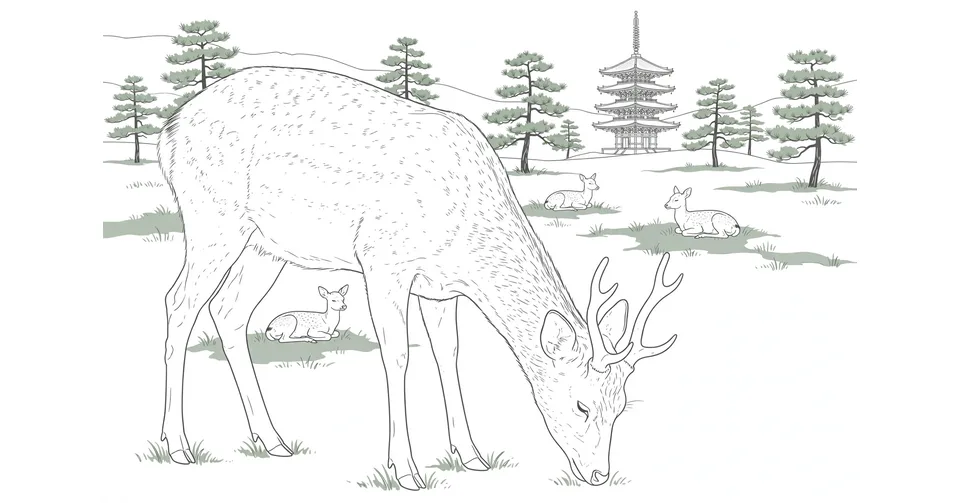
A day in Nara Park runs at the pace of the Nara deer themselves, which is to say slowly, with long pauses in the shade. The park is free to enter, about 45 minutes by train from Kyoto or Osaka, and small enough to cross on foot in a day. What follows is what the animals are, why they bow, and how to meet them without ruining the encounter for everyone else.
The Sacred Messengers of Kasuga Taisha
The Nara deer are sacred because of a story that is more than 1,250 years old. According to legend, the deity Takemikazuchi arrived in Nara in the year 768 riding a white deer, and the deer have been honoured as the messengers of the gods ever since. Kasuga Taisha, the shrine founded in that same year, still stands at the eastern edge of the park, and its deer are still treated as its messengers, not as its pets.
That status has protected the herd for centuries. The Nara deer are designated a national natural treasure, and for much of their history harming one was treated as a grave offence. The Nara Deer Preservation Foundation, which cares for the herd from its Rokuen centre, was established in 1892, and it still runs the census, the treatment facility, and the cracker system that keeps the deer fed.
The herd has not always been this large. Numbers fell during the pandemic years, when the park emptied and the crackers stopped, then rose for four straight years as visitors returned, reaching the record 1,465 in July 2025. The census counted 315 stags, 816 does, and 334 fawns, and the foundation credited the high number of fawns for the new record. More Nara deer also means more pressure on the park, and the city has begun talking openly about contraception and habitat work to keep the herd in balance.
Shika Senbei and the Cracker Economy
The Nara deer eat what the park provides, and what visitors provide is one thing only: shika senbei, the deer crackers sold from small wooden kiosks and vending machines across the park. A pack of ten costs 200 yen, a price that has held since October 2019, after rising from 150 yen, and from 100 yen before 1991. The crackers are made of wheat flour and rice bran, formulated for a deer's digestion, and the name is a registered trademark of the Nara Deer Preservation Foundation. Part of the money from every pack goes back into protecting the herd.
Do not feed the Nara deer anything else. Human snacks, bread, chips, and fruit can make them ill, and plastic packaging can kill them. The rule is simple and it is written on signs all over the park: crackers only, bought in the park. The Nara deer know the difference, and they will ignore an offered sandwich and walk straight past it to the person holding the right packet.
Why the Nara Deer Bow
The bow is the part of the visit that feels like magic, and it is learned, not trained. A Nara deer that wants a cracker lowers its head toward the person holding one, and visitors have turned the gesture into a small ritual. Hold a cracker above the deer's head and wait for the first bow. Tuck the cracker behind your back and wait for a second. Hold it overhead once more, and after the third bow, offer the cracker on an open palm. Older Nara deer are the most patient at this, and they will wait through all three bows without complaint.
The bow works because it is a request, and the cracker is the answer. Teasing breaks the deal. Pull a cracker away after the deer has bowed, or wave food around for a photograph, and the animal gets frustrated. It may headbutt you, nip at your clothes, or follow you with increasing insistence. The Nara deer are wild animals, not performers, and the bow is the one polite behaviour they have worked out with us. Keeping your side of it is the whole trick.
When the crackers run out, there is a gesture for that too. Raise both open hands, palms facing the deer, and the Nara deer recognise it as the sign for no more food. They turn away and look for the next visitor. It is a small thing, but it tells you how long these animals have been reading people.
Nara Deer at a Glance
| Fact | Detail |
|---|---|
| Population | 1,465 deer in the July 2025 census, a record since 1953 |
| Species | Sika deer, known in Japanese as shika |
| Park size | About 660 hectares of lawns, temples, and streets |
| Crackers | Shika senbei, 200 yen for a pack of ten |
| Sacred status | Messengers of Kasuga Taisha, a national natural treasure |
| Best time to visit | Early morning, or spring when the cherry trees bloom |
Todai-ji and the Great Buddha
The deer share the park with buildings that are older than most countries. Todai-ji, the great eastern temple, holds the Great Buddha, a bronze statue about 15 metres tall that was completed in 752. Its hall, the Daibutsuden, is one of the largest wooden buildings in the world, and the temple is part of the Historic Monuments of Ancient Nara, inscribed on the UNESCO World Heritage list in 1998. The Nara deer wander the approach to the hall as if they own it, which, in a sense, they do.
Kasuga Taisha sits at the far end of the park, past the lantern-lined paths, and Kofuku-ji stands near the station with its five-story pagoda, currently enclosed for a major restoration that runs through 2033. The temples and the Nara deer belong together in a way that is hard to separate. Nara is not a city with a deer park attached to it. It is a city where the deer were part of the plan from the beginning, and the plan is still running.
Nara is not the only place in Japan where deer roam free among the temples. The deer of Miyajima wander the island around its floating torii gate in much the same way, and the two herds make a natural pair for anyone travelling through western Japan. Miyajima's deer are smaller in number and wilder in manner, which makes the comparison worth the trip.
Visiting the Nara Deer Respectfully
The rules for the park are short, and they exist because the deer are wild. Feed them only shika senbei, never tease them with food, and keep small children in front of you rather than behind, where a deer can nip without being seen. Stags are at their most unpredictable in autumn, during the rutting season, when their antlers are full and their tempers are short. Every October the park holds Shika no Tsunokiri, the antler-cutting ceremony that has run since 1672, to keep the stags from injuring each other and the visitors.
Injuries do happen, and they have been rising. The prefectural government recorded 159 cases in fiscal 2024, of which 111 involved foreign tourists, most of them small bites and headbutts from deer that had been teased or crowded. The numbers are a warning, not a reason to stay away. The Nara deer are gentle with visitors who are gentle with them, and the worst encounters almost always start with a person doing something the signs told them not to do.
Come early if you can. The deer are calmest in the morning, before the tour groups arrive, and the park is at its best in spring, when the cherry trees bloom over the lawns and the deer rest in their shade. Nara is a popular stop during Golden Week, so expect crowds then, and consider a weekday instead. Kintetsu Nara Station is the closest stop to the park, and the walk from the station takes you past Kofuku-ji and straight into the herd. For the full picture on feeding rules and bowing etiquette, the guide at Clever Tourists is worth reading before you go, and the record 2025 population is covered in detail by Sakura Co.
There is something quietly instructive about an animal that bows before it eats. The Nara deer are not tame, and they are not a show. They are wild animals that have spent thirteen centuries learning to live alongside people, and the bow is the small contract they worked out with us: politeness answered with politeness, food given, not taken. Nara's first capital lasted less than eighty years, but the deer outlasted it, and the reason they are still here is that the city never stopped treating them as residents. Visit them as a guest, and they will bow to you like one.
More in Food & Travel
Latest posts
- Japan's Population Decline and the Villages It Leaves Behind
- KRL Commuterline and the Trains That Move Jakarta
- Loma Linda's Long Lives Run on Saturdays
- The Three Sisters Grow Better Together
- Half the Old Springs in Japan Thank Kobo Daishi
- Tatamiishi Terraces Filter a River Through Stone
- Wasabi-Zuke Puts the Whole Plant in Sake Lees
- Konyoku Is Still Out There, Past the Last Train Station
- Karo Is the Tengger's Other Great Gathering
- Dry January Lasts a Month on Purpose
- Urashima's Dragon Palace Had a Name, Ryugu
- Petruk's Nose Arrives Before He Does
- Ikaria Runs on Island Time
- Why Nicoya Cooks Its Corn in Lime
- A Ngaben Can Take a Village Years to Prepare