Yokozuna Is the Rank Sumo Never Takes Back
· 20 min read
A yokozuna is the highest rank in sumo, a title that cannot be taken away once it is earned, and only seventy five wrestlers had reached it by May 2025.
A yokozuna is the highest rank in professional sumo, and it is the only rank a wrestler can never lose. Every other wrestler on the ranking sheet rises and falls with his results, but a yokozuna stays a yokozuna for life. The price of that permanence is simple and severe. If he can no longer compete at the highest level, he is expected to retire.
That single rule shapes everything about the rank. It explains why promotion is so slow, why the ceremony around it is so solemn, and why only seventy five wrestlers had reached it by May 2025, according to the Japan Sumo Association. In more than two centuries of formal record keeping, roughly one wrestler every three years has earned the title.
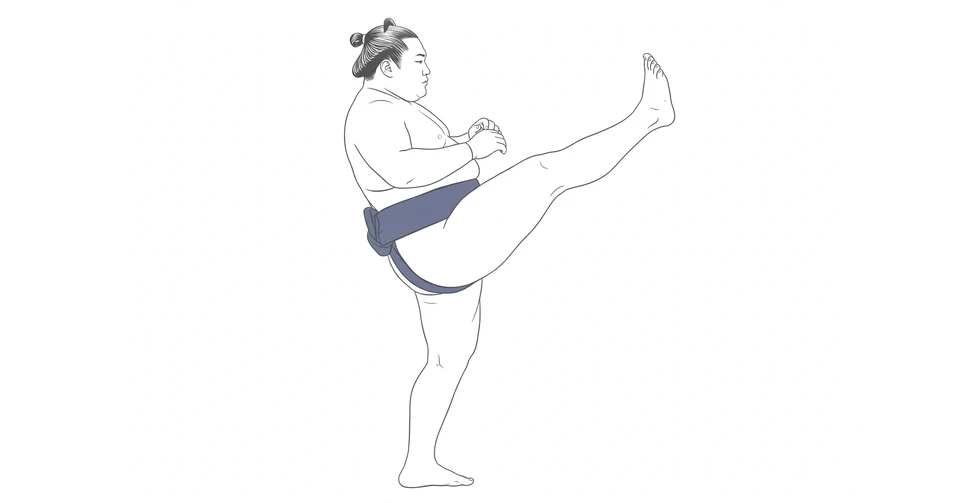
The word itself means horizontal rope, and the rope is the whole story in miniature. A yokozuna wears a thick sacred rope around his waist during his ring entering ceremony, and that rope marks him as something set apart, the way a sacred rope marks off a shrine. This guide explains what the rank is, how a wrestler earns it, what the rope and the ceremony mean, and why sumo refuses to take the title back once it is given.
What a yokozuna actually is
A yokozuna sits at the very top of the ranking sheet, above the ozeki, the sekiwake, and the komusubi. Those four ranks together are called sanyaku, but the yokozuna is a rank apart even within that group. The banzuke lists his name in the largest characters on the sheet, at the top right, where the eye lands first. Our earlier guide to The Banzuke Remembers Every Basho in Calligraphy explains how that sheet records the fate of more than six hundred wrestlers, and the yokozuna is the name it treats with the most space and the most respect.
The name comes from the rope, the tsuna, worn around the waist. The rope is similar to the shimenawa used to mark off sacred areas in Shinto, and like the shimenawa it serves to purify and mark off what it surrounds. A yokozuna does not wear the rope during his bouts. He wears it during the dohyo-iri, the ring entering ceremony, which is the moment when the rank becomes visible to everyone in the arena. The rope can weigh up to 20 kilograms, which is a heavy thing to carry through a ceremony, and the weight is part of the point. The rank is not light, and it is not meant to feel light.
The rank was not always a rank at all. In the early days, a yokozuna was regarded as an ozeki with a special licence to wear the rope and perform his own ring entering ceremony. The first yokozuna licences were awarded in 1789, to Tanikaze Kajinosuke and Onogawa Kisaburo, by the Yoshida family, and formal record keeping begins with those two men. The name was first written on the banzuke in May 1890, after the sixteenth yokozuna, Nishinoumi Kajiro I, insisted that his status be recorded. It was officially recognised as the highest rank in February 1909, during the reigns of the nineteenth yokozuna, Hitachiyama Taniemon, and the twentieth, Umegatani Totaro II.
That slow history matters, because it shows that the rank grew into its meaning rather than being invented all at once. Sumo did not design a perfect system and then hand out titles. It recognised, over more than a century, that some wrestlers stood so far above the rest that they needed a rank of their own, and then it built the rules, the ceremony, and the expectations around that recognition. The yokozuna of today inherits all of that history every time he steps into the ring wearing the rope.
There is also a practical side to the rank that is easy to miss. A yokozuna is entitled to buy a membership share in the Japan Sumo Association, and he is called on to represent all sumo wrestlers on formal occasions, for example when members of the Imperial Family visit a tournament. He has more junior wrestlers to assist him, and he carries responsibilities that no other wrestler carries. The rank is not only a reward for winning. It is a job, and the job lasts as long as the wrestler keeps the rank, which is to say, for the rest of his career.
How a wrestler becomes a yokozuna
There is no fixed formula for promotion to yokozuna, and that is deliberate. The modern standard requires an ozeki to show enough power, skill, and dignity, or hinkaku, to qualify. The power and skill are judged from recent tournament results. The de facto standard is to win two consecutive championships as an ozeki, or an equivalent performance. When the equivalent performance route is used, the wrestler's record over the previous three tournaments is considered, with an expectation of at least one tournament victory and one runner-up finish, and none of the three records falling below twelve wins.
The dignity requirement is the part that makes the rank different from every other promotion in sport. Hinkaku is about character, conduct, and grace, and it is judged by people, not by numbers. The Yokozuna Deliberation Council, a body of lay people appointed by the Japan Sumo Association, meets after a tournament and discusses whether an ozeki has the necessary attributes. Its recommendation goes to the Judging division and then to the Board of Directors, who make the final decision. The council has existed since 21 April 1950, and the first yokozuna promoted by the Sumo Association itself was the forty first yokozuna, Chiyonoyama Masanobu.
Promotion is a multi stage process, and the stages are full of ceremony. Once a wrestler is judged to have met the criteria, a member of the Sumo Association Board of Directors visits his stable to give him the news in person. A new tsuna is then made in his stable, and he practises the ring entering ceremony with advice from a previous or current yokozuna. Finally, he performs his first ceremonial ring entry at Meiji Shrine in Tokyo, usually within a couple of weeks of the end of the tournament. The Yokozuna on Wikipedia sets out this process, the promotion criteria, and the history of the rank in full, and it is the best place to check the details that follow here.
The two most recent promotions show how the standard works in practice. Hoshoryu, the seventy fourth yokozuna, was promoted in January 2025, and Onosato, the seventy fifth yokozuna, was promoted in May 2025. That brought the total of officially recognised yokozuna to seventy five, a number that covers more than two centuries of the sport. I find that number quietly astonishing. In a sport that holds six tournaments a year, with hundreds of wrestlers competing, the highest rank has been reached by fewer men than fit in a small room.
The history of the dignity requirement is not always comfortable. Hawaiian born ozeki Konishiki was widely felt to have been kept from the rank in part because of his non-Japanese origin, and some Sumo Association members openly said that foreigners could never achieve the hinkaku needed for a yokozuna. That debate was finally settled on 27 January 1993, when Hawaiian born ozeki Akebono was formally promoted to yokozuna after only eight months as an ozeki. Since then, seven of the ten wrestlers to reach the rank after Akebono were not born in Japan, including wrestlers from the United States and Mongolia. The rank is now open to any wrestler who meets the standard, wherever he was born, and the sport is better for it.
Not every promotion has gone well, and sumo remembers the failures as clearly as the successes. Futahaguro was given the title in 1986 despite concerns about his immaturity, and his time at the top ended in scandal. He retired after only a year and a half at the rank, and he remains the only yokozuna in history to retire without having won at least one top division championship. The lesson sumo took from that episode is the reason the council exists and the reason the standard is so strict. A bad promotion cannot be undone, because the rank cannot be taken back, so the decision has to be right the first time.
The rope, the ceremony, and the two styles
The dohyo-iri, the ring entering ceremony, is where a yokozuna is most visibly different from every other wrestler. The normal ceremony for top division wrestlers is a group presentation, with the men forming a circle around the ring in their decorated silk aprons before filing off to prepare for their bouts. A yokozuna is introduced after the lower ranked wrestlers, and he is flanked by two assistants. The tsuyuharai, the dew sweeper, walks ahead of him, and the tachimochi, the sword bearer, follows behind him carrying a Japanese katana, which symbolises the samurai status of the yokozuna. The tachimochi is always the more highly ranked of the two assistants, and the ceremonial aprons of all three form a matching set.
Once inside the ring, the yokozuna performs a much more complex ritual dance than the group ceremony. He claps, stamps, and raises each leg high in turn, in a slow and deliberate sequence that is meant to drive away evil spirits and purify the ring. The dance can take one of two forms, and a yokozuna usually chooses his form when he is first promoted. The choice is also visible in the knot used to tie the rope around his waist. The Unryu style has only one loop at the back, while the Shiranui style has two. The styles are named after the tenth yokozuna, Unryu Kyukichi, and the eleventh, Shiranui Koemon, of the Edo period, although there is no historical proof that they actually performed the dances attributed to them.
Watching a yokozuna perform the dohyo-iri is one of the great pleasures of following sumo, and I think it is worth slowing down for. The bouts are fast, violent, and over in seconds. The ceremony is the opposite. It is slow, formal, and repeated in exactly the same way every day of a tournament, and its slowness is the point. The wrestler is not showing off his strength. He is showing that he understands the weight of what he carries, and that he is willing to carry it in public, in front of thousands of people, twice a day, for fifteen days. The rope makes the rank visible, and the ceremony makes the responsibility visible.
There is one more ceremony that belongs to the rank, and it is the most touching of all. When a former yokozuna reaches the age of sixty, he usually performs a special ring entering ceremony known as the kanreki dohyo-iri, wearing a red tsuna in celebration of his longevity. The first such ceremony took place with the former yokozuna Tachiyama in 1937. Sixty is a full cycle in the traditional Japanese calendar, a return to the beginning, and the red rope marks the occasion. A man who carried the rank in his youth puts the rope on again in old age, not to compete, but to show that the rank, and the life it shaped, are still with him.
The rope itself is an object worth understanding. A tsuna is made of hemp, braided and folded in a particular way, and it is not a costume. It is a sacred object, treated with the same respect as the shimenawa that hangs at a shrine. When a wrestler is promoted, a new rope is made for him in his stable, and the making of it is part of the promotion. The rope belongs to the man, and it belongs to the rank, and the two cannot be separated while he holds the title.
Why a yokozuna cannot be demoted
No other rank in sumo works this way. An ozeki who loses two tournaments in a row is demoted to sekiwake. A sekiwake who loses is demoted at once. A maegashira slides down the ranking sheet with every losing record. The system is strict, public, and automatic, and every wrestler knows exactly where he stands. A yokozuna is the exception, and the exception is absolute. He cannot be demoted, no matter how badly he performs.
The reason is not mercy. It is a trade. In exchange for a rank that can never be taken away, a yokozuna accepts a standard of performance that no other wrestler is held to. He is expected to win championships regularly, or at least to be a serious contender for them, and even a single losing record can raise concerns. It is common for a yokozuna to withdraw from a tournament for health reasons, even after the tournament has started, if he finds himself unable to perform at the expected level. A yokozuna who is consistently unable to compete at the peak of the sport is expected to retire from competition altogether.
That expectation is enforced by honour rather than by a rulebook, and it mostly works. A wrestler who has fought for years to reach the top of the sport does not need to be told that he is no longer good enough. He knows, and the crowd knows, and the council knows, and the retirement usually comes before anyone has to say it out loud. The system trusts the man to judge himself, and that trust is part of what makes the rank so respected. Fifteen Days of Basho Decide Who Sumo Remembers explains how each tournament sorts every wrestler by wins and losses, and a yokozuna is the one man on the sheet whose fate the tournament cannot change, because his fate is in his own hands.
The history of retirements shows how the expectation plays out in real life. Kisenosato lost his first five matches in the November 2018 tournament before withdrawing, and he had withdrawn without a winning record in eight out of ten tournaments as a yokozuna. He eventually retired after three consecutive defeats in the January 2019 tournament. Kakuryu sat out for two additional tournaments after a warning from the council, and eventually retired during the March 2021 tournament. Hakuho returned from injury and surgery to win the July 2021 tournament with a perfect fifteen wins and no losses, and then retired. Each of these endings was different, but each of them was a decision made by the man himself, in his own time, under the weight of the same expectation.
I think there is something deeply admirable about this arrangement, and something deeply demanding. Most of modern sport protects its stars with contracts, with minimum salaries, with rules that guarantee a place while the star is still marketable. Sumo does the opposite. It gives its greatest wrestlers the highest honour it has, and then it asks them to give it back the moment they can no longer earn it. The rank is permanent, but the career is not, and the wrestler himself has to decide when the two have come apart. That is a heavy responsibility to carry, and it is why the dignity requirement matters as much as the winning record. A yokozuna is not only a great wrestler. He is a man who can be trusted to know when to stop.
The rule also protects the sport. Because a yokozuna cannot be demoted, a weak yokozuna would sit at the top of the ranking sheet indefinitely, blocking the rank and cheapening it for everyone. The expectation of retirement is the only mechanism that keeps the top of the sheet honest, and it depends entirely on the character of the men who hold the rank. That is why the council is so careful about promotion, and why a single bad promotion, like Futahaguro, is remembered for decades. The system has no safety net. It has only the judgement of the people who run it and the honour of the people who hold the rank.
When the council steps in
The Yokozuna Deliberation Council has one power that makes the whole system work, and it has used it only three times since the council was formed in 1950. In extremely rare instances, the council can issue a formal notice to a yokozuna whose performance, poise, or character falls short of what the rank requires. The notices come in three levels of severity: encouragement, warning, and recommendation to retire. A recommendation to retire requires the support of more than two thirds of the council members.
The first notice was the most severe, and it was issued in January 2010, when the council recommended that Asashoryu retire. The recommendation followed allegations that Asashoryu had punched and injured an acquaintance in a drunken brawl at a nightclub during the January 2010 tournament. Asashoryu chose to retire before the Sumo Association could act on the recommendation. It was a retirement prompted by a judgement about the dignity of the rank, not by tournament results, and it showed that the council takes the character requirement as seriously as the winning requirement.
The second notice was an encouragement, issued to Kisenosato in November 2018, after he had lost his first five matches of the tournament and withdrawn. The third was a warning, issued in November 2020 to two yokozuna at once, Hakuho and Kakuryu, because neither had performed to the level required of the rank between November 2019 and November 2020. Hakuho had won two championships in that period and recorded a ten win performance, while Kakuryu had managed only one runner-up finish. Both men had sat out the September and November 2020 tournaments through injury. The warning was upheld in March 2021. Kakuryu retired during that same tournament. Hakuho sat out the January tournament, won two matches in March before withdrawing for kneecap surgery, and then returned to win the July 2021 tournament with a perfect record before retiring.
Three notices in more than seventy years is a remarkable record, and it says something important about how the system works. The council does not need to issue notices often, because the expectation of retirement usually does the work on its own. The notices exist as a last resort, for the rare cases where a yokozuna will not or cannot judge himself. The fact that they are so rare is itself a sign of health. A system that has to punish its champions constantly is a system that has failed. A system that almost never has to is a system whose people understand what is expected of them.
The council is made up of lay people, not former wrestlers, and that matters too. The Japan Sumo Association appoints them to provide independent quality control on promotion, and their independence is the point. A decision about who deserves the highest rank in the sport should not be made only by the people inside the sport. It should be made, at least in part, by people who can look at it from the outside and ask whether the wrestler in question is worthy of the honour. That outside view is what keeps the rank honest, and it is why the council's recommendations carry so much weight.
The men who hold the rank now
As of the middle of 2025, two men hold the rank. Hoshoryu, the seventy fourth yokozuna, was promoted in January 2025, and Onosato, the seventy fifth, was promoted in May 2025. Onosato is from Japan, and Hoshoryu is from Mongolia, continuing a pattern that has shaped the top of the sport for more than thirty years. Seven of the ten wrestlers to reach the rank after Akebono in 1993 were not born in Japan, and the current pair reflects that same international character.
There is no requirement for a yokozuna to exist at all, and there have been periods in sumo history with no active yokozuna and periods with as many as four at once. The banzuke can also carry a special designation when the ranks below are thin. If there is only one ozeki, for example, a yokozuna can be designated as a yokozuna-ozeki to fill the gap, a solution that was used for Onosato himself after his promotion left Kotozakura as the lone ozeki. The system is flexible where it can afford to be flexible, and rigid where it cannot. The flexibility is in the numbers. The rigidity is in the standard.
The official record of every yokozuna, from the first licences in 1789 to the two men who hold the rank today, is kept by the Japan Sumo Association, and its Find Rikishi database lists every wrestler who has held the rank, with his record and his history. It is the authoritative source for the number at the heart of this article, and it is worth browsing for anyone who wants to see how rare the rank really is. Seventy five names, across more than two centuries, is a short list for a sport this old.
Two men holding the rank at once is a healthy number for sumo. One yokozuna carries the whole weight of expectation alone, and that weight is heavy. Two can share it, push each other, and give the crowds a rivalry to follow. Four at once is a golden age, and none at all is a worrying time, a sign that no ozeki has been able to meet the standard. The number of active yokozuna is, in its own quiet way, a measure of the health of the sport.
What the rank teaches the rest of us
A yokozuna is not only a sporting achievement. It is an idea about how honour should work, and the idea is worth carrying outside the ring. The rank says that the highest honour is the one you cannot lose, and that the price of such an honour is the willingness to give it up yourself when you can no longer deserve it. There is no committee that strips it from you, no demotion, no forced retirement. There is only the expectation, and the man, and the judgement he makes about himself.
That idea cuts against much of how the modern world works. We are used to honours that are defended by lawyers, titles that are kept long after they are earned, and positions that are held because the rules make them hard to lose. Sumo does the opposite. It makes the highest rank impossible to lose, and then it trusts the holder to walk away when the time comes. The trust is the whole system, and the system works because the people inside it take the trust seriously.
I think there is a lesson in that for anyone who has ever held a position of responsibility, in any field. The question is not only whether you earned the position, but whether you still deserve it, and whether you would know it if you did not. A yokozuna has to answer that question in public, in front of thousands of people, every tournament, with his body as the evidence. Most of us answer it in private, with far less at stake, and we still find it hard. The wrestlers who answer it honestly are the ones who make the rank mean something, and they are the reason that seventy five names, across more than two centuries, are still remembered.
The next time a tournament begins, watch the ring entering ceremony before the bouts start. Watch the dew sweeper walk ahead, the sword bearer walk behind, and the yokozuna step into the centre of the ring with a rope that can weigh twenty kilograms around his waist. He is not showing off. He is showing the crowd, and himself, that he still carries the rank, and that he knows what it costs. That is what a yokozuna is, and that is why sumo never takes the rank back.
More in Culture & Society
- Gyoji Are Sumo's Referees in Silk and Calligraphy
- Japanese Baseball and the Game Japan Made Its Own
- The Banzuke Remembers Every Basho in Calligraphy
- Fifteen Days of Basho Decide Who Sumo Remembers
- Kojiri Is the End Cap That Takes Every Knock for a Katana
- Kurikata Is the Chestnut Knob That Holds a Katana at the Hip
Latest posts
- Ebi Bends Like an Old Back and Wishes You a Long Life
- Kobumaki Rolls Joy Into a Strip of Kelp
- Kurikinton Is the Golden Mash That Wishes You Wealth
- Japanese Beer and the Dry Wars That Changed How Japan Drinks
- Kamaboko Paints the New Year Red and White
- Datemaki Rolls Sweet Eggs Into a Spiral of Good Luck
- Japanese Bento and the Lunch Box That Became an Art Form
- Tazukuri Turns Tiny Sardines Into a Wish for a Good Harvest
- Kazunoko Is the Herring Roe That Promises Children and Plenty
- Kuromame Turns Black Beans Into a Wish for Health
- Jubako Layers a Family's Luck One Box at a Time
- Osechi Packs a Whole Year of Luck Into Stacked Boxes
- Koshirae Is the Formal Mounting That Turns a Blade Into a Katana
- Shirasaya Is the Plain White Scabbard Where a Katana Rests
- The Togishi Polishes a Katana for Weeks Before It Ever Cuts