A Donabe Turns a Clay Pot Into Japan's Slowest and Warmest Way to Cook
· 12 min read
A donabe is a Japanese clay pot that cooks rice and hot pots slowly over an open flame, holding its heat long after the fire is out.
A donabe looks like the simplest pot in the kitchen. It is a squat clay pot with a heavy lid and two small handles, glazed on the inside and rough on the outside, and it has no dial, no timer, and no electric cord. Put it on a flame, though, and it does something a steel pot cannot do. It heats slowly, holds its heat for a long time, and cooks the food inside gently from every side at once, so that rice comes out fluffy, stews taste deeper, and a hot pot can sit at the centre of the table and keep simmering while everyone eats.
The name is plain, too. Donabe means earthenware pot, do for clay and nabe for pot, and the pot has been part of Japanese cooking for centuries. It is sized by the sun, an old Japanese unit of measurement, and it comes in sizes for a single person or a whole family. The pot is not a museum piece. It is a working tool, and it is still made by hand in the same pottery towns that have made it for generations.
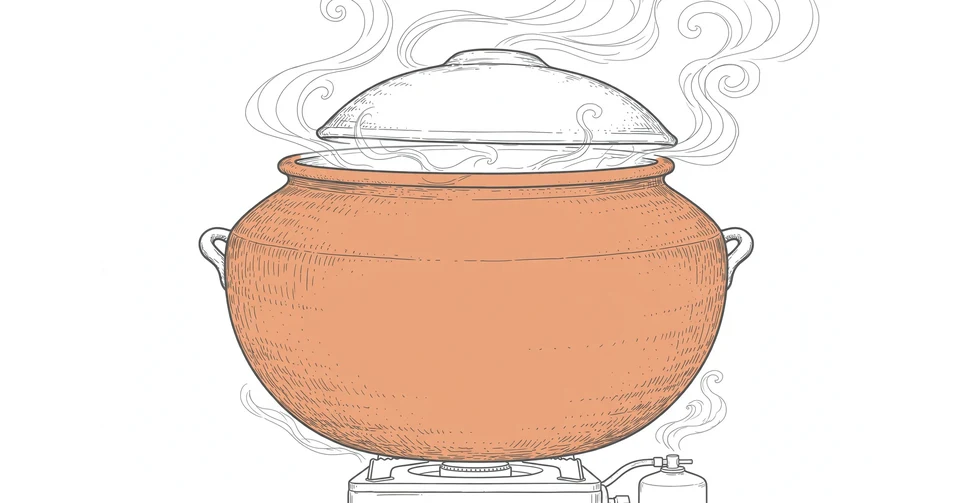
What makes a donabe special is the clay itself. The walls are thick and porous, and they store heat the way a brick oven stores heat, releasing it slowly and evenly long after the flame is turned down. That slowness is the whole secret of the pot. A metal pot heats fast and cools fast, and its hottest spot is always the part touching the flame. A donabe heats all over, gently, and it keeps cooking even after it leaves the stove, so the food finishes in its own steam while it waits on the table.
Two clays, two pottery towns
Most donabe come from one of two pottery traditions, and both of them are in Mie Prefecture. The first is Iga ware, made in the city of Iga, where pottery in general dates back to the 7th century and donabe in the Iga style have been made since 1832. Iga clay is coarse and porous, and it gives the pot its rough, earthy surface and its remarkable ability to hold heat. A well made Iga donabe can take two weeks to make, and if it is treated properly it can last for decades, with a few old ones surviving for centuries.
The second tradition is Banko ware, from Yokkaichi, and it is the one most people meet first. The Banko wholesalers' association says its members ship close to 80 percent of the donabe sold wholesale in Japan, and the story of the kyusu gives the same figure for the region's share of Japan's donabe clay pot production, noting that it belongs to the cooking pots rather than the teapots. Banko clay is rich in petalite, a mineral that can make up 40 to 50 percent of the clay body, and that is what lets a Banko pot take direct flame without cracking. Shigaraki and Mashiko also make donabe, but Iga and Banko are the two names a buyer will meet most often.
The two clays cook a little differently, and the difference is worth knowing before buying. Iga pots are heavier and slower, with thick walls that store a great deal of heat, and they suit long simmers and rice. Banko pots are often thinner walled and lighter, and they heat a little faster, which makes them friendly for everyday hot pots. Neither is better in any absolute sense. The choice is between a pot that leans toward patience and a pot that leans toward convenience, and either one will cook a good meal once the cook learns its rhythm.
Rice is where a donabe earns its keep
If a donabe has one dish that proves its worth, it is plain white rice. The pot holds heat so evenly that every grain cooks at the same pace, and the rice comes out fluffy and tender with a faint sweetness that an electric cooker rarely matches. The method is simple, but it rewards attention. The rice is washed until the water runs mostly clear, then soaked in the pot for 20 to 30 minutes so that every grain absorbs water evenly. The ratio is one part rice to 1.1 parts water, and a standard measuring cup of 180 millilitres takes about 200 millilitres of water.
Cooking takes two stages. First the pot goes over medium heat until it reaches a full boil, which should take about 10 to 12 minutes, and then the heat is turned down low for about 15 minutes more. Then comes the part that tests the cook's patience. The pot is lifted off the heat and left alone, covered and undisturbed, for 15 minutes, while the rice finishes steaming in the heat the clay has stored. Lifting the lid to check is the one mistake that matters, because the escaping steam is what the rice still needs. When the lid finally comes off, the rice is fluffed gently with a moistened paddle, lifting and folding from the bottom so the grains stay separate.
The bottom of the pot sometimes holds a small reward. If the heat is raised briefly near the end of cooking, the lowest layer of rice turns golden and crisp, and this toasted layer is called okoge. It is prized in Japanese cooking for its nutty flavour and its crunch, and it is the reason many cooks prefer a clay pot to an electric cooker for rice. A donabe does not just cook rice. It gives the cook a second dish at the bottom of the pot, free of charge.
The Wikipedia entry on the donabe notes that the pot is usually glazed on the inside and porous on the outside, and that food is often served straight out of the pot it was cooked in. That is the natural way to use it. A donabe arrives at the table still hot, the lid is lifted, and everyone serves themselves from the same pot, which is exactly how a family meal should feel.
A hot pot at the centre of the table
Rice is only half the story. A donabe is also the pot for nabemono, the family of Japanese hot pot dishes, and it is at its best when it sits in the middle of the table over a portable gas burner while everyone cooks and eats together. Shabu-shabu, with its thin slices of meat swirled briefly in simmering broth, and oden, with fish cakes and vegetables simmered slowly, are both natural donabe dishes, and so are the hearty stews of winter, when a simmering pot can warm a whole room as surely as it feeds the people in it.
There is a Japanese phrase for this way of eating, nabe o kakomu, which means surrounding the pot, and it captures something important about the donabe. The pot is not just a cooking vessel. It is the centre of the meal, and the meal is built around it rather than served from a kitchen far away. The story of the shichirin describes a similar feeling, a small fire that keeps the cook at the table instead of sending them into another room, and a donabe does the same work with clay instead of charcoal. The food arrives piece by piece, the conversation fills the gaps, and nobody is in a hurry to leave.
The same gentle heat that suits a hot pot also suits soups, stews, braised dishes, and steamed vegetables, and the pot's ability to keep cooking after the flame is turned down means that a stew can be finished on the table rather than on the stove. That matters more than it sounds. A cook who can bring the pot to the table and let it finish there is a cook who can sit down with everyone else, and that is a small but real improvement to an evening.
Seasoning the pot before the first meal
A new donabe needs one job done before it cooks anything, and the job is called medome, which means pore stopping. The clay is porous, and the seasoning fills its microscopic pores with starch so that the pot will not leak, crack, or soak up the smells of its first meals. The Just One Cookbook guide to seasoning a donabe explains the method plainly. Fill the pot about 80 percent full of water, add two tablespoons of uncooked short grain rice or a bowl of cooked rice, and bring it slowly to a boil over medium low heat. Once it boils, turn the heat down low and let the porridge simmer for an hour, then turn off the heat and leave the pot to cool to room temperature with the porridge still inside. Only then is the porridge thrown away and the pot rinsed and dried.
The same treatment can repair a pot that has developed fine hairline cracks. The starch fills the small gaps, and a second simmering, this time for two hours, can close cracks that would otherwise end the pot's life. It is a forgiving process, and it is worth doing properly, because a well seasoned donabe will last for decades, and the fine crackle that forms in the inside glaze over years of use, called kannyu, is valued as a sign of the pot's character rather than a flaw.
Looking after a clay pot
A donabe is fragile in ways that a steel pot is not, and the rules for keeping it are simple but firm. The outside of the pot must be completely dry before it goes on the flame, because moisture trapped in the clay will expand in the heat and can chip or crack the pot. It must never be heated while empty, and it must never be shocked by sudden changes of temperature, such as high heat from the start or cold water poured over a hot pot. The right habit is to start on medium low heat, raise it gradually to medium, and turn it down to low once the liquid boils.
Washing is gentle work. Warm water and a soft sponge are enough, with a little mild soap if needed, rinsed off at once. The pot must never be soaked in water, and it must never go in a dishwasher. Leftover food should be moved to another container for storage rather than left in the pot, and the pot should be left to cool completely before it is washed and then dried thoroughly, ideally upside down overnight. These rules sound fussy, but they are the price of a pot that can last a lifetime, and they become habit quickly.
There is one more habit worth keeping. A donabe should sit on a trivet or a folded cloth when it comes to the table, because its base stays hot long after the flame is gone, and it can mark a wooden table. That lingering heat is the point of the pot, though. It is what keeps the food warm through a long, slow meal, and it is the reason the pot feels alive in a way that a steel pan never quite manages.
The slowest pot in a fast kitchen
Modern kitchens are built for speed. A microwave reheats in minutes, an induction hob boils water before the kettle has finished, and a rice cooker finishes its cycle with a beep and a light. A donabe belongs to the opposite idea, and I think that is why it has survived. It asks the cook to soak the rice, to watch the steam, to wait fifteen minutes with the lid closed, and to sit at the table while the pot finishes its work. None of that is efficient, and all of it is the point.
There is a quiet pleasure in cooking with a tool that cannot be hurried. The clay heats slowly, the food cooks gently, and the meal arrives when it is ready rather than when a timer says so. A donabe will not suit every night. On a busy evening, a faster pot is the honest choice, and there is no shame in that. But on a quiet night, when there is time to cook properly and eat together, the clay pot earns its place at the centre of the table, and the meal tastes better for having been given time.
A donabe turns a clay pot into Japan's slowest and warmest way to cook because it treats heat as something to store rather than something to spend. The thick walls hold the fire long after the flame is gone, the lid keeps the steam where the food needs it, and the pot carries the meal from the stove to the table without losing its warmth on the way. It is a simple object, and it asks for a little patience and a little care. In return it gives back rice that tastes of the grain itself, stews that have had time to deepen, and evenings that move at the speed of a simmer rather than the speed of a deadline. That is a fair trade, and it is why a pot made of earth has outlasted so many pots made of steel.
More in Food & Travel
- Mount Takao and the Day Trip Tokyo Takes When It Needs Air
- A Shichirin Turns a Handful of Charcoal Into a Full Meal
- Binchotan Is the Charcoal That Made the Hibachi Possible
- Chawanmushi Hides a Whole Meal Inside a Teacup
- Himeji Castle, Japan's White Heron That Survived War and Fire
- Japanese Breakfast and the Morning Meal That Starts with Rice and Soup
Latest posts
- Boro Turns Rags Into the Cloth Japan Refused to Throw Away
- Iga Ware Fires the Clay Pot That Holds Heat the Longest
- Sashiko Turns Mending Into the Most Beautiful Part of a Garment
- Warosoku Burns Brighter Because Its Wick Is Hollow
- Japanese Chopsticks and the Quiet Rules Behind Every Meal
- A Tanzen Is the Full Length Robe Japan Wears Indoors in Deep Winter
- The Haze Tree Grows the Wax Behind Japan's Oldest Candles
- A Hanten Is the Winter Jacket Japan Wears to Work
- Haze Wax Keeps Japan's Oldest Candles Burning
- Furoshiki, the Japanese Cloth That Wraps Almost Anything
- Japanese Candles Are Still Rolled by Hand in Japan
- Ubame Oak Is the Tree That Turns Into White Charcoal
- Igusa Is the Humble Grass Under Every Tatami Mat
- Japanese Incense and the Art of Listening to Smoke
- Kumiko Builds Beauty From Wood Without a Single Nail