Japanese Chopsticks and the Quiet Rules Behind Every Meal
· 15 min read
Japanese chopsticks are short, pointed, and full of unspoken rules. Here is how they arrived, how they differ from their neighbours, and what not to do with them at the table.
Two thin sticks of lacquered wood sit beside every bowl in Japan, and they do far more work than they look capable of doing. Japanese chopsticks lift grains of rice one at a time, separate a piece of grilled fish from its bones, and carry a slippery slice of sashimi without a single drop. They are also, quietly, a test. Hold them wrong and nobody will say a word, but the room will notice. Stick them upright in a bowl of rice and the mood at the table changes at once, because that one gesture belongs to funerals.
Japanese chopsticks deserve a closer look, not because they are exotic, but because they are ordinary in the best sense. They show how a tool borrowed from another country can be reshaped by local food, local materials, and local manners until it becomes something distinctly Japanese. The story runs from Chinese courts to Buddhist temples, from sake barrel workshops to the lacquer studios of Wajima, and it ends, every day, at millions of dinner tables where the rules are mostly unspoken and almost always followed.
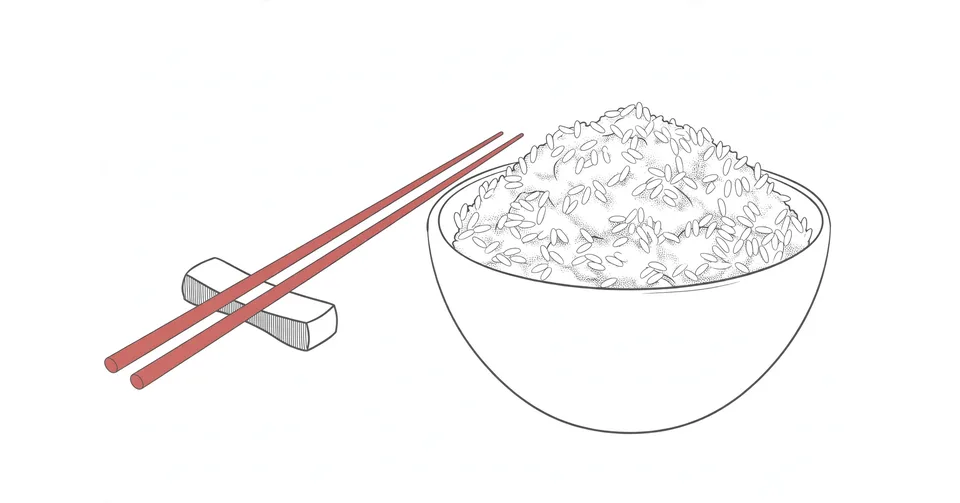
The first thing to know is that the Japanese word is hashi, written with the kanji for chopsticks, and the polite form is ohashi, with the honorific o in front. The word is also a homonym for bridge, and that coincidence has fed a lovely folk idea that Japanese chopsticks form a bridge between people and the divine, keeping hands away from food offered to the gods. Whether or not the etymology holds up, the attitude it describes is real. In Japan, Japanese chopsticks are treated with a respect that goes beyond their function, and that respect shows up in dozens of small rules.
How Japanese chopsticks arrived
Chopsticks were invented in China, where they were in use by around 1200 BCE, and they reached Japan centuries later, probably around the sixth century, travelling through the Korean Peninsula along with Buddhism and other parts of Chinese court culture. Early Japanese chopsticks were not the separate pair we know today. They were joined at the top, like tweezers, and they were used first in religious ceremonies rather than at everyday meals. Ordinary people ate with their hands.
The change came gradually. According to one well repeated account, the court official Ono no Imoko brought knowledge of Chinese chopstick use back to Prince Shotoku in the early seventh century, and the practice spread through the imperial court, a story retold in this history of chopsticks in Japan. Buddhism helped too. The faith discouraged eating meat with the hands, and as Buddhist ideas spread, so did the sticks. By the Nara period, from 710 to 794, Japanese craftsmen were already making their own version: shorter than the Chinese original, with tapered, pointed ends suited to a diet built around fish and rice. That pointed tip is still the most visible difference between Japanese chopsticks and their neighbours today.
Chinese chopsticks tend to be longer, around 25 centimetres, with blunt square ends, made for reaching into shared dishes at the centre of a large table. Korean chopsticks are often flat and metal, a shape that suits the metal bowls and barbecue culture of Korea. Japanese chopsticks are shorter, usually 21 to 24 centimetres for everyday use, with a fine point that can pick a single grain of rice or tease apart a piece of fish. Men traditionally use slightly longer pairs, around 23 to 25 centimetres, and women slightly shorter ones, around 21 to 23 centimetres. The difference is small, but it shows how thoroughly the tool was fitted to the hand and the meal.
The many kinds of Japanese chopsticks
Walk into a Japanese home and you will probably find more than one kind of Japanese chopsticks in the drawer, because different jobs call for different sticks. The everyday pair, called simply hashi, is the one most people picture: wooden or bamboo, coated in lacquer or varnish so it lasts longer and looks better, often with a small pattern near the top.
The disposable pair is waribashi, from the words for split and chopsticks. These are the plain wooden sticks handed out at restaurants, convenience stores, and with bento boxes, meant to be snapped apart before use. They were originally made from scrap wood left over from making sake barrels, and their unvarnished surface actually grips food well. Japan goes through billions of them every year, which is why collapsible travel chopsticks, sometimes called pokebashi, have grown popular as a reusable alternative. A similar disposable logic shows up in the takeaway culture around Japanese bento, where a pair of waribashi is part of the package.
In the kitchen, the sticks get longer. Saibashi, cooking chopsticks, are 30 centimetres or more, thick enough to stir a pot or turn tempura in hot oil without bringing the hand near the flame. Between saibashi and table chopsticks sit manabashi, serving chopsticks used to move food from a shared plate to your own. Using the blunt end of your own pair for the same job is also acceptable, and it is one of the small courtesies that keeps a shared meal comfortable.
Then there are the ceremonial kinds. Iwai-bashi are made from willow, tapered at both ends, one end for people and one for the gods, and they appear at New Year and weddings. After the meal they are traditionally burned, a small ritual of purification and fresh beginnings. Rikyu-bashi are handcrafted pairs used in the tea ceremony, named after the tea master Sen no Rikyu. Meoto-bashi, couple's chopsticks, come as a matched set in two lengths, one longer and one shorter, and are given as wedding gifts to symbolise harmony. Each of these exists because Japanese chopsticks are not just a tool. They are part of how occasions are marked.
There is even a day for them. Chopsticks Day falls on February 6 in Japan, a quiet observance that honours the craft and culture behind hashi, and one of the small facts collected in this guide to Japanese chopsticks. It is not a public holiday, and most people outside the industry would not notice it, but its existence says something about how seriously the object is taken.
How to hold them without thinking about it
Holding Japanese chopsticks correctly looks effortless when someone else does it, and the first attempts of a beginner can feel like trying to write with the wrong hand. The standard grip is simple to describe and takes practice to feel natural. Rest the lower chopstick on the ring finger, held steady by the thumb, and let it stay still. Hold the upper chopstick like a pencil between thumb and forefinger, resting on the middle finger, and move only that one to open and close the pair. The grip point is about one third of the way down from the top, not in the middle and not near the tips.
The important detail is that only the upper stick moves. Beginners often try to move both, or grip too tightly, or hold the pair in the middle like drumsticks. None of this will ruin a meal, and Japanese hosts are generally forgiving, especially with visitors. But the correct grip is worth learning, because it is the grip that makes the pointed tips useful. With the tips you can pick up a single edamame bean, lift a slice of raw fish without squeezing it, and separate the flesh of a grilled fish from its spine, all without a knife at the table. That precision is the whole point of the Japanese design, and it is also why the skill transfers so well to foods far from Japan, from salads to noodles.
Children in Japan learn the grip early, sometimes with training chopsticks joined by a small bridge at the top, and the skill becomes automatic long before adulthood. For adults learning late, the advice is the same as for any small motor skill: practise at home with something forgiving, like pieces of soft food, and accept that the first week will be slow. Nobody at a restaurant is timing you.
The rules nobody writes down
This is where Japanese chopsticks stop being a tool and become a social language. The rules are rarely posted on a wall, but most Japanese people absorb them in childhood, and breaking the big ones in company will draw a reaction. The two that matter most are both tied to death, which is why they feel so serious.
Never stick your chopsticks upright in a bowl of rice. This is called tate-bashi, and it copies the way incense sticks are placed upright in an offering at a funeral. The image is unmistakable, and doing it at dinner is considered deeply disrespectful, even if it is done by accident. The same goes for passing food directly from your chopsticks to someone else's, called hashi-watashi. At a cremation, family members pass the bones of the deceased from chopstick to chopstick, so the gesture at the dinner table is a reminder nobody wants.
The rest of the rules are gentler, but they are still worth knowing. Do not stab food with the tip, which is called sashi-bashi. Do not use your chopsticks to drag a bowl or a plate toward you. Do not point at people with them, and do not wave them around while talking. Do not spear a piece of food and then change your mind and put it back, and do not hover over a shared dish while you decide what to take. When you need to take food from a shared plate, use the blunt top ends of your chopsticks, or the serving pair provided, rather than the ends that have touched your mouth. And when you pause during the meal, rest the pair on the small ceramic holder called a hashioki, or lay them across the edge of your bowl or plate, tips pointing left. The paper sleeve that waribashi come in can even be folded into a makeshift hashioki, a small act of care that regulars do without thinking.
None of this is about snobbery. The rules exist because a meal in Japan is a shared space, and Japanese chopsticks are the instrument that moves food through that space. The etiquette is really a way of saying that everyone at the table matters, and that the food, the cook, and the company all deserve the same attention. I find that idea quietly appealing. Most table manners are about not embarrassing yourself. These rules are mostly about not disturbing anyone else, and that feels like a better reason to learn them.
Craft, lacquer, and the towns that make them
The best Japanese chopsticks are not bought in a supermarket. They are made in towns with centuries of craft behind them, and the most famous is Obama, a small city in Fukui Prefecture on the Sea of Japan coast. Obama produces the majority of Japan's lacquered chopsticks, and its workshops have been coating wood in layer after layer of lacquer since the Edo period. A good pair from Obama is light, balanced, and warm to the touch, with a finish that deepens with use. The city even has a chopstick museum and a monument to the craft, which tells you how central the object is to the place.
Wajima, in Ishikawa Prefecture, is famous for its lacquerware in general, and its chopsticks carry the same deep, durable finish. Further south, the workshops of Aizu in Fukushima and the bamboo craftsmen of Beppu in Oita each have their own traditions. The materials vary: bamboo is light and springy, wood like ebony or cherry is dense and smooth, and lacquer adds both beauty and grip. Some pairs are inlaid with mother of pearl or gold leaf. A handmade pair can cost a few thousand yen, and a truly fine one can cost far more, but the price is not the point. The point is that a tool used three times a day, every day, for a lifetime, is worth making well.
That attitude extends to how Japanese chopsticks are given and kept. A pair makes a common gift, for a wedding, a housewarming, or a New Year, and the matched meoto-bashi sets are a traditional wedding present precisely because they suggest two people eating together for a long time. Personal pairs are often kept in a drawer or a small case, and many people carry a pair in a case called a hashi-bako when they eat out or take a bento to work. The disposable waribashi of restaurants is the exception, not the rule, in a culture where most people own chopsticks the way other people own a favourite mug.
Japanese chopsticks beyond Japan
Outside Japan, Japanese chopsticks have travelled with Japanese food, and they are now a familiar sight far beyond Asia. Sushi restaurants from London to Los Angeles hand out a pair with every order, and many of those pairs are the Japanese style, short and pointed, even when the restaurant is not Japanese at all. The design has quietly won. It is simply better at picking up the foods people eat with chopsticks, and the rest of the world has noticed.
That spread has also changed the conversation at home. The billions of disposable waribashi used each year have become an environmental question, and the answer, for many people, has been to carry a personal pair. Schools teach children to use them, and also to think about where they come from. There is a small, practical lesson in that. A tool can be both traditional and disposable, both beautiful and wasteful, and the way a culture handles that tension tells you something about its values. Japan has not banned waribashi, and it has not romanticised them either. It has simply made the reusable alternative easy, attractive, and normal.
The global spread has also produced a small irony. In many countries, the first thing a person learns about Japanese chopsticks is the rule about not sticking them upright in rice, often before they learn how to hold them at all. The rule travels because it is dramatic and easy to remember, while the grip, which is the harder and more useful skill, takes longer to learn. I think that is a shame, because the grip is the part that changes the meal. The rules keep you out of trouble. The grip lets you actually enjoy the food.
Why two sticks still matter
It would be easy to call Japanese chopsticks old fashioned. Japan has no shortage of modern conveniences, from vending machines on every corner to toilets with more buttons than a television remote, and a fork would solve the whole problem in a second. But the sticks have survived every wave of modernisation, and they have survived because they fit the food. Japanese cooking is built around small pieces, soft textures, and rice that clings together just enough to be lifted. A fork would tear the fish, scatter the rice, and crush the tofu. The chopstick, with its pointed tip and gentle pressure, handles all of it without a fight.
There is also something about the pace they set. Eating with Japanese chopsticks is slower than eating with a fork, and that slowness is not a flaw. It gives you time to notice the food, to separate the bones from the flesh, to take the right amount rather than the biggest piece. In a country where the meal is often the main event of the evening, whether that is a quiet dinner at home or a long night at an izakaya, the slower pace is part of the pleasure. The sticks do not rush you, and the rules do not punish you. They just ask you to pay attention.
That, in the end, is what Japanese chopsticks are for. They are a tool, a craft, a small piece of etiquette, and a reminder that the way we eat says something about how we live. Two sticks of wood, a little lacquer, and a set of rules nobody had to write down. It is a modest technology, and it has lasted more than a thousand years. That is a good record for anything, let alone something you use three times a day.
If you are visiting Japan, buy a pair you like, learn the grip before you go, and remember the two funeral rules. The rest you will pick up by watching the people around you, which is how most Japanese people learned it too. And if you fumble a piece of sashimi on your first night, do not worry. Everyone at the table has done it. The sticks are patient, and so, usually, are the people.
More in Culture & Society
- Warosoku Burns Brighter Because Its Wick Is Hollow
- The Haze Tree Grows the Wax Behind Japan's Oldest Candles
- Haze Wax Keeps Japan's Oldest Candles Burning
- Furoshiki, the Japanese Cloth That Wraps Almost Anything
- Japanese Candles Are Still Rolled by Hand in Japan
- Ubame Oak Is the Tree That Turns Into White Charcoal
Latest posts
- A Shichirin Turns a Handful of Charcoal Into a Full Meal
- A Tanzen Is the Full Length Robe Japan Wears Indoors in Deep Winter
- A Hanten Is the Winter Jacket Japan Wears to Work
- Binchotan Is the Charcoal That Made the Hibachi Possible
- Igusa Is the Humble Grass Under Every Tatami Mat
- Japanese Incense and the Art of Listening to Smoke
- Kumiko Builds Beauty From Wood Without a Single Nail
- A Hibachi Carries the Hearth Anywhere in the House
- A Kotatsu Turns a Cold Winter Evening Into the Warmest Room in the House
- The Jizaikagi Hangs Above the Fire and Sets the Pace of Dinner
- Japanese Paper Lanterns and the Light That Folds Flat
- A Zabuton Is the Cushion That Tells You Where You Sit in Sumo
- An Irori Hearth Warms the Room and the People Around It
- Tatami Still Sets the Measure of a Japanese Room
- Chawanmushi Hides a Whole Meal Inside a Teacup