A Rikishi Is a Man of the Sumo World Before He Wins a Single Bout
· 20 min read
A rikishi is a professional sumo wrestler, and the title belongs to him from the day he joins a stable, long before his first win.
A boy walks into a sumo stable at fifteen, carrying a small bag and wearing his school uniform for the last time. He has not fought anyone. He has not won anything. He has not even learned how to tie his hair yet. But from the day he is accepted, he is a rikishi, a man of the sumo world, and the sport will treat the new rikishi as one.
That is the strange and generous heart of professional sumo. In most sports, you earn your title by winning. In sumo, you earn it by belonging. The rank comes later, the salary comes much later, and the fame may never come at all. But the identity arrives on day one, and it changes how the boy lives, dresses, eats, and is spoken to for as long as he stays.
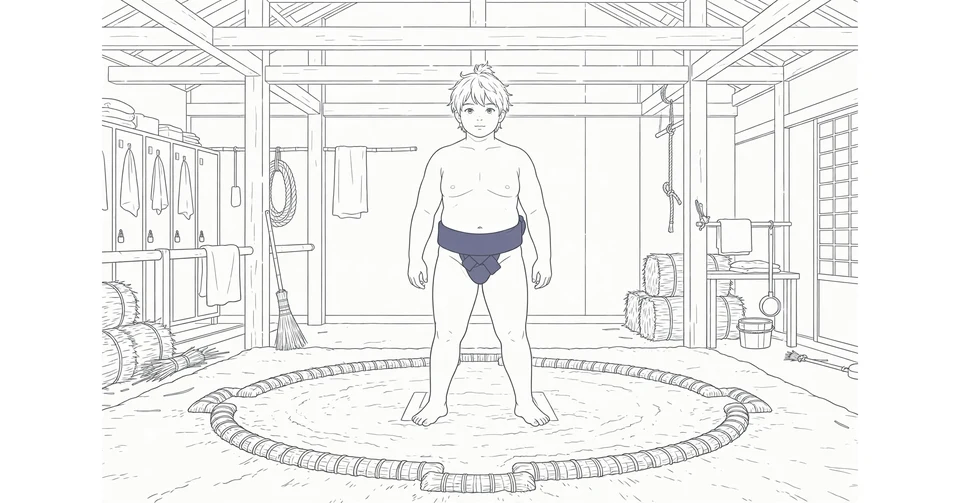
A rikishi is, at its simplest, a professional sumo wrestler employed by the Japan Sumo Association. The word is written with two characters, one meaning strength and the other meaning warrior or gentleman, and it is the term the Association itself uses in its own English pages. The full article on the term traces its history from the Edo period to the present day. Fans at a tournament will call the men in the ring by this word, and so will the newspapers. There are other words for the same job. Sumotori is the everyday, slightly looser word a Japanese speaker is more likely to use in conversation, and osumoson is the warm, respectful nickname, the honorable Mr. Sumo. But rikishi is the professional title, and it carries weight that the casual words do not.
What makes the word interesting is how wide it reaches. It covers the yokozuna at the top of the sport and the teenager at the very bottom of the ranking sheet who has never fought a ranked bout. It covers the men who earn a salary and the hundreds who do not. A single word holds the whole pyramid together, and that is why it is worth understanding on its own terms.
What a rikishi actually is
A rikishi is a wrestler who has joined a stable, a heya, and been registered with the Japan Sumo Association as a professional. He lives under the Association rules, trains under a stablemaster, and fights in the official tournaments, the honbasho, six times a year. Japan is the only country where sumo is practiced professionally, so every professional rikishi in the world belongs to this one system.
The word is often translated as sumo wrestler, and that translation is not wrong, but it misses something. A wrestler in the Western sense trains, competes, and goes home. A rikishi lives inside his sport. He sleeps in the stable, eats in the stable, and follows rules that reach into ordinary life. The Association even prohibits wrestlers from driving cars. His appearance tells the public who he is, because a rikishi is expected to wear his hair in a topknot and traditional Japanese dress whenever he is in public. The job is not something he does for a few hours a day. It is the shape of his whole life.
The numbers give a sense of how many men share the title of rikishi. On the ranking sheet for the September 2026 tournament there were 593 active rikishi, spread across six divisions, and only 70 of them were paid a salary. That means nearly nine out of ten men who carry the title work without a wage, receiving a tournament allowance and their keep at the stable and nothing else. The total has fallen a long way from its peak of 943 active wrestlers in May 1994, at the height of the WakaTaka boom, and by January 2024 it had declined to 599. The decline in recruits is a regular topic of discussion in sumo, and it breaks records for the lowest number of new wrestlers with uncomfortable frequency. Yet the title itself has not been cheapened to attract more boys. If anything, the sport guards it more carefully now that fewer arrive.
The history of the word runs back further than most fans realize. The term rikishi appeared around 1717, in the Edo period, when local lords were reviving the practice of keeping wrestlers in their households. A more specific term also existed then, kakae-rikishi, a retained wrestler attached to the patronage of a lord. Those men were allowed to carry two swords, while wrestlers without a patron carried only one, or even a dagger. The lords' wrestlers were given samurai status and a salary, and they wore their lords' symbols on large ceremonial aprons. The patronage system is long gone, but the echo of it remains in the way the title still marks a rikishi as something more than an athlete.
How a boy becomes a rikishi
Becoming a rikishi starts with a decision that most teenagers never have to make. Since 1973, every new aspirant must have completed compulsory education, which in Japan means six years of primary school and three years of junior high school. Most new recruits sign up in March, at the end of the school year, which means the typical new rikishi is fifteen years old, leaving home just as his classmates are starting high school. With the exception of recruitments based on special criteria, all wrestlers must be under twenty three when they join.
The stable finds the boy as often as the boy finds the stable. Since the 1970s, sumo has run an intensive scouting system. The largest stables keep scouting networks across the country, supported by retired wrestlers and patron club members who act as part time scouts. Acquaintances of the stablemaster, or one of the stable wrestlers, often bring a promising boy to the stable. When a master travels on a provincial tour, he is always watching for talent. And it is often the case that a young wrestler is motivated to join a stable solely by the reputation of its current master. The boy chooses the man as much as the house.
There used to be physical standards, and they were strict. Recruits once had to be at least 1.73 meters tall and weigh 75 kilograms, and later the minimum was set at 1.67 meters and 67 kilograms. Some boys went to desperate lengths to meet the height requirement, and a practice of injecting silicone on top of the head to gain a few centimeters was eventually prohibited. As of January 2024, recruits are no longer subject to physical standards at all. Instead the Association judges new recruits on an athletics test, reintroduced in April 2024 for the first time in twelve years, built on seven physical tests including back strength, grip strength, a handball throw, a handstand, a standing long jump, and a fifty meter run. The sport decided that what matters is what a body can do, not what it measures.
Once accepted, the new rikishi enters a world with almost no private life. All new wrestlers must attend the Sumo School at the Ryogoku Kokugikan, where they spend six months learning the basic movements as well as calligraphy, history, folk songs, and sports medicine. A wrestler does not compete under his own name. Each is given a shikona, a ring name, usually built by his stablemaster from a syllable of the stable's own tradition. The name can change mid career, and it rarely resembles the name on his passport. The Ukrainian ozeki who fights as Aonishiki, for example, is registered with the Association under his birth name. The shikona is a second identity, and receiving one is one of the first signs that the young rikishi now belongs to the stable rather than to his old life.
There is one more detail that tells you how seriously sumo treats belonging. A rikishi does not move between stables the way a footballer moves between clubs. There is no transfer market and no free agency. Movement happens only when the stable itself changes, if it closes, or if the coach who recruited him leaves to open his own house, and then the Association decides where its wrestlers go. The stable is not an employer in the ordinary sense. It is a home, and a rikishi does not choose a new home lightly.
The six divisions from jonokuchi to makuuchi
Every rikishi stands somewhere on the banzuke, the official ranking sheet that the Association rebuilds after each tournament and publishes thirteen days before the next one starts. The sheet runs from the yokozuna at the top down to jonokuchi at the bottom, in six divisions and ten ranks. A newcomer starts below the sheet entirely, in a status called maezumo, where he must first prove himself before earning a place. A wrestler who has competed and succeeded on the national amateur scene may begin higher, under a status called tsukedashi, starting in the sandanme or makushita divisions. For everyone else, the climb begins at the bottom.
The divisions, from the bottom up, are jonokuchi, jonidan, sandanme, makushita, juryo, and makuuchi. The top division, makuuchi, is itself split into five ranks: yokozuna, ozeki, sekiwake, komusubi, and maegashira. On the September 2026 sheet, the divisions held 43 wrestlers in jonokuchi, 200 in jonidan, 160 in sandanme, 120 in makushita, 28 in juryo, and 42 in makuuchi. The shape is a pyramid with a very wide base and a very narrow top, and the numbers make the odds plain. Statistics show that only one wrestler in fifty makes it to the juryo division, just one in a hundred becomes a makuuchi wrestler, and only one in four hundred makes the yokozuna rank. Most wrestlers retire from professional sumo without ever having reached the salaried levels.
Rank moves on tournament results, not on body weight, and that is a point worth repeating because it surprises people who assume sumo is only about size. A rikishi climbs by winning more bouts than he loses in a tournament, and he falls by losing more than he wins. The banzuke is rebuilt six times a year, so a rikishi career is a long series of small verdicts, each one moving a man a few places up or down. There is no single trial that decides everything. There is only the slow accumulation of results, tournament after tournament, year after year.
At the top of the pyramid sits the yokozuna, and the rank is unlike any other in sport. The story of how the yokozuna rank is never taken back explains why a man who reaches it keeps it for life, retiring rather than being demoted. On the September 2026 sheet there were two yokozuna, Onosato of Ishikawa, the 75th man to hold the rank, and Hoshoryu of Mongolia. Below them sat three ozeki, two sekiwake, two komusubi, and thirty three maegashira. Every one of those forty two men is a rikishi, and so is every one of the forty three teenagers in jonokuchi. The word does not change as the rank changes. Only the life around it does.
A day in the heya
If you want to understand what the title costs, look at an ordinary day in the stable. Sumo life centers on the training stable, to which all active wrestlers must belong. Most wrestlers, and all junior ranked ones, live in the stable in a dormitory style, training, cleaning, eating, sleeping, and socializing together. Since stable members live in a brotherhood similar to a family, they are forbidden to fight another member of their stable during tournaments.
The day of a junior rikishi starts before dawn. Wrestlers ranked in the lower divisions get up around four or five in the morning to do chores around the building and stretch in preparation for the usual empty stomach morning training. The lowest ranked wrestlers begin training first, before being joined by their seniors and the stablemaster, who only appears when the wrestlers ranked in sandanme begin training. The sekitori ranked wrestlers always turn up last, and their assistants have to leave the training briefly to help them put on their mawashi. On their arrival at the training hall, the senior men are systematically greeted by wrestlers of lower rank than themselves. The morning exercises are designed to exhaust the wrestlers and strengthen their fighting spirit, and they are repeated every morning without exception.
After training, the wrestlers take their baths in turn by order of rank, the highest ranked starting first so that the senior men always benefit from a clean bathroom. Meanwhile the lower ranked wrestlers begin to prepare the meal, usually the first of the day. Wrestlers then eat by turns according to rank, each rikishi being served by another wrestler belonging to a rank lower than his own. The lowest ranks must patiently and hungrily wait until all of the others have finished and gone to have a nap. This regimen of no breakfast and a large lunch followed by a sleep is intended to help wrestlers put on a lot of weight so as to compete more effectively. It is a hard life, and it is deliberately hard, because the sport believes that hardship shared in the stable is what makes a wrestler.
The hierarchy inside the heya is strict, and a young rikishi learns it in every hour of the day. Senior wrestlers, even lower ranked ones, have authority over their juniors and win the title of anideshi, big brother, allowing them to exercise authority, notably during training, over their ototodeshi, little brother, meaning every wrestler with less seniority than them. The lowest ranked wrestlers are expected to obey and act as assistants to their coaches and to the sekitori. In sandanme, the wrestlers no longer have to perform the most thankless tasks and gain a few extra freedoms. In makushita, they have even more rights and are considered experienced enough to teach the basics to young wrestlers. The ladder is visible in every hour of the day, and a young rikishi climbs it one chore at a time.
I find something quietly admirable in this arrangement, and something worth questioning at the same time. The stable gives a fifteen year old boy a home, a purpose, and a community that will feed him and train him for years without asking for anything except obedience and effort. That is a generous offer in a world that rarely gives teenagers such a clear place to belong. But the price is real, and it is paid in privacy, in comfort, and in years that cannot be recovered if the climb stalls. A boy who leaves after three years in jonidan has little to show for it except discipline and a body built for a sport he no longer plays. The system is honest about the odds, since the ranking sheet is public and the statistics are brutal, yet the dream is strong enough that boys keep arriving every March. I think the lesson is not that sumo is cruel or kind. It is that belonging always costs something, and the honest question is whether the boy understands the price before he pays it.
A rikishi and a sekitori are not the same thing
Here is the distinction that confuses almost every new fan, and it is the key to the whole article. Every sekitori is a rikishi, but most rikishi are not sekitori. The word sekitori refers to wrestlers who have risen to the two highest divisions, juryo and makuuchi, and it is a more prestigious term that brings significantly more status, privilege, and salary than their lower division counterparts. A wrestler becomes a sekitori from the tournament in which he reaches juryo. Of the 593 wrestlers on the September 2026 sheet, only 70 were sekitori. The other 523 were rikishi without the extra title.
The difference in treatment is so large that an expression in sumo says the two statuses are like heaven and hell. When a rikishi reaches the juryo ranks, his daily life changes completely, with his daily needs taken care of for him. He is assigned a minimum of one tsukebito, an assistant who acts as his personal servant, helping him dress and prepare, carrying his belongings, helping him bathe, acting as a secretary, or running errands on his behalf. The higher a sekitori climbs, the more assistants he is entitled to. He has his name hand painted with that of his sponsor on tall banners called nobori, which are then erected at the entrance to tournament arenas during the honbasho. Around the ring he is entitled to small perks such as personalized towels during pre bout preparations, and while waiting for his match, a makuuchi wrestler is entitled to his own personalized waiting cushion, a zabuton made of silk with about twenty centimeters of padding and bearing his name. To transport his personal belongings, a sekitori uses an akeni, a bamboo and paper luggage box dating back to the Edo period, each one bearing his name, and a yokozuna is allowed three.
The lower divisions have their own small mercies. Wrestlers who reach makushita and spend enough time in sandanme become eligible for a job offered by the Sumo Association and a retirement gratuity when they retire. But no one pretends the two halves of the sport are equal. The story of the white silk describes the moment a wrestler earns the right to wear a white silk mawashi and an oichomage topknot, the visible signs that he has crossed the line. The white silk is not a fashion choice. It is the announcement that a man has arrived.
What I take from this is that sumo is unusually honest about hierarchy. Most workplaces pretend everyone is equal while quietly rewarding a few. Sumo does the opposite. It writes the hierarchy on a public sheet, dresses it in different clothes, and serves lunch in a different order, so nobody can pretend the difference does not exist. That honesty has a cost, because the men at the bottom can see exactly how far they are from comfort. But it also has a dignity, because the rules are the same for everyone and the way up is written down for all to see.
What the word means to the fans
To the fans, a rikishi is more than an athlete. The sport has been called the national sport of Japan, and its wrestlers have served as emblems of the country since the 1960s, when the first international tours of professional sumo since the 1930s carried men like Taiho, Kashiwado, and Sadanoyama abroad. In the summer of 1965, a group of eight wrestlers went to the Soviet Union at the invitation of the Russian government to perform goodwill matches, and the press, seeing them fight in their mawashi, dubbed the delegation the naked ambassadors. The nickname was playful, but the role was serious. A rikishi abroad represents Japan in a way few other athletes do, because the sport itself is so visibly Japanese, from the ring to the dress to the rituals before each bout.
The fans also know each rikishi as a person, not just as a rank. A rikishi keeps his ring name for years, and the crowd learns his story, his stable, his hometown, and his habits. The Association publishes an official profile for every wrestler, with his photograph, height and weight, stable, debut tournament, highest rank, and career record, and fans follow those records the way followers of other sports follow statistics. The full directory of current and historic wrestlers counts every name on the September 2026 sheet and links each of the seventy salaried men to his official profile. It is the kind of page a fan keeps open during a tournament.
There is also a tenderness in how fans treat the lower ranks. The crowd at a tournament watches the early bouts, when the jonokuchi and jonidan rikishi fight in a mostly empty arena, and the regulars know those names too. A boy fighting his third bout in front of a few hundred people is still a rikishi, and the people who come early know it. The sport does not hide its beginners. It puts them in the ring first, in daylight, before the stars arrive, and asks the audience to watch them learn. That is a small act of respect, and it says something about why the word matters. The title is not a reward for winning. It is a recognition that the man in the ring has given his life to the sport, and the fans honor the gift even when the results have not come yet.
The international shape of the sport has changed, and the fans have changed with it. Of the 593 wrestlers on the September 2026 sheet, 31 were born outside Japan, and they come from eight countries. Mongolia accounts for 23 of the 31, and the foreign born share rises sharply with rank: ten of the forty two wrestlers in makuuchi were born abroad. The first foreign born wrestler to reach the top division was Takamiyama of Hawaii in 1968, and the first foreign born yokozuna was Akebono, also of Hawaii, who held the rank from March 1993 to January 2001 and won eleven championships. The sport that once recruited its wrestlers from the guards at feudal road barriers now welcomes boys from Ulaanbaatar and Kyiv, and the word rikishi stretches to hold them all. A Ukrainian teenager who arrives at a stable in Tokyo and receives his shikona is as much a rikishi as a boy from Aomori. The title does not ask where you were born. It asks whether you belong.
Why the title comes before the first win
So we return to the boy with the small bag, standing at the door of the stable. He has not won a bout. He may never win many. The statistics say he probably will not reach juryo, and almost certainly will not reach the top division. And yet the sport calls him a rikishi from the first day, and the fans, the Association, and his stablemates all use the word without hesitation.
The reason, I think, is that sumo understands something most sports forget, which is that identity is what makes effort possible. A boy who is told he is a rikishi only when he wins will quit the first time he loses, because losing will feel like losing himself. A boy who is told he is a rikishi before he has won anything can lose and still know who he is. The title gives him a floor to stand on while he learns to climb. It is not a prize for the future. It is a tool for the present, a way of saying that the work matters even when the results do not show it yet.
That is a generous idea, and it is one that travels well beyond the ring. Most of us spend our lives waiting for permission to call ourselves something, a writer, a cook, a musician, a person who belongs somewhere, and we set the bar at a victory that may never come. Sumo sets the bar at the door. You walk in, you accept the rules, you do the morning training on an empty stomach, and you are one of us. The wins will come or they will not, and the ranking sheet will say what it says, but the name is yours from the start.
A rikishi is a man of the sumo world before he wins a single bout, and that is not a sentimental slogan. It is the working rule of a sport that has kept its wrestlers for centuries by giving them a home first and a rank second. The boy at the door does not know yet how far he will climb. He knows only that he belongs, and for a fifteen year old leaving home, that is enough to begin.
More in Culture & Society
- An Oyakata Is the Father a Sumo Stable Cannot Replace
- A Tokoyama Spends Ten Years Learning to Dress a Topknot
- Japanese Calligraphy and the Brush That Turns Writing Into Art
- A Tegata Is Sumo's Inked Handprint Autograph
- Mawashi Carries a Wrestler's Rank Around His Waist
- Yokai, the Strange Spirits That Haunt Japanese Folklore
Latest posts
- Namasu Turns Daikon and Carrot Into a Red and White Wish
- Ebi Bends Like an Old Back and Wishes You a Long Life
- Yokozuna Is the Rank Sumo Never Takes Back
- Kobumaki Rolls Joy Into a Strip of Kelp
- Kurikinton Is the Golden Mash That Wishes You Wealth
- Japanese Beer and the Dry Wars That Changed How Japan Drinks
- Kamaboko Paints the New Year Red and White
- Datemaki Rolls Sweet Eggs Into a Spiral of Good Luck
- Japanese Bento and the Lunch Box That Became an Art Form
- Tazukuri Turns Tiny Sardines Into a Wish for a Good Harvest
- Kazunoko Is the Herring Roe That Promises Children and Plenty
- Kuromame Turns Black Beans Into a Wish for Health
- Gyoji Are Sumo's Referees in Silk and Calligraphy
- Japanese Baseball and the Game Japan Made Its Own
- Jubako Layers a Family's Luck One Box at a Time